English Ivy Removal for Atlanta Trees and Garden Beds
English ivy can turn a manageable garden edge into a connected mat of vines climbing nearby trees. For English ivy removal in Atlanta, protecting the tree matters more than making the trunk look clean immediately.
Climbing growth, rooted ground cover, and vines tangled through shrubs need separate attention. A lasting plan also includes debris handling and monitoring for new growth.
Start by identifying the plant and separating ground-level landscape work from tree work that requires a qualified arborist.
Key Takeaways
- Protect tree bark and roots throughout removal, especially where ivy conceals the trunk base.
- Treat climbing ivy and garden-bed ivy as separate parts of the project.
- Use a qualified arborist when vines extend high into a tree or removal creates an injury risk.
- Include regrowth monitoring and ongoing bed maintenance in the plan, rather than treating the first cleanup as completion.
Identify English Ivy Before Planning Removal
Dense vegetation can hide several plants growing together. Correct identification matters because English ivy, poison ivy, and ground ivy require different precautions.
Recognize English ivy's growth habit
English ivy ( Hedera helix ) is an evergreen climbing vine. Its familiar juvenile leaves usually have several pointed lobes, while mature flowering growth can have unlobed leaves. Small attachment roots help climbing stems cling to surfaces.
Across a garden bed, trailing stems can root where they contact soil. As a result, a broad patch may have several rooted locations rather than one obvious base.
Look at the entire planting area, including tree bases, shrub interiors, and the far side of the bed. That wider view helps define the project's boundaries. A visible patch beside the driveway may connect to growth behind a hedge or along a wooded edge.
Separate English ivy from poison ivy
Poison ivy typically has three leaflets. Older climbing stems can also look hairy, so a vine's appearance against bark alone isn't enough for identification.
English ivy doesn't contain poison ivy's urushiol, but handling vegetation still calls for gloves, covered skin, and sturdy footwear. Mixed patches deserve particular caution.
Our Atlanta poison ivy control guide covers the identification and exposure concerns associated with that different plant. Don't transfer poison ivy treatment advice directly to English ivy simply because both climb.
Put Tree Protection Ahead of Appearance
English ivy is an aggressive vine that climbs mature tree trunks and adds maintenance concerns. However, the amount of visible ivy doesn't establish a tree's condition or explain every problem beneath it.
Make bark protection a priority
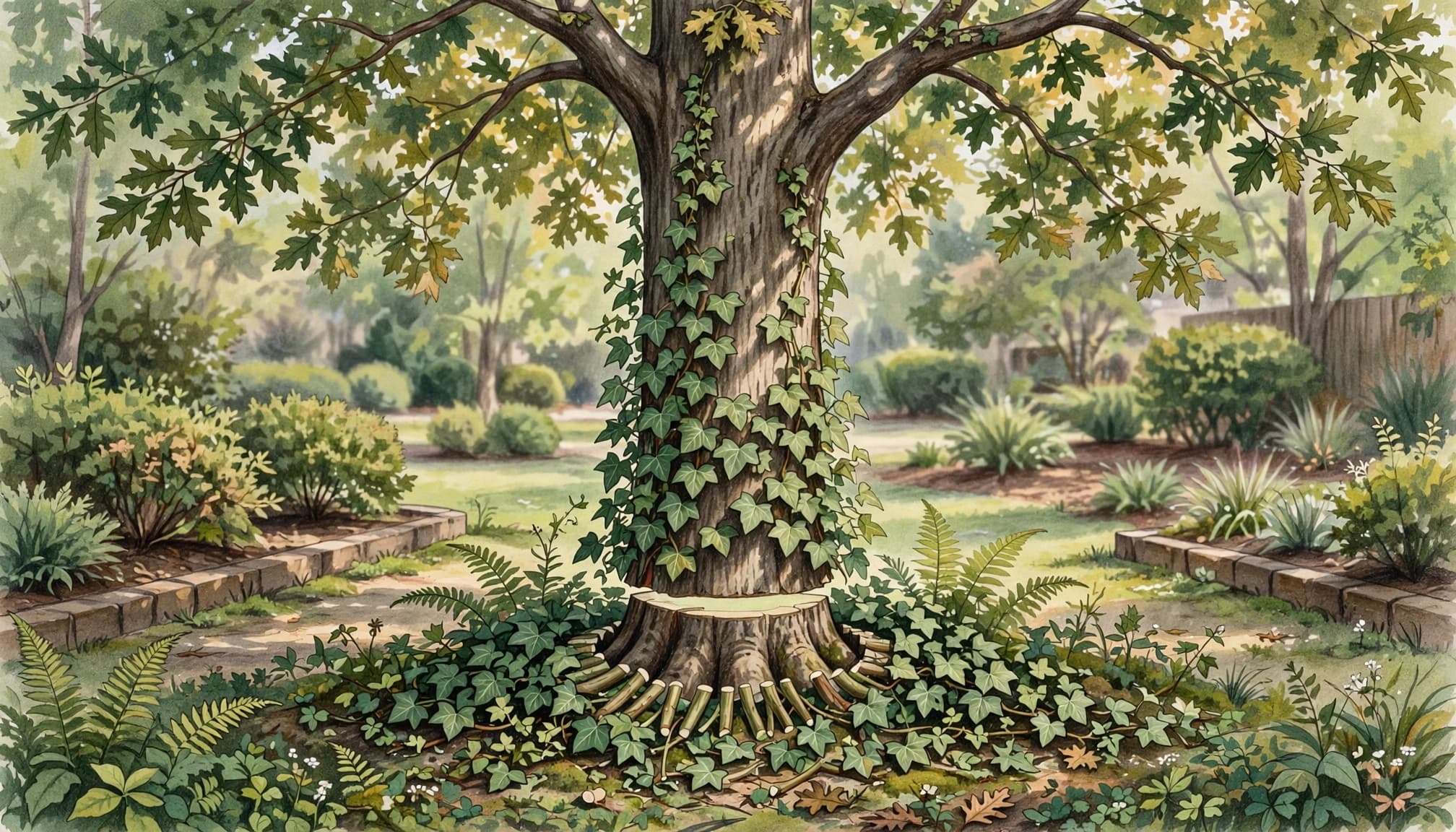
Tree bark isn't a disposable surface beneath the vines. Removal work should protect it, especially where thick stems or attachment roots obscure the trunk.
A project that leaves scratches, gouges, or exposed wood has compromised that priority. Likewise, a completely bare trunk isn't a useful goal if achieving it requires damaging the tree.
Climbing growth also makes inspection harder. An arborist can assess obscured areas and distinguish vine-management needs from separate tree-health concerns. This matters when a trunk already has cavities, loose bark, or other visible defects.
Preserve roots and the root flare
The root flare is the widening area where the trunk meets its major roots. Ivy, accumulated leaves, and excess mulch can make this area difficult to see.
Keep root protection in the project scope. Excavation, new edging, equipment traffic, and added soil can create problems around established trees, even when the original goal is landscape cleanup.
Our tree root and bed repair guide addresses these related concerns. The same care applies when restoring a bed after ivy removal: avoid treating the tree's root zone as an empty construction area.
Treat Garden Beds as a Separate Work Area
Ivy growing through a bed presents a different problem from ivy climbing a trunk. Here, the work overlaps with existing shrubs, perennials, irrigation, edging, and shallow roots.
Account for plants and hidden obstacles
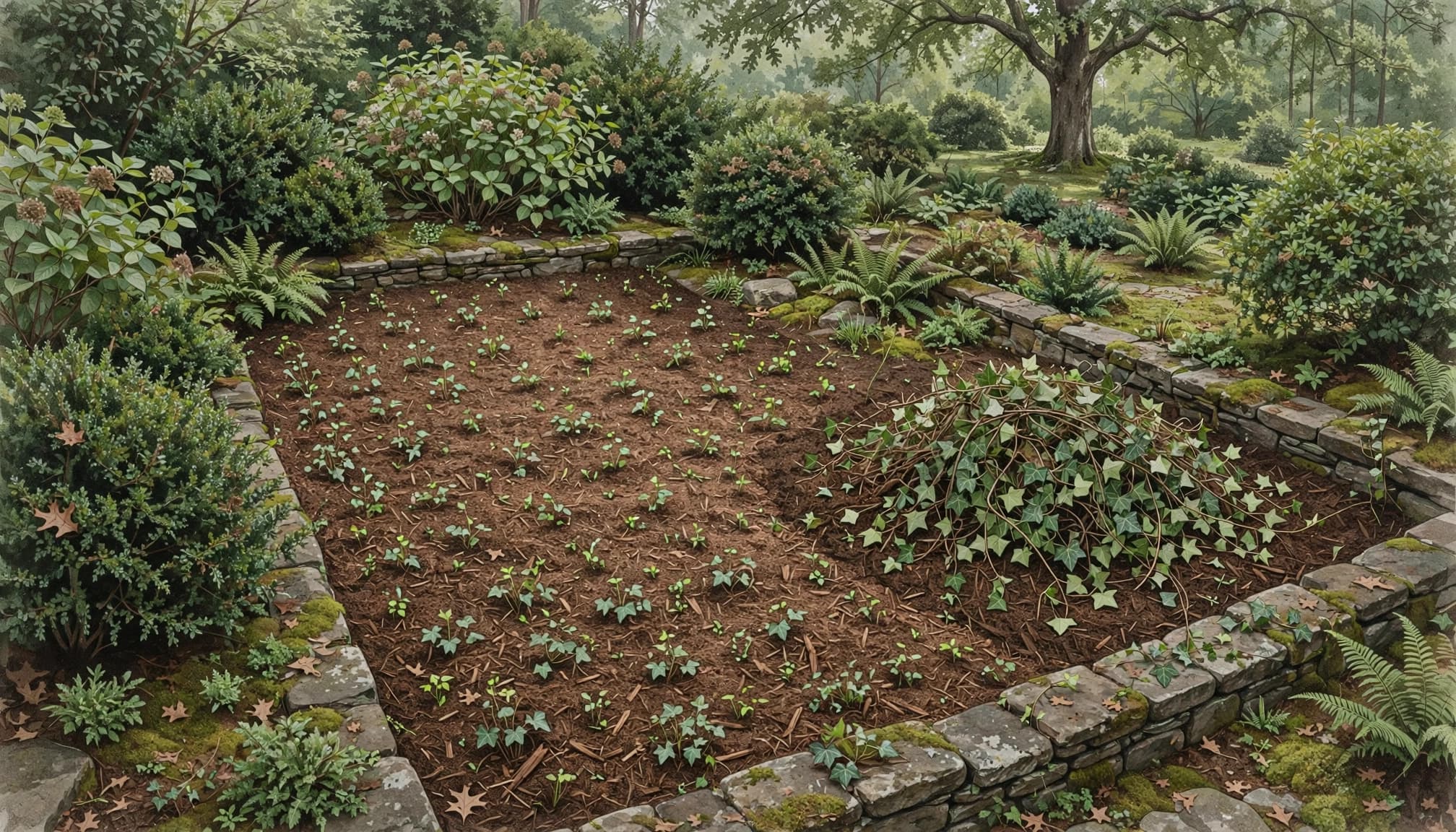
Before work begins, identify the plants you intend to retain. Dense ivy can conceal small ornamentals, irrigation tubing, landscape lighting cables, and damaged edging.
The bed's condition should guide the scope. A patch beneath established hydrangeas needs more selective attention than an open area without desirable plants. Likewise, exposed tree roots limit how much disturbance is appropriate.
Don't assume that everything underneath the ivy needs replacement. Once the vegetation no longer obscures the bed, assess the remaining plants individually. Some may need routine care, while others may require replacement because of unrelated problems.
Include the edges and neighboring growth
The visible center of an ivy patch is only part of the area to consider. Growth can continue beneath shrubs, across property boundaries, or into wooded sections beyond the maintained yard.
Define which areas the project includes and which remain outside it. Otherwise, an attractive cleared section can sit beside an unmanaged source of encroaching vines.
Bed borders also need attention after cleanup. Our Atlanta landscape bed edging guide covers ways to define maintained areas. Near trees, choose a border that doesn't depend on disruptive excavation through major roots.
Know When a Qualified Arborist Is Necessary
A qualified arborist should handle ivy high in a tree or any situation where removal could cause injury or tree damage. Elevated vines, uncertain branches, and concealed trunk defects belong in a tree-work assessment.
Ground-level access doesn't automatically make the whole project suitable for ordinary yard maintenance. A tree may have overhead hazards even when its base is easy to reach.
Professional assessment is especially appropriate when vines extend into the canopy, the tree stands near a building, or branches hang above a walkway. Also, avoid ladder work around tangled vegetation and uneven ground.
An arborist's role differs from landscape-bed maintenance. Tree assessment addresses bark, structural condition, overhead exposure, and the safety of the work. Bed maintenance addresses the surrounding planting area and its ongoing care.
For a combined project, keep those responsibilities clear. The scope should identify the tree work, ground-cover management, plants to retain, access restrictions, and debris handling. It should also distinguish immediate cleanup from later monitoring.
This separation helps homeowners and property managers understand what the project includes. It also prevents a general landscape cleanup from expanding into hazardous tree work without the right skills and equipment.
Expect Regrowth to Need Continued Attention
English ivy removal in Atlanta requires attention beyond the first visible improvement. Rooted stems and remaining growth can produce new shoots, while nearby unmanaged patches can extend back into the bed.
Watch the places most likely to be missed
Monitoring should include tree bases, shrub interiors, bed borders, and transitions into wooded areas. These locations are easy to overlook because foliage, leaves, or mulch can hide small shoots.
Keep a simple record of where ivy appeared. Photographs taken from the same viewpoint help distinguish a new patch from growth that remained outside the original scope.
Also, pay attention to renewed climbing growth. A bed can look tidy while a vine begins moving up a trunk again. Looking at both ground level and the lower trunk gives a more complete picture of the area.
Judge progress by new growth
A cleaner appearance is useful, but it doesn't prove that the ivy has stopped returning. Evaluate progress by the presence and extent of fresh growth, not by the amount of material removed initially.
A cleared bed can still contain rooted ivy, so appearance alone doesn't establish lasting control.
Follow-up observations should guide the next maintenance decision. If the same locations repeatedly produce shoots, those areas deserve focused attention. Meanwhile, expanding growth at the boundary suggests the surrounding patch remains part of the problem.
Restore the Bed Without Creating New Problems
After ivy no longer dominates the planting area, bed restoration becomes easier to plan. However, new mulch, replacement plants, and edging should respect existing roots and drainage.
Use mulch for bed care, not as proof of control
Mulch helps maintain a landscaped bed, but covering the surface doesn't establish that ivy is gone. Keep new growth visible enough to notice during routine inspections.
Around trees, leave the root flare exposed and keep mulch away from the trunk. Adding layers against bark can conceal the very area that needs attention.
Our Atlanta mulch installation guide covers material choices, depth, and placement. Consider the existing mulch layer before adding more, rather than treating every cleanup as a reason for another full application.
Match replacement planting to the site
Replacement plants should fit the available light, drainage, and mature growing space. A shaded bed under an established tree has different limits from a sunny foundation bed.
Also, avoid crowding new plants simply to hide the cleared ground. Dense planting makes inspection harder and can recreate a difficult maintenance area.
Where ivy covered a slope, include erosion concerns in the restoration plan. A suddenly exposed bank needs attention to soil stability as well as appearance. Larger slopes, drainage problems, and sites requiring structural support need an appropriate landscape assessment before substantial changes.
Make Ivy Monitoring Part of Landscape Maintenance
Routine landscape care provides opportunities to spot ivy before it becomes another large project. Include tree bases and bed boundaries in ordinary property inspections, rather than watching only lawn edges.
Mowing alone doesn't address ivy hidden beneath shrubs or climbing a tree. Likewise, fresh mulch and neat edging can improve appearance without resolving vegetation outside the maintained area.
For homeowners, the useful goal is a bed that's easy to see and maintain. For HOAs and commercial properties, consistent inspection across shared boundaries matters because one neglected section can affect adjoining planting areas.
At RW Lawn Co, our landscape bed maintenance services include weed control, mulch installation, and bed edging. These services support ongoing landscape care; hazardous climbing-vine work still calls for a qualified arborist.
Keep debris handling and follow-up responsibilities within the project scope. A defined handoff between tree work and bed maintenance makes the next stage of care easier to manage.
Keep the Tree Safe and the Bed Manageable
Successful English ivy removal in Atlanta starts with tree protection and a clear distinction between climbing vines and garden-bed growth. A tidy appearance should never come at the expense of bark, roots, or personal safety.
Use a qualified arborist for elevated ivy and risky tree work. Then make regrowth monitoring part of regular landscape care, so the cleared area stays visible, accessible, and easier to maintain.