Atlanta Concrete Removal Cost Guide for 2026
A torn-out driveway, an old patio, or a cracked slab can change the look of a property fast. The price, however, can change just as fast once the crew gets on site.
The Atlanta concrete removal cost in 2026 usually starts with a square-foot estimate, then shifts based on access, thickness, and haul-off. That means two jobs with the same size can land in very different price bands.
If you want a realistic budget, focus on the parts that change the quote, not just the slab size. That is where the real number lives.
What Atlanta homeowners can expect to pay in 2026
For a basic 4-inch unreinforced slab in Atlanta, current local estimates land around $3.45 to $5.16 per square foot for demolition and removal. That range fits common jobs like patios, walkways, and simple driveway sections.
Small projects often cost more per square foot than larger ones. Crews still have to load equipment, break concrete, haul debris, and cover dump fees. So a tiny stoop can feel expensive when compared with the raw square-foot math.
Here is a simple way to think about it.
| Slab size | Typical 4-inch unreinforced removal range | What that size often means |
|---|---|---|
| 100 sq ft | $345 to $516 | Small patio or walk area |
| 200 sq ft | $690 to $1,032 | Small driveway section |
| 400 sq ft | $1,380 to $2,064 | Average driveway area |
| 600 sq ft | $2,070 to $3,096 | Larger pad or apron |
Those numbers are a good starting point, not the finish line. Reinforcement, thicker concrete, and hard access can push a job well above the base range.
The cheapest quote isn't always the best one if it leaves out hauling or site cleanup.
For smaller loads, Atlanta crews may still have a minimum charge. That means a short job can land closer to a few hundred dollars before the work gets complicated. Hourly demo pricing can also appear on some estimates, especially when the job size is unclear.
What changes the price more than the square footage
Concrete size matters, but it rarely tells the full story. The slab itself is only one part of the job. The rest is movement, labor, and disposal.
Thickness and reinforcement
A 4-inch slab is easier to break than a thick driveway edge or footing. Rebar, wire mesh, and hidden reinforcement add time because the crew has to cut, pry, and lift more material. That usually raises both labor and equipment use.
Older Atlanta properties can also surprise crews. A slab that looks plain on top may hide reinforcement below. Once that happens, the job slows down and the quote rises with it.
Access to the slab
A slab in an open backyard is easier to remove than one behind a narrow gate or down a steep slope. Tight side yards, fenced lots, and limited truck access all affect labor. So do stairs, tree roots, and long carry distances to the driveway or dumpster.
In-town lots often create the biggest access issues. That is especially true when the crew has to protect nearby landscaping, avoid fencing, or work around parked cars.
Hauling and disposal
Removal is more than demolition. Someone has to load the debris, transport it, and pay to dump it. The farther the haul, the more the cost can climb.
Some quotes include disposal. Others do not. If a bid looks low, make sure the crew is not planning to add dump fees later.
Finish work after the slab is gone
A clean break is only part of the story. If the area needs rough grading, backfill, or leveling for sod or mulch, that adds another layer of labor. The same is true if the space will hold a new patio, retaining wall base, or drainage fix.
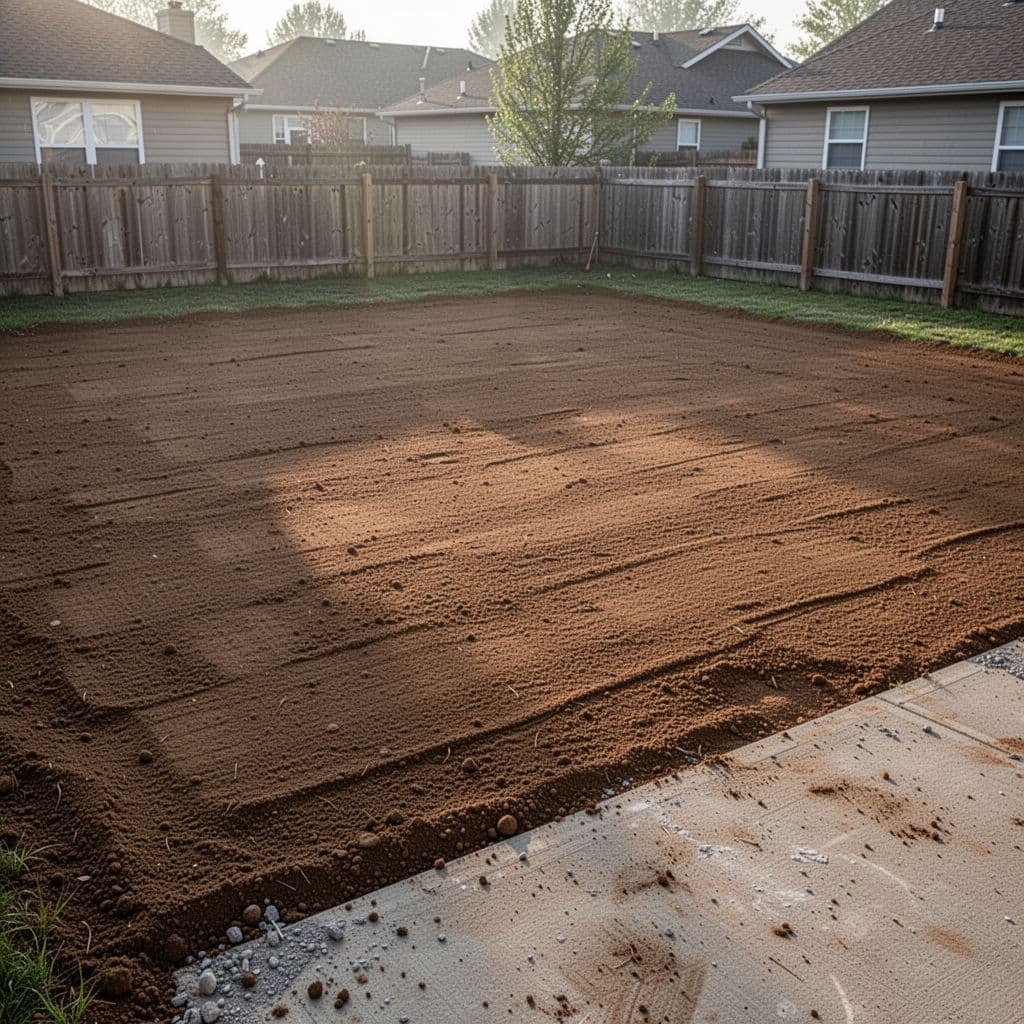
Once the concrete is gone, the site still needs to be set up for what comes next.
Example budgets for common Atlanta concrete jobs
A lot of homeowners want a quick answer, so here is a more practical view. These are the kinds of budgets that make sense for common Atlanta projects when the slab is plain and access is decent.
| Project type | Common budget range | Notes |
|---|---|---|
| Small patio or walk | $350 to $900 | Minimum charges can raise the effective rate |
| Small driveway section | $700 to $1,200 | Haul-off and load time matter a lot |
| Full average driveway | $1,400 to $2,100 | One of the most common residential jobs |
| Larger slab or apron | $2,100 to $3,500+ | Reinforcement and disposal can add cost fast |
These ranges line up with the local square-foot pricing, but they also leave room for real job conditions. That is the gap many homeowners miss when they only compare unit prices.
For property managers, the math can be a little different. Access windows, tenant traffic, and work-hour limits may add time. A slab behind a storefront or near a common area often costs more to stage than the concrete itself would suggest.
If your project includes a driveway replacement, patio rebuild, or landscape reset, ask for the removal price and the follow-up work as separate line items. That keeps the estimate easier to compare.
What a clear quote should include
A good estimate should tell you what gets broken, what gets hauled, and what gets left behind. If a quote only lists demolition, the rest of the job may still be hiding in the fine print.
| Quote item | Why it matters |
|---|---|
| Demolition labor | This is the actual break-up work |
| Hauling | Concrete is heavy, so transport time matters |
| Disposal fees | Dump costs can change the total quickly |
| Saw cutting | Needed when edges must stay clean or controlled |
| Reinforcement removal | Rebar and mesh take extra time |
| Grading or backfill | Important if the area needs to be usable again |
| Permits or access fees | May apply if work touches a sidewalk, curb, or public area |
After you get the quote, read it like a checklist. The total should make sense without guesswork. If the bid is vague, ask what is included before you compare it with another estimate.
That is especially important in Atlanta neighborhoods where access is tight. A simple driveway tear-out can turn into a longer job once the crew sees the full layout.
How to keep the project on budget
The best way to control cost is to remove surprises before the crew arrives. Photos help. Measurements help more. A clear description of the site helps most of all.
A few simple steps can keep the price steadier:
- Measure the slab length and width.
- Share photos of gates, slopes, and tight access points.
- Tell the crew if the concrete has rebar, mesh, or thick edges.
- Ask whether hauling, disposal, and grading are included.
- Clear cars, furniture, and planters before the job starts.
If the slab removal is part of a bigger cleanup, bundling the work can save time. For example, pairing demo with residential junk hauling and light demolition can keep one crew responsible for the debris and the site cleanup. That helps when a patio, shed pad, or old hardscape is coming out together.
Scheduling also matters. Wet ground slows equipment, and bad weather can push a small job into a longer one. If you have a flexible timeline, ask for a window when the crew can work with dry soil and clear access.
Conclusion
The smartest way to read Atlanta concrete removal cost in 2026 is to start with the square-foot range, then add the real site factors. For a basic 4-inch slab, the local price often starts around $3.45 to $5.16 per square foot, but access, reinforcement, hauling, and finish work decide the final number.
A good quote spells out each part of the job. That makes it easier to compare bids and avoid surprise add-ons later.
If the slab has to go and the space needs to look clean when it's done, the cheapest number usually is not the best one. A clear estimate is.