Atlanta Deck Demolition Cost Guide for 2026
If you're pricing deck demolition cost in Atlanta , the first quote you get may not tell the whole story. Two decks with the same square footage can land in very different price ranges because of access, debris hauling, and what the crew finds once the boards come up.
That gap matters in Metro Atlanta. A backyard in Brookhaven, a steep lot in Marietta, or an older deck in Decatur can all change the price fast.
The good news is that most quotes make sense once you know what drives them. A solid estimate should feel clear, not mysterious.
What Atlanta homeowners can expect to pay in 2026
For most homes, deck removal in Atlanta is priced as a project, not as a simple flat rate. The deck size, material, haul-away, and site access do most of the work behind the scenes.
Here's a realistic range for 2026:
| Deck type | Typical Atlanta price range | What usually affects the total |
|---|---|---|
| Small wood deck, up to 200 sq ft | $1,000 to $3,000 | Easy access, simple tear-out, light debris |
| Medium deck, 200 to 400 sq ft | $3,000 to $6,000 | More labor, larger debris load, more cleanup |
| Large deck, 400 to 800 sq ft | $6,000 to $12,000 | Longer demo time, heavier hauling, possible equipment |
| Multi-level or complex deck | $10,000 to $20,000+ | Stairs, landings, railings, footings, tighter work area |
| Full demo with haul-off and cleanup | $4,000 to $9,000 | Includes more labor and disposal work |
The lower end usually fits newer, easier-to-reach decks. The higher end shows up when the deck is older, built with heavier materials, or pinned into a hard-to-reach yard.
Older Atlanta homes can also hide surprises. Rotting framing, rusted fasteners, and buried concrete footings can push a quote higher once the crew opens things up.
What actually drives the price
A deck doesn't cost more just because it is bigger. It costs more when the crew needs extra labor, extra time, or extra hauling.
Size and structure
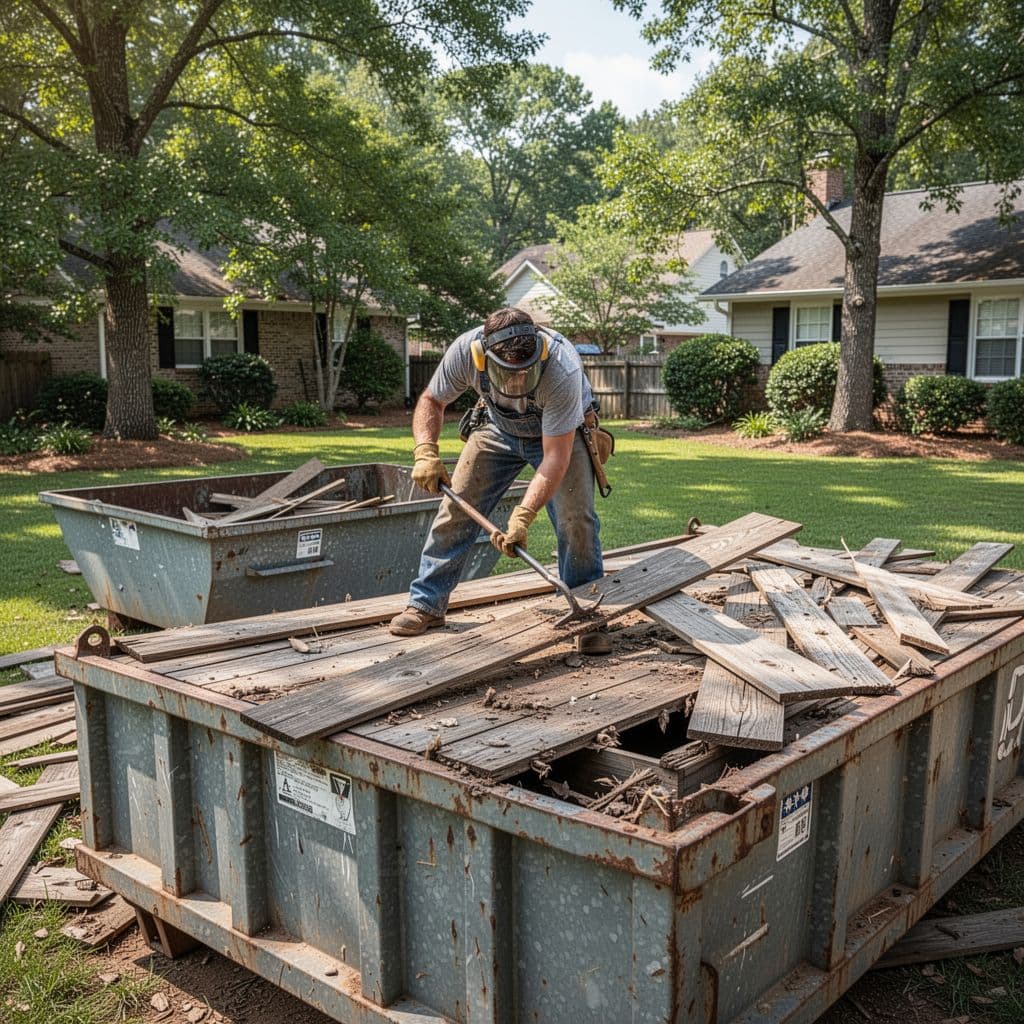
A simple platform deck is faster to remove than a deck with stairs, rails, and multiple levels. Every extra cut, lift, and load adds time.
If the deck is attached to the house, built over a slope, or framed around a sunroom, the quote usually climbs. That is because the crew has to work slower and protect nearby surfaces.
Material and what is hidden underneath
Wood is usually the easiest and cheapest material to remove. Composite boards, thicker framing, and concrete footings are tougher and heavier.
If the deck sits on old footings or has a concrete pad nearby, the crew may need heavier tools and more disposal time. That can change the final number more than the deck boards themselves.
Access and haul-away
This is where Atlanta neighborhoods can really matter. Tight side yards, narrow gates, steep backyards, and limited truck access can all raise labor costs.
If the crew has to carry debris a long way, the job takes longer. If they can park close and load fast, the price usually stays lower.
For projects that include debris pickup, residential junk hauling and light demolition in Atlanta can be a practical fit, especially when the deck removal is tied to a larger cleanup.
Permits and prep
Some jobs need more coordination than others. If the deck connects to utilities, supports a covered structure, or affects nearby hardscape, the contractor may need time for prep and planning.
Utility checks, HOA rules, and permit steps can add cost too. The work itself may still be simple, but the setup is not always simple.
A low quote can look great until haul-away and cleanup show up as extras.
Partial removal vs full deck demolition
Not every deck needs to come down all at once. Sometimes a partial tear-out saves money and still gets the job done.
| Option | Best for | Typical cost impact |
|---|---|---|
| Partial removal | Damaged boards, rails, stairs, or one section | Lower than full demolition |
| Full demolition | Old, unsafe, or outdated decks | Higher, but clears everything |
| Demo plus cleanup | Homes that need the area ready for the next project | Higher than tear-out alone |
Partial removal makes sense when the frame is solid and only certain parts are worn out. For example, a deck with bad stairs or a broken railing may not need a full teardown.
Full demolition makes more sense when the deck is old, soft, or unsafe. If the framing has rot, the posts are failing, or the layout no longer fits the yard, patching parts of it can waste money.
A simple rule helps here. If the repairs are close to the cost of removal, full demolition is usually the cleaner choice.
How to compare deck removal quotes the smart way
A fair quote should tell you what is included, what is excluded, and what can change the price later. That matters more than the headline number.
Before you sign anything, ask these questions:
- Does the quote include debris haul-away and dump fees?
- Are footings, posts, and concrete removal included?
- Will you handle cleanup after the deck is gone?
- What happens if the crew finds hidden rot or extra framing?
- Is there a charge for tight access, stairs, or long carry distances?
- Do you handle permits if the job needs them?
- Is the price fixed, or can it change after the site visit?
A site visit is worth it. Photos help, but they can miss access problems, soft ground, or bad framing under the deck.
Also ask how the crew protects the yard. Lawn ruts, broken edging, and damaged fence lines can become a bigger headache than the deck itself.
When you compare quotes, look for the same scope of work in each one. One contractor may include cleanup and disposal. Another may leave that out. That difference can make a cheaper quote end up costing more.
Atlanta-specific issues that change the final number
Atlanta has its own quirks, and they show up in demolition pricing.
In older neighborhoods, decks are often built on aging footings with uneven framing. In newer subdivisions, access can be better, but fenced lots and tight setbacks can still slow the crew down. Meanwhile, homes on sloped lots often need more careful removal and more labor.
Weather matters too. A wet yard makes hauling harder. Soft ground can slow dumpster placement and increase the chance of lawn damage.
Disposal costs also affect local pricing. Haulers have to move debris somewhere, and that cost gets built into the estimate. Wood, composite, and concrete all behave differently once they leave your yard.
A contractor who knows the Atlanta metro area will usually spot these issues fast. That helps you avoid surprise charges later.
Getting a quote that matches the real job
The best estimate starts with clear facts. Give the contractor the deck size, photos from multiple angles, and a note about access.
If you know the deck age, mention it. If the yard is hard to reach, say that early. If there are stairs, railings, built-in seating, or a roof covering, include those details too.
An accurate quote should reflect:
- The full deck size
- Material type, such as wood or composite
- Access to the yard
- Haul-away and disposal
- Cleanup after demolition
- Any concrete footings or attached pieces
It also helps to ask whether the contractor has handled older Atlanta decks before. Old framing can hide soft spots, rusted brackets, and mixed materials that change the work plan.
A good quote feels honest because it explains the job, not because it sounds low.
Conclusion
Deck removal prices in Atlanta vary for a simple reason, the job changes once the crew sees the deck, the yard, and the debris. Size matters, but access, haul-away, and hidden damage usually move the number the most.
If you're comparing quotes, focus on scope, cleanup, and disposal, not just the bottom-line price. That is the clearest way to avoid a surprise once the boards start coming off.
A solid estimate should tell you exactly what comes down, what gets hauled away, and what could change the final bill.