Atlanta Creeping Charlie Control for Tall Fescue in Shady Lawns
Creeping charlie can slip into a shaded Atlanta lawn and spread before you notice the first patch. In tall fescue, that problem gets worse fast because summer heat, tree cover, and thin turf all work against the grass you want.
That mix is common in Metro Atlanta. Cool-season fescue likes mild weather, but our summers are long and harsh. Add shade, moisture, and compacted soil, and creeping charlie gets a clear path.
The fix is not a single spray. It starts with correct identification, the right timing, and a plan to thicken the turf after treatment.
How to identify creeping charlie in a shaded Atlanta lawn
Creeping charlie is also called ground ivy, and it often hides in plain sight. It grows low and spreads by creeping stems that root where they touch soil. That habit lets it form a green mat under trees, along fence lines, and in damp corners.
Look for these signs:
- Scalloped, round leaves that grow in pairs along the stem
- Square stems that feel different from many other lawn weeds
- Purple-blue flowers in spring, usually small and short-lived
- A mint-like smell when the leaves are crushed
- A spreading edge instead of one neat clump
Wild violet and clover are often confused with it. Wild violet has heart-shaped leaves, while clover has three leaflets instead of paired leaves. Creeping charlie tends to hug the ground and run outward like a loose green net.
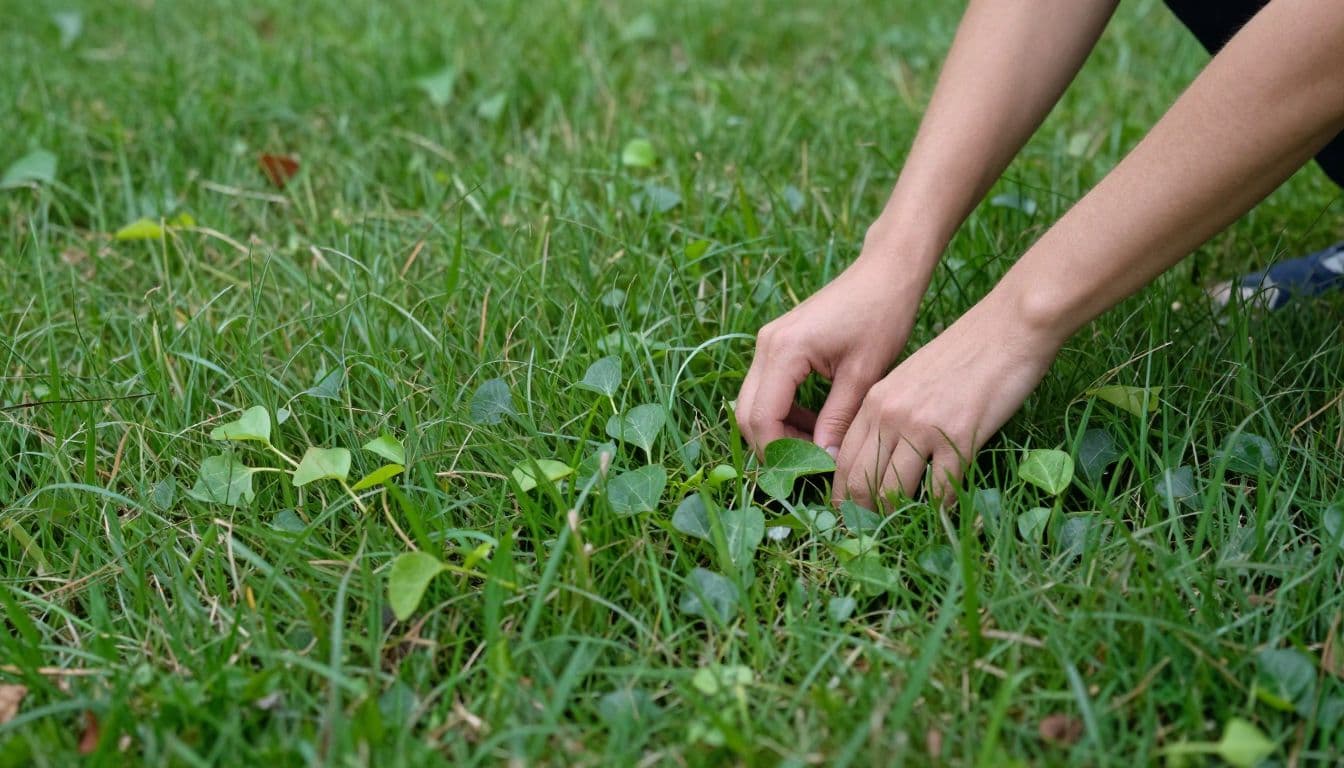
If the patch sits in shade and stays moist, suspect creeping charlie first. Early identification matters because small patches are far easier to control than a mat that has already threaded through the lawn.
Why shaded tall fescue gives it an opening
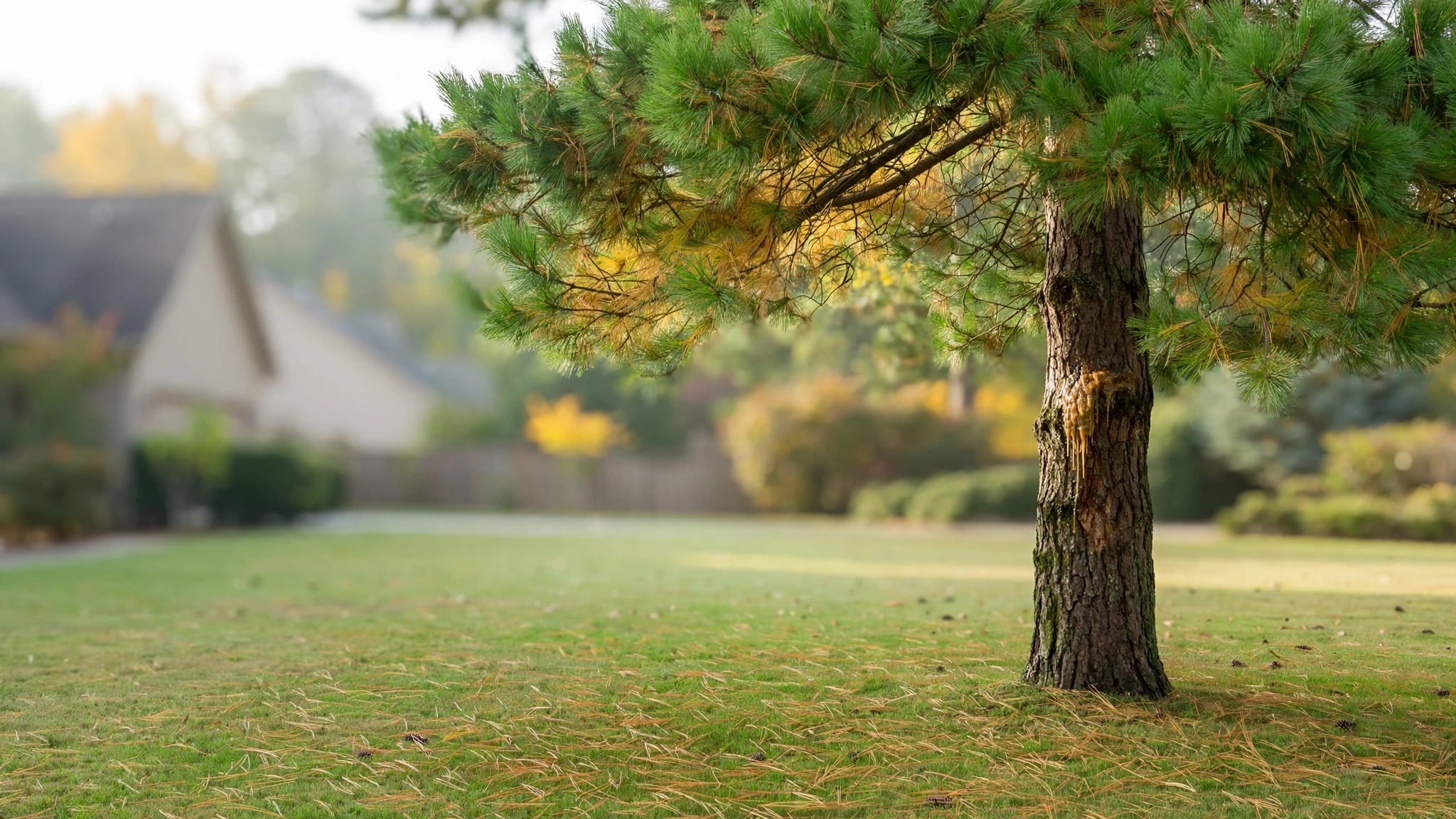
Tall fescue can handle shade better than many warm-season grasses, but it still has limits. In Atlanta, summer heat pushes fescue hard, especially in yards with afternoon shade, poor airflow, or root competition from mature trees. When the grass thins, weeds move in.
Creeping charlie loves those weak spots. It spreads across the soil surface, roots at the nodes, and keeps filling open space. Once it settles in, every bare patch becomes a landing pad for more growth.
The problem is often bigger in areas that get:
- Heavy shade from large trees or buildings
- Thin soil over roots or construction fill
- Frequent watering that keeps the soil damp
- Compaction from foot traffic or mowing on wet ground
- Low mowing that weakens fescue blades
Atlanta lawns also deal with a long transition between seasons. Fescue grows best in cool weather, then struggles as summer arrives. That means the lawn may look fine in spring, then open up by July or August. Creeping charlie uses that gap.
A thin, shaded lawn is the best invitation for creeping charlie.
If the turf is already weak, weed control alone will not hold for long. The grass has to reclaim space after the weed is knocked back.
Best treatment windows for creeping charlie control in Atlanta
Timing matters as much as the treatment itself. Creeping charlie responds best when it is actively growing and the turf is not under heat stress. In Atlanta, that usually points to fall first, then early spring.
| Window | Best use | Atlanta notes |
|---|---|---|
| Mid-fall | Strongest option for established patches | Tall fescue is recovering, temperatures are mild, and creeping charlie is still active |
| Early spring | Good for smaller outbreaks | Treat before summer heat builds and before the lawn starts thinning |
| Hot summer stretches | Skip broad spraying when possible | Fescue is stressed, and herbicide injury risk rises |
Fall is usually the sweet spot. The grass has a better chance to recover, and the weed is still moving nutrients through its leaves. Spring can work too, especially on smaller patches, but the window narrows once Atlanta heat settles in.
For established lawns, use a broadleaf herbicide that is labeled for tall fescue and creeping charlie. Many labels call for actives such as triclopyr or a mixed broadleaf formula. Read the label every time, because turf safety and timing can vary by product. If the lawn was recently seeded, check the waiting period before spraying.
Mild weather beats a hot day every time. A calm, dry afternoon is usually safer than spraying just before a heat wave or right after heavy rain. If the patch is large, a second treatment may be needed later, but only if the label allows it.
Protecting tall fescue during and after treatment
Creeping charlie control works best when the fescue stays as healthy as possible. That starts before the spray goes down. Mow a few days ahead of time, but don't scalp the lawn. You want enough leaf area on the weed for the herbicide to stick and move.
After treatment, keep foot traffic light for a few days. Follow the label for watering and re-entry. Some products work best when left dry for a short period, while others have different instructions.
A few habits help the grass recover faster:
- Mow high , usually around 3.5 to 4 inches for tall fescue
- Water deeply and less often , instead of frequent shallow watering
- Sharpen mower blades so the grass does not fray and brown
- Avoid heavy nitrogen in summer , when fescue is already stressed
- Keep leaves and debris off the lawn , especially in shady beds and under trees
If you want the lawn to stay cleaner through the season, pair weed control with routine residential lawn care and mowing services. Regular mowing keeps the fescue more even, and consistent cleanup helps the turf breathe and dry out faster after rain.
Spot treatment works well on small areas. For larger patches, a blanket approach may seem faster, but it can also stress the lawn more than needed. A careful spot spray often gives better results in shady turf.
Thicken the lawn so creeping charlie has less room to return
Knocking back the weed is only half the job. The real goal is to make the lawn dense enough that creeping charlie has nowhere to settle.
Fall is the best time to rebuild tall fescue in Atlanta. Seed germinates better in cooler weather, and the lawn has time to fill in before next summer. If you wait until spring, the new grass has less time to establish before heat arrives.
Focus on the weak areas first. Bare spots under trees, along sidewalks, and near downspouts usually need the most attention. In many yards, these spots also have compacted soil. Core aeration can help water and seed reach the root zone.
A stronger lawn program usually includes:
- Overseeding thin areas in early fall
- Testing soil so fertilizer matches the site
- Improving drainage where water lingers
- Trimming low tree limbs to increase light and airflow
- Pulling isolated patches after rain, when roots loosen more easily
Shade is the hardest part to fix. If a section gets less than four hours of direct sun, tall fescue may stay thin no matter how careful you are. In those areas, lighter pruning or a different ground cover may be a better long-term answer than repeated weed spraying.
The main idea is simple. Give the fescue more light, better soil, and a head start in fall, and creeping charlie loses the space it needs.
Conclusion
Creeping charlie control in Atlanta works best when you treat the weed and protect the turf at the same time. Shade, summer heat, and thin tall fescue create the perfect opening, so timing and lawn care both matter.
If you identify the weed early, spray during mild weather, and thicken the grass in fall, the lawn has a much better chance of staying ahead of it. A dense tall fescue lawn leaves far less room for creeping charlie to spread.