Atlanta Retaining Wall Repair Guide For Bowing And Leaning Walls
A retaining wall doesn't have to fall down to be a problem. In Metro Atlanta, a wall that's bowing or leaning is often telling you one thing: water is building pressure where it shouldn't .
This guide helps you figure out what's happening, how to measure it, and what to do next. You'll also see clear red flags that mean "stop and call a pro" before a small shift becomes a full failure.
Why Atlanta retaining walls bow and lean (hint: it's usually water)
A retaining wall works like a firm handshake with the soil. When that handshake turns into a shove, the wall starts to move. In Atlanta, the shove usually comes from wet clay, poor drainage, or both.
Hydrostatic pressure and clay soils create force fast
When rainwater gets trapped behind a wall, it adds weight and pressure. That pressure is called hydrostatic pressure, and it pushes steadily on the back of the wall. If there's no easy exit path (like gravel backfill and working drains), the wall becomes the exit.
Atlanta's clay-heavy soils make this worse. Clay holds water, then swells. Later it dries and shrinks. That cycle can nudge a wall forward over time, especially after long wet stretches or a series of storms.
A few common water sources show up again and again:
- Downspouts dumping near the wall
- Soggy yards that slope toward the wall
- Neighbor runoff
- Clogged or missing weep holes
- No drain pipe behind the wall
Build and site issues that show up years later
Even a good-looking wall can have hidden weak points. Some problems don't show until the soil loads up with water.
For example, a wall may lean because it lacks:
- Proper base depth and compacted footing material
- Gravel backfill and filter fabric
- Reinforcement (like geogrid for segmental block walls)
Extra weight above the wall also matters. Parking, sheds, stacked firewood, or even a heavy patio can add "surcharge" load. Roots can shift soil, too, but water still tends to be the main driver.
How to diagnose a leaning wall (and document movement)
Guessing leads to the wrong fix. A simple measurement routine gives you real answers, and it helps a contractor or engineer act faster.
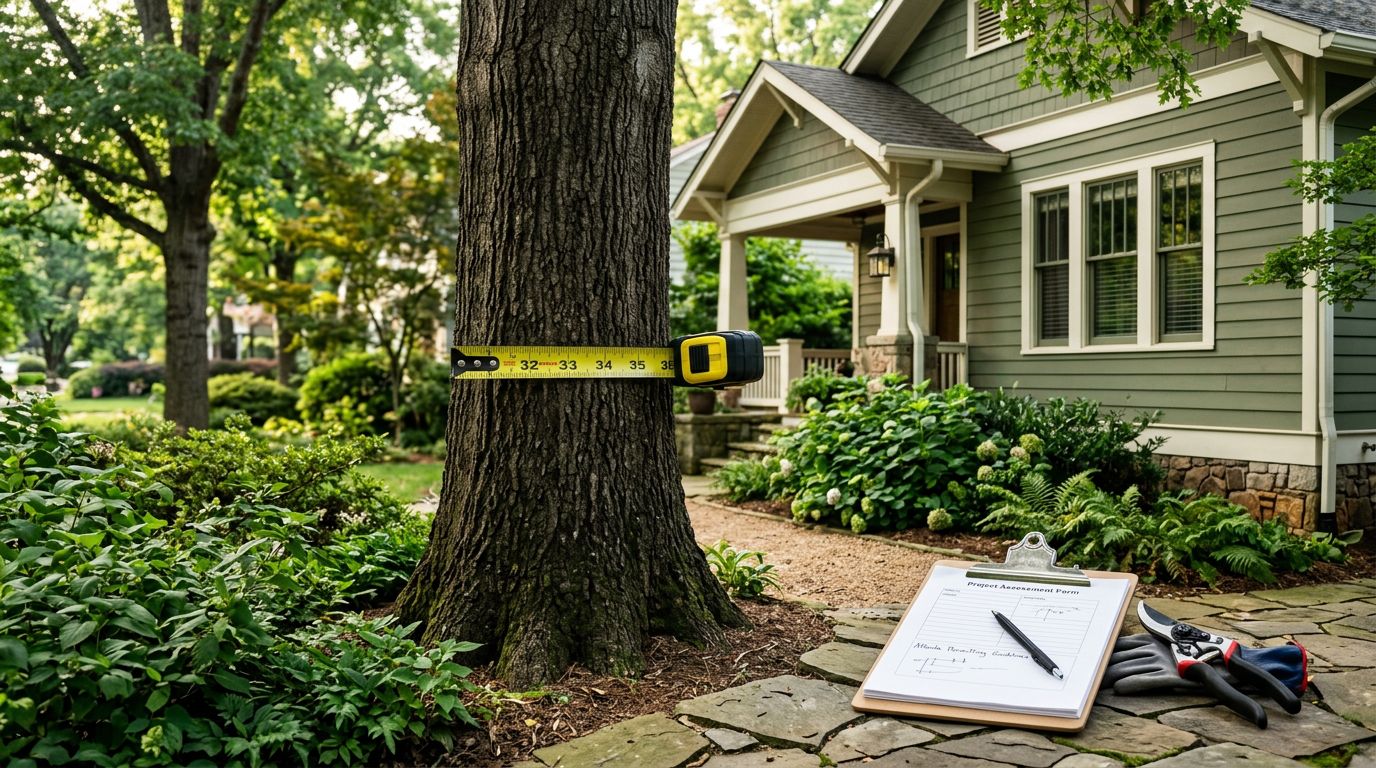
Measure lean with a level or a string line
Start with two tools: a 4-foot level (or a straight 2x4 plus level) and a tape measure.
- Pick a spot near the worst bulge or lean.
- Place the level vertically against the wall face.
- Keep the level plumb, then measure the gap between the wall and the level at the widest point.
A quick rule many homeowners use: more than about 1 to 2 inches of lean over 4 feet of height is a serious warning sign, especially if the wall is still moving.
For longer walls, a string line helps. Tie a string tight from one end of the wall to the other at a consistent height. Measure how far the wall pushes past the string at the bulge. Write the measurement down.
Track changes, not just today's snapshot
Movement history matters as much as the current lean. Take photos from the same angle every time. Also mark a few reference points.
Good ways to document:
- Date-stamped photos after heavy rains
- Pencil marks on the wall near a crack, with dates
- A small reference screw or paint mark, measured to a fixed point
Check weekly for a month, then monthly. If you see steady change, treat it as active movement, not an old defect.
Red flags that suggest imminent failure
Use this list as your stoplight. One item might be manageable, but several together often mean urgent retaining wall repair.
- Rapid movement over days or weeks
- Large stair-step cracks in block, brick, or mortar joints
- Soil sloughing (dirt spilling out from behind or under the wall)
- Saturated backfill that stays wet long after rain
- A bulge that's growing, not just a uniform lean
- The top of the wall spreading apart, or caps separating
If the wall has shifted quickly, don't dig behind it "to see what's going on." Removing soil can trigger a collapse.
Drainage-first retaining wall repair (plus a clear decision tree)
Most successful retaining wall repair starts by controlling water. Still, "drainage-first" doesn't mean "dig it all out." Some drainage improvements are safe for homeowners, while others need equipment and a plan.
Low-risk fixes many homeowners can do
Start above and around the wall, not behind it.
Improve surface drainage:
- Extend downspouts so they discharge far from the wall
- Re-grade shallow areas so water runs away from the wall
- Keep gutters clean so they don't overflow near the slope
- Clear debris from visible weep holes (if the wall has them)
Also look for plumbing and irrigation leaks. A small leak can keep soil behind the wall wet for months.
Any time you plan to dig, even for a short extension line, protect yourself first. Follow the steps in Georgia 811's overview of the 811 process so utilities get marked before you put a shovel in the ground.
High-risk DIY: digging behind a failing wall
Excavating behind a leaning wall is risky because the soil is part of what's holding everything in place. If the wall is already unstable, relieving pressure the wrong way can make it fall.
Call for utility marking every time, and don't assume you "know where the lines are." Georgia 811 also explains timing and marking basics in this Georgia 811 how-it-works PDF.
Decision tree: monitor, DIY drainage, contractor repair, or engineer?
This table helps you choose the next step based on what you see.
| What you're seeing | Best next step | Why it matters |
|---|---|---|
| Minor cosmetic cracks, no bulge, no change over 30 to 60 days | Monitor and document | Some walls settle, your notes confirm it's stable |
| Wet soil near wall, downspouts nearby, little to no lean | DIY drainage improvements | Fixing water sources can stop new pressure |
| Leaning near or above 1 to 2 inches over 4 feet, bulging, or recurring wet backfill | Contractor evaluation and repair plan | The wall may need drainage rebuild, reinforcement, or partial rebuild |
| Rapid movement, major stair-step cracks, soil falling out, wall taller or supporting major loads | Structural engineer, then contractor | Safety first, you need a design that matches site forces |
Depending on location and wall size, permits may apply. For Atlanta addresses, start with the City's guidance on how to obtain a building permit. Nearby jurisdictions can differ, so always confirm local rules.
Conclusion
A bowing wall is like a bent fence post, it rarely straightens itself. When you focus on drainage and measure movement, the right fix becomes much clearer. Start with safe water control, document what changes, and don't excavate behind a failing wall. If the wall keeps moving or shows red flags, bring in a pro before the repair turns into a rebuild. For any digging, begin at Georgia 811.