Atlanta Wild Violet Control for Tall Fescue and Shady Lawns
Wild violet can take over a shady Atlanta lawn before the rest of the yard looks troubled. If your tall fescue already fights tree cover, summer heat, and damp soil, this weed gets a head start.
One spray rarely finishes the job. Atlanta wild violet control works best when you treat the weed and rebuild the turf at the same time.
Why wild violet keeps showing up in shady fescue
Wild violet likes the same places where tall fescue struggles. It settles into cool, moist soil, creeps through leaf litter, and spreads where tree roots have taken most of the water and nutrients.
That is why it shows up so often in Metro Atlanta yards with mature oaks, maples, and evergreens. Shade stress reduces turf competitiveness, so the grass thins out while the weed keeps moving.
Tall fescue can handle more shade than Bermuda grass, but it still needs enough light to stay dense. When the canopy closes in, the lawn loses leaf surface, the soil stays damp longer, and bare pockets appear.
Mowing plays a big part too. If your mower is shaving fescue too low, the grass loses even more strength. The Atlanta lawn mowing frequency guide is a useful reference for keeping cool-season turf tall enough to fight back.
Atlanta's mild winters matter as well. Wild violet does not disappear when the weather cools, and it often keeps pushing while the lawn is still thin from summer stress. That is why a single spring fix rarely holds.
How to spot it before it spreads
Wild violet stays low, so it can hide under fescue until spring flowers pop up. The leaves are rounded to heart-shaped, often with small scallops on the edges, and they grow in a tight mat instead of upright clumps.
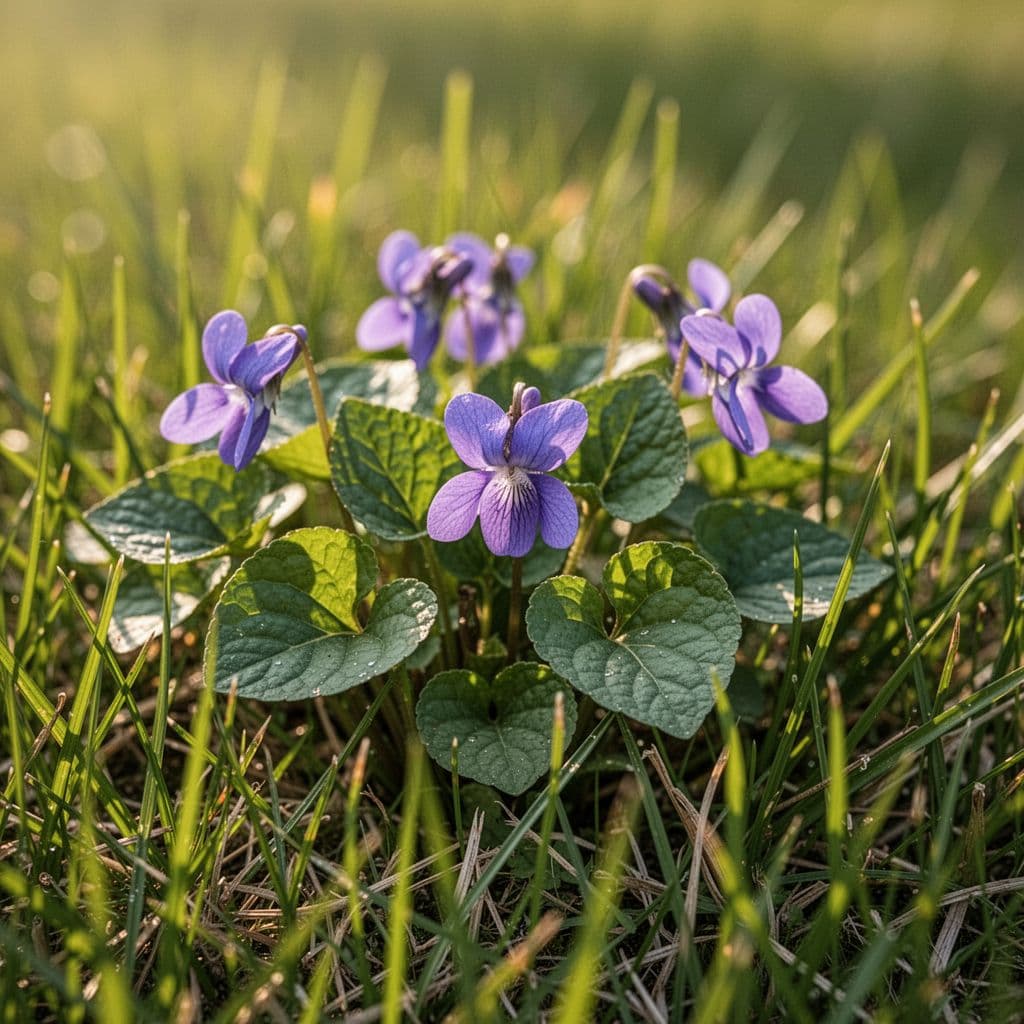
In shady Atlanta lawns, the plant often spreads beyond the visible edge. What looks like a small patch above ground can hide a wider pocket under the turf.
Small purple flowers are the giveaway in spring. After that, the weed can blend into the lawn and keep spreading near tree trunks, fence lines, patios, irrigation overspray, and any spot that stays damp after rain.
If you can see violet in spring, the patch under it is often larger than it looks.
That is why early scouting matters. The sooner you notice the shape of the leaves and the low, woven growth, the easier it is to target the right spots without treating the whole yard.
A safe control plan for tall fescue
The label should guide the first step. Use a post-emergent broadleaf herbicide that lists wild violet and says it is safe for tall fescue. Avoid blanket spraying unless the whole lawn truly needs it.
Timing matters. In Atlanta, the best windows are usually early spring and fall, when the weed is active and the fescue is not fighting peak heat. Summer sprays can work poorly because stressed turf and stressed weeds both slow down.
| Atlanta timing | What wild violet is doing | Best move |
|---|---|---|
| Early spring | Active growth, flowers may appear | Spot-treat the visible patches |
| Late spring and summer | Shade stays damp, turf is under heat stress | Focus on recovery, not heavy spraying |
| Fall | Cooler weather helps fescue recover | Re-treat if the weed is still present |
The takeaway is simple. Persistence matters more than a one-time hit. Wild violet often needs follow-up treatments because the first spray may damage the leaves without finishing the root system.
That is why patience pays off. A good plan treats the weed, waits for the label window, then checks the same spots again.
Step-by-step treatment and recovery plan
A solid plan works best when the lawn and the weed both get attention. Start with the worst areas first, then build the grass back around them.
- Mark the thin, shady spots.
Walk the yard after rain and note where the lawn stays wet or sparse. Those are the places where wild violet usually gets the strongest foothold. - Adjust mowing and watering before you spray.
Keep tall fescue at a healthy height so it can shade the soil and recover faster. Keep watering deep and spaced out, not daily and shallow. The seasonal lawn watering schedule for Atlanta is helpful when you want to match irrigation to Atlanta weather without soaking shady soil. - Spot-treat the violet patches.
Spray only the areas that need it, and use a product labeled for tall fescue. That keeps the rest of the lawn from taking extra stress. - Repeat after the label says to.
Do not assume the weed is gone after the first round. If the violet still shows up, make a second pass in the same problem spots. - Repair the turf after the weed backs off.
Overseed thin areas in fall, clear out leaves, and keep traffic off the weakest spots. The goal is to fill the open space before violet does. A thicker stand of fescue is the best long-term defense.
This process takes longer than most homeowners want. Still, it works better than chasing a single miracle spray.
Keeping shady spots thick enough to fight back
Wild violet comes back most easily where the lawn stays thin. That means the real fix is not only weed control, it is better turf cover in the places that struggle most.
Start with the shade itself. Trim low branches where it makes sense, clear heavy leaf buildup, and keep air moving through the yard. Even a little more light can help tall fescue hold its ground.
Soil compaction matters too. Foot traffic, tree roots, and tight clay soil all make it harder for fescue to spread. If one side of the yard keeps thinning out, treat it as a special problem area instead of assuming it will improve on its own.
Watering needs discipline in shade. Wet soil for too long can keep violet happy, and shallow watering keeps fescue roots near the surface. Deep, spaced-out watering is safer for the grass and less friendly to the weed.
Fertilizer should also match the lawn, not the calendar. Tall fescue does best with steady, moderate feeding during its growth window, then a lighter touch as the season changes. Heavy nitrogen in the wrong weather can create soft growth that breaks down fast in heat or shade.
If your lawn keeps losing the same spots every year, that is a sign the site needs more than weed spray. It needs thicker turf, better light, and a routine that fits Atlanta's mix of warm summers and mild winters. The Atlanta lawn mowing frequency guide can help you keep the canopy high enough for fescue to compete.
Conclusion
Wild violet is stubborn in shady Atlanta lawns, especially where tall fescue already feels the stress. A single treatment may knock it back, but lasting control comes from repeat spot treatment and a stronger lawn behind it.
Keep the grass taller, water with care, and use the cool-season recovery window to thicken thin areas. When the turf fills in, wild violet has less room to return.