How to Repair Spalling Concrete on Atlanta Driveways
Flaking and pitted concrete can make a driveway look worn, but shallow surface damage is often repairable. A successful spalling concrete repair starts with checking whether the damage is limited to the surface or points to a deeper problem.
Atlanta's humid weather, heavy rain, and occasional freeze-thaw conditions affect when you should patch and how you protect fresh repairs. A surface patch can improve shallow damage, but it won't correct a weak base, drainage problem, or structural deterioration.
Key Takeaways
- Shallow spalling affects the top surface. Widespread damage, moving sections, deep cracks, or exposed reinforcement deserve a professional assessment.
- Remove loose concrete and clean the area before applying a patch. Repair material bonds best to a sound, properly prepared surface.
- Choose a repair product made for the area and depth you need to fix, then follow its directions for mixing, application, and curing.
- Plan around rain and freezing conditions. Protect a new patch during its initial cure.
- A patch won't fix standing water, settlement, or structural problems beneath the slab.
What spalling looks like on a driveway
Spalling is the flaking, chipping, or pitting of concrete at the surface. It can appear as small rough patches, shallow flakes, or areas where the top layer has broken away. The damage may be limited to one spot or scattered across the driveway.
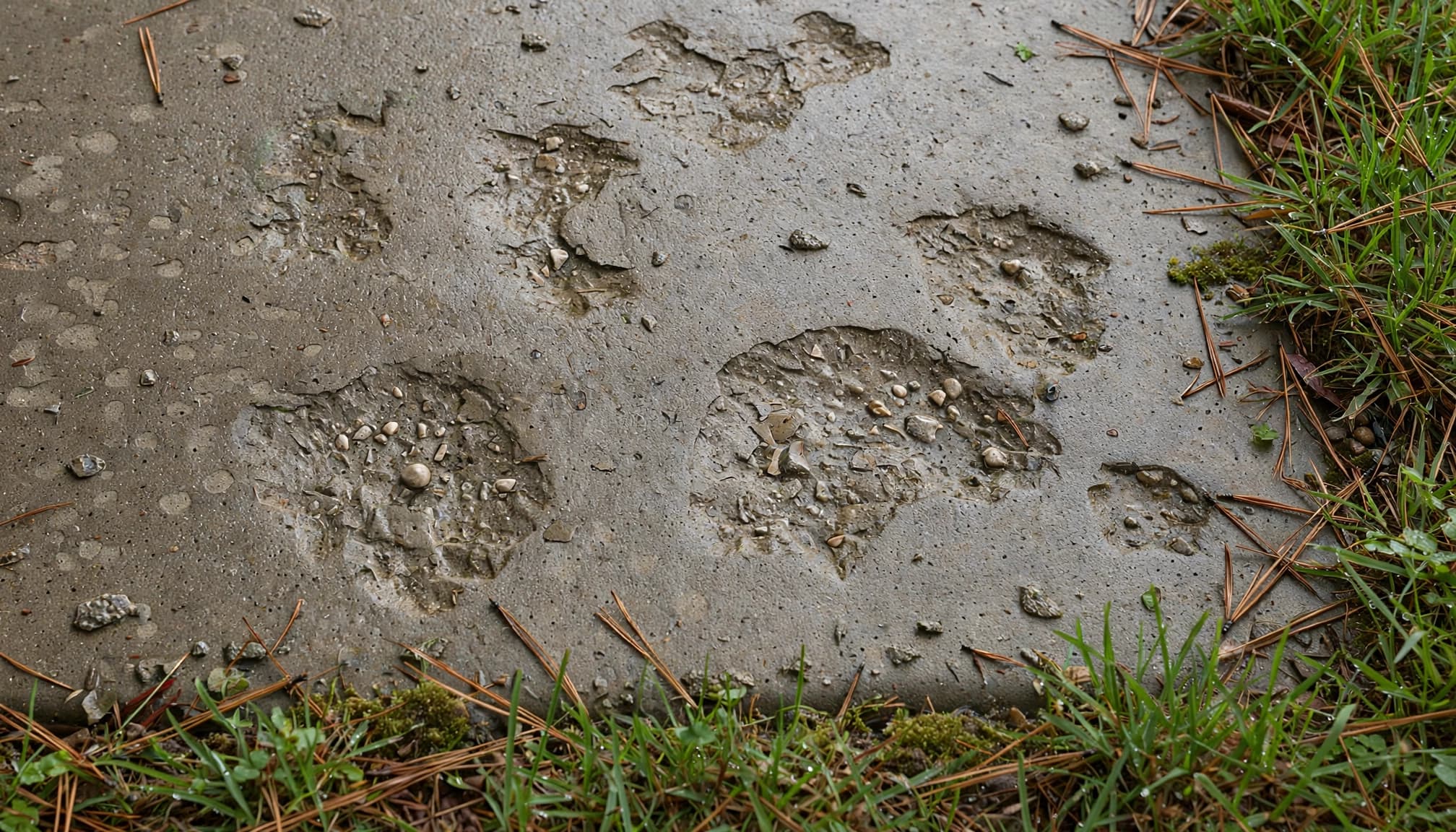
A little surface roughness does not automatically mean the whole slab needs replacement. However, look beyond appearance. If the concrete around the damaged area is firm and the driveway remains level, a localized repair may be reasonable. If pieces move underfoot or the slab has settled, a surface patch may only cover the visible symptom.
Keep track of whether the damage is spreading. A few shallow chips that remain unchanged call for a different response than larger areas that continue to break apart.
Assess the damage before choosing a repair
Signs that may suit a surface patch
A patch is most appropriate when the damaged concrete is shallow, contained, and surrounded by solid material. The nearby slab should feel stable, without noticeable rocking, sinking, or broad cracking. Check the driveway after rain, too. Water that regularly collects around the damaged area may affect the repair unless the drainage issue is addressed.
Use a stiff brush to test the edges. Concrete that keeps crumbling or sounds hollow when tapped may not provide a reliable surface for a patch. Remove loose material during preparation, but don't treat a large or deep failure as a simple cosmetic job.
Signs to take seriously
Contact a concrete professional if damage covers a large portion of the slab, continues into its depth, exposes reinforcement, or appears alongside major cracks and uneven sections. Movement near the garage, sidewalk, or street also deserves a broader assessment.
Those signs can point to problems a surface repair won't resolve. The right fix may involve more than patch material, especially if the slab has settled or water is affecting the area beneath it. Avoid applying a thin coating over unstable concrete; it can separate along with the material underneath.
Prepare the damaged area carefully
Remove weak concrete and define the repair
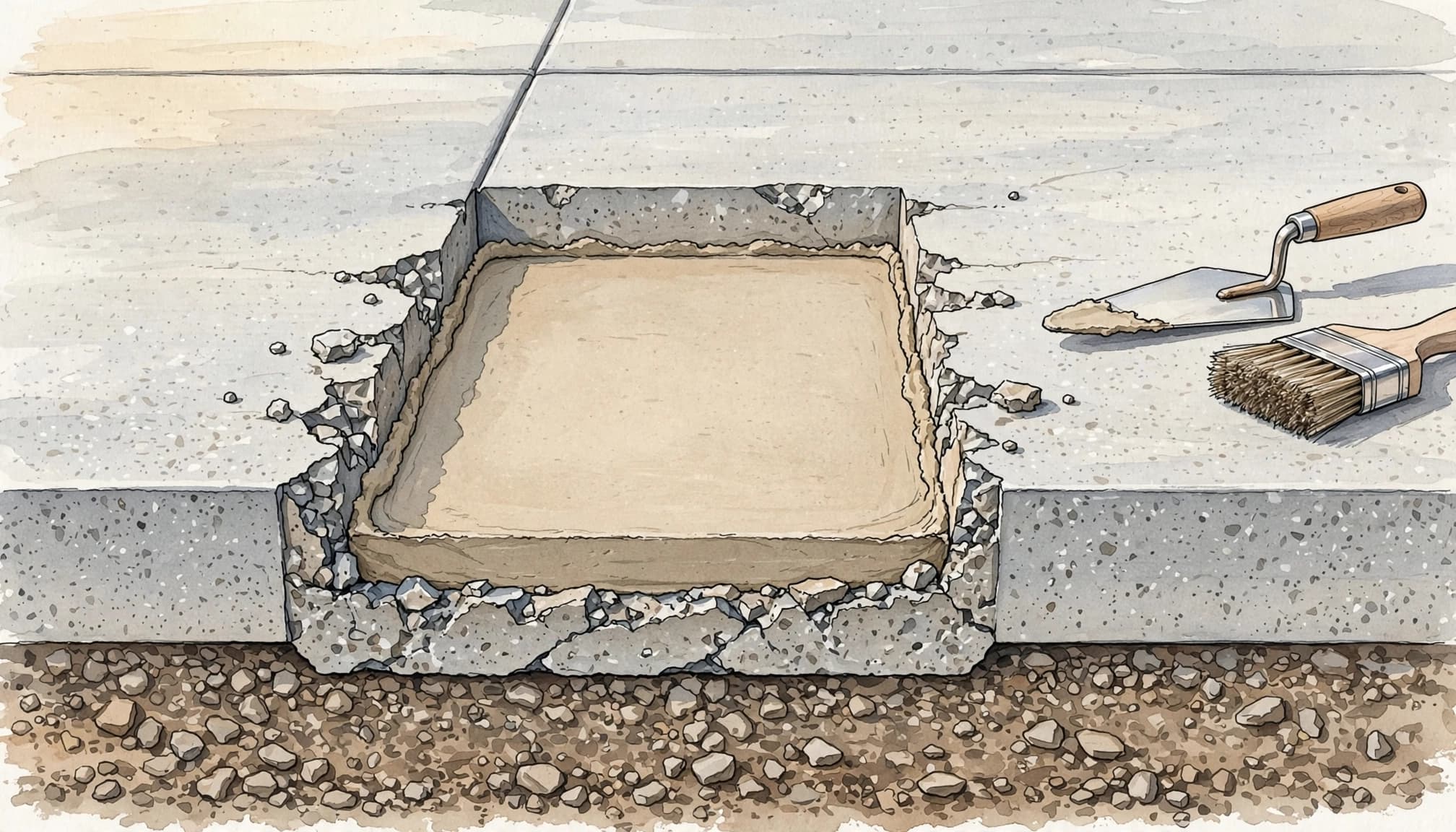
Start with a dry day and clear the driveway of cars, leaves, dirt, and other debris. Use a cold chisel and hammer or an appropriate concrete tool to remove loose, flaking material. Wear safety glasses, gloves, and a dust mask. Keep other people away from flying chips and dust.
Continue until the edges and base feel solid. Avoid leaving loose fragments or a thin, fragile lip around the repair. A patch needs a stable border, so don't stop at the first layer that looks clean if surrounding concrete still crumbles.
Clean the surface and manage water
Brush away dust and small pieces, then clean the area as directed by the repair product. Oil, mud, grass, and loose grit can interfere with bonding. If you wash the spot, give it the preparation the product requires before applying the patch. Don't leave standing water or puddles in the repair area.
Mask the nearby concrete if you want a neater edge. Before mixing anything, read the package directions for suitable repair depth and surface condition. Products differ, so don't assume one mix or application method works for every patch.
Apply the patch and allow it to cure
Place and finish the repair material
Choose a concrete repair material intended for driveway use and suitable for the depth of the damage. Follow the manufacturer's directions for mixing, any bonding treatment, and application. Spread the material across the prepared surface, pressing it firmly into the repair area so it contacts the base and edges.
Finish the patch to match the surrounding driveway as closely as practical. A broom finish can provide texture on a surface that already has a similar finish. Avoid building a raised edge that could catch a tire or hold water. If the repair area is deep, wide, or irregular, or the product's instructions don't match the damage, get professional guidance rather than improvising.
Protect the patch while it cures
Keep vehicles and foot traffic off the repair for the time specified on the product label. Concrete can feel hard before it has reached the condition needed for use, so don't judge readiness by touch alone. Follow directions for any covering, damp curing, or curing compound.
Atlanta's humidity and sudden rain make timing important. A shower can disturb fresh material, while hot sun can dry an exposed patch too quickly. Occasional freezes add another reason to protect a new repair during its initial cure. Choose a weather window that suits the product instructions, and keep rainwater from pooling on the patch.
Prevent repeat damage in Atlanta weather
Watch drainage and nearby soil
After heavy rain, look for standing water, runoff crossing the driveway, or soil washing away along its edges. Those conditions can leave the slab and repaired spots exposed to repeated wetting. Keep gutters and downspouts clear, and direct roof runoff away from the driveway where practical.
Atlanta properties may have sloped ground or dense clay soil that holds water. If water consistently flows toward the slab or collects beside it, a patch alone won't change that pattern. Our Atlanta grading and paving services include slope correction and drainage improvement, which can help address site conditions around outdoor surfaces.
Maintain the surface without masking problems
Sweep off leaves, pine straw, and mud, especially when they remain damp. Clean spills before they sit on the concrete. Avoid harsh deicing products unless they're approved for the driveway and any sealer used. Sealer may help protect a sound surface when selected for the concrete and local conditions, but it won't repair cracks, standing water, or a failing base.
Pay attention to changes over time. If the patch separates, the surrounding concrete starts flaking, or the same spot stays wet after storms, find the underlying issue before adding more repair material.
Know when a patch isn't enough
A surface patch is meant for localized deterioration on otherwise stable concrete. It won't lift a settled slab, reinforce a weakened section, or correct poor drainage. If the driveway has repeated patches, widespread spalling, large cracks, or uneven sections, ask a concrete professional to assess the full slab and the ground beneath it.
The same applies when damage returns soon after a repair. Repeated failure can mean the patch didn't bond, the damaged area extended farther than expected, or another condition is affecting the concrete. Avoid covering the entire driveway with a thin surface layer unless the slab is sound and the product is designed for that use.
When the problem involves slope or runoff, deal with the site conditions as part of the plan. Replacing or resurfacing concrete without addressing water movement or unstable ground can leave the original problem in place.
Repair costs versus replacement costs
Repair costs depend on the size and depth of the damaged area, access, preparation, and whether the surrounding slab is stable. There isn't a single reliable price for every spalling repair, and installation prices shouldn't be used as a patch estimate.
For comparison, RW Lawn Co's 2026 concrete driveway cost guide for Atlanta gives a typical new driveway installation range of $8 to $14 per square foot , with many standard projects between $3,000 and $8,000 . Those figures describe installation, not surface repairs. Demolition, grading, drainage, difficult access, and other site needs can change a replacement project's total.
If damage is limited and the slab is stable, a localized repair may be sensible. When defects are widespread or tied to settlement, compare the scope of a broader repair with replacement rather than judging by the visible patch alone.
Frequently asked questions
Can I patch spalling concrete myself?
You can often patch a small, shallow area if the surrounding concrete is firm and you can prepare it properly. Use a product made for the repair, follow its directions, and don't patch over loose material. If the slab is moving, deeply damaged, or widely spalled, get a professional assessment.
How do I know if spalling is only cosmetic?
Cosmetic damage is generally limited to surface flaking or pitting on a stable, level slab. Deep deterioration, broad cracks, exposed reinforcement, or sections that move suggest the problem may go beyond the surface. A patch won't resolve those underlying concerns.
Should I patch concrete before or after rain?
Wait for conditions that meet the repair product's instructions. The surface must be prepared as directed, and fresh patch material needs protection from rain. In Atlanta, check the forecast before starting so a storm doesn't interrupt preparation or the initial cure.
Will sealing stop spalling from coming back?
Sealer may protect sound concrete when the product suits the surface and conditions, but it can't fix a weak base, unstable slab, or drainage issue. Follow the sealer maker's directions and address recurring water or movement problems separately.
Repair shallow damage, but respect deeper problems
Shallow spalling can often be repaired when the concrete around it remains solid. Careful removal, thorough cleaning, correct patch application, and proper curing give a repair a better chance of holding.
Atlanta's rain and occasional freezes make timing and drainage part of the job. If the driveway is uneven, deeply damaged, or failing across a broad area, a surface patch won't solve the real problem.