Atlanta Tree Girdling Roots: Signs and Safe Corrective Options
A tree can look healthy above ground while a root slowly presses against its trunk. In Atlanta yards, girdling roots may develop alongside compacted soil, planting problems, or years of landscape changes, but visible roots alone don't confirm the cause.
The safest next step is an on-site assessment by a qualified arborist. Cutting a major root can destabilize or seriously injure a tree, so avoid digging or pruning roots yourself. The right response depends on the tree, the root's location, and the conditions around it.
Key Takeaways
- Girdling roots grow around or press against the trunk or another major root, potentially restricting growth and contributing to decline.
- A visible root, thinning canopy, or raised lawn doesn't prove girdling. Several other problems can cause similar signs.
- Have a qualified arborist assess the tree before any root cutting or excavation.
- In many cases, the safest landscape repair changes the area around the tree instead of removing roots.
- Atlanta's clay soil, heavy rain, dry spells, shade, and compacted ground can all affect root health.
What Girdling Roots Are
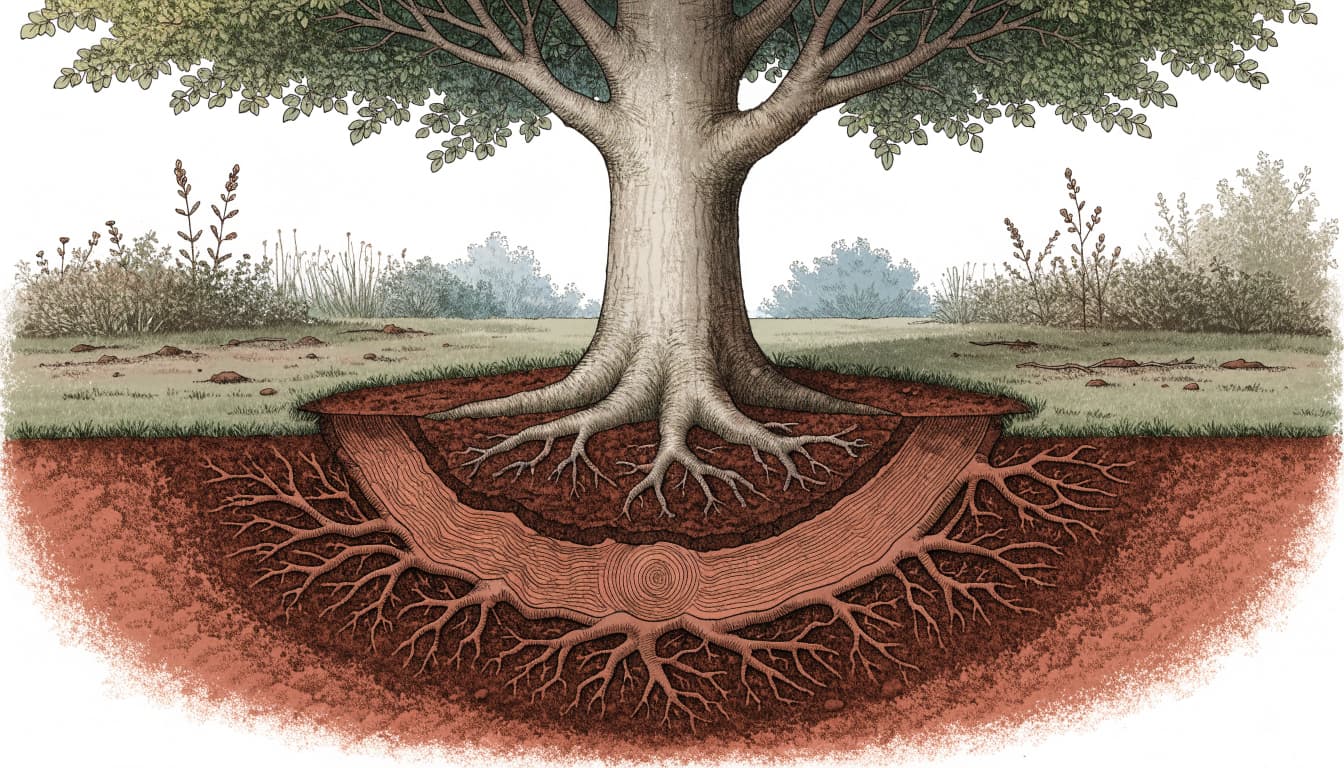
Tree roots normally spread through the soil to support the tree and take up water and nutrients. A girdling root grows in a circular or crossing path and presses against the trunk or another structural root as the tree expands.
Pressure against the trunk can interfere with the movement of water and nutrients. The effect may develop slowly, so a tree can show no obvious distress for years. The root's position, size, and contact with the trunk matter; a root that curves near the surface isn't automatically girdling.
Why the root flare matters
The root flare is the widened area where the trunk transitions into the main roots. It should remain visible at the soil surface. Soil or mulch piled against the trunk can hide the flare, hold moisture against the bark, and make it harder to notice changes.
A tree planted too deeply or in a tight planting space may develop roots that circle near the trunk. Conditions vary by species and site, though, so the flare is one clue for an inspection, not a diagnosis by itself.
Girdling roots and surface roots aren't the same thing
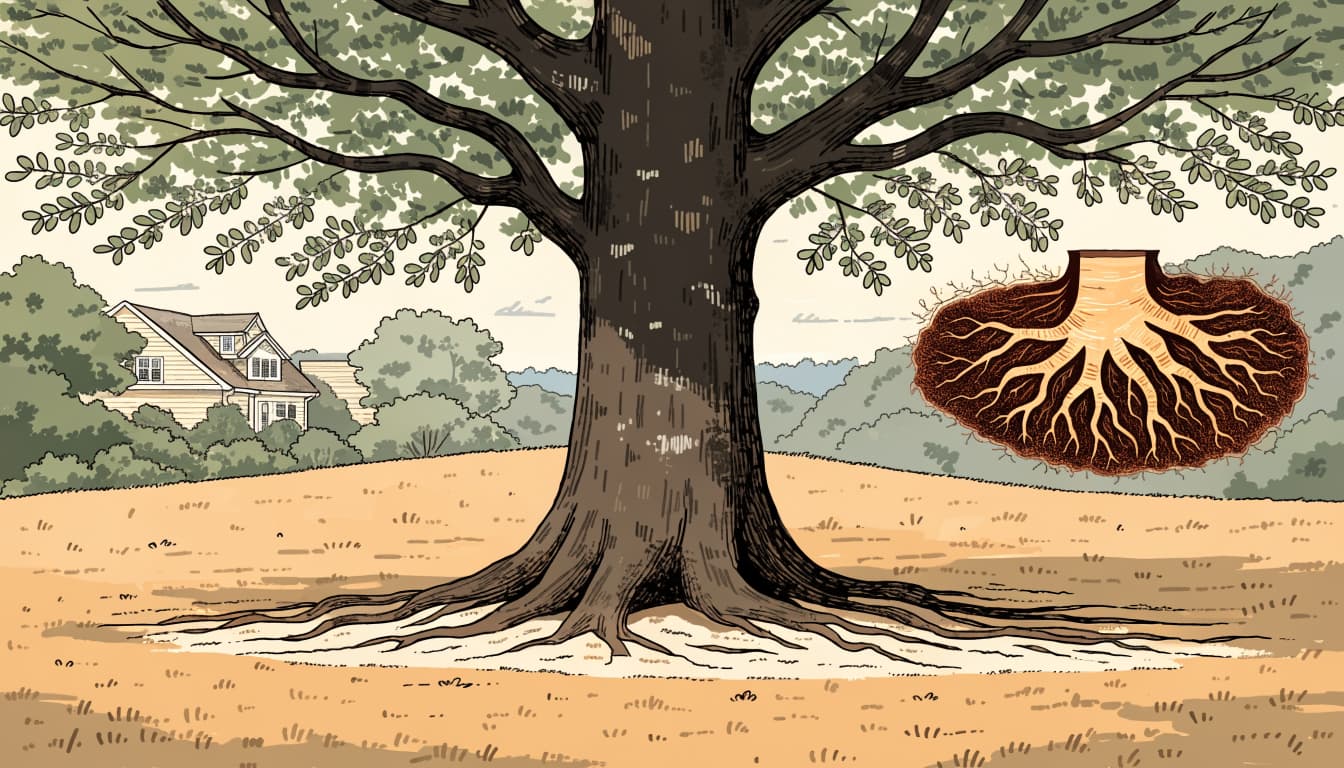
Mature trees often have roots near the surface. In Atlanta, dense shade, soil erosion, and compacted red clay can make roots more visible as the surrounding soil shifts or turf thins.
Those roots may be normal parts of the tree's root system. Burying or cutting them to create a smooth lawn can cause harm, so don't treat every raised root as a defect.
Signs That May Warrant an Assessment
Girdling roots can be hard to identify without seeing where roots meet the trunk. Above-ground changes may prompt an inspection, but they don't establish the cause.
Look for changes at the trunk and root flare
A trunk that appears flattened or indented near a root, or a root that presses tightly against the trunk, deserves attention. A buried or obscured root flare can also make it difficult to judge how the trunk broadens into the roots.
Don't remove soil or mulch to expose roots with a shovel or other tool. An arborist can decide how to inspect the area while limiting disturbance.
Watch the whole tree, not one symptom
Thinning foliage, dead branches, reduced growth, or a canopy that declines over time can occur with root stress. However, drought, disease, pests, drainage trouble, and physical damage can produce similar symptoms.
Leaning, large dead limbs, trunk cavities, or sudden canopy dieback are reasons to arrange a professional tree assessment. These signs don't prove girdling roots, but they can indicate a broader tree-health or safety concern.
How Atlanta Yard Conditions Affect Roots
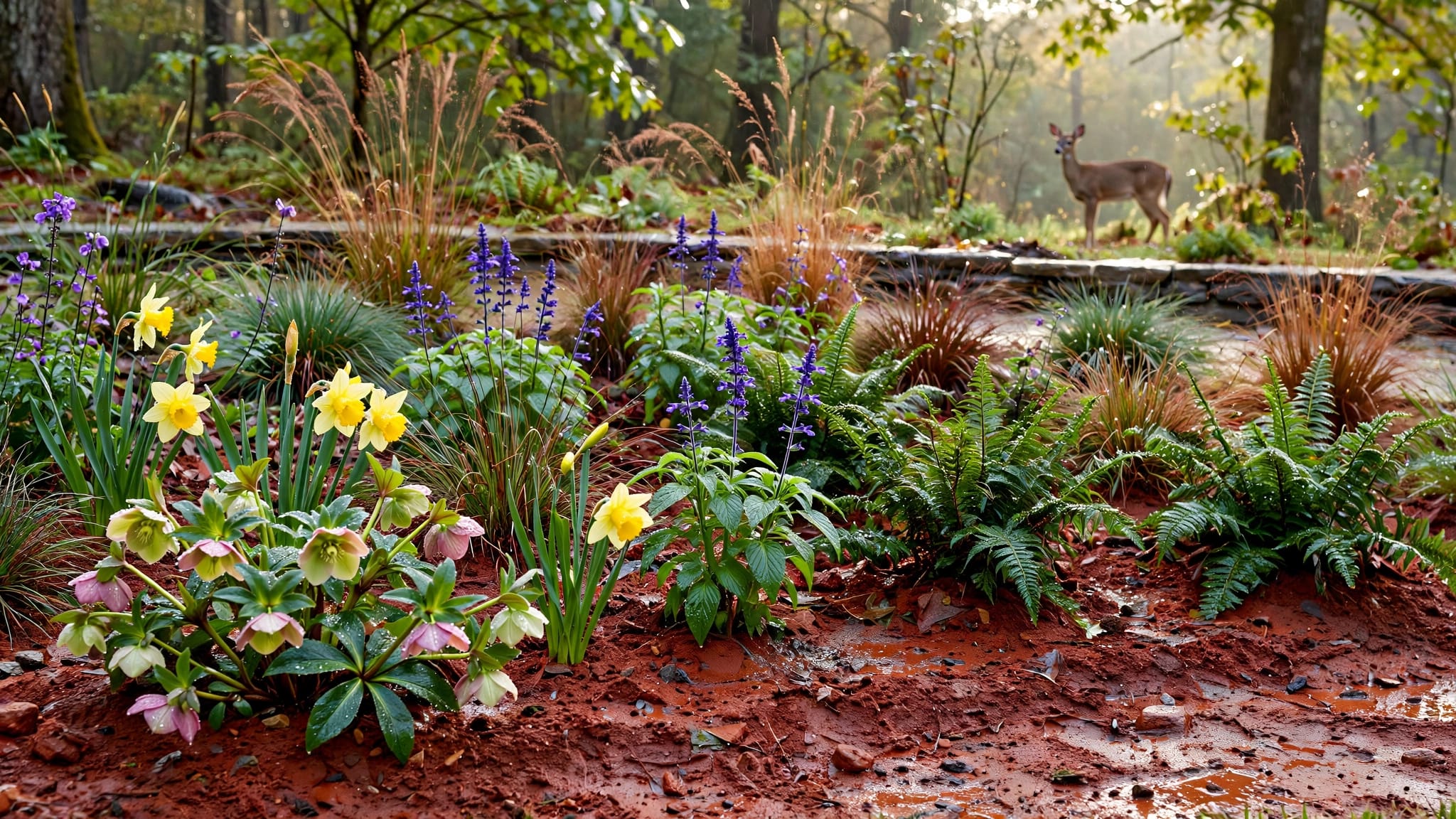
Many Metro Atlanta properties have dense red clay. When wet, clay can become sticky and compacted; during dry periods, it can harden and crack. Heavy rain may also wash soil away, exposing roots or changing the grade around a tree.
These conditions influence the root zone, but they don't all cause girdling roots. Compaction can limit the air and water available in soil, while erosion can uncover roots that were previously covered. A low spot or leaking irrigation line may keep part of the yard wetter than the rest.
Shade creates a separate challenge. Grass under a mature canopy competes with tree roots for water, and it may thin where sunlight is limited. In those areas, expanding a bed or using suitable ground cover can be more practical than trying to maintain turf beneath the tree.
Getting a Reliable Diagnosis
A reliable diagnosis requires looking at the tree and its site together. An arborist can assess the trunk flare, visible roots, canopy, soil conditions, drainage, and nearby landscape changes.
Explain what has changed
Share when you first noticed a root or canopy change, whether the area stays wet after rain, and whether anyone has recently added soil, mulch, edging, or irrigation. Information about construction, trenching, or grade changes can also help identify possible sources of root stress.
Photos taken from a safe distance can help show how symptoms change over time. They don't replace an on-site inspection, especially when the question involves structural roots.
Separate tree concerns from lawn concerns
A bare patch or raised strip in the lawn may relate to tree roots, but it can also reflect shade, compaction, poor drainage, erosion, or irrigation trouble. A pattern around one tree is useful context, not proof of a specific root problem.
For help with the surrounding turf or landscape bed, see our guide to Atlanta tree root damage repair. Decisions that involve cutting roots or evaluating tree stability belong with a qualified arborist.
Corrective Options Depend on the Tree
There isn't one safe fix for every tree with suspected girdling roots. An arborist's assessment should guide whether the tree needs monitoring, a change to nearby site conditions, root work, or another course of action.
Root cutting requires professional judgment
Cutting a large root can reduce a tree's support and may cause serious injury. The risk depends on factors such as the root's size and position, the tree's condition, and the work planned nearby. Avoid DIY excavation, sawing, or pruning around the root flare.
An arborist can decide whether root pruning is appropriate and how it could affect the tree's stability. In some cases, the safer recommendation may be to leave the root in place and manage the surrounding landscape instead.
Change the area around the tree when possible
A repair that protects the tree may involve adjusting a bed, replacing struggling turf, or improving drainage away from the root zone. The goal is to avoid covering the trunk flare or forcing a new feature into the space occupied by major roots.
If roots are lifting a sidewalk, edging, or another structure, don't cut them to make the surface level. An arborist should assess the tree-related risk before the repair is planned. Landscape work can then focus on the surrounding area without assuming root removal is necessary.
Preventing Root Stress Around Existing Trees
Good yard care can reduce avoidable stress, although it can't reverse every root problem. Keep the root flare visible and protect the soil beneath the canopy from unnecessary disturbance.
Keep soil, mulch, and equipment in check
Avoid adding several inches of soil over exposed roots to level the lawn. Don't pile mulch against the trunk; a thin, even layer across a bed is safer than a mound that hides the flare. Our Atlanta mulch installation guide covers mulch placement and keeping the trunk base clear.
Mowers, string trimmers, trenches, and construction equipment can damage roots or compact soil. Keep heavy activity away from major roots, and address leaking irrigation rather than assuming a root is the source of a wet spot.
Plant with the mature tree in mind
For a new tree, correct planting depth and root flare placement matter. A planting hole should be wider than the root ball, not deeper, and the flare should sit at or slightly above finished grade. Circling roots found during planting should be handled as part of planting work, not used as a reason to cut into the root system of an established tree.
Our guide to proper tree planting and root flare placement offers more planting context for Atlanta's clay-heavy yards.
Plan Landscape Work Around the Root Zone
Before adding a path, bed edge, drainage feature, or irrigation line, consider how the work may affect nearby roots. Digging close to a mature tree can damage roots even when the project seems small. In Georgia, call 811 before digging so underground utilities can be located, then involve an arborist when the proposed work could affect structural roots.
Where grass repeatedly struggles under dense shade, consider a larger bed, suitable ground cover, or mulch instead of adding soil over roots. If the lawn or bed is damaged, repair the surface without trying to remove roots as a shortcut. Our Atlanta landscaping and mulch services can help with bed maintenance and mulch work around the landscape.
For broad runoff or grading problems, a site-level plan may be needed rather than a quick change around one tree. Tree condition and landscape repairs should be considered together, especially where water pools or soil erodes.
Protect the Tree Before Changing Its Roots
Girdling roots can contribute to tree decline, but symptoms like exposed roots, thin grass, or a sparse canopy have several possible causes. A qualified arborist needs to assess the tree on site before anyone cuts or excavates around major roots.
In many Atlanta yards, the safer repair is to improve the space around the tree, keep the root flare visible, and reduce avoidable soil disturbance. Protect the root system first , then plan lawn and landscape work around what the tree needs.