Native Shade Trees for Atlanta Clay Soil
Atlanta's familiar red clay can turn a promising shade tree into a slow decline when water pools around its roots or the trunk sits too deep. The native shade trees Atlanta homeowners choose need to handle summer heat and dense soil, but they also need room to mature.
Clay isn't a reason to settle for a smaller canopy. It does mean you should match each tree to drainage, sun, and the space around your house, driveway, and lawn. Start by reading the soil and the lot before choosing a species.
How Atlanta Clay Soil Affects Tree Selection
Piedmont clay holds water after a storm, then dries hard and cracks during hot weather. It also compacts easily under foot traffic and equipment. Those conditions limit oxygen around roots, especially in a planting hole that acts like a bowl.
Roots need air as much as water
A tree can fail in wet clay even when it gets plenty of moisture. Fine roots need oxygen to absorb water and nutrients. When a hole stays saturated, roots may rot or remain trapped inside the original root ball.
University of Georgia Extension recommends checking drainage before planting. Dig a test hole in the proposed area and watch how quickly it drains after filling with water.
If water drains slower than about one inch per hour, choose a wet-site tree or raise the planting area.
A low spot can still support a good shade tree. River birch fits that job far better than a sugar maple or tulip poplar.
Improve the root zone without replacing the soil
Heavy amendments often create a comfortable pocket that roots don't want to leave. Backfill mostly with the native soil you removed. That approach encourages roots to grow into the surrounding clay instead of circling in a soft, compost-rich hole.
Loosen or score the sides of the planting hole, especially if the clay is slick. Then cover the surface with a two to three-inch mulch layer. Mulch moderates soil temperature and reduces surface crusting, but it shouldn't touch the trunk.
Best Native Shade Trees Atlanta Homeowners Can Plant
The ranking below favors Atlanta heat tolerance, clay-soil performance, canopy value, and practicality for residential yards. These native shade trees Atlanta properties can support still need the right drainage and enough overhead space.
| Rank | Native tree | Best fit | Main limitation |
|---|---|---|---|
| 1 | Willow oak ( Quercus phellos ) | Large sunny yards with average to heavy clay | Needs room for a large mature crown |
| 2 | River birch ( Betula nigra ) | Low spots and poorly drained clay | Struggles in dry, hot upland soil |
| 3 | Red maple ( Acer rubrum ) | Average soil with dependable moisture | Weak branch structure needs pruning |
| 4 | Tulip poplar ( Liriodendron tulipifera ) | Large lots with deeper, less-compacted soil | Grows too large for many yards |
| 5 | Southern sugar maple ( Acer floridanum ) | Medium-size yards with moist, draining clay | Doesn't like chronically wet soil |
| 6 | Live oak ( Quercus virginiana ) | Sunny sites with room for an evergreen giant | Leaf and acorn litter, huge spread |
Willow oak takes the top spot because it handles Atlanta clay well and develops a broad canopy. River birch ranks second because it solves a common problem, a yard where water lingers after rain. The remaining choices are excellent when their site limits match your property.
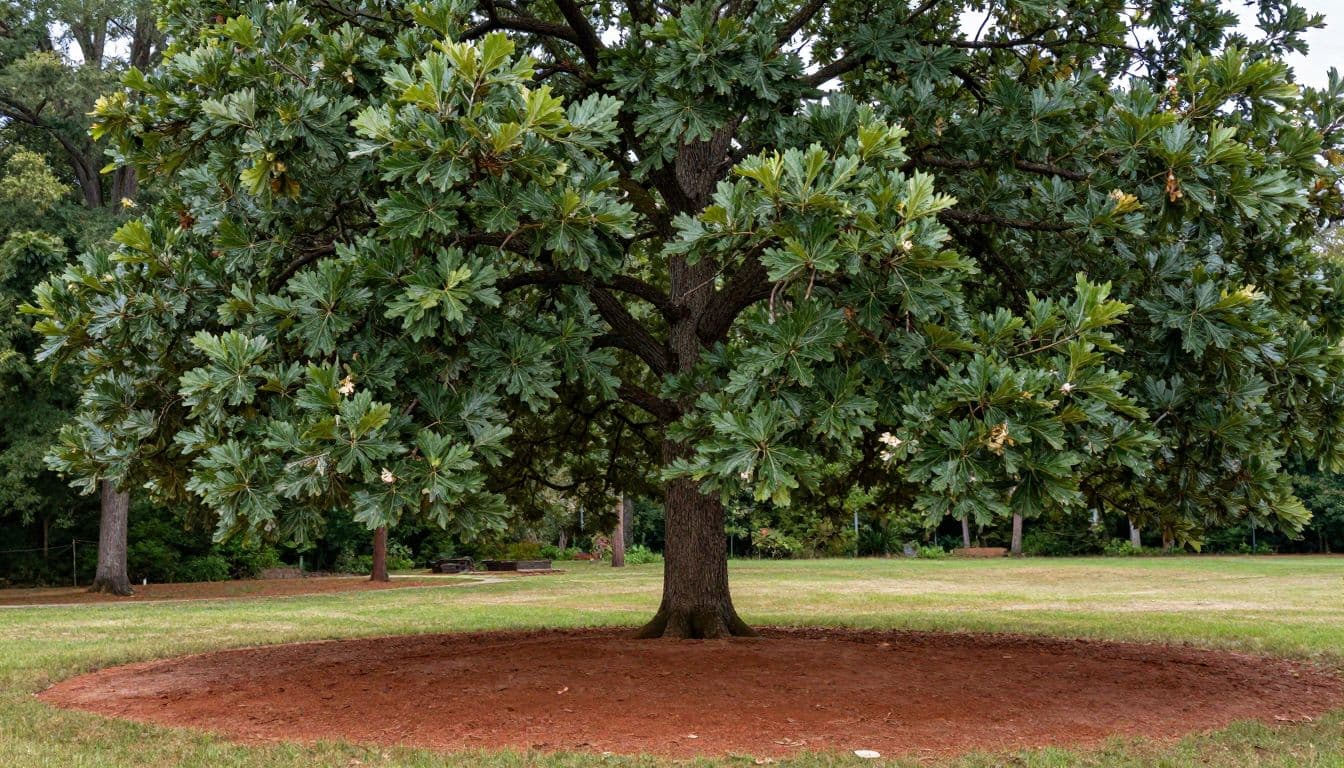
Southern red oak is another native option for larger, well-drained sites, although the six trees above fit typical residential clay conditions more consistently.
Match the Tree to Your Yard's Conditions
A high-ranking tree can still be the wrong purchase for a tight lot. Mature height matters, but mature spread, roots, and sun exposure matter just as much.
For broad, sunny yards
Willow oak is a dependable choice when you want serious summer shade and have room away from the house, driveways, and utility lines. Its narrow leaves create a finer texture than many oaks, yet the canopy becomes substantial with age. Plan for leaf and acorn cleanup each fall.
Tulip poplar also creates fast shade on a large property. Georgia's state tree grows tall and straight in good conditions. However, it prefers deeper soil and adequate moisture. Avoid it on a small yard, below power lines, or in a compacted area where water stands.
For wet or low-lying clay
River birch belongs where other shade trees struggle with poor drainage. Its peeling bark provides winter interest, and multi-stem forms work well near rain gardens or damp property edges. It needs consistent moisture, though, so don't use it in a dry hilltop bed without irrigation.
Red maple handles a wider range of soil conditions and offers dependable fall color. It works in average clay that doesn't stay waterlogged. Give it open sun and enough room for a rounded crown.
For medium-size spaces or evergreen cover
Southern sugar maple is a better fit when you want a native tree with a more moderate scale. Plant it where clay holds moisture but drains within a reasonable time after rain. Exposed, droughty sites can cause stress and leaf scorch.
Live oak gives Atlanta homeowners evergreen shade, but it is a long-term commitment. Its canopy and roots need a wide open area. Choose it only when the mature size suits the property, not because the young nursery tree looks manageable.
Limitations to Consider Before Planting
Native trees support local wildlife, but they aren't maintenance-free. Review the likely mess, branch structure, and future root space before you bring one home.
Weak wood, branch structure, and common pests
Red maple can develop weak branch unions, especially when several upright stems compete near the trunk. Early structural pruning helps form a central leader and reduces future limb failures.
Tulip poplar grows quickly, but fast growth can produce brittle limbs during storms. Aphids may also leave sticky honeydew on patios, vehicles, or furniture below. Oak leaf galls can look alarming, yet they are usually cosmetic and don't require treatment.
Avoid topping any young shade tree. Remove only dead, damaged, rubbing, or poorly placed branches while it establishes.
Fruit, litter, and roots around hard surfaces
Live oak drops leaves and acorns. Willow oak also produces seasonal litter, although its leaves are smaller. These are normal trade-offs for a dense canopy, so don't plant them where constant cleanup will become frustrating.
Sweetgum and American sycamore are native, but they are rarely first choices for a typical Atlanta yard. Sweetgum's spiky fruit becomes a mowing hazard. Sycamore grows enormous and drops large leaves, bark, and seed balls.
None of these trees have invasive roots in the botanical sense. Still, large tree roots can lift pavement, crowd shallow turf roots, and reach far beyond the canopy. Keep big species well away from sidewalks, septic systems, foundations, and utility corridors.
Plant a Shade Tree Without Creating a Clay Bowl
Dormant-season planting gives deciduous trees time to root before Atlanta's summer heat arrives. January is often a favorable month, although container-grown trees can be planted at other times with careful watering.
Check drainage and prepare the site
Watch where runoff collects during a hard rain. If a whole portion of the yard stays soggy, don't rely on a deeper hole to fix it. Select river birch, build a modest raised planting area, or correct the drainage pattern first.
Broad drainage problems need a property-wide fix, not a single amended tree hole. Yard grading and drainage solutions can redirect runoff before it damages turf, beds, or young tree roots.
Dig wide, set the root flare high
Make the hole two to three times wider than the root ball, but no deeper. Find the root flare, where the trunk broadens into the upper roots. Set that flare at or slightly above finished grade because clay can settle.
Remove burlap, wire baskets, tags, and synthetic wrapping. Cut circling roots before planting, then backfill with native soil. Water slowly to settle the soil around the roots. Skip fertilizer at planting time, since it can stress a tree that hasn't rooted out yet.
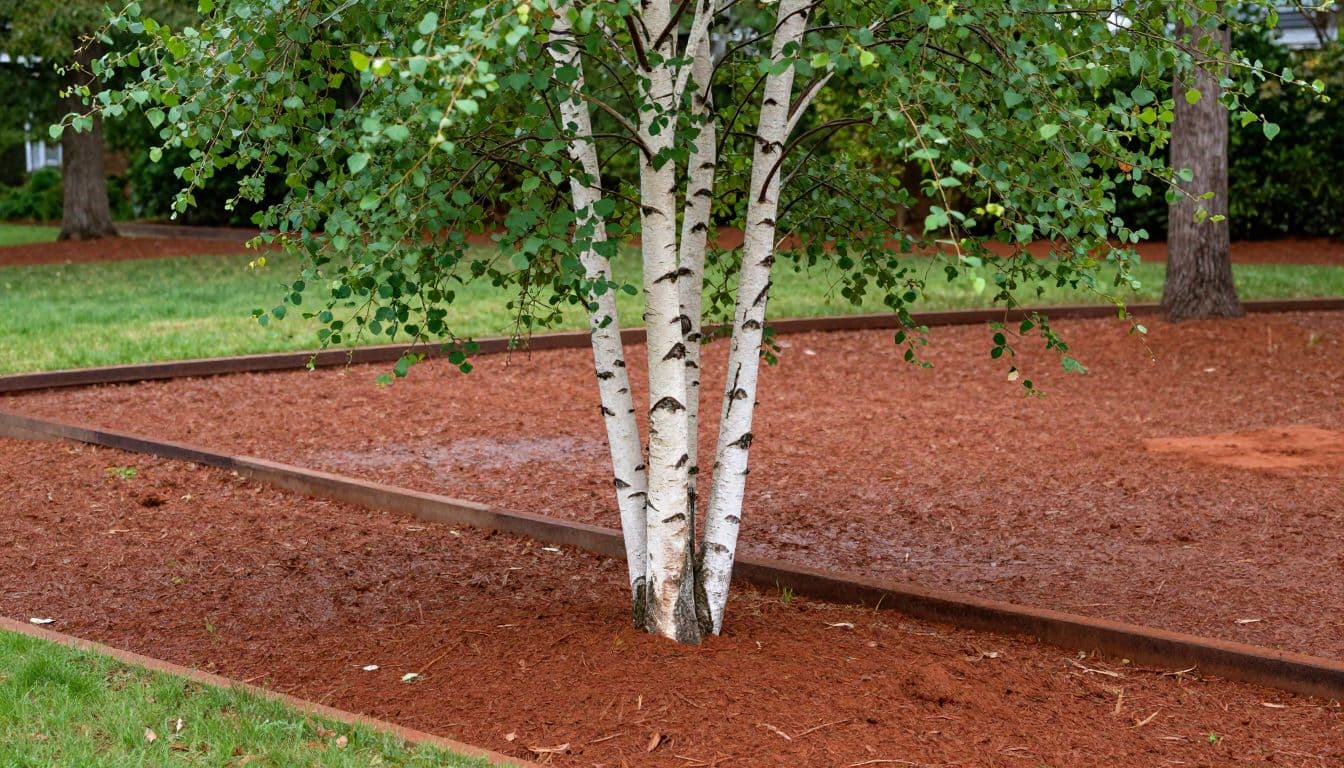
Keep lawn equipment away from the trunk. A wide mulch ring gives roots space and prevents mower damage.
Establish Your Tree During Its First Two Years
A tree's first two growing seasons determine whether it becomes a reliable shade tree or a recurring replacement project. Consistent care matters more than expensive additives.
Water deeply, but don't water by habit
Water thoroughly at planting. Then provide about one inch of water per week during dry weather for the first two growing seasons, including rainfall. Apply it slowly over the root zone rather than flooding the trunk.
Clay can take several days to drain after an inch of rain or irrigation. Check below the mulch before watering again. If the soil is still moist several inches down, wait rather than adding more water.
Maintain mulch and protect the trunk
Refresh mulch as it breaks down, keeping it two to three inches deep and several inches away from the bark. A mulch ring also keeps turf from competing with young roots. Homeowners who need a clean, consistent bed can use mulch services for Atlanta yards.
Inspect the trunk after storms and mowing days. Remove ties once the tree can stand on its own. If staking is needed on a windy site, use flexible ties and remove them within a year.
A Strong Canopy Starts Below Ground
Atlanta clay can grow impressive shade trees when the species fits the moisture level and mature space. Willow oak is the strongest all-around choice for many properties, while river birch, red maple, tulip poplar, southern sugar maple, and live oak each suit more defined conditions.
The best native shade trees Atlanta homeowners plant begin with a wide hole, visible root flare, native-soil backfill, and patient watering. Give the roots a workable start, and the canopy can provide shade for decades.