Atlanta Commercial Irrigation Maintenance Checklist
An irrigation issue can turn a polished entrance into a slippery walkway before the first tenant arrives. For office parks, HOAs, retail centers, and mixed-use sites, commercial irrigation maintenance protects turf and planting beds while reducing water waste, complaints, and avoidable repair bills.
Property managers don't need to diagnose valves or repair wiring. They do need a repeatable inspection routine, useful records, and a clear line between visible problems and qualified service work. Start with a system that makes every irrigation zone accountable.
Build a commercial irrigation maintenance schedule for Atlanta
Atlanta properties often combine warm-season turf, ornamental beds, shaded corners, slopes, and hardscape. Those areas need different water schedules. A fixed controller program can waste water in one zone while leaving another stressed.
Set up the schedule around the property itself, then update it as weather and site conditions change.
Document the system before problems appear
Keep a current irrigation map with every controller, valve box, main shutoff, backflow device, zone number, and irrigation source. Include zones that serve entrances, dumpster enclosures, monument areas, detention pond edges, and shared HOA spaces.
Store the map with service contacts, controller access details, warranty information, and recent repair records. If a new manager or landscape crew takes over, this file prevents costly guesswork.
A simple zone list should identify the area served, plant type, sun exposure, typical runtime, and any recurring issue. For example, note a spray zone that reaches a sidewalk or a shrub bed that dries faster than nearby turf.
Mark areas where water creates risk
Walk the property and flag places where overspray can create a safety or property concern. Entrances, sidewalks, parking lots, loading areas, electrical equipment, retaining walls, and building foundations deserve close attention.
Also mark low spots where water pools and slopes where runoff crosses pavement. These zones may need shorter cycles, better drainage, or different nozzle placement. A clear map helps a service technician find the right area without testing the entire site.
Perform a weekly manager walk-through
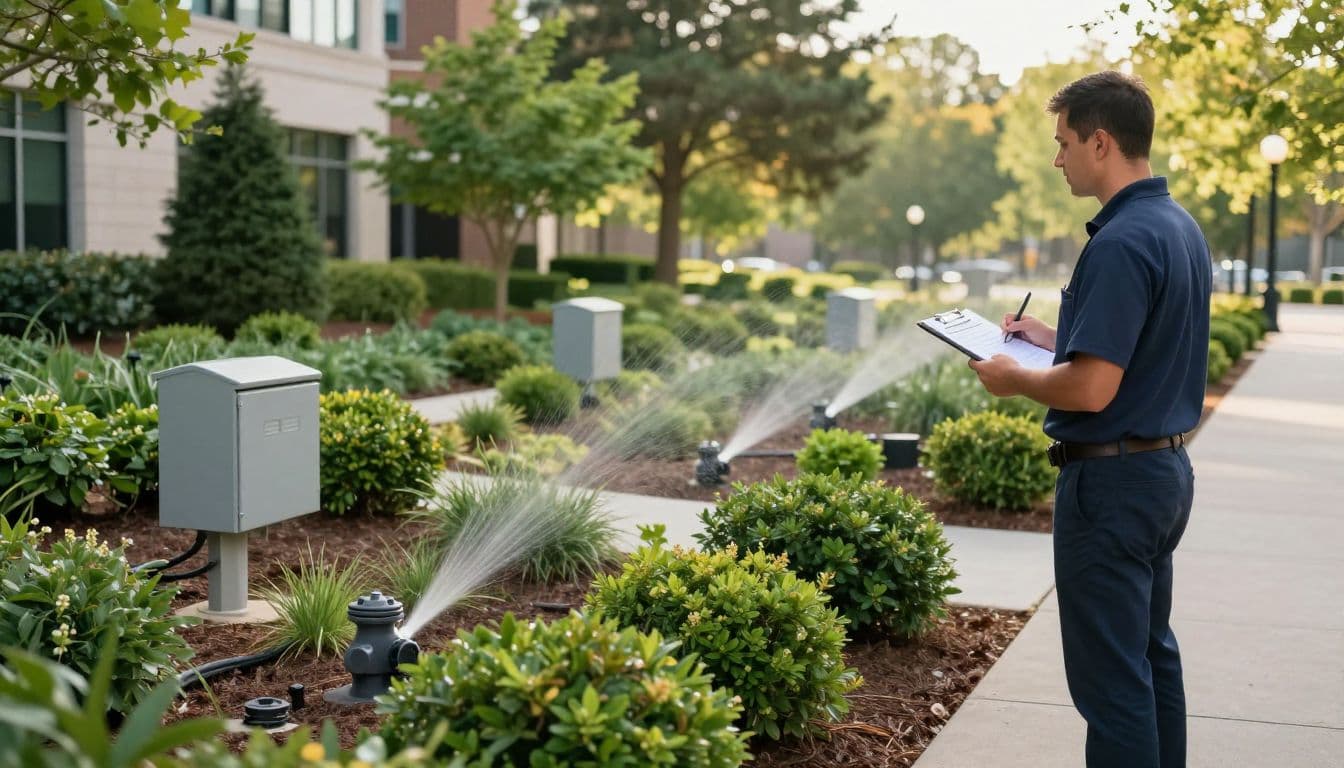
A weekly visual check catches many irrigation problems before they affect curb appeal or create a hazard. Visit while a scheduled cycle is running when possible. You can see spray patterns, runoff, and dry areas that aren't obvious after the system shuts off.
Managers should observe and document. Leave electrical panels, pressurized components, underground leaks, and controller wiring to trained irrigation personnel.
Watch each operating zone for visible trouble
Use the same route every week so changes stand out. During the walk-through, look for:
- Broken, tilted, buried, or missing sprinkler heads.
- Water hitting sidewalks, building walls, signs, parked vehicles, or streets.
- Geysers, bubbling soil, constant wet spots, or water flowing from a valve box.
- Dry turf, wilted plants, or uneven growth within a zone.
- Pooling water near curbs, drains, entrances, and pedestrian paths.
- Loose or damaged valve-box lids that could create a trip hazard.
If a zone creates a slippery surface or sends water toward a building, report it immediately. When you can safely control the schedule, pause that zone until a qualified technician evaluates it.
Create records a service team can use
Take wide photos that show the problem's location, then add a closer photo of the damaged head, wet area, or runoff path. Record the date, zone number, weather, approximate start time, and whether the issue repeats.
Avoid vague notes such as "sprinkler problem near front." A better report reads, "Zone 6 sprays the east lobby sidewalk for the first three minutes of its 5:30 a.m. cycle." That detail speeds up the repair visit and helps confirm the fix later.
Review commercial irrigation maintenance every month
A monthly commercial irrigation maintenance review connects field observations with controller settings and landscape conditions. Weekly checks find obvious damage. Monthly reviews reveal patterns, such as one bed that always dries out or a controller program that runs after heavy rain.
Schedule this review before monthly vendor meetings or site inspections. Then, unresolved problems can move into a repair request with clear priorities.
Check controller settings and automatic shutoffs
Review run days, start times, station runtimes, and seasonal adjustment settings. Look for duplicate start times, settings that changed without approval, and zones operating at times that conflict with tenant traffic or cleaning crews.
Confirm that rain and freeze shutoff devices are present and active if your system uses them. A bypass setting can leave a sensor physically intact but functionally useless. Don't reset a controller to factory settings after a complaint, because that can erase useful information and create new watering problems.
Compare the irrigation plan with plant conditions
Turf color tells only part of the story. Inspect shrubs, annual color beds, tree rings, mulch depth, and soil moisture around the root zone. A brown patch may come from sprinkler coverage, but it can also result from compacted soil, mower damage, pests, or plant decline.
Tell the irrigation contractor about recent mulch work, new plantings, pavement repairs, and drainage changes. A sprinkler head that worked well last season may now sit below mulch or spray against a newly installed curb.
Use seasonal checkpoints for Metro Atlanta properties
Atlanta's hot summers, frequent rain, humid conditions, and periodic freezes make one year-round irrigation program a poor fit. Review settings as seasons change instead of relying on a calendar created years ago.
| Season | Manager inspection focus | Typical service priority |
|---|---|---|
| Late winter and spring | Look for cracked heads, soggy areas, damaged lids, and winter debris around valves. | Inspect zones, test coverage, and correct damage before peak growth. |
| Summer heat | Watch for runoff, stressed turf, dry shrub beds, and overspray near busy walkways. | Adjust runtimes, check pressure, and improve distribution where needed. |
| Fall | Note shorter days, changing rainfall, leaf buildup, and new landscape work. | Reduce unnecessary watering and clear debris from heads and sensors. |
| Freezing weather | Check exposed equipment and confirm the property's cold-weather process. | Protect vulnerable components and avoid running tests during freezing conditions. |
Rainfall should guide decisions more than the month on the calendar. A shaded courtyard after a wet week may need no irrigation, while a sunny roadside bed can dry quickly. Keep seasonal changes documented so the next adjustment has a clear starting point.
Separate manager checks from specialized service work
Property managers can spot trouble, preserve records, and approve repairs. Qualified irrigation professionals handle the work that requires system diagnosis, tools, pressure testing, electrical knowledge, or credentials required by the local authority.
This division protects staff and avoids small issues becoming larger repairs.
| Routine manager responsibilities | Qualified irrigation service work |
|---|---|
| Observe active zones and report visible problems. | Repair leaks, damaged lateral lines, valves, and sprinkler components. |
| Photograph runoff, pooling, damaged heads, and stressed plant material. | Diagnose pressure issues, electrical faults, solenoids, and controller wiring. |
| Review schedules for obvious conflicts with weather or site activity. | Test coverage, tune nozzles, and evaluate distribution across a zone. |
| Keep repair invoices, maps, inspection notes, and test records. | Perform backflow work, testing, certification, or permitting when required. |
Keep people away from a leaking valve box with standing water or exposed wiring. Water flowing toward a building, traffic lane, or electrical equipment needs prompt attention. The same applies to a valve that won't shut off or a backflow concern.
A rain sensor can look intact yet fail to stop a cycle because of a controller setting, a bypass, or damaged wiring.
Reduce waste without starving the landscape
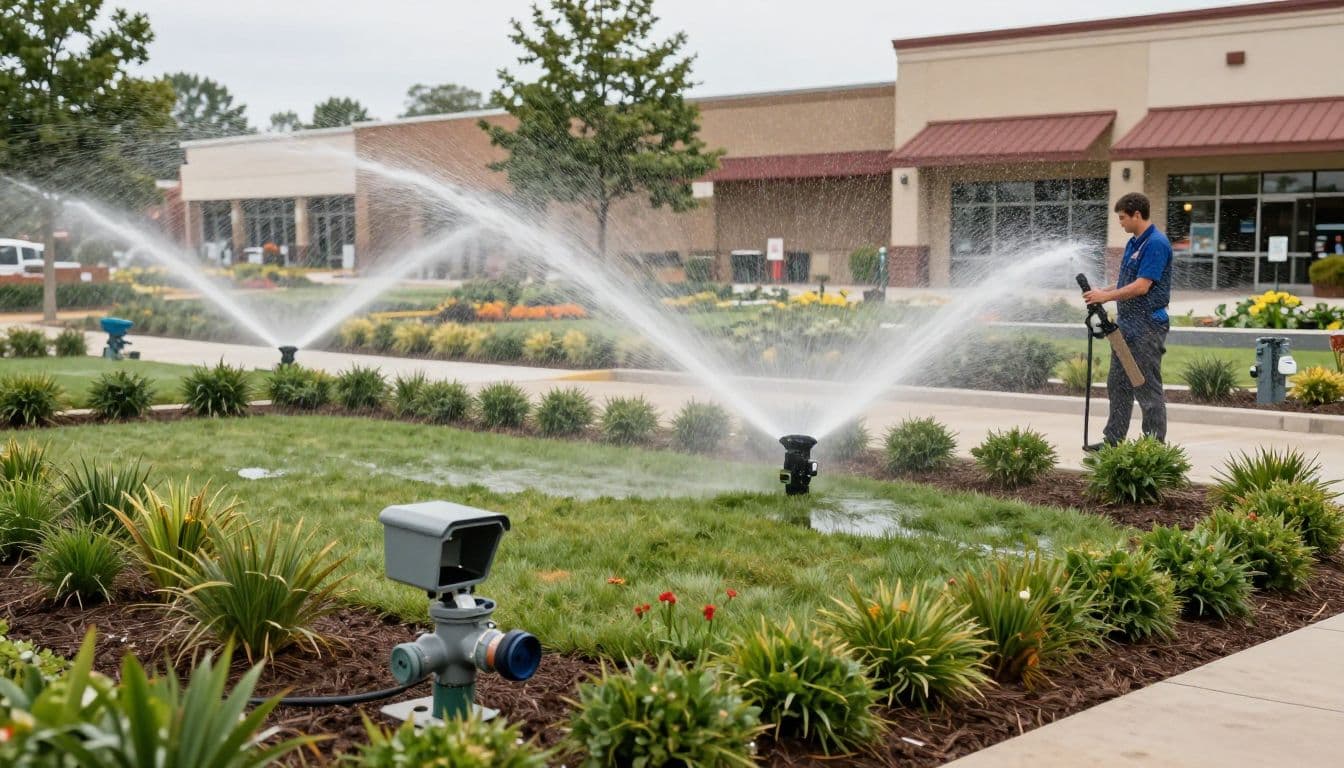
Good commercial irrigation maintenance uses observed soil and plant conditions, not a fixed runtime copied across every zone. Water that runs off pavement or collects at a curb isn't helping the roots.
When slopes or compacted areas shed water, ask your service provider about cycle-and-soak programming. The controller runs shorter intervals with soak time between them, which gives water a better chance to enter the soil.
Track waste signals before bills rise
Recurring runoff, wet pavement, unusually green strips beside dry turf, and unexplained soggy ground all point to a coverage or leak issue. Compare these observations with irrigation days and recent weather before authorizing a broad schedule increase.
A professional audit can measure actual nozzle output and identify zones with poor distribution. Managers can then approve targeted repairs instead of adding water to the whole property.
Verify current local requirements before compliance decisions
Water-use restrictions, backflow rules, testing schedules, and irrigation requirements can vary by municipality, county, water provider, and drought status. Confirm current requirements with the appropriate local authority before changing practices for compliance.
Keep copies of test reports, permits, repair invoices, and inspection notices when they apply to your site. Also confirm that your irrigation contractor has the credentials required for the work being performed.
Coordinate irrigation with the rest of the grounds work
Irrigation doesn't operate separately from mowing, pruning, mulch installation, drainage work, or parking-lot repairs. Each activity can affect sprinkler access and coverage.
A coordinated schedule gives crews time to report damage instead of covering it up or working around it.
Keep landscape crews in the reporting loop
Ask mowing crews to report damaged heads, exposed drip lines, sunken valve boxes, and wet ground. Mulch crews should keep heads and drip emitters visible. Pruning crews need to know when branches block a spray pattern or when new plants require a zone adjustment.
For properties that need one accountable grounds partner, commercial lawn and property services can align mowing, seasonal cleanup, planting-bed care, and irrigation observations under a clearer service plan.
Set expectations in writing. Include inspection frequency, emergency response steps, photo reporting, repair approval limits, and how the contractor documents completed work.
Keep Irrigation Visible and Accountable
A well-kept property can still lose water, damage turf, and create safety issues if irrigation runs without regular oversight. Weekly observations, monthly reviews, and seasonal adjustments give managers a practical way to catch problems early.
The strongest commercial irrigation maintenance plan is simple enough to follow and detailed enough to guide repairs. When every zone has an owner, a record, and a purpose, the property stays safer, healthier, and easier to manage.