Atlanta Centipede Lawn Renovation for Thin Southern Yards
Thin grass rarely becomes a thick lawn because of one bag of fertilizer. A thoughtful centipede lawn renovation starts by finding the cause of bare spots, then giving surviving turf the conditions it needs to spread.
Atlanta clay, heavy summer rain, mature tree shade, and low mowing can all thin centipedegrass. Start with an honest assessment, then choose a repair method that fits your yard, budget, and patience.
When a centipede lawn renovation beats replacement
Renovation preserves healthy centipedegrass, repairs thin areas, and corrects the conditions that caused the decline. Complete replacement removes or kills the existing lawn and starts over across the entire area.
A renovation usually costs less and creates less disruption. However, it cannot fix deep shade, serious drainage problems, or a lawn that is mostly the wrong grass type.
Renovate when living centipedegrass still covers the yard
Choose renovation when you can find live runners across much of the lawn. Those runners can spread into nearby gaps once soil, moisture, mowing, and sunlight improve.
Patchy damage from traffic, drought, light weed pressure, or a few compacted areas often responds well to plugs or small sod repairs. Keep the healthy turf, improve the weak spots, and avoid disturbing more soil than necessary.
Replace when the lawn has widespread failure
Full replacement makes more sense when broad areas contain Bermuda grass, tall fescue, aggressive weeds, or bare compacted soil. It also fits a yard where old turf has declined beyond a practical repair point.
Sod gives a more uniform appearance right away, but it costs more and still needs careful watering. If water pools near the house or races across the yard, correct that issue before you install new grass.
Find the reason the lawn became thin
Centipedegrass has low fertilizer needs, but it needs warmth, sunlight, and soil that drains without drying into a brick. Treating the visible bare spots without addressing the cause often leads to another thin lawn next summer.
Measure sunlight, drainage, and soil compaction
Centipedegrass performs best with at least six hours of direct sunlight. Watch the lawn at several points during a clear day, because a tree canopy can cast far more shade in June than in early spring.
After a hard rain, look for standing water, exposed roots, and channels where runoff strips soil away. Persistent soggy spots require more than extra seed or plugs. An Atlanta drainage and grading guide can help you sort out whether regrading, a swale, or drainage work fits the problem.
Look at grass roots and weeds before treatment
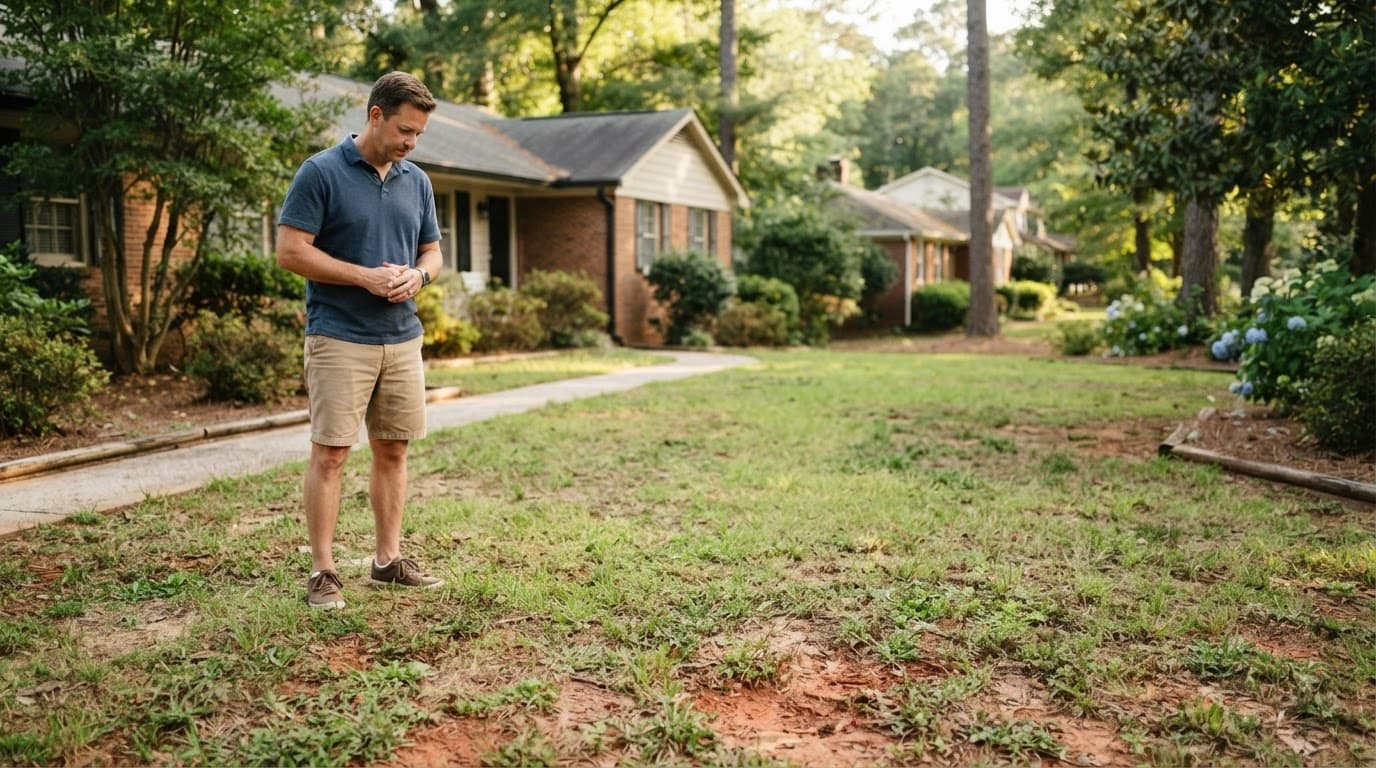
Pull back a small section of turf. Healthy centipedegrass has runners that root at nodes and living roots holding the soil together. Dry, loose soil, shallow roots, or a sour smell can point to a bigger issue.
Also identify weeds before buying a herbicide. Crabgrass, chamberbitter, nutsedge, and broadleaf weeds do not respond to the same products. Yellow grass is not automatic proof that the lawn needs fertilizer.
Schedule renovation around Atlanta's growing season
Centipedegrass needs active warm-season growth to repair itself. In Metro Atlanta, late spring through early summer is usually the most reliable time to seed, plug, or sod after the lawn has fully greened up.
Soil should feel consistently warm, and new grass should have several months to establish before fall cools growth. Late April through June can work well, although weather and elevation change the exact window.
Plant after the lawn is actively growing
Wait until centipedegrass has broken dormancy across the yard. Plugs and sod root faster when warm days and mild nights support new growth.
Seed also needs warmth. Follow the seed label closely, because centipede seed needs steady moisture near the surface while it germinates.
Avoid rushed fall repairs and drought stress
Late-summer work can succeed with dependable irrigation, yet it leaves less time for roots to settle before winter. Avoid renovation during a severe dry spell if you cannot water properly.
Don't install grass into cold soil because a calendar says it is spring. A short delay is cheaper than replacing failed plugs or sod.
Prepare the soil before adding grass
Good preparation gives roots a place to grow. Skipping this stage often leaves new turf sitting on the same compacted, uneven ground that weakened the old lawn.
Test soil before spreading lime or fertilizer
Submit a soil sample through your local UGA Extension office before applying major amendments. The report can show pH, phosphorus, potassium, and recommended nutrient amounts.
Centipedegrass generally prefers acidic soil, often around pH 5.0 to 6.0. Lime can raise pH too far and contribute to nutrient problems.
For centipedegrass, unneeded lime can set a renovation back instead of fixing it.
Wear gloves and eye protection when handling soil amendments. Keep dust out of your face, sweep granules off pavement, and keep fertilizer or lime away from storm drains.
Clear debris, repair grade, and loosen compacted areas
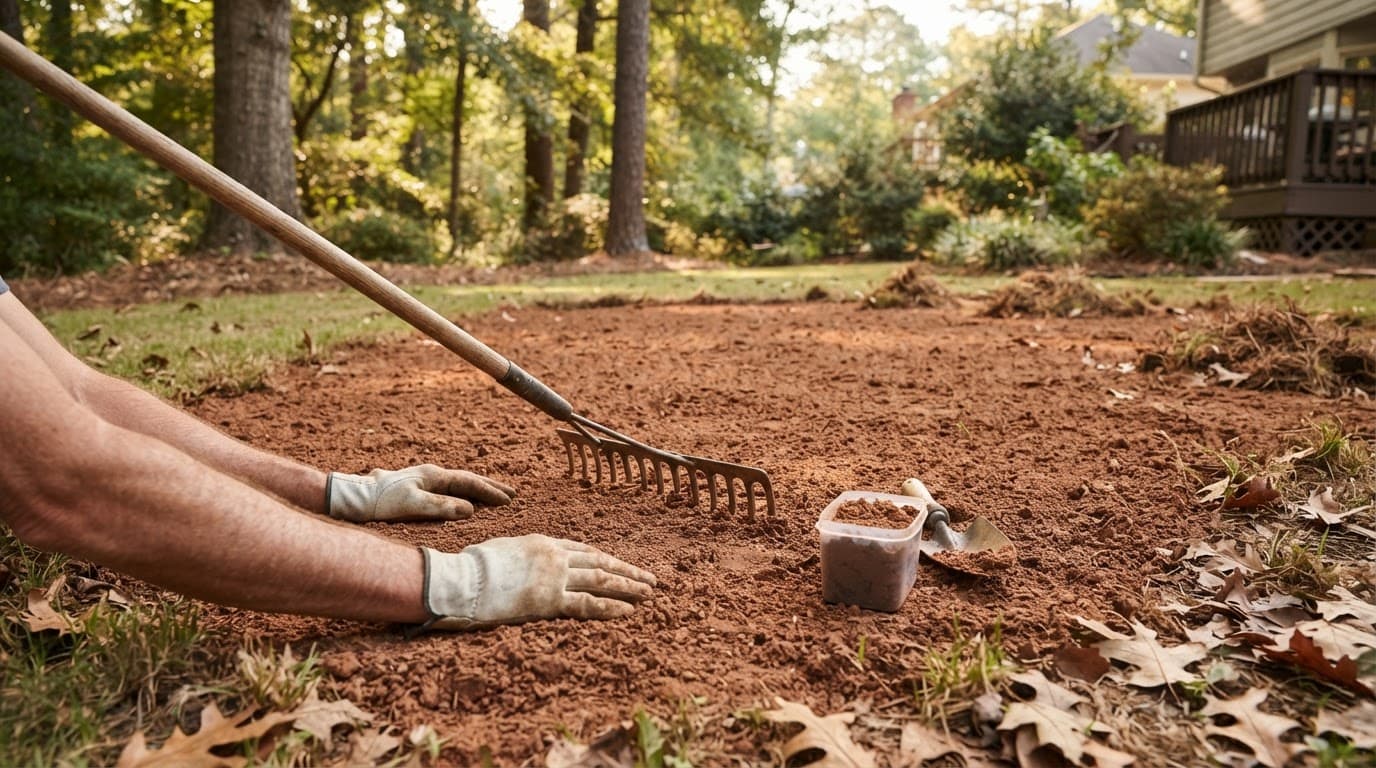
Remove leaves, sticks, thick thatch, and dead weeds so new grass can contact soil. Fill shallow low spots gradually with compatible soil, then rake the surface level without burying surviving runners.
Core aeration can help compacted soil, but avoid it when the ground is saturated or when the lawn is already weak from heat stress. For broad uneven areas, drainage corrections, or major grading, residential site preparation in Atlanta may be a better starting point than another round of grass repairs.
Choose seed, plugs, or sod for your yard
A centipede lawn renovation does not require one repair method for every square foot. Seed suits open bare soil, plugs work well for scattered thin areas, and sod gives immediate cover where appearance or erosion matters.
This comparison can narrow the choice.
| Method | Best fit | Main advantage | Main tradeoff |
|---|---|---|---|
| Seed | Large bare areas with full sun | Lower material cost | Slow establishment and strict watering |
| Plugs | Patchy thin turf | Lower cost than sod | Gaps can take a growing season to fill |
| Sod | Visible areas or slopes | Immediate coverage | Highest material and installation cost |
Seed needs open soil and close attention
Use centipedegrass seed, not a generic Southern lawn mix. Rake the surface lightly, spread seed at the package rate, and cover it only enough to maintain seed-to-soil contact.
Seedlings compete poorly with weeds and dry quickly in Atlanta heat. Skip pre-emergent weed control unless the product label clearly allows use with new centipedegrass seed.
Plugs and sod offer faster grass coverage
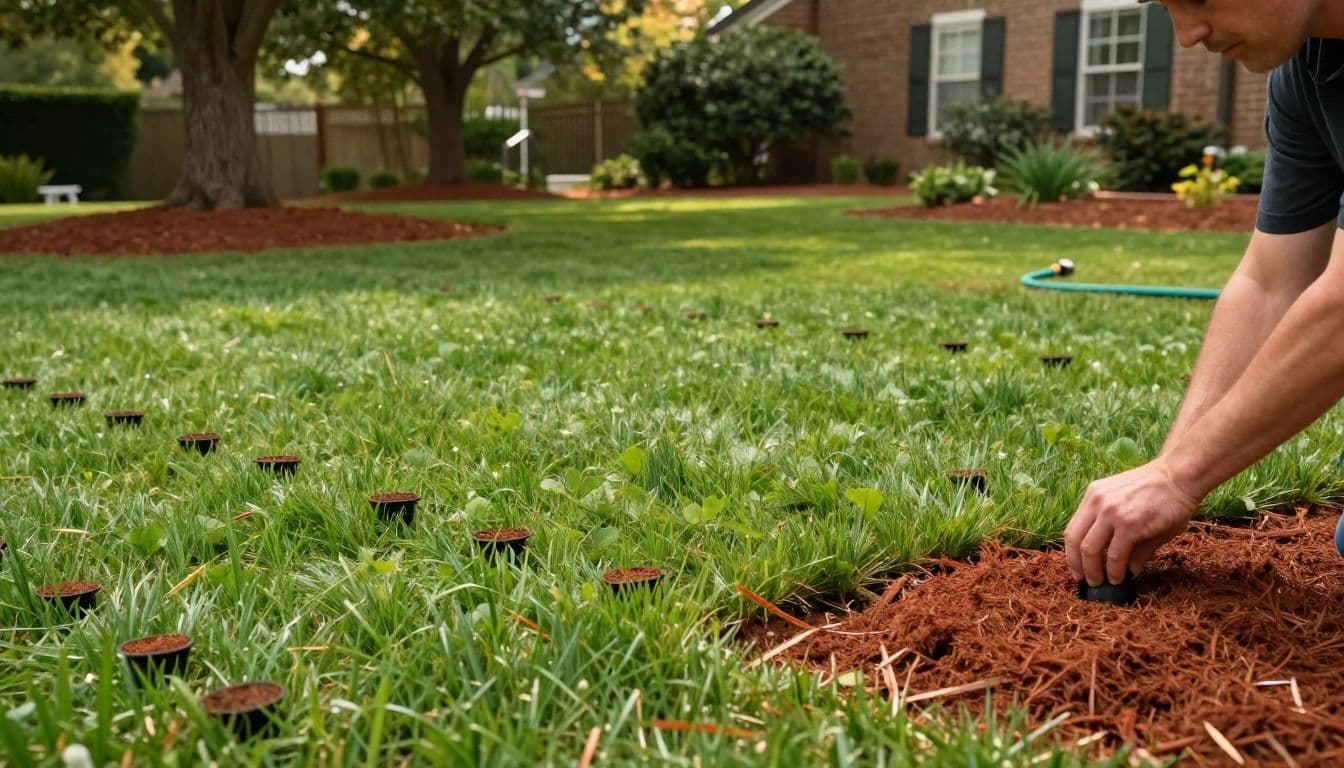
Plugs are small sections of living turf installed at regular spacing. They blend naturally with existing centipedegrass, though the open spaces need time and consistent care.
Fresh centipede sod works well for high-visibility patches, erosion-prone slopes, and areas where you need rapid cover. Lay it on moist, prepared soil and stagger seams so they do not create long channels for runoff.
Install new turf in an order that protects roots
Once the site is clean and level, work steadily so plugs, sod, or seed do not sit exposed. Keep wheelbarrows, pets, and foot traffic off prepared areas as much as possible.
- Mark the thin sections, then remove dead turf and weeds that would block soil contact.
- Rake bare soil to break the crust and create a loose, even surface without digging deep holes.
- Set plugs with their soil level even with the surrounding lawn, or lay sod tightly against the prepared surface.
- Press plugs and sod gently into place so roots touch moist soil. For seed, use a light rake or roller instead of burying it.
- Water immediately after installation, then inspect the area for lifted sod edges, washed-out soil, or dry plug roots.
Avoid adding a thick layer of topsoil over existing grass. A shallow topdressing can help level minor spots, but grass blades and runners still need light and air.
Water and mow new centipedegrass carefully
Watering habits decide whether roots move into the soil or stay shallow. The goal is moist soil, not a muddy surface that excludes oxygen.
Keep the surface moist, then water deeper
New seed needs frequent light watering so the upper soil layer stays moist through germination. Check it often during hot, windy afternoons because exposed clay dries fast.
Plugs and sod need enough water to moisten the root zone. As roots begin to anchor and new growth appears, shift toward deeper, less frequent watering. Rain counts, so adjust the schedule rather than running irrigation by habit.
Wait for roots before mowing
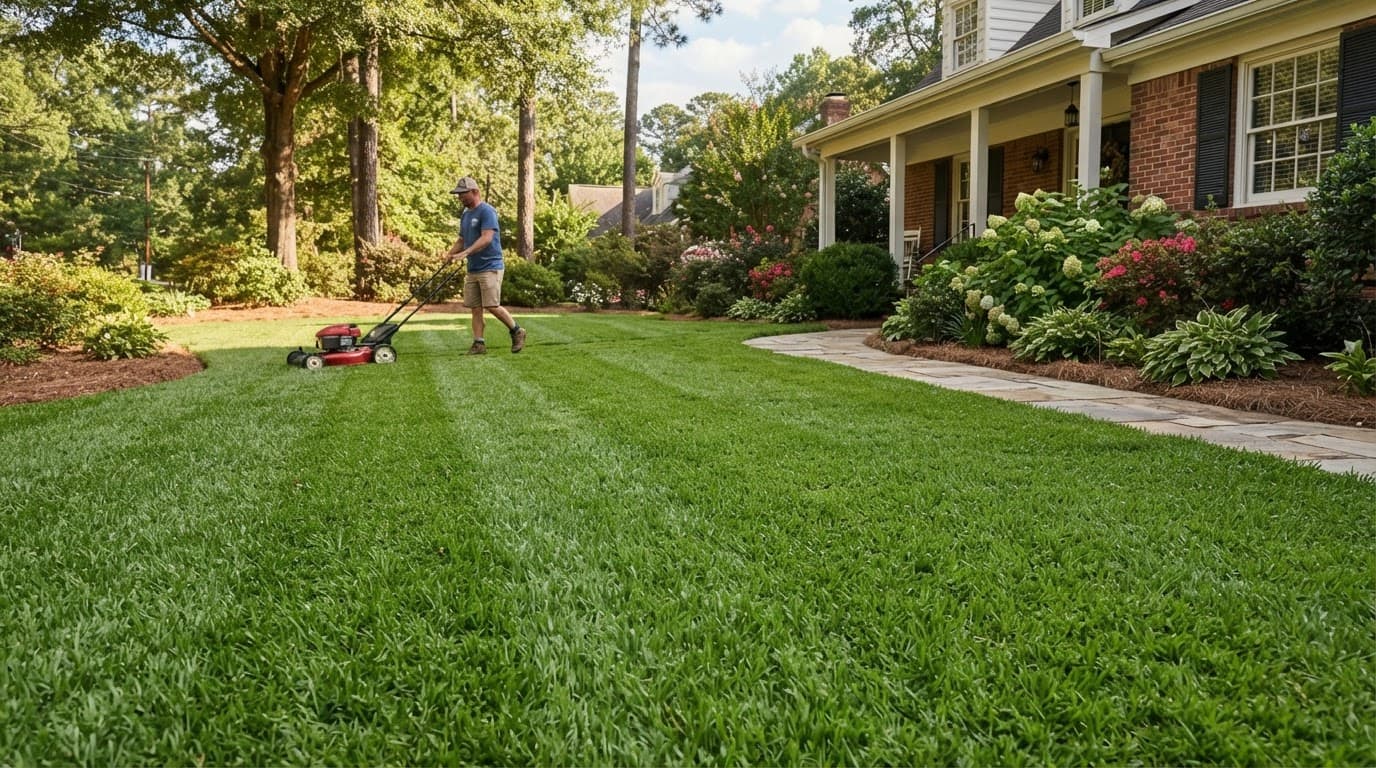
Do not mow loose sod or plugs that pull up easily. Once grass has rooted, keep centipedegrass around 1.5 to 2 inches tall and use a sharp mower blade.
Remove no more than one-third of the leaf blade in a single mow. If routine care is hard to keep up with, professional lawn care services in Atlanta can help maintain a consistent cut without scalping new turf.
Prevent weeds and fertilizer damage during recovery
New centipedegrass is vulnerable while roots establish. Strong herbicides, heavy fertilizer, and poor timing can thin the lawn again before it has a chance to spread.
Control weeds with the grass type in mind
Choose a product that lists both centipedegrass and the target weed on its label. A weed killer that is safe for Bermuda or zoysia may not be safe for centipedegrass.
Non-selective herbicides kill desirable grass wherever spray touches it. Avoid spraying on windy days, wear label-required protective gear, and keep children and pets off treated areas for the label's stated re-entry period.
Many products also require a waiting period before seeding, plugging, or sodding. The label directions are part of safe pesticide use, so follow them even when a neighbor recommends a different schedule.
Feed lightly after soil results guide you
Centipedegrass does not reward heavy nitrogen applications. Excess fertilizer can push weak, tender growth and raise the risk of problems during summer heat.
Apply only what the soil test calls for, and spread nitrogen during active growth rather than dormancy. Divide any recommended annual nitrogen into smaller applications instead of applying it all at once. Water fertilizer off leaf blades and sweep stray granules from driveways before rain carries them away.
Expect gradual improvement, and know when to call for help
Sod can look complete on installation day, yet its roots still need weeks to establish. Plugs leave visible gaps at first and may need most of a growing season to spread well. Seed usually takes the longest route to a full-looking lawn.
Watch for progress instead of perfection
Healthy renovated areas show new leaves, rooted plugs, and runners moving outward. Compare photos every few weeks rather than judging the lawn after a single weekend.
Bare soil that keeps widening, grass that remains yellow despite proper pH, or areas that stay wet after rain need more diagnosis. Repeated patching without correcting the cause wastes time and material.
Bring in help for site-wide problems
Professional help is useful when grade changes, drainage work, heavy brush removal, or large sod areas are part of the job. It also helps when trees create permanent shade that grass cannot overcome.
A good plan matches the repair method to the yard. Thin grass under dense shade may need a mulch bed or shade-tolerant planting instead of another round of centipedegrass.
A Thicker Centipede Lawn Starts Below the Blades
The strongest centipede lawn renovation begins with soil, sunlight, drainage, and mowing habits, not a quick cover-up. Once those conditions improve, seed, plugs, or sod have a real chance to take hold.
Give new turf steady care through its first warm season, then keep mowing and fertilizer modest. Healthy centipedegrass spreads slowly, but it can build a durable Southern lawn when the site supports it.