Atlanta Fertilizer Burn Recovery for Stressed Turf
An Atlanta lawn can turn from green to straw-colored within days after too much fertilizer lands in one area. The urge to add more product for color can turn a manageable problem into a larger one.
Careful fertilizer burn recovery gives living grass the best chance to rebound without sending nutrients into storm drains. Start by confirming the cause, then use measured water and low-stress lawn care until new growth returns.
Confirm Fertilizer Burn Before You Treat It
Fertilizer burn is salt injury. A concentrated fertilizer application pulls moisture away from roots and leaf tissue, leaving grass yellow, tan, or brown. Granules caught in wet blades can also scorch the leaves.
The timing and pattern usually provide the clearest clues. Damage often shows up within several days of an application, especially after hot weather or when a quick-release product was applied too heavily.
Look for spreader lines, piles, and hard edges
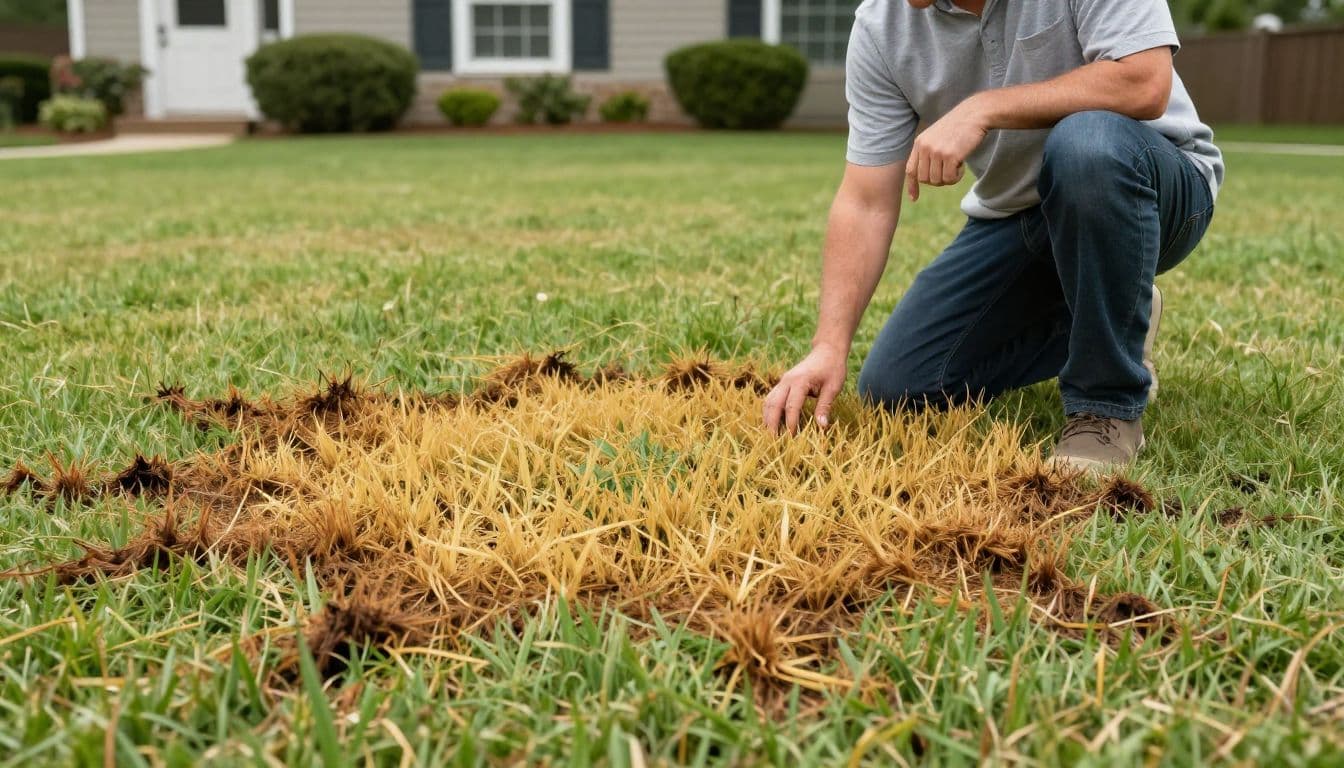
Burned turf often follows the path of a spreader. You may see long stripes, dark green bands beside brown ones, or a dense brown spot where fertilizer spilled during filling.
Check borders near driveways, garden beds, and sidewalks too. Fertilizer that collected along an edge can create a sharp line between healthy and damaged grass.
Sort the damage by severity
Part the grass blades and inspect the crowns, which are the growing points near the soil surface. Firm crowns with some green tissue can still produce new blades.
Use these signs to judge the condition of the area:
- Light burn leaves yellowed tips or thin brown streaks, while most grass remains green and rooted.
- Moderate burn creates straw-colored patches, although the crowns still feel firm and some green shoots remain.
- Severe burn leaves grass brown to the soil line, with brittle crowns and little or no living tissue.
If granules remain in a concentrated pile, carefully collect the excess before watering. Don't rake them deeper into the turf or wash them into the street.
Fertilizer Burn Recovery Starts With Controlled Water
Water is the first practical treatment because it dilutes fertilizer salts in the root zone. However, Atlanta's clay-heavy soils can shed water quickly, so a long soak from one sprinkler session may create runoff instead of relief.
A good fertilizer burn recovery plan moves water into the soil in stages. It also pauses every other lawn product until the grass has recovered.
Water in short, measured cycles
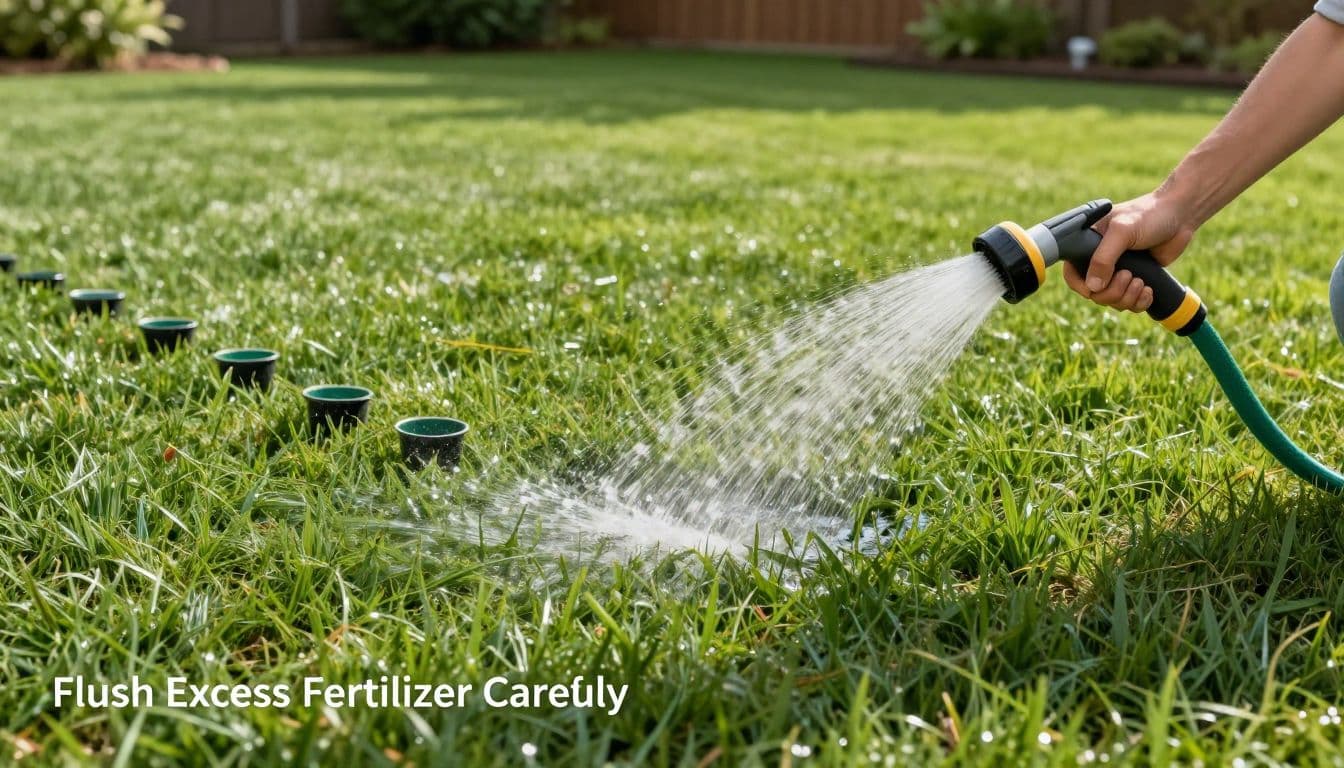
Begin early in the day, when evaporation is lower and the grass has time to dry before night. Place a few straight-sided cups around the damaged area and apply about one-quarter inch of water.
Then stop and let the water soak in. If the surface remains stable and the soil absorbs water, repeat another short cycle later that day or the next day.
Several smaller cycles can rinse excess salts past the shallow roots without flooding the lawn. Stop sooner if water starts pooling or flowing downhill. The goal is controlled infiltration, not a fixed number of gallons.
Keep fertilizer out of drains and creeks
Watch the lowest point of the yard during each watering cycle. If water reaches the driveway, curb, or a storm drain, shut off the sprinkler and allow the lawn to absorb what is already there.
Water that runs across compacted clay has left the root zone, taking fertilizer with it.
Avoid watering just before a heavy thunderstorm. Also sweep loose fertilizer from pavement before rain arrives. Once the initial flushing period is over, return to an Atlanta lawn watering schedule that fits your grass type, rainfall, and season.
Adjust Mowing While the Lawn Is Stressed
Mowing won't cure burned turf, but an aggressive cut can remove the remaining green leaf tissue the grass needs to recover. Keep the mower parked if the ground is soft from watering or the blades are already brittle.
Keep more leaf surface on the grass
Raise the mower one setting while the lawn repairs itself, while still staying within the proper range for your turf. A slightly taller canopy shades the soil and reduces moisture loss during Atlanta heat.
Wait until the lawn is dry and growing again before mowing. Use a sharp blade, move at a steady pace, and remove no more than one-third of the grass height in a single cut. Scalp marks can look much like fertilizer burn and make diagnosis harder.
Use these recommended mowing heights for Atlanta grass to avoid adding more stress while the lawn is thin.
Limit traffic and pause other treatments
Keep foot traffic, mower turns, and heavy equipment off saturated or weakened patches. Repeated pressure can tear shallow roots and compact wet soil.
Skip weed-and-feed products, iron treatments, herbicides, and any additional fertilizer. Even a small feeding can worsen salt stress before the grass has rebuilt its root system.
Match Recovery Care to Atlanta Turf and Weather
Atlanta lawns don't all respond at the same speed. Grass type, sunlight, soil moisture, and summer heat affect what recovery looks like.
Warm-season turf can repair damaged spots during active growth. Cool-season grass may hold its color poorly through summer, even when the roots remain alive.
Give Bermuda and zoysia time to spread
Bermuda grass often produces new blades and runners fairly quickly when it is actively growing, watered properly, and not scalped. Let those runners fill open areas naturally rather than pushing growth with more nitrogen.
Zoysia grass grows more slowly than Bermuda and often needs more patience. Its dense growth can hide living crowns beneath brown leaves, so inspect the base of the plant before assuming the patch is dead.
During hot, dry stretches, keep irrigation steady without soaking the lawn every day. Heat-stressed grass uses water differently than grass injured by excess fertilizer, and oversaturation can create a new problem.
Handle fescue and centipede with extra restraint
Tall fescue is a cool-season grass. In Atlanta's summer heat, it may not show strong new growth until temperatures ease, even after fertilizer salts have been flushed. Keep it mowed taller and avoid adding nitrogen during a weak period.
Centipedegrass needs a light touch as well. It can decline after heavy nutrient applications, particularly in clay soil. Maintain moderate watering, protect the turf from scalping, and wait for clear recovery before considering future nutrition.
Track New Growth Instead of Chasing Color
Color alone can mislead you. Brown blades may stay visible even after the crowns begin to recover, while a dark green edge doesn't mean the center of the patch is healthy.
Mark the affected area with a nearby landscape feature and inspect it every few days. Take photos from the same angle so you can spot gradual changes that are easy to miss day to day.
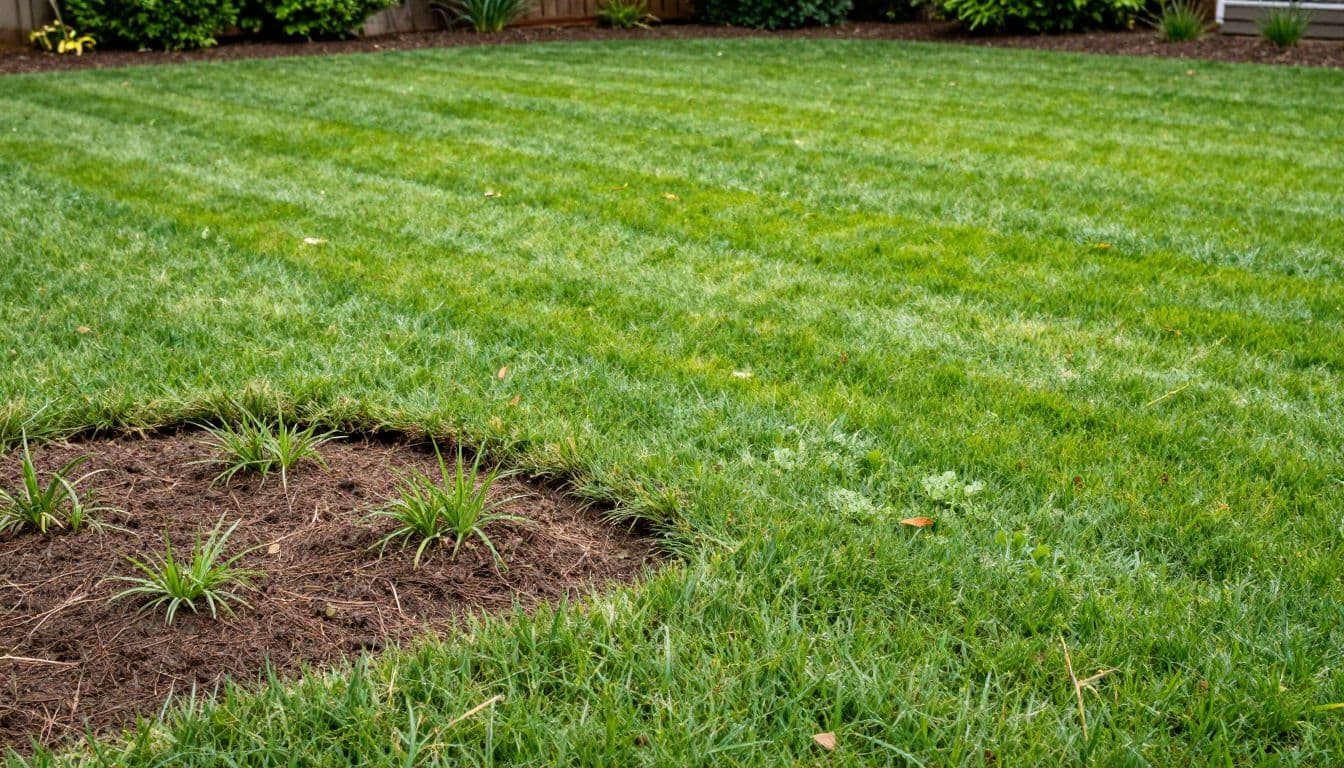
Watch for these signs of progress
New green blades emerging from the crown are the strongest sign of recovery. Bermuda may also send runners into the damaged section, while zoysia can slowly thicken at the edges.
Successful fertilizer burn recovery usually looks uneven at first. The patch may remain lighter in color, but it should stop expanding and show fresh growth during the grass's active season.
This timeline offers a practical guide, although weather and turf type can change the pace.
| Time after burn | What to do | What to watch for |
|---|---|---|
| First 48 hours | Remove visible excess and water in controlled cycles. | Pooling, runoff, or damage spreading after irrigation. |
| Days 3 to 7 | Pause products and mow only if the lawn is dry and growing. | Firm crowns and stable patch edges. |
| Weeks 2 to 3 | Continue normal, measured watering and check for new blades. | Green shoots or runners in warm-season turf. |
| Week 4 and beyond | Reassess bare sections and underlying soil conditions. | Areas with no living crowns may need repair. |
Don't fertilize again until the lawn has returned to consistent, active growth. Once Bermuda or zoysia has fully recovered, follow a measured Bermuda and Zoysia fertilization plan rather than trying to replace lost color with a heavy application.
Troubleshoot Turf That Isn't Improving
If the brown area expands after careful watering, fertilizer may not be the only issue. Atlanta heat, irrigation gaps, insects, disease, and compacted soil can all damage turf in ways that resemble burn.
Compare the pattern with other lawn problems
Use the location and shape of the damage to narrow down the cause:
- Brown stripes or circles that match a spreader path point toward excess fertilizer.
- Irregular patches that enlarge during warm, humid weather can indicate a lawn disease.
- Dry spots that follow sprinkler gaps often come from uneven irrigation coverage.
- Turf that lifts easily from the soil may have grub damage or weak roots.
Check the irrigation system before changing the care plan. A clogged nozzle or blocked spray pattern can leave one section dry while the rest of the lawn receives enough water.
Know when a patch needs repair
A patch with completely brown, brittle crowns may not recover, even with proper care. Continue to avoid fertilizer, then decide on repair after you confirm the grass type and the season.
Bermuda can fill small gaps while it is actively growing. Tall fescue repairs usually wait for Atlanta's fall seeding weather. For large damaged areas, recurring burn, or turf near a drainage channel, a lawn-care professional can inspect the soil, irrigation, and grass condition before any repair work begins.
Give Atlanta Turf Time to Rebuild
Fertilizer burn can look alarming, yet living crowns often recover when you remove the excess, water carefully, and reduce stress. The most useful response is patience with a plan , not another product application.
Protect the grass through a few normal mowing and watering cycles, then judge progress by fresh growth rather than immediate color. A lawn that regains healthy roots has a better chance of filling in evenly over time.