Bradford Pear Replacements for Atlanta Yards
Bradford pear replacements work best when they fit the yard's mature space, sunlight, and drainage, not just its spring appearance. Atlanta homeowners can choose from native flowering understory trees for smaller lots or larger shade trees for open ground. The right selection can also reduce conflicts with lawns, paving, utilities, and routine yard care.
Before choosing a tree, look at where water collects after rain and how much sun the planting spot receives. Then compare the mature canopy with the room available above and below ground.
Key Takeaways
- For smaller yards, consider eastern redbud, flowering dogwood, serviceberry, fringe tree, eastern hophornbeam, or a tree-form yaupon holly.
- For larger sunny areas, compare willow oak, red maple, river birch, and other shade trees against the site's drainage and available root space.
- A tree that tolerates wet soil may struggle on a dry slope, while one suited to a compact yard may not provide broad shade.
- Plant with the root flare visible, keep mulch off the trunk, and give a new tree steady attention through its first growing season.
Why Replace a Bradford Pear?
A replacement is a chance to choose a tree that suits the way you use your yard. Perhaps you want spring flowers near the front walk, shade over a seating area, or a canopy that leaves enough room to mow beneath it. Start with that purpose, then narrow the options by site conditions.
Atlanta planting guidance favors native Piedmont trees where they fit the property. Native status alone doesn't settle the choice, though. A large oak needs far more space than a small flowering tree, and a low, wet corner calls for a different selection than a sunny, well-drained lawn.
Match the Tree to Your Yard
Measure the space the mature tree will need
A nursery tree can look compact while its mature crown and roots extend well beyond the planting hole. Check both mature height and spread, then consider nearby roofs, sidewalks, driveways, overhead lines, and underground utilities. Large trees need room beyond the visible canopy, so don't place them in narrow strips or close to pavement.
For smaller properties, an understory tree often makes a better fit. These trees can add flowers or seasonal color without taking over a front lawn or blocking a view.
Read the light and the soil
Track the sun in the proposed planting area. Open, sunny spaces can suit many shade trees, while a patio with filtered light may favor a smaller ornamental tree. Also pay attention after heavy rain. If the same spot stays soggy, choose a tree suited to regular moisture or address the grade before planting.
Atlanta's red clay can hold water and compact, then harden during dry weather. That makes drainage and soil volume part of the selection, not an afterthought.
Flowering Trees for Smaller Atlanta Yards
Native understory trees can bring seasonal interest to residential landscapes without demanding the footprint of a large shade tree. The table gives typical mature heights as a planning guide. Actual size varies by species, cultivar, and growing conditions.
| Tree | Typical mature height | Seasonal interest | Site and care notes |
|---|---|---|---|
| Eastern redbud | About 20 to 30 feet | Early spring flowers and fall color | Works well in smaller spaces; allow room for its spreading crown |
| Flowering dogwood | About 15 to 30 feet | Spring flowers, fall color, and berries | Often suits morning sun and afternoon shade |
| Serviceberry | Similar to redbud, often narrower | Spring flowers, edible fruit, and fall color | Useful where a narrower canopy is preferred |
| Fringe tree | About 12 to 20 feet | Fragrant spring flowers | A compact option for a yard with room for a small canopy |
| Eastern hophornbeam | About 25 to 40 feet | Textured bark and fall color | Needs more vertical and canopy room than smaller ornamentals |
| Yaupon holly | Varies by cultivar and form | Evergreen foliage and berries on female plants | Choose a tree-form selection and plan for its eventual spread |
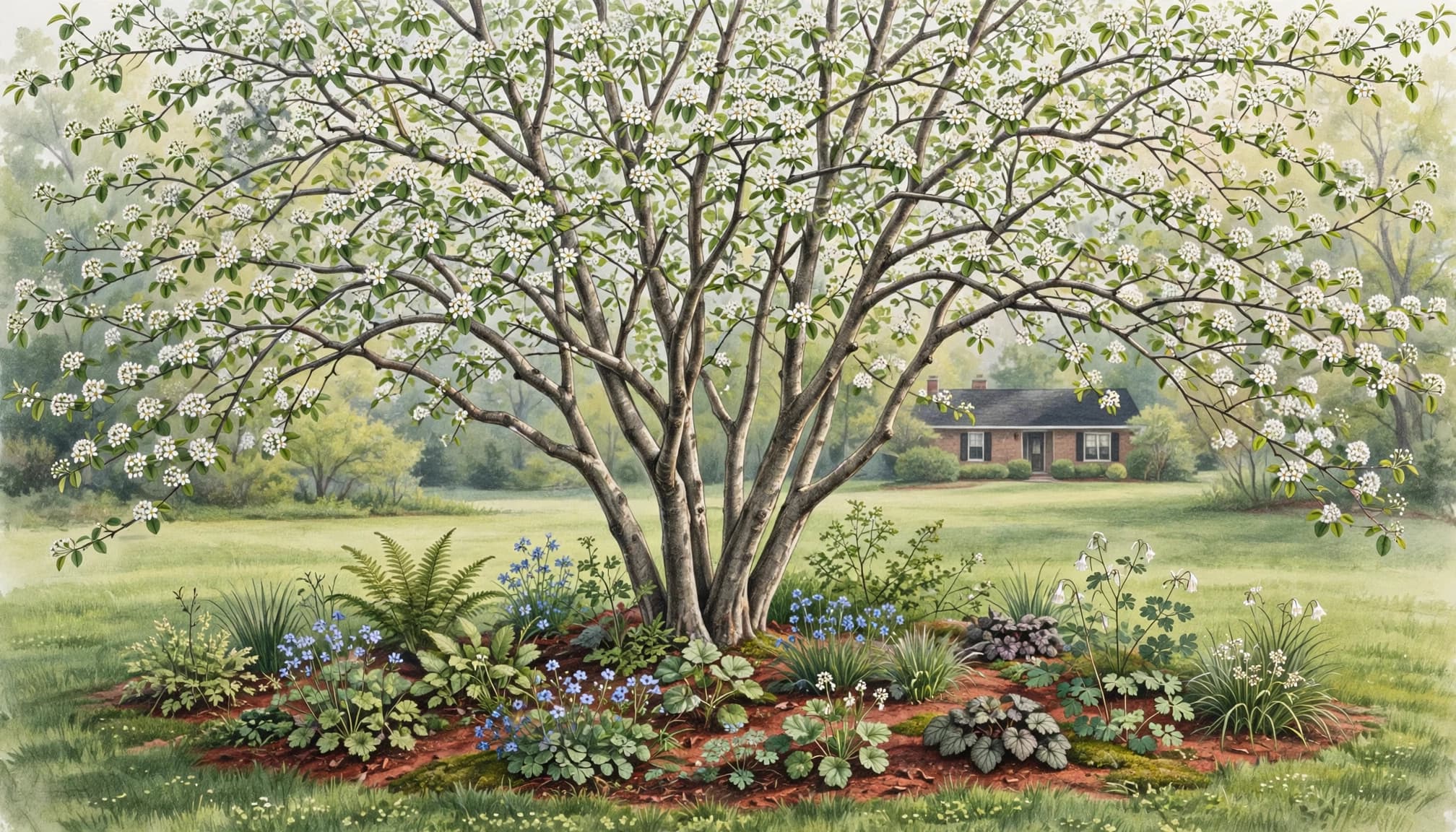
Eastern redbud and dogwood are strong candidates where a modest canopy and seasonal flowers matter. Serviceberry adds a similar flowering effect with a narrower form, while yaupon holly offers year-round foliage. Check the mature form of the individual selection, since cultivars can differ in size and shape.
Shade Trees for Larger Open Yards
Choose by canopy size and soil moisture
Where there's room for a broad canopy, willow oak is a practical native shade-tree candidate for many Atlanta properties with clay soil. It still needs generous space away from foundations, pavement, and utility corridors. Red maple suits open yards with average soil and reliable moisture, and its fall color adds seasonal interest.
River birch fits a different situation: a low area where water lingers after rain. It needs consistent moisture, so a dry hilltop is a poor match. Southern sugar maple can suit a medium-sized yard with moist soil that drains, while live oak needs a large, open planting area for its long-term canopy and root system.
Avoid choosing a large tree for a small lot
Tulip poplar and American sycamore can grow very large, so they rarely suit a typical residential yard. Sweetgum's spiky fruit can make mowing unpleasant, and sycamore drops large leaves, bark, and seed balls. These are real maintenance costs even when a property has room for a tall tree.
Large roots can extend beyond the canopy and may lift pavement or crowd shallow turf roots. Keep large species well away from sidewalks, septic systems, foundations, and narrow planting strips.
Check Drainage Before Planting
Don't turn the planting hole into a clay bowl
Observe the spot after a hard rain. If water regularly pools there, digging a deeper hole won't solve the problem. A planting hole in dense clay can hold water around the root ball, leaving roots short of oxygen. For a persistently wet area, consider river birch or a modest raised planting area.
If the whole section of yard stays soggy, correct the drainage or grade before adding a tree. RW Lawn Co provides grading and site preparation for landscaping, including drainage correction and water-flow management.
Protect the planting space
Before digging, account for overhead lines, buildings, pavement, septic features, and underground utilities. Call 811 before digging, even for a small planting project. Avoid heavily compacted ground and places where runoff moves quickly across a slope.
If a site needs major regrading or has a bare bank, deal with the soil and erosion risk first. A young tree can't correct active soil movement on its own.
Planting and First-Year Care
Choose a cool planting window
Fall through early winter is often a good time to plant deciduous trees in Metro Atlanta, when cooler weather gives roots time to settle before summer heat. December through early March is a practical dormant-season window for many trees, provided the soil is workable and has adequate moisture. Spring can also work, but the new tree will need close attention as warmer weather arrives.
Container-grown trees can be planted at other times with careful watering. Avoid treating the calendar as a substitute for site conditions: soil moisture, sun exposure, and drainage all affect how a new tree settles in.
Set the tree at the right height
Keep the root flare at or slightly above finished grade. Planting too deeply can restrict oxygen near the roots and hold moisture against the trunk. Backfill mostly with the soil removed from the hole, unless a soil test or specific site condition points to another approach.
Spread 3 to 4 inches of mulch over the root zone, but leave a clear gap around the trunk. Mulch helps moderate soil temperature and surface drying; it won't fix poor drainage. For help with bed preparation and planting, see our Atlanta landscaping and mulch services.
Water through the first growing season
Water thoroughly at planting, then keep checking soil moisture through the first year. Newly planted trees need a dependable water source for roughly 12 months, even when planted during cooler weather. Use slow, thorough watering rather than frequent shallow sprinkling, and adjust after rain so the root zone doesn't remain saturated.
Temporary support is only needed when a tree can't stand securely on its own. Remove temporary staking within 12 months, and inspect the tree after severe weather.
Plan for Lawn and Landscape Maintenance
A tree's canopy changes how you care for the surrounding yard. As branches grow, shade may thin turf and increase leaf cleanup. Leave enough room around the trunk to mow without striking bark, and consider a defined landscape bed where grass struggles or the tree's roots reach the surface.
Seasonal cleanup can help keep fallen leaves and branches from collecting in lawn areas and planting beds. RW Lawn Co offers spring and fall yard cleanup in Atlanta, including leaf and debris removal. For planting beds, a correctly maintained mulch layer can reduce surface drying without touching the trunk. Our Atlanta mulch installation guide covers mulch depth and placement.
Frequently Asked Questions
Which Bradford pear replacement is best for a small yard?
Eastern redbud, flowering dogwood, serviceberry, fringe tree, and tree-form yaupon holly are useful options to compare. Choose based on mature height and spread, available sunlight, and the room around the planting spot. A narrower serviceberry can suit a tighter space, while a dogwood may fit a location with morning sun and afternoon shade.
What should I plant in a wet part of the yard?
River birch can suit a low area where water regularly lingers, provided the tree has enough room. If a larger portion of the property stays soggy, address the drainage or grade instead of expecting a tree to fix it.
When should I plant a replacement tree?
Fall through early winter is often a favorable period, with December through early March serving as a practical dormant-season window for many trees. Spring planting can also succeed with steady watering as temperatures rise.
Choose for the Yard You Have
A good Bradford pear replacement fits the property after it reaches mature size, not only when it comes home from the nursery. Match the tree to available space, sunlight, and drainage, then give it a sound start with correct planting depth, mulch placement, and steady first-year watering. That planning helps the new tree add interest without making routine lawn care harder.