Deer-Resistant Plants for Atlanta Gardens With Heavy Clay
Deer-resistant plants can reduce browsing in an Atlanta garden, but no plant is guaranteed to go untouched. The most reliable plan combines plants deer tend to avoid with soil preparation that helps roots handle wet storms and dry summer heat.
Atlanta's red clay can stay waterlogged after rain, then harden as it dries. Choose plants for the actual sun, drainage, and slope in each bed, and group them by their growing needs. These options can help you build a practical, attractive landscape without relying on invasive species.
Key takeaways
- Deer resistance is a tendency, not a promise. Season and food availability affect what deer eat.
- Atlanta clay holds water after storms and can become hard during dry spells. Drainage and root space matter.
- Salvia, little bluestem, switchgrass, daffodils, Christmas fern, and hellebores offer useful options for different light conditions.
- Improve the whole bed with organic matter, and correct standing-water problems before planting.
- Avoid invasive plants such as Chinese privet, which Georgia Extension identifies as a leading invasive species in the state.
What deer resistance does and doesn't mean
Browsing changes with conditions
Deer often avoid plants with strong aromas, bitter or toxic foliage, prickly leaves, or coarse textures. Still, a hungry deer may eat plants it usually ignores, especially during winter or when other food is scarce. Young plants also tend to be more vulnerable than established ones.
That's why "deer resistant" describes a plant's typical appeal, not a dependable barrier. Watch the garden through the year, then protect new plantings with temporary fencing or individual guards if browsing becomes a problem.
Build variety into the planting
A mixed bed spreads risk. If deer browse one plant, the rest of the design can still provide structure and color. Combine plants with different leaf textures and mature heights, and avoid planting a large, single-species border.
For a landscape with a dense evergreen screen, compare the options in our guide to privacy shrubs for Atlanta clay soil. Screen plants still need enough room for their mature size and roots.
Read the clay and the planting site first
Match plants to moisture and light
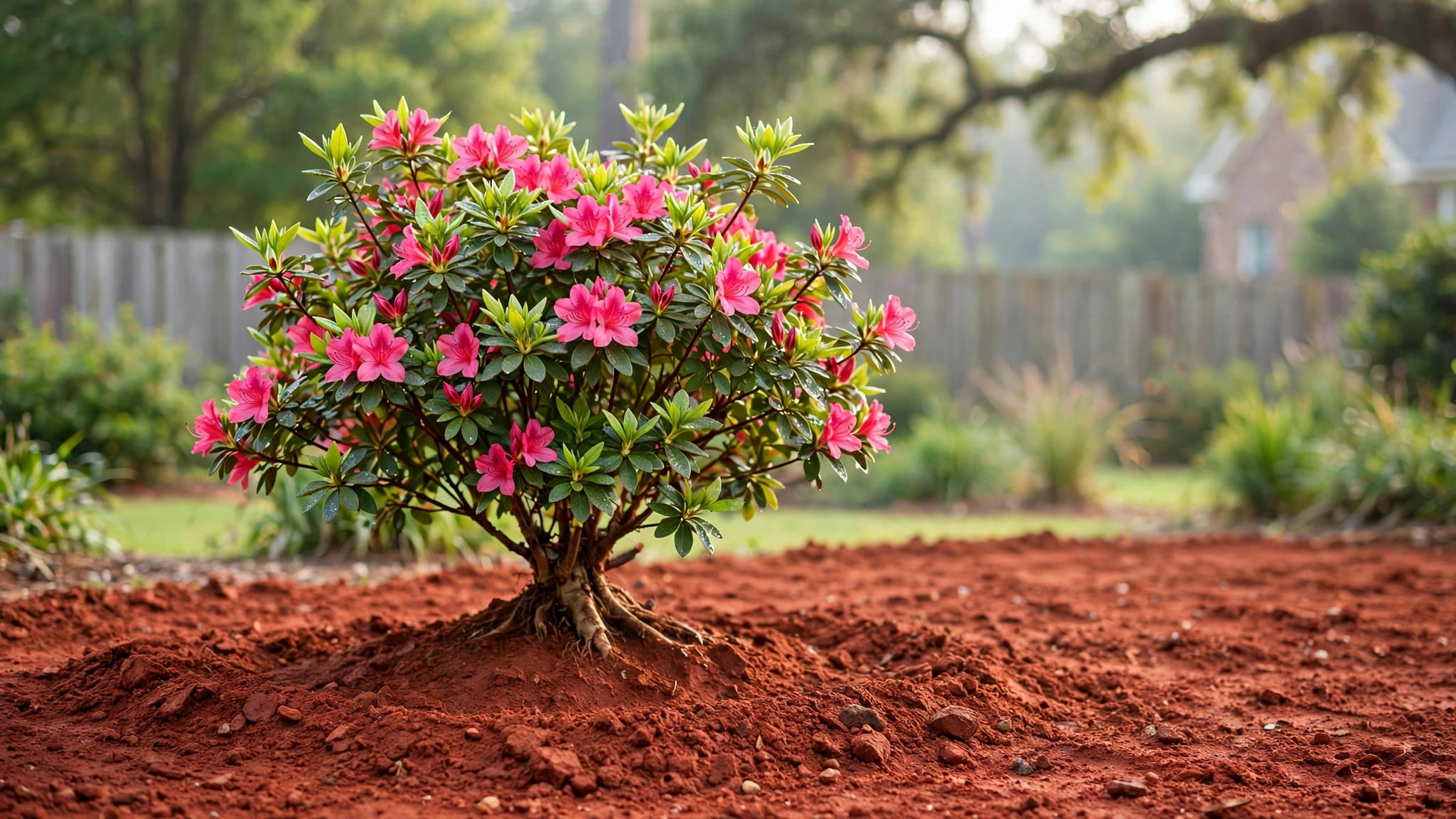
Metro Atlanta soils often include acidic red clay loam, with pH commonly between 5.0 and 6.5. Clay can hold water after storms and then dry hard in summer. A bed beside a downspout may stay wet, while a sunny slope can dry much faster.
Observe the site after rain and during a dry stretch. Note where water lingers, where the sun falls, and whether the bed is compacted by foot traffic or equipment. These conditions can matter as much as the plant's general soil preference. For large planting projects, our guide to planting trees in Georgia clay soil covers similar drainage and soil concerns.
Correct runoff before planting
Plants can help cover soil and slow erosion, but they won't fix a severe drainage problem or unstable slope on their own. If runoff repeatedly cuts through a bed, consider a swale, grading adjustment, or other site solution before installing new plants. Slopes that need structural support may require retaining walls that manage runoff.
Best deer resistant plants for sunny Atlanta beds
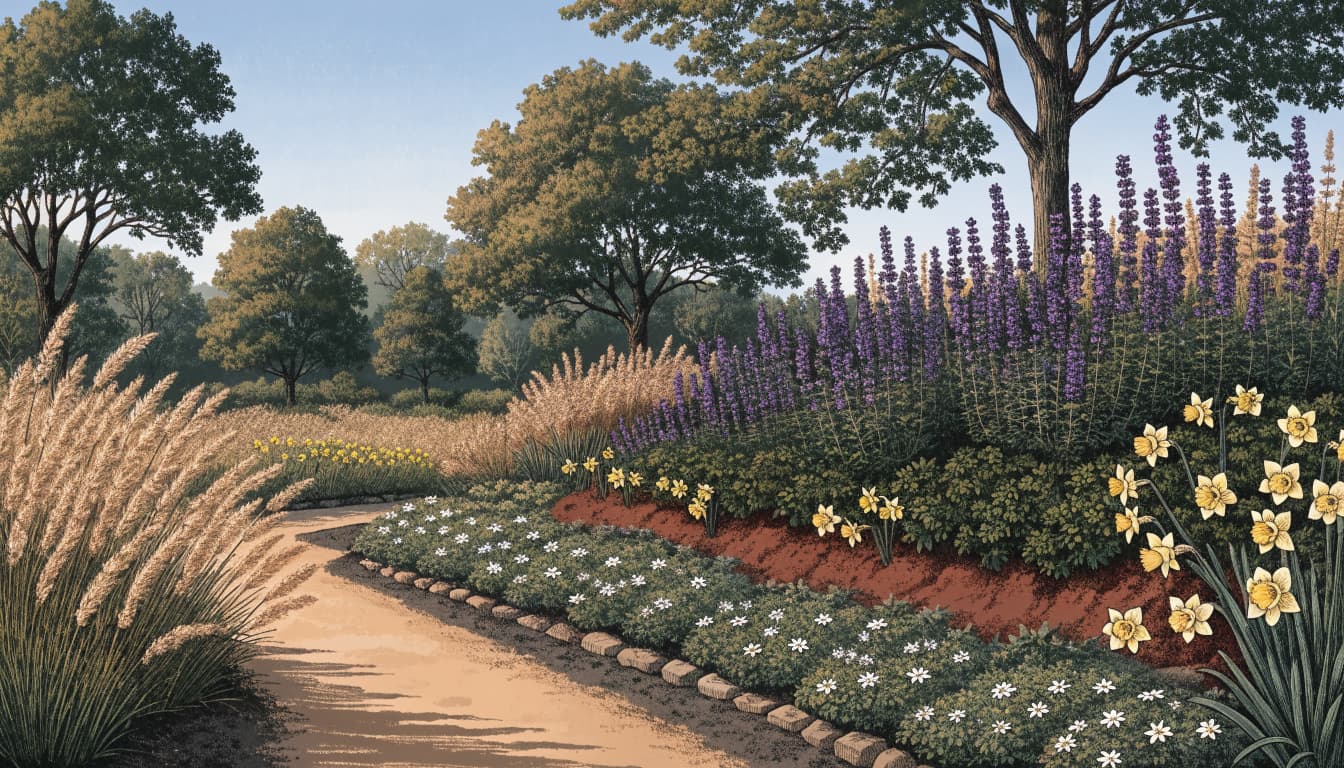
Sunny beds need plants that handle summer heat and don't depend on constantly wet roots. The choices below suit different uses, from low seasonal color to a taller grass backdrop.
Grasses and flowering perennials
Little bluestem grows best in full sun and tolerates clay that drains reasonably well. Its upright clumps add winter texture and work along borders or on sunny slopes. Deer generally show less interest in its coarse foliage than in tender, broad-leaved plants.
Switchgrass grows in full sun to part shade and handles a range of soil moisture levels, including heavier ground. Use it in a larger bed, as a seasonal screen, or to help cover a slope. Choose a clumping form and allow room for its mature width.
Salvia prefers sun and soil that doesn't stay saturated. Its aromatic leaves and flowering stems suit front borders and pollinator beds, while its scent can make it less attractive to deer. Cut back spent flower stalks to encourage a tidy appearance.
Black-eyed Susan adds summer color in sunny beds and tolerates a range of soils, including clay with reasonable drainage. Plant it in a group for a broad patch of flowers. Deer may browse it, particularly when young growth is tender, so treat it as a lower-risk choice rather than a protected one.
Bulbs and evergreen structure
Daffodils grow in sun or part shade and are a dependable spring option because their foliage and bulbs are unappealing to deer. In clay, plant them where water doesn't sit through winter. Use them beneath deciduous trees or in small drifts along a bed edge.
Yaupon holly provides evergreen structure in full sun or part shade and adapts to many Atlanta-area soils. It needs drainage rather than prolonged standing water. Use it as a foundation shrub or informal screen, with spacing based on the selected cultivar's mature size. Deer may still browse it when food is limited.
Shade plants for woodland edges and foundations
Shaded beds under mature trees often combine dry soil, root competition, and dense leaf cover. Choose plants for the conditions below the canopy, not simply the shade level.
Ferns and hellebores
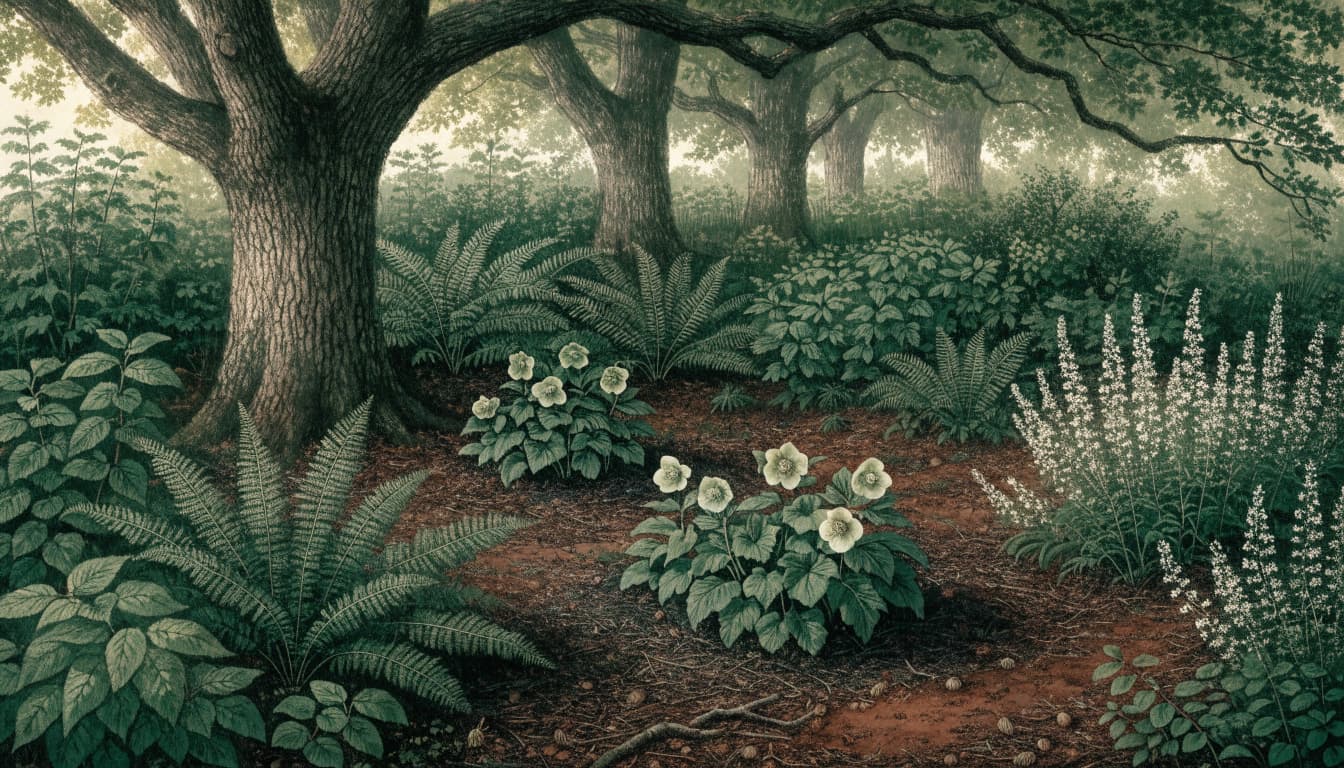
Christmas fern thrives in shade or part shade and does well in a woodland-edge bed with consistent moisture and good drainage. It keeps its foliage through much of the year and works as a ground layer on shaded slopes. Deer usually leave established ferns alone, though browsing can vary.
Hellebores grow in part to full shade and prefer moist, well-drained soil. They offer early flowers and evergreen foliage for a sheltered bed or foundation planting. Their foliage is toxic, so deer typically avoid it. Don't place them where clay stays saturated after rain.
Shrubs for filtered shade
Oakleaf hydrangea grows well in part shade and can handle clay when the planting area drains. Its large leaves and flowers make it useful as a specimen shrub or informal woodland border. Deer may browse its new growth, so it's a less dependable choice where pressure is heavy.
A varied understory can pair a shrub with a ground layer, rather than filling the entire bed with one plant. Keep the planting away from tree trunks, and shift locations if large surface roots make digging difficult.
Prepare clay beds for healthy roots
Improve the whole planting area
Clay often causes trouble when a small, heavily amended planting hole holds water like a bowl. Instead, loosen the soil across the bed and blend in organic matter near the surface. A layer of composted pine bark, leaf mold, or finished compost can improve the upper soil structure.
Avoid creating a pocket of loose, rich soil surrounded by dense clay. Roots need to move into the surrounding ground, and excess water needs a path out. If water remains after storms, address grading or drainage before adding plants.
Mulch without covering stems
Apply about 2 to 3 inches of mulch to reduce evaporation and protect the soil surface. Keep it a few inches away from plant stems and shrub trunks. Thick mulch piled against the plant can trap moisture where it isn't needed.
Mulch supports good bed care, but it won't solve a soggy site or compacted subsoil. For material choices and application details, see our Atlanta mulch installation guide.
Design for maintenance and changing seasons
Group plants with similar sun and moisture needs so watering is easier to manage. A sunny grass-and-salvia bed belongs in a different spot from a fern-and-hellebore planting. This also makes it simpler to replace an individual plant without disturbing the rest of the landscape.
Planting in March can give roots time to establish before summer heat arrives. Water new plants as needed, but allow for clay's slower drainage. Check the soil before watering again, especially after a storm.
Choose mature size over the small container's appearance. Grasses, shrubs, and perennials need enough space to grow without constant trimming or crowding. For slopes, use spreading or fibrous-rooted plants where appropriate, and protect bare soil while new plants fill in.
Frequently asked questions
Are any plants completely deer-proof?
No. Deer may eat plants they usually avoid when food is scarce, especially in winter or during dry periods. Plant selection can reduce damage, but fencing or guards may still be needed to protect young growth.
What grows in Atlanta clay and resists deer browsing?
Little bluestem, switchgrass, daffodils, salvia, Christmas fern, and hellebores are useful options for different sun and shade conditions. Each still needs the right drainage and placement. For instance, daffodils and hellebores struggle where water remains around their roots.
Should I amend each planting hole with compost?
It's usually better to improve the bed broadly than to fill an individual hole with a very different soil mix. Work organic matter into the upper layer across the planting area, and address standing water or compaction separately.
Choose plants for the bed you have
Deer-resistant planting works best when it accounts for browsing habits, drainage, sun, and mature plant size. In Atlanta clay, a suitable plant still needs a healthy root zone and a site that doesn't stay waterlogged.
Use a diverse mix, protect vulnerable new growth, and build the bed around local conditions. That approach gives your garden a better chance to stay attractive through both deer visits and Georgia's wet-to-dry swings.