How to Spot Atlanta Chinch Bug Damage in St. Augustine Lawns
Atlanta heat can turn a healthy St. Augustine lawn patchy in a week. St. Augustine chinch bugs often hide in that stress, so the damage gets blamed on dry weather first.
That mistake costs time and grass. More water won't help if the real problem is a pest feeding in the turf canopy.
If your lawn has sunny edges, hot sidewalks, or stressed spots near driveways, watch those areas closely. The faster you confirm the cause, the easier it is to stop the spread.
What Chinch Bug Damage Looks Like in St. Augustine Grass
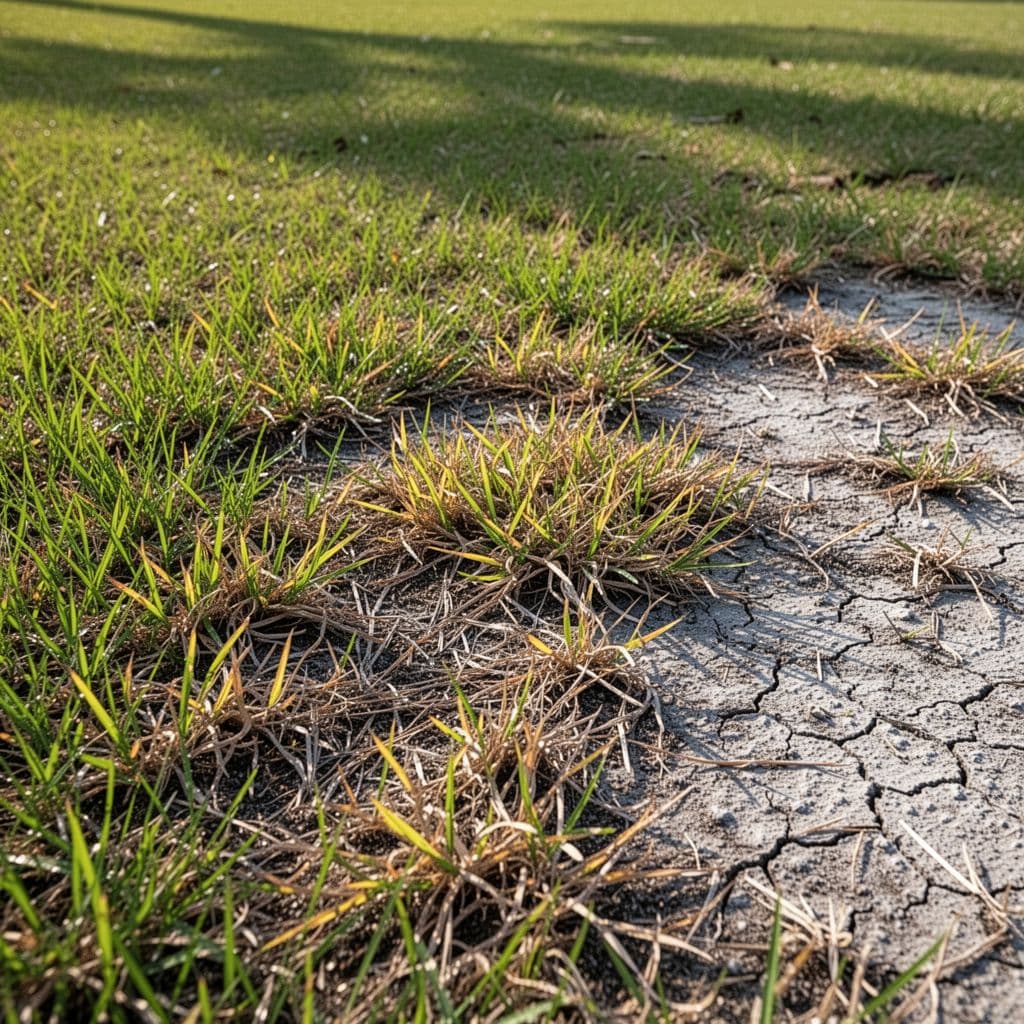
Chinch bug damage usually starts in the hottest parts of the yard. In Atlanta, that often means full-sun areas, curb strips, and lawn edges near pavement that hold heat.
At first, the grass loses its color. It may turn pale yellow, then straw brown. The patches often look irregular, not round and neat.
The grass can still look dry after watering, which confuses many homeowners. However, the turf may be alive at the edges while the center keeps fading.
Pull back a few blades and inspect the crown. Chinch bugs feed near the base, so the grass may feel brittle even when the soil below is not bone dry.
Small nymphs and adults may hide in the thatch layer. They are tiny, dark, and easy to miss unless you part the grass and look closely.
One more clue is spread. A chinch bug patch often expands outward, like a stain soaking into fabric. Drought stress can do that too, but chinch bug damage usually keeps moving even after the lawn gets water.
Drought Stress or Chinch Bugs? Spot the Difference
Atlanta summers make this call tricky. St. Augustine grass is already under pressure during long stretches of sun, heat, and low rain. That means both drought and chinch bugs can show the same early signs.
The difference often shows up in the pattern and the recovery. Drought usually affects larger areas more evenly. Chinch bugs tend to leave irregular patches with sharper edges.
Here's a quick comparison that helps narrow it down:
| Clue | More like drought stress | More like chinch bugs |
|---|---|---|
| Patch shape | Broad and even | Irregular, spreading patches |
| Soil feel | Dry several inches down | Soil may still be moist |
| Location | Whole lawn or wide sections | Sunny spots, edges, and hot areas |
| Response to watering | Improves after deep watering | Keeps fading or spreading |
| Turf look | Wilted all over | Yellowing that turns brown in spots |
If the lawn perks up after a deep soak, drought was probably part of the problem. If the patch keeps getting worse, chinch bugs deserve a close look.
A lawn that stays moist at the root zone but still turns brown needs a closer inspection before you add more water.
In Atlanta, this confusion happens a lot near stone borders, south-facing beds, and sidewalks that throw heat back into the grass. Those spots dry fast and also attract stress pests.
What to Check Before You Treat
Before you spray or spread anything, confirm what's happening. Treating the wrong problem wastes money and can leave the lawn stressed for longer.
Start with the lawn's hottest spots. Check the sunny side of the house, the edge along the driveway, and any area that dries sooner than the rest.
Next, part the grass at the soil line and look for movement. Chinch bugs are tiny, but you may spot small black insects with white markings, especially if the turf is active and the weather is warm.
A simple can test helps a lot. Use a coffee can with both ends removed, press it a few inches into the turf, and fill it with water. Wait several minutes, then watch for insects floating up.
Here's a practical order that works well:
- Check the worst patch first. Focus on sunny, stressed areas before you inspect the whole yard.
- Look at the grass base. Chinch bugs feed low in the canopy, so don't just scan the top blades.
- Run the can test. If bugs rise to the surface, you have a stronger case for treatment.
- Review recent lawn care. Mowing too low, heavy nitrogen, and uneven watering can make damage look worse.
If the grass is moist and still thinning, keep digging for the cause. That's usually the point where many homeowners realize the yard is not just thirsty.
Treating the Lawn the Right Way
Once you confirm chinch bugs, act on the damaged areas first. A wide, blanket treatment is often more than the lawn needs, especially if the infestation is still local.
Spot-treat the active patches and a small buffer around them, because the bugs often spread beyond the visible damage. Follow the product label exactly, since rates and timing matter.
Do not scalp the lawn before treatment. St. Augustine needs enough leaf surface to recover, and short mowing can leave the grass even weaker in Atlanta heat.
After treatment, water only as directed. Some products need irrigation to move into the turf, while others work better on a dry canopy. The label tells you which is which.
Recovery takes patience. Brown spots may not green up right away, especially if the turf was already heat-stressed. Keep checking the edges of the damaged area, because that is where the lawn often starts to rebound.
If the damage is widespread, or if you keep seeing new patches, get help before the whole yard thins out. A professional lawn care and mowing service can help keep St. Augustine dense enough to recover faster and make future problems easier to spot.
Keeping Atlanta Lawns Protected Through Summer
Chinch bugs like weak turf. So the best defense is a lawn that stays healthy through heat, sun, and uneven rain.
Mow St. Augustine high enough to shade the soil. In Atlanta, short grass dries faster and leaves the crown exposed. Sharp blades matter too, because ragged cuts add stress.
Water deeply, then let the lawn dry a bit before the next cycle. Frequent light watering keeps the top layer damp, which does the turf no favors in hot weather.
A few habits help keep outbreaks down:
- Watch hot edges often. Inspect sidewalks, driveways, and sunny borders every couple of weeks in summer.
- Limit excess nitrogen. Heavy feeding during peak heat can push weak growth that bugs like to attack.
- Reduce thatch. A thick thatch layer gives chinch bugs a place to hide.
- Keep mower height consistent. Sudden low cuts can expose St. Augustine to sun stress fast.
Late summer is the time to stay alert. That's when Atlanta lawns take the most heat, and a small problem can turn into a broad brown patch before you know it.
Conclusion
Chinch bug damage in St. Augustine grass often looks like drought at first. That's why sunny patches, hot pavement edges, and fast-spreading brown spots deserve a closer look before you reach for more water.
Check the pattern, inspect the grass base, and use a simple can test if needed. Once you confirm the problem, treat the active areas and adjust your mowing and watering so the lawn can recover.
A healthy Atlanta lawn can bounce back, but early diagnosis makes the biggest difference.