Atlanta Tall Fescue Summer Survival Guide for Heat-Stressed Lawns
Why does a lawn that looked great in April start looking tired by July? In Atlanta, tall fescue often runs into heat, humidity, and warm nights all at once, and that mix is rough on cool-season grass.
The goal in summer is not perfect color. The goal is to keep the lawn alive, limit damage, and give it a clean path back when fall arrives. That takes restraint, good timing, and a clear read on what the grass is telling you.
What Atlanta summer does to tall fescue
Tall fescue is built for cooler weather. It grows best in spring and fall, then slows down when Atlanta turns hot and sticky. Once soil temps rise and nights stay warm, the grass puts energy into survival instead of growth.
That's why many Atlanta tall fescue lawns turn dull, thin out in full sun, or stop looking "fresh" by mid-summer. Some areas may hold up better under trees or near shaded sides of the house. Others, especially hot south-facing spots, can thin fast.
The biggest mistake is expecting summer to behave like spring. Tall fescue rarely stays deep green through a North Georgia heat wave without help. Even then, some color loss is normal.
What matters most is whether the plant is still alive below the surface. If the crown and roots stay healthy, the lawn can recover when weather cools. If you push too hard with water, fertilizer, or mowing, you can make the stress worse.
Know whether you're seeing dormancy, drought stress, or disease
These three problems can look similar at first, but they do not call for the same response. A patch of brown grass is not always dead grass.
Here's a quick way to separate them:
| Problem | What it often looks like | What to do now |
|---|---|---|
| Temporary dormancy | Gray-green color, slower growth, thin look in hot sun | Water deeply when needed and wait for cooler weather |
| Drought stress | Footprints stay visible, leaves curl, soil is dry several inches down | Water sooner and more thoroughly |
| Summer disease | Irregular patches, spreading spots, discolored rings, or soft-looking areas | Check watering habits and compare symptoms before treating |
Temporary dormancy is the least alarming. The grass may look rough, but it is conserving energy. With enough moisture and less heat, it often improves on its own.
Drought stress is more serious. The plant is losing water faster than it can replace it. Leaves start folding, the color fades, and dry soil shows up deeper in the root zone.
Common summer disease, like brown patch, behaves differently. It often shows up in warm, humid weather, especially after long wet periods or evening watering. If you see spots spreading after muggy nights, compare the pattern before you react. A good place to start is the Atlanta brown patch treatment guide.
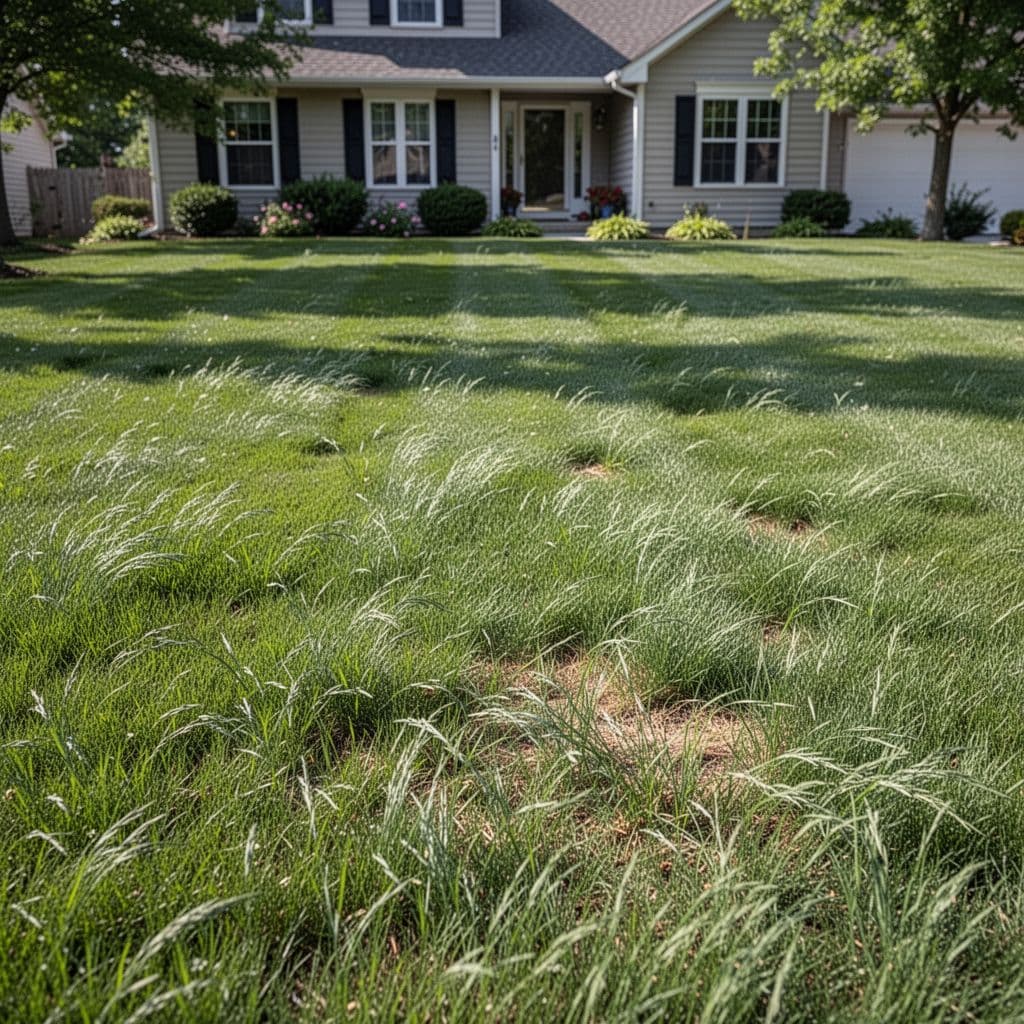
The takeaway is simple: don't treat every brown patch the same way. Water issues, dormancy, and disease need different responses.
Water deeply, but only when the lawn asks for it
Tall fescue in Atlanta does best with deep, early watering, not daily sprinkles. Light watering keeps the top inch damp, which encourages shallow roots. Shallow roots are the last thing you want in July.
Water in the early morning so the grass dries during the day. That lowers stress and helps reduce disease pressure. Evening watering keeps leaves wet too long, and that gives fungus a better chance to spread.
Use the soil, not the calendar, to guide you. If the top few inches feel dry and footprints stay behind, the lawn needs water. If the grass looks flat but the soil still has moisture below the surface, wait.
A seasonal watering guide for Atlanta fescue can help you match watering to weather instead of guessing by the week. That matters in summer, because one storm can change your schedule fast.
A few rules help most homeowners:
- Do water long enough to reach the root zone.
- Do water early in the morning.
- Do let the lawn dry a bit between soakings.
- Don't run a short cycle every day.
- Don't water late in the evening.
- Don't flood stressed areas because they look thin.
If your yard has slopes or clay-heavy soil, slower soak cycles work better than one fast run. That gives water time to sink in instead of running off.
Mow high, keep blades sharp, and protect stressed areas
Mowing can either help tall fescue or wear it down fast. In summer, the safest move is a taller cut. Taller grass shades the soil, protects roots, and holds moisture a little better.
For Atlanta tall fescue, aim for the upper end of the normal mowing range during heat. If the lawn is already stressed, don't scalp it trying to make it look neat. A short cut exposes the soil and leaves the plant with less leaf surface to recover.
Sharp blades matter too. Dull blades tear the grass, which leaves ragged tips that dry out faster. That also makes the lawn look worse even when it is still alive.
Try to mow only when the grass is dry. Wet blades clump, bend, and spread disease more easily. If the lawn is thin, reduce traffic where you can. Kids, pets, and heavy use add stress that the grass can't afford in extreme heat.
If you want a quick reference, the tall fescue mowing height guide is useful for matching height to season.
One more thing matters in Atlanta yards with trees. Shade can help with heat, but thick shade can also trap moisture. That creates a better setup for disease if the grass never dries out.
What to skip in summer, and what to save for fall
Summer is the wrong time to push tall fescue too hard. The grass is already under pressure, so extra input can do more harm than good.
Skip quick-release nitrogen fertilizer in hot weather. It can force tender growth that burns out fast. If the lawn is struggling, feeding it aggressively usually makes the problem more obvious, not less.
Also skip overseeding in the middle of summer. Seed needs better conditions than Atlanta usually offers in July and August. Fall is the better window for thickening and repair.
Weed control needs judgment too. Some products can stress fescue when temperatures are high. If weeds are only showing in a few spots, spot treatment is safer than broad spraying. When the lawn is weak, holding off may be the smarter call.
If the grass is brown from heat but still alive, patience often beats treatment.
That said, don't ignore a real disease issue. If patches keep spreading after rainy, muggy weather, compare the symptoms before they take over. A lawn that gets brown patch every summer may need a more careful plan than a lawn that only looks faded in a dry spell.
What fall recovery should look like
Tall fescue usually does not snap back in the middle of an Atlanta heat wave. It waits. Then, when nights cool and rain returns, it starts growing again.
That is why summer care should focus on survival. You want enough root strength left for the grass to wake up in fall. A lawn that looks rough in August can still recover well if you avoid needless stress.
If some areas stay thin after cooler weather returns, that can point to shallow roots, compacted soil, or disease damage from summer. Those spots may need repair later, not more summer pressure now. Keep a realistic eye on the lawn and judge it by recovery, not by one hot week.
Conclusion
Atlanta tall fescue rarely looks perfect through the hottest part of the year, and that's normal. The smart move is to read the signs, water deeply when the lawn asks for it, mow high, and skip the extra stress.
If you protect the roots now, you give the grass a better shot at coming back strong in fall. That is the real summer win for atlanta tall fescue , not a flawless color show in August.