Two-Lined Spittlebug Damage in Atlanta Centipede and St. Augustine Lawns
Yellow patches in a Georgia lawn can send homeowners down the wrong path fast. One week the grass looks tired, and the next it looks thin, scorched, or uneven, even when watering hasn't changed.
In Atlanta, two-lined spittlebug damage often shows up in centipedegrass and St. Augustine lawns that are already under stress. The trick is to spot the pest before you treat the wrong problem, because drought, mowing injury, and fungus can look similar at first glance.
What two-lined spittlebugs do to warm-season turf
Two-lined spittlebugs are small, black insects with two orange-red lines on their backs. The immature stage makes the telltale frothy foam you may see on grass blades and stems.
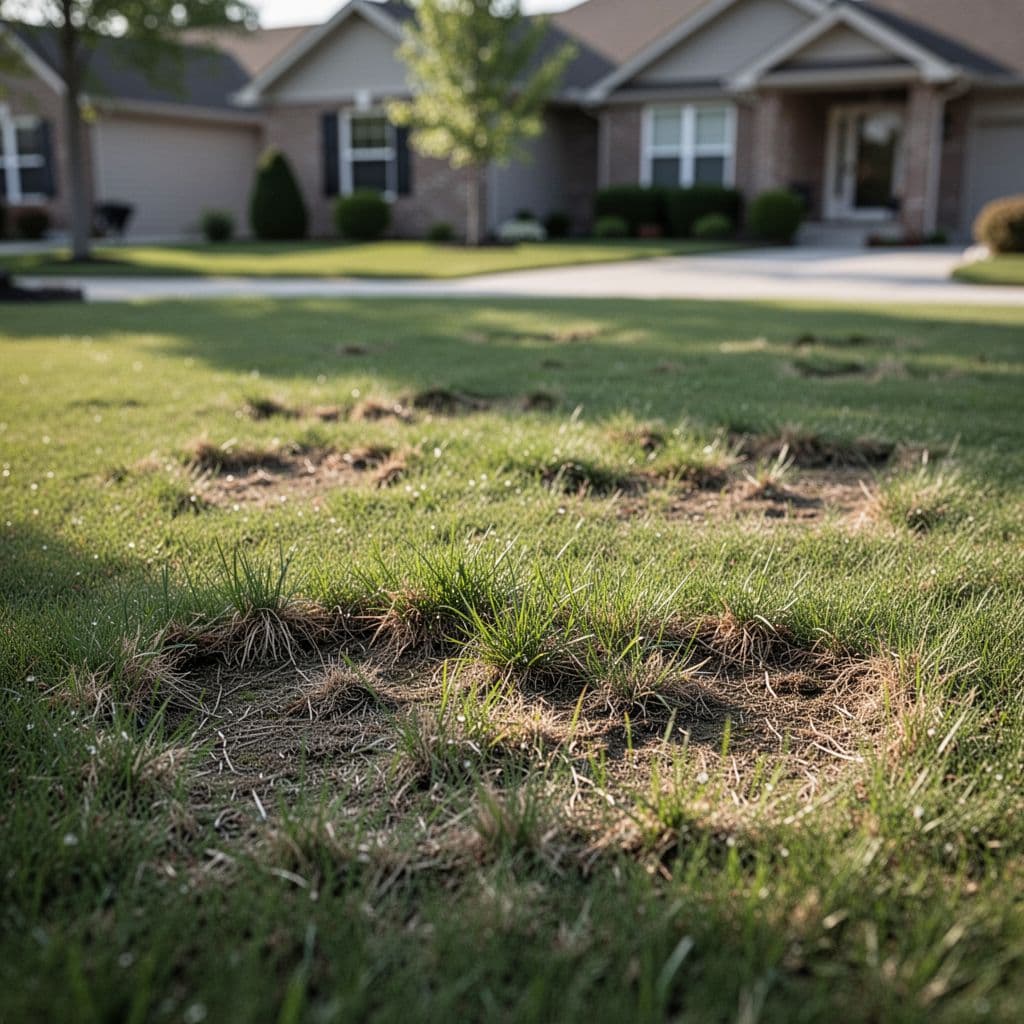
They feed by piercing the plant and pulling out sap. That feeding weakens the grass, so the lawn starts to lose color and density. In centipede and St. Augustine, the damage often looks like patchy yellowing, thinning, or a lawn that never seems to bounce back after heat.
The foam is a big clue. It's not coming from the grass itself, and it usually hides the nymphs where they feed. You'll often find it near the lower part of the plant, especially in thicker areas or along edges where the lawn is more stressed.
In Metro Atlanta, the timing matters. Spittlebugs are often most active from late spring into early summer, when warm weather settles in and lawns start feeling the pressure of heat, sun, and regular mowing. By midsummer, the grass may show the result of that stress more clearly.
How to tell spittlebug damage from drought, fungus, or mowing problems
Accurate diagnosis saves time and money. A lawn can look rough for several reasons, and spraying the wrong issue won't help much.
A quick comparison can narrow it down:
| Problem | What it often looks like | Clue that helps separate it |
|---|---|---|
| Two-lined spittlebugs | Yellowing, thinning, patchy decline | Foam on stems, damage in hot stressed spots |
| Drought stress | Whole lawn wilts or turns dull | Soil is dry deeper down, not just at the surface |
| Fungus | Spots, rings, or leaf lesions | Often follows long wet spells and poor air flow |
| Mowing injury | Scalp marks or striped damage | Pattern matches the mower path or a low cut |
If you're checking the lawn yourself, start close to the ground.
- Pull back the grass in the thin area and look at the lower stems.
- Search for frothy foam on blades and around the crown.
- Check the edges of the affected patch, not only the center.
- Compare the problem area with parts of the lawn that get more shade or water.
If you see foam and weak, yellow turf at the same time, spittlebugs move higher on the list. If the whole lawn is dry and crunchy, drought may be the bigger issue. If the pattern follows the mower deck, the problem may be cutting height or blade sharpness.
What to do before you reach for a spray
Warm-season lawns in Atlanta need steady care, but they don't like rough handling. Centipedegrass and St. Augustine can both decline fast when they're cut too low, watered too often, or fed too hard in hot weather.
Start with these basics:
- Mow high enough to protect the crown of the plant.
- Keep mower blades sharp so the grass isn't shredded.
- Water deeply, then let the soil dry a bit before the next cycle.
- Avoid heavy nitrogen fertilizer in the hottest part of the season.
- Watch thatch buildup, because thick thatch can hold pests and hide early damage.
A consistent mowing schedule helps too. Routine residential grass cutting keeps the turf even, which makes stress easier to spot and reduces the sloppy growth that can hide pest activity.
For centipedegrass, a lighter touch usually works best. It prefers less fertilizer than many homeowners expect, and too much nitrogen can make the lawn soft and more likely to struggle later. St. Augustine also needs careful mowing, because scalping can leave it weak and open the door to more damage.
If the grass is already stressed, fixing the care routine can matter as much as pest control.
Good lawn care won't remove an active infestation on its own, but it gives the turf a better chance to recover. That matters most in late spring and early summer, when Georgia heat starts building and the lawn has less room for mistakes.
When insecticide treatment makes sense in Atlanta
Insecticide treatment can help, but only when the pest is actually there. That's why diagnosis comes first. A yard that is yellow from drought or cut too short won't recover from a spray.
Treatment makes the most sense when you find foam, active nymphs, and expanding patches of damage. It also makes more sense in younger lawns, thin turf, or lawns that have had repeated problems in the same area. In Atlanta, that window is often late spring through early summer, when the insects are active and the turf is already under heat stress.
Treating at the right time matters more than treating fast. If the insects are still feeding, a labeled product can help stop more damage. If the lawn has already browned out from other causes, an insecticide won't fix the real problem.
Before any application, read the label carefully and match the product to the grass type. Centipedegrass and St. Augustine can react badly to the wrong product or the wrong rate. Spot treatment may be enough for a small area, but wide problems usually call for a broader look at the lawn, the irrigation schedule, and the mowing pattern too.
If you're not sure what you're seeing, a closer inspection is the best next step. A lawn that looks tired in one corner and fine in another often gives away the answer once you check the stems, the soil moisture, and the cut height.
Conclusion
Two-lined spittlebugs can leave Atlanta lawns looking weak, but the damage is easy to mistake for something else. That's why the best first move is a close look at the grass, not a quick spray.
Centipedegrass and St. Augustine hold up better when mowing, watering, and fertilizing stay balanced. When those basics are off, pest damage shows up faster and recovery takes longer.
If you spot foam, thinning turf, and patchy yellowing in late spring or summer, treat it as a clue, not a guess. Careful diagnosis gives you the clearest path back to a healthy lawn.