Atlanta Asphalt Driveway Repair: Patch or Resurface?
A localized asphalt patch makes sense when damage affects one area and the surrounding driveway remains stable. Resurfacing is worth considering when surface wear extends across the driveway, but the pavement underneath still provides dependable support.
For Atlanta asphalt driveway repair, the deciding factor is the condition beneath the surface , not simply how noticeable a crack looks. Covering settlement or drainage trouble can leave the original problem unresolved.
Start by separating isolated damage from broader deterioration, then look at where water travels across your property.
Key Takeaways
- An isolated crack may need crack treatment rather than a full patch, provided the surrounding asphalt remains firm.
- Patching replaces damaged pavement in a limited area, while resurfacing adds a new asphalt layer across a larger surface.
- Sinking areas, recurring failures, and persistent puddles deserve closer attention before either repair.
- Drainage and base preparation belong in the repair plan whenever they contribute to the damage.
Atlanta Asphalt Driveway Repair Starts With the Damage
A driveway's appearance offers clues, but no single crack pattern establishes the condition of its base. Look at the surrounding pavement, changes in elevation, and whether the same area repeatedly deteriorates.
Is the problem isolated?
An individual crack with firm edges and no nearby sinking may be suitable for crack treatment. If pavement around the opening has broken away, a localized patch may be more appropriate.
The distinction matters because filling an opening and replacing damaged asphalt are different jobs. Crack treatment addresses a gap; patching removes pavement that no longer provides a sound surface.
Also look beyond the crack. A pothole surrounded by otherwise stable asphalt presents a different repair question than several damaged areas connected by depressions.
Does the surface show movement or recurring damage?
Sinking wheel paths, raised sections near trees, crumbling edges, and patches that repeatedly reopen can suggest problems beyond surface wear.
These signs don't prove a particular cause. However, they justify assessing support, drainage, roots, and pavement condition before choosing an overlay.
Photographs taken after rain can help document persistent wet areas. Include the uphill lawn, nearby downspouts, and driveway edges, because the source of water may sit outside the paved area.
When a Localized Asphalt Patch Makes Sense
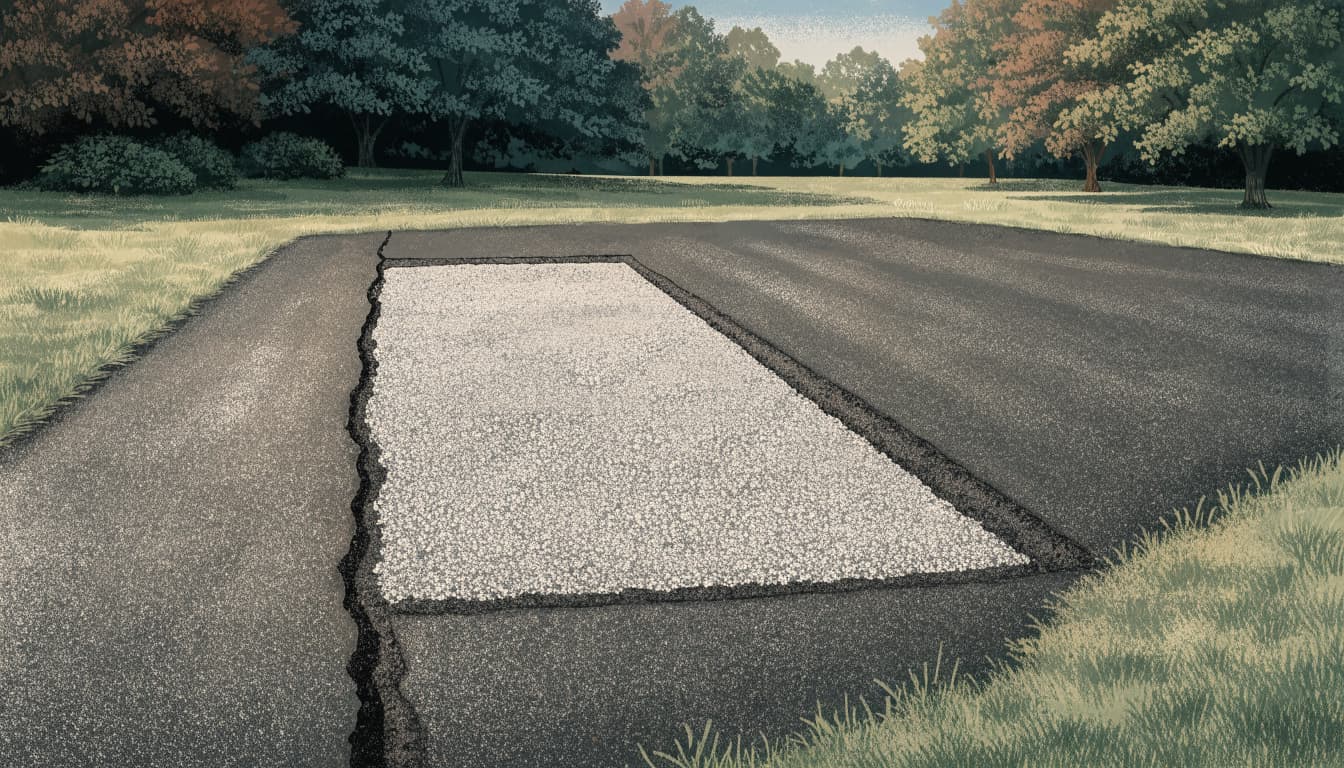
Patching targets a damaged section while preserving usable pavement around it. It's a reasonable option when the repair boundary can reach sound asphalt and any problem underneath can be addressed within that area.
What patching involves
A proper patch starts with removing loose or failed material rather than covering it. The repair area needs firm boundaries and a stable foundation.
Where the base has deteriorated, the work must address that condition before new asphalt goes down. The crew then places and compacts the replacement pavement, matching the surrounding surface and maintaining drainage.
A patch should avoid creating a raised lip or a depression that collects runoff. Its connection to the existing driveway matters as much as its appearance.
When crack treatment is enough
A sound driveway doesn't need pavement removal around every crack. Some isolated openings can receive a suitable asphalt crack treatment after cleaning and preparation.
However, loose edges, missing pavement, or movement change the decision. Material placed into an opening can't replace support that has disappeared underneath it.
For homeowners considering a small DIY repair, preparation and product suitability matter. Avoid packing material over dirt, vegetation, standing water, or unstable pavement. Those conditions prevent the repair from addressing the actual defect.
When Broader Resurfacing Is Worth Considering
Resurfacing adds an asphalt layer over prepared existing pavement. It addresses a larger area than a patch, so the existing driveway must be a suitable foundation for that work.
Look for widespread surface deterioration
Broader wear may justify evaluating resurfacing when the driveway remains generally stable. Examples include surface aggregate loosening across several areas or an uneven collection of previous surface repairs.
The assessment should separate surface deterioration from deeper failure. Localized repairs may still be necessary before an overlay, especially around damaged edges or failed patches.
Existing cracks also need attention during preparation. An overlay doesn't guarantee that movement or cracks underneath will stay hidden.
Know when an overlay is the wrong starting point
Widespread settlement, repeated pavement failure, or unresolved drainage trouble calls for a broader assessment. Some driveways need substantial removal and base correction rather than another surface layer.
Elevation also matters. Adding pavement changes its relationship to garage entrances, sidewalks, drainage channels, and adjacent landscaping. Preparation may require removing existing material at those connections.
A resurfacing proposal should explain how the new surface meets the garage, driveway entrance, and drainage features without creating new low spots.
Choose the repair based on what remains structurally usable, rather than treating resurfacing as the automatic next step after patching.
How Atlanta Weather and Drainage Affect the Plan
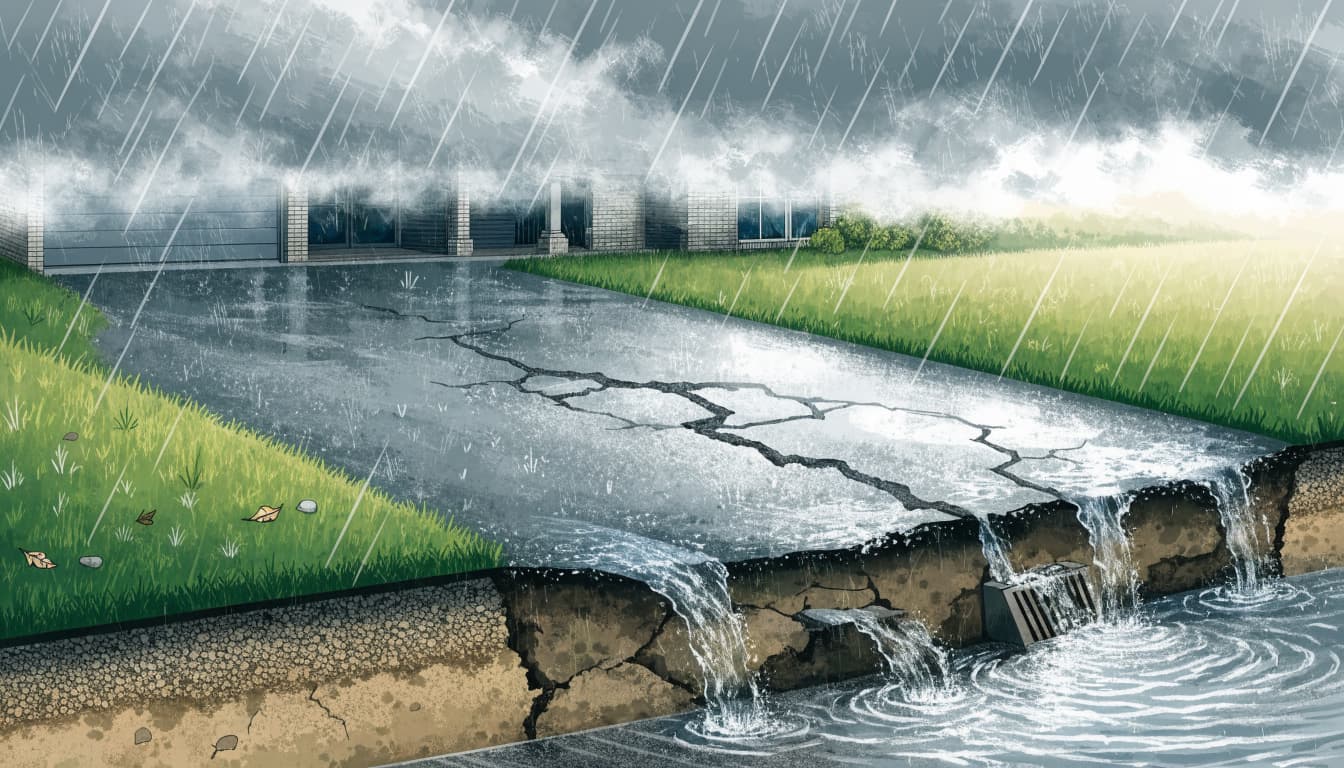
Atlanta's wet weather makes runoff an important part of driveway planning. Meanwhile, Metro Atlanta's clay-heavy soils can limit infiltration, so water may travel across lawns and paved surfaces instead of soaking into the ground.
Follow the water beyond the driveway
Look for downspouts discharging beside pavement, uphill beds draining toward the driveway, and soil or mulch blocking its edges.
Persistent puddles deserve attention because water needs a usable exit. Simply directing runoff away from one crack may shift the problem toward the garage or a neighboring property.
Our Atlanta yard grading cost guide explains how slope correction and drainage shaping fit together. The goal is a continuous route toward a suitable outlet.
Coordinate paving with surrounding landscape work
A driveway repair can overlap with lawn grading, bed reshaping, or drainage improvements. Addressing those connections together helps avoid disturbing freshly repaired pavement later.
At RW Lawn Co, our grading and paving services include slope correction, water-flow management, driveway site preparation, and erosion control.
Weather also affects scheduling. Crews need suitable conditions for preparation, placement, and compaction. A dry surface alone doesn't establish that saturated ground below is ready for paving, so the repair plan needs to account for both.
What a Repair Proposal Should Include
A useful proposal describes the work clearly enough to distinguish crack treatment, patching, resurfacing, and reconstruction. Those approaches involve different preparation, equipment, and amounts of pavement removal.
Compare scope before comparing totals
The written scope should identify repair locations, removal boundaries, base correction, pavement preparation, and cleanup. It should also explain how unexpected soft soil or concealed drainage problems will be handled.
Separate drainage work from surface work so neither disappears inside a vague paving allowance. Excavation, a drainage channel, pavement restoration, and the discharge route are connected parts of the project. Our trench drain installation cost guide discusses that complete drainage path.
Also account for disturbed lawn edges, irrigation components, and planting beds. Restoring the surrounding property belongs in the scope when construction affects it.
Plan the sequence and vehicle access
Drainage correction and base work generally need to precede the finished surface. Otherwise, later excavation may disturb completed pavement.
Access can also shape the work plan. A narrow driveway, steep approach, or limited equipment space requires a different setup than an open, level parking area.
Before work begins, establish where vehicles will park and how household access will function. The proposal should distinguish installation from reopening the driveway, without treating every repair material or site condition as interchangeable.
Maintenance That Protects the Repaired Area
Maintenance starts with keeping the driveway visible and its drainage routes open. Leaves, soil, and encroaching grass can hide deteriorating edges or obstruct runoff.
Build these tasks into your regular property care:
- Clear leaves and sediment from drainage channels and paved edges, especially after storms.
- Keep mulch and loose soil from accumulating above the pavement edge where they block water.
- Address leaking irrigation and downspouts that discharge beside damaged asphalt.
- Photograph new cracks and low spots so you can track changes instead of relying on memory.
Clean oil and fuel spills promptly with an asphalt-compatible approach. Avoid aggressive cleaning that loosens surface material.
Sealcoating is a maintenance treatment, not a substitute for repairing failed asphalt or correcting drainage. Handle those defects first.
Finally, avoid repeatedly driving over unsupported edges. Where lawn erosion has exposed the pavement's side, the surrounding grading and edge support deserve attention alongside the visible asphalt.
Frequently Asked Questions
Can a cracked driveway be resurfaced without replacing it?
Sometimes. The existing pavement needs to provide suitable support, and damaged areas may need repair before the overlay. Widespread settlement or unresolved water problems can make removal and reconstruction the more appropriate scope.
Does one pothole mean the whole driveway needs replacement?
No. An isolated pothole may be suitable for a localized patch when nearby pavement remains sound. The repair still needs to address damaged material beneath the hole rather than filling only the visible opening.
Should I patch first or fix drainage first?
When drainage contributes to the damage, include it in the repair plan before finishing the pavement. That may involve coordinating excavation, grading, and patching within one project. Covering the damaged area while leaving water trapped beside or underneath it leaves the underlying concern unresolved.
Choose the Repair That Matches the Driveway
A lasting repair starts with sound support and a workable drainage path . Isolated damage may call for crack treatment or patching, while broader surface wear can justify evaluating resurfacing.
When the driveway is sinking or repeatedly failing, focus on the cause before choosing a new surface. The right scope preserves usable pavement and addresses the conditions that made the repair necessary.