Atlanta Azalea Gall Guide for Distorted Spring Leaves
Atlanta spring rains can turn a healthy azalea into a curled, lumpy mess almost overnight. If your shrub is pushing out thickened, pale green, pinkish, or white new leaves, azalea gall may be the cause.
The good news is that this problem usually looks worse than it is. In Atlanta yards, quick cleanup and a few simple habits often keep the shrub healthy and the bed looking neat.
Key Takeaways
- Azalea gall shows up as thickened, curled, distorted new growth in spring.
- Cool, wet weather in Atlanta gives the fungus the conditions it likes.
- Remove affected leaves or galls early, then bag and trash the debris.
- Improve air movement and avoid overhead watering when you can.
- Fungicides are usually unnecessary for home landscapes unless the problem keeps coming back hard.
What azalea gall looks like in a spring bed
Azalea gall is easy to miss at first because it starts on tender new growth. The leaves get thicker than normal, curl or twist, and often turn a pale green. As the galls mature, they may take on a pinkish or white look before they dry out and turn powdery.
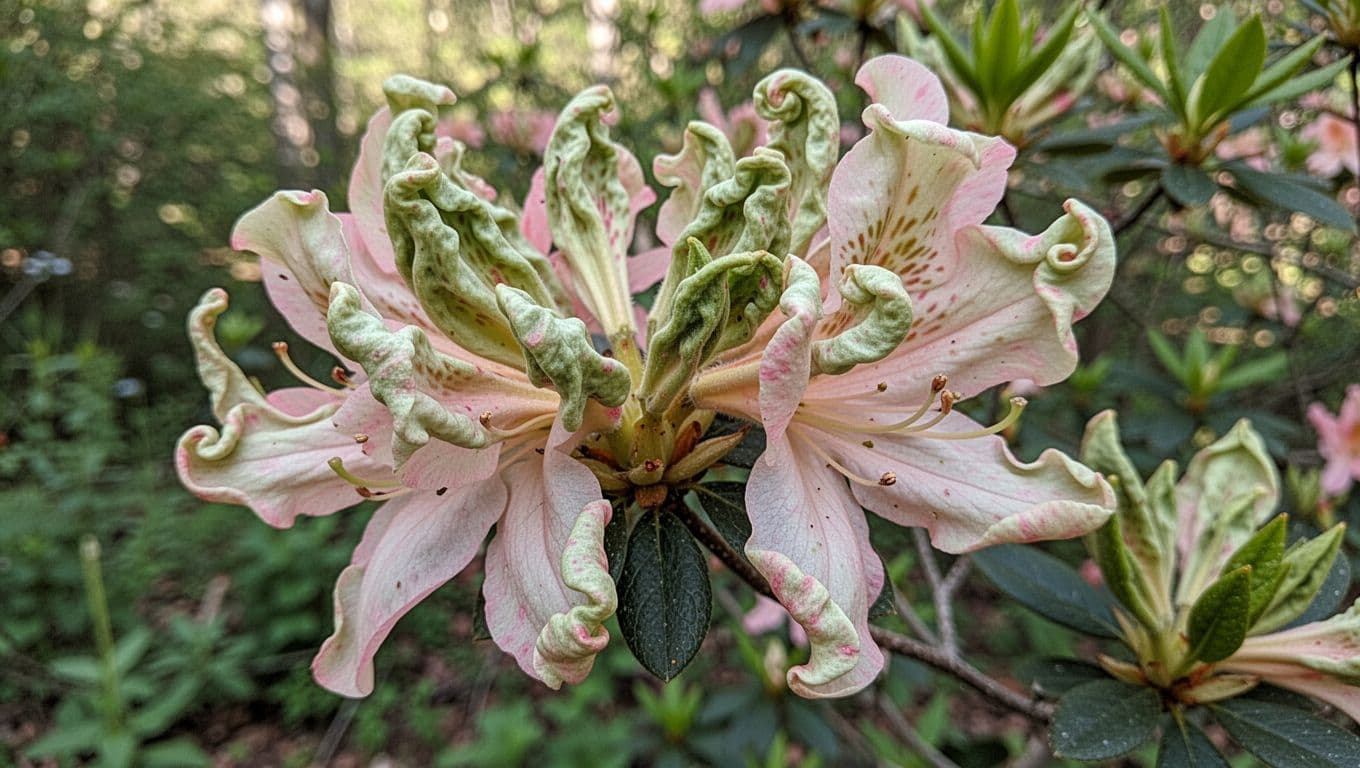
Most homeowners notice it right when azaleas should be shining. Instead of soft, clean spring growth, the shrub looks bumpy and uneven. That can be frustrating, but the plant is usually more unsightly than dangerous if you remove the affected growth promptly.
A quick comparison helps when the symptoms overlap with other azalea problems.
| Problem | What you usually see | Best next move |
|---|---|---|
| Azalea gall | Thickened, curled, swollen new leaves, pale green to pinkish or white | Prune early, bag debris, monitor next spring |
| Azalea lace bug damage | Speckled or bronzed leaves, often with damage on the top surface | Check leaf undersides and compare the pattern |
| Flower issues | Blooms brown fast or look blotchy while leaves stay normal | Remove spent flowers and clean up fallen petals |
If the leaves are speckled or bronzed instead of swollen, signs of lace bug damage on azalea shrubs may be the better fit. When the growth is puffy, twisted, and soft, gall is the stronger clue.
If you catch the growth while it's still pale and soft, cleanup is easy. Once it turns white and powdery, the job gets messier.
Why Atlanta weather gives azalea gall an opening
Atlanta springs often bring mild temperatures, rain, and high humidity all at once. That mix is perfect for tender azalea growth and also for the fungus that causes gall, often Exobasidium vaccinii.
The fungus attacks new growth while it's still soft. That is why symptoms show up in spring, even though the infection may have started earlier during a damp stretch. Cool nights, wet leaves, and slow drying time all help the problem spread.
Landscape layout matters too. Shrubs packed close together hold moisture longer. Azaleas planted under dense trees or along a shaded wall also dry more slowly after rain or morning dew. In Atlanta, that extra damp time can make a difference.
Mulch, irrigation, and airflow all play a role. Deep shade and crowded beds do not cause gall by themselves, but they make the plant stay wet longer. When the leaves stay wet, the fungus gets a better chance to settle in.
The pattern is simple. Wet spring weather plus tender new growth equals a better chance of seeing those odd, swollen leaves. That is why checking azaleas early in the season matters so much.
How to remove azalea galls the right way
The fastest fix is careful pruning. Do it as soon as you notice the distortion, while the growth is still pale green or pinkish. If you wait until it dries out and turns white and powdery, cleanup gets harder and the shrub looks rough longer.
- Cut off the distorted leaves or galls with clean pruners.
- If the infected growth sits on a small shoot, remove the shoot a bit below the damage.
- Put the clippings in a bag right away.
- Throw the bag away instead of composting the material.
- Wipe your pruners before moving to the next plant.
That last step matters in a mixed planting bed. Clean tools help you avoid moving other plant problems around the yard.
For most Atlanta homeowners, that is enough. The plant may need a little time to fill back in, but healthy azaleas usually push out better growth later in the season. A light hand works better than aggressive pruning, because you want to remove the gall without stripping the shrub bare.
What to skip, especially if you're tempted to spray
Fungicides usually are not needed for azalea gall in home landscapes. Once the leaves are swollen and twisted, a spray will not untwist them. It also will not make the current growth look normal again.
That is why cleanup beats spraying in most yards. Save treatment discussions for severe recurring cases where several shrubs show the same problem every spring. In those situations, a licensed pro can look at the timing and decide whether a label-approved preventive treatment makes sense before new growth opens.
Even then, sprays are not the main fix. Airflow, pruning, and good sanitation do more of the work. Avoid overhead watering when you can, because wet foliage stays damp longer and gives fungal problems a better chance. Water at the base instead, and try to keep the bed from staying soggy.
Keeping azaleas cleaner next spring
The best time to think ahead is after the current outbreak is gone. Walk the bed next spring during cool, wet weather and look at the newest leaves first. That is when gall shows up most clearly.
If the same plants keep getting hit, open the canopy a little. Thin out nearby shrubs that crowd the azaleas, and keep branches from growing into each other. Better air movement helps leaves dry faster after rain or irrigation.
A few small habits also help:
- Keep mulch off the stems.
- Water early in the day when possible.
- Avoid wetting the foliage with sprinklers.
- Check azaleas after long rainy stretches.
- Watch the same shrubs again next spring.
Atlanta homeowners with large foundation beds or repeated azalea issues often do better with routine landscape cleanup. A tidy bed makes it easier to spot the first signs of trouble and remove infected growth before it spreads through the plant.
Conclusion
Azalea gall can look alarming, especially when spring growth twists into thick, pale clusters. In most Atlanta yards, though, it is a cleanup problem more than a plant emergency.
Catch it early, prune it off, bag the debris, and let the shrub recover. With better airflow and less overhead watering, next spring often starts cleaner and stays that way longer.
FAQ
Can azalea gall kill my shrub?
Usually not. Most azaleas recover well if you remove the affected growth early and keep the plant healthy the rest of the season.
Should I compost the infected leaves?
No. Bag the material and throw it away. Compost piles are not the best place for diseased azalea growth.
Will fungicides fix azalea gall after I see it?
Not on the leaves you already see. Fungicides are generally unnecessary for home landscapes, and they are only worth discussing in severe recurring cases before new growth appears.
Why does it keep showing up on the same azaleas?
Those shrubs may sit in a wetter, more crowded spot, or they may simply be more exposed during Atlanta's cool, rainy spring weather. Better airflow and early spring checks usually help the most.