Atlanta Azalea Petal Blight and Spring Bloom Loss
Spring azaleas can go from bright to blotchy in a matter of days. When the blooms brown fast, turn soft, and drop early, Atlanta azalea petal blight is often the reason.
This problem shows up most often in warm, damp weather, which Atlanta gets plenty of in spring. The good news is that you can spot it early, clean it up the right way, and protect next year's bloom show.
What petal blight looks like on azaleas
Petal blight usually starts on the flowers, not the leaves. Small specks appear first, then the petals turn water-soaked, brown, and limp. The bloom may stick together, collapse, or look mushy before it drops.
Healthy azalea petals fade more evenly. They dry up and fall apart without that spotted, soggy look. With petal blight, the flowers look damaged while the plant itself still looks mostly fine.
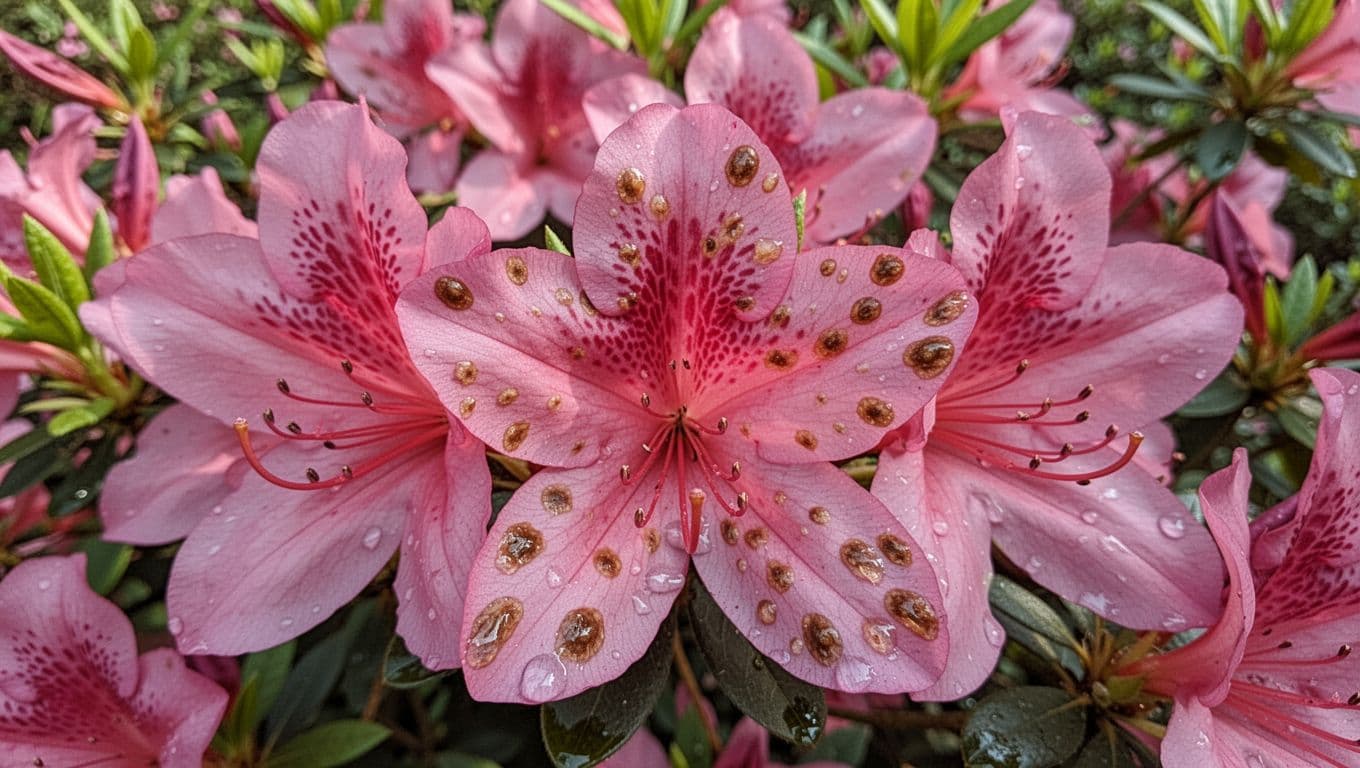
If the petals are soft, speckled, and collapsing after warm rain, petal blight is a strong suspect.
That last part matters. Leaves often stay green and healthy, so the shrub can fool you. A plant can look strong and still lose most of its blooms.
Why Atlanta spring weather sets it off
Atlanta spring weather gives this fungus a boost. Cool mornings, warm afternoons, and long stretches of humidity keep flower petals wet longer than they should be. Rain makes the problem worse because water spreads spores from one bloom to another.
Crowded shrubs also hold moisture. Azaleas planted too close together, under dense trees, or against a wall dry more slowly. That damp pocket is exactly where petal blight likes to spread.
Old flowers and fallen petals can keep the cycle going. Once infected blooms land in the bed, they become part of the problem. That's why cleanup matters as much as the weather.
Overhead watering can add fuel to the fire. If sprinklers hit the blooms, petals stay wet and spores move around faster. Soil-level watering is much safer for azaleas in spring.
Petal blight vs. frost, rain, and other lookalikes
Petal damage does not always mean petal blight. Late frost, heavy rain, and plant stress can leave azaleas looking rough too. A quick comparison helps you avoid the wrong fix.
| Problem | What the blooms look like | Common clue |
|---|---|---|
| Atlanta azalea petal blight | Brown spots, soft petals, blooms stick together or rot | Follows warm, wet weather, leaves stay mostly healthy |
| Late frost damage | Dark, limp, or browned blooms, buds may fail to open | Shows up after a cold night or freeze |
| Rain-related flower collapse | Flattened, bruised, or torn flowers | Appears right after heavy rain, with little spotting |
| General plant stress | Small blooms, early drop, weak growth | Leaves may yellow, soil may be dry, or the whole shrub looks tired |
Petal blight usually leaves a spotted, soggy trail. Frost damage follows a cold snap. Rain damage looks battered, but not usually blotchy. Stress problems are broader, because the whole shrub starts to look off.
If the leaves have spots, the stems die back, or the plant fails in more than one season, the issue may be larger than bloom blight. In that case, check drainage, root health, shade, and pruning history.
Cleanup steps that stop the spread
Once petal blight starts, fast cleanup helps more than waiting for the blooms to finish on their own. The goal is simple, remove infected flowers before they can keep spreading spores.
- Pick off the damaged blooms as soon as you see them. Remove the whole flower, not just the brown petals.
- Put the spent flowers in the trash. Do not compost infected petals, because they can carry the fungus back into the yard.
- Sweep up fallen petals from mulch, paving, and bed edges. Wet petals on the ground can still spread the problem.
- Water at the base of the plant, early in the day. Keep the flowers dry whenever you can.
- After the bloom cycle ends, thin crowded growth lightly so air can move through the shrub. Avoid heavy spring shearing, because it can leave the plant stressed and bare.
A clean bed helps too. Keep mulch in place, but don't let old petals pile up on top of it. Fresh mulch can help reduce splash from the soil, as long as you keep it at the right depth, about 2 to 3 inches, and pulled back a little from the stems.
For larger beds or a full spring reset, residential landscaping and lawn care services can help with cleanup, mulch, and the follow-through that keeps beds tidy after a rough bloom season.
How to keep azaleas healthier next spring
Azaleas usually recover from petal blight, but the flowers that were already damaged won't come back. That's the frustrating part. The shrub may look much better later, yet this year's bloom display is still lost.
The real win is next season. Better airflow, cleaner beds, and drier petals can cut the problem down a lot. In Atlanta, that usually means staying ahead of spring rain, deadheading early, and keeping the area under the shrubs free of old bloom debris.
Petal blight usually ruins the show, not the shrub.
If the same azaleas lose blooms every year, look at the site itself. Deep shade, crowded planting, poor drainage, and overhead watering all make the problem harder to control. A small change, like moving a sprinkler head or opening the bed a little, can help more than people expect.
The best results come from habits, not one quick fix. Clean blooms fast, keep petals dry, and clear away the mess before it settles in.
Keep Next Spring Cleaner and Brighter
When azalea blooms brown fast in Atlanta, petal blight is often the culprit. The flowers take the hit first, while the leaves can still look healthy, which makes the problem easy to miss at the start.
A close eye, prompt cleanup, and better moisture control go a long way. Keep the beds clean, water at the base, and give the shrubs room to breathe, and next spring has a better chance of looking the way it should.