
White Prunicola Scale on Cherry Laurels in Atlanta
White prunicola scale can make a cherry laurel look tired long before the shrub dies. Leaves yellow, branches thin out, and small white bumps appear on stems like crusty paint.
For Atlanta homeowners, that kind of decline is easy to miss at first because cherry laurels stay dense for a long time. Once the damage shows, though, the shrub may already be under steady stress. Spotting the problem early gives you a much better shot at recovery.
How to spot white prunicola scale on cherry laurels
White prunicola scale on cherry laurel usually starts with small changes. You may see a few yellow leaves, a little branch dieback, or parts of the shrub that look dull instead of glossy.
Then the white scale buildup becomes easier to see. It often looks like tiny crusty spots along stems, twigs, and older branches. On a bad infestation, the stems can look dusted or flecked in white.
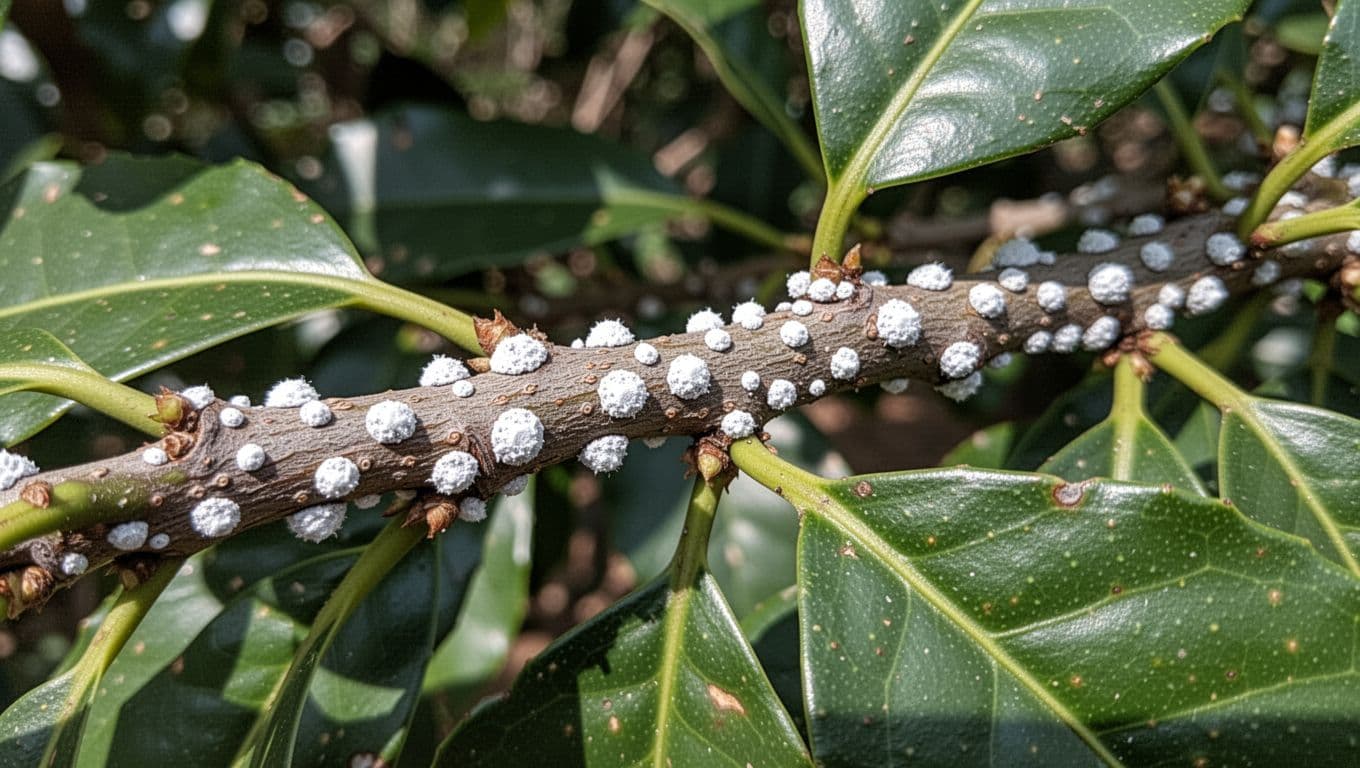
Look for these signs on your shrub:
- Leaf yellowing : Leaves lose color and may drop sooner than normal.
- Branch dieback : Tips dry out, then whole sections stop growing.
- White crusty buildup : Small raised bumps cling to stems and twigs.
- Thin new growth : Fresh shoots come in weak, sparse, or stunted.
- Sticky residue or sooty look : Some plants show extra mess from sap-feeding pests.
Cherry laurel decline can also be easy to confuse with drought stress or root problems. That is why a close look at the stems matters. If the white bumps are there, scale is likely part of the story.
A shrub can still hold leaves while losing strength underneath. That makes regular inspection important, especially after hot spells or dry weather.
Why Atlanta yards seem to feel it more
Atlanta weather gives scale pests plenty of time to spread. Mild winters help them survive, and long warm seasons give them more chances to reproduce. Cherry laurels also grow thick, which lets pests hide inside the canopy.
Heat and drought make things worse. A stressed shrub has less room to recover from feeding damage. If the soil stays dry for long stretches, branch dieback can move faster.
Crowded planting beds also create problems. When shrubs are packed in close, it is harder to notice early scale buildup. Airflow drops, pruning gets delayed, and the infestation keeps moving.
A cleaner bed makes monitoring easier. It also makes it simpler to spot problems before the whole shrub starts to thin out. If you are already improving the rest of the yard, residential landscaping services can help keep the area around the shrub open and manageable.
Seasonal timing that matters
Scale control works best when you match the treatment to the pest's life stage. White prunicola scale has a tough outer shell when it settles on stems, so timing matters more than brute force.
| Season | What you may see | Best next step |
|---|---|---|
| Late winter | Old white crusts are easy to spot, and dead wood stands out | Prune dead branches and inspect the shrub closely |
| Spring | Tiny crawlers may spread onto new growth | Watch weekly and treat at the right label window |
| Summer | Yellowing and thinning often become more obvious | Monitor for new buildup and remove badly damaged wood |
| Fall | Damage is clear, but recovery slows | Plan cleanup and next season's treatment timing |
The main point is simple, early action works better than waiting for the shrub to look nearly bare. By the time branch dieback is widespread, recovery takes longer.
When to treat and what actually helps
Horticultural oil is one of the most practical tools for white prunicola scale. It works best when applied at the right time, usually when crawlers are active or when dormant oil is appropriate for the plant and product label.
Horticultural oil helps most when it hits the vulnerable stage, not when the stems are already packed with hard, settled scale.
That means timing matters more than spraying often. A mistimed treatment may barely touch the pest. A well-timed one can make a real difference.
For Atlanta cherry laurels, these points matter most:
- Check the label first : Use only products labeled for the plant and pest.
- Target crawler periods : Young scale insects are easier to control than older ones.
- Avoid hot-day spraying : Oil can burn leaves when temperatures climb.
- Cover stems well : Scale hides on twigs and branch crotches, not just leaf surfaces.
- Repeat if needed : Some infestations need more than one round, depending on pressure.
Late winter is often a good time for dormant oil on many ornamental shrubs, if the label allows it. Spring and early summer can also be useful when crawlers are present. Because weather shifts fast in Atlanta, the exact window can move from year to year.
A strong spray is not the goal. Good coverage and correct timing matter far more.
Consistency also helps. If you already keep up with professional lawn care and mowing, it becomes easier to notice changes in the shrubs during routine yard visits. That kind of regular look is often what catches scale before it spreads.
What to do when the shrub is heavily infested
Heavily infested branches should come out first. Prune dead or badly covered wood back to healthy growth, then remove the clippings from the area. If the shrub is very dense, thinning a few interior branches can also help air move through it.
Use clean pruners. Wipe the blades between cuts if you move from one plant to another. That keeps you from carrying problems around the yard.
If the infestation is strong, focus on the worst sections instead of trying to save every stem. A cherry laurel with severe branch dieback often needs a reset, not a quick touch-up.
A few safe steps make the biggest difference:
- Cut out dead, dry, or heavily crusted branches.
- Bag or haul away the debris instead of leaving it under the shrub.
- Check nearby shrubs, since scale can spread to more than one plant.
- Watch new growth for fresh yellowing or new white buildup.
- Reinspect after treatment, since missed spots often show up later.
If the shrub sits in a mixed planting bed, the problem may extend beyond one plant. Nearby ornamentals can pick up scale too. In that case, a broader look at the bed is smart.
A professional inspection makes sense when the infestation is heavy, the canopy is thinning fast, or you are not sure how far it has spread. Sometimes what looks like scale damage also includes drought stress, root trouble, or old pruning cuts. A trained eye can separate the causes.
If the shrub is worth saving, that inspection can help you avoid wasting time on the wrong fix. If it is too far gone, you will know sooner and can replace it with less guesswork.
What recovery looks like for cherry laurels
Recovery is possible, but it is usually slow. A cherry laurel that was lightly hit may put out healthier growth after treatment and pruning. A shrub with widespread dieback may need a full season, or more, before it looks balanced again.
Do not expect every brown branch to turn green. Dead wood stays dead, even after the scale is gone. What you want to see is clean new growth, better color, and fewer fresh scale spots on the stems.
The shrub will often recover in stages:
- New scale activity slows down.
- Yellowing leaves stop spreading.
- Fresh growth appears at branch tips.
- The canopy fills back in over time.
That process can be uneven. Some parts of the shrub may bounce back while others stay thin. If you stay ahead of the pest, the plant has a much better chance.
Avoid overcorrecting with heavy feeding or aggressive watering. A stressed shrub needs steady care, not shock treatment. Keep soil moisture even, remove dead material, and keep checking the stems.
The biggest mistake is giving up too soon. Scale control takes patience, especially on mature shrubs with thick growth. The good news is that a healthy cherry laurel can put on new growth once the pest pressure drops.
Conclusion
Atlanta white prunicola scale is easier to manage when you catch it early. Yellowing leaves, branch dieback, and white crusty buildup on stems are the signs that matter most.
From there, the plan is simple, inspect often, prune the worst wood, and time horticultural oil for the right stage of the pest. If the infestation is heavy or the decline looks widespread, a professional inspection can save time and keep the shrub from slipping further.