Atlanta Broadleaf Weed ID Guide (with photos), clover vs chickweed vs henbit vs wild violet vs dandelion, plus look-alikes and what works in Bermuda, Zoysia, and tall fescue
If your Atlanta lawn looks great from the curb but messy up close, broadleaf weeds are usually the reason. The tricky part is that several of our most common winter and spring weeds look alike until you know what to focus on.
This atlanta weed identification guide helps you sort out clover, chickweed, henbit, wild violet, and dandelion, along with the look-alikes that cause most mis-ID problems. Once you know what you’re staring at, choosing the right control plan for Bermuda, Zoysia, or tall fescue gets a lot simpler.
Quick Atlanta broadleaf weed ID: the 30-second cheat sheet
Don’t start with flowers. Start with leaves and growth habit. In Metro Atlanta, many “spring weeds” actually sprout in fall, sit low all winter, then explode when days warm up.
For a photo library to compare what you see in your yard, bookmark UGA’s broadleaf weed photo guide.
| Weed (common in Atlanta) | Fast ID trait you can trust | Typical season you notice it | Where it shows up |
|---|---|---|---|
| Clover (white clover) | 3 leaflets, often a pale “V” mark, creeps low | Spring through early summer | Thin turf, low nitrogen areas |
| Chickweed (common) | Tiny opposite leaves, mat-forming, small white star flowers | Late winter to spring | Moist, shaded or overwatered spots |
| Henbit | Square stem, rounded scalloped leaves, purple-pink tubes | Late winter to spring | Sunny thin turf, edges, compacted soil |
| Wild violet | Heart-shaped leaves with a pointed tip, waxy look | Spring, then again in fall | Shade, damp soil, under trees |
| Dandelion | One yellow flower per hollow stem, milky sap, jagged rosette | Late winter to spring (best treated fall too) | Sunny lawns, disturbed soil |
Strong turf blocks weeds. Mowing too short opens the door, especially in spring green-up. If you’re unsure about your cut height, use this ideal grass mowing heights in Atlanta lawns resource as a baseline.
Side-by-side comparisons (the look-alikes that fool Atlanta homeowners)
Clover vs oxalis (wood sorrel)
Clover leaves are oval and smooth-edged , with three leaflets that often show a faint white chevron. It creeps by stolons and can root at nodes.
Oxalis (wood sorrel) has heart-shaped leaflets with a clear notch at the tip. It often folds up at night or on cloudy days. Yellow flowers are common. If you treat oxalis like clover, results can be inconsistent, so this one is worth getting right.
Chickweed vs mouse-ear chickweed
Common chickweed has small, smooth leaves and a telltale detail: a single line of fine hairs running down one side of the stem. It forms a soft green mat and makes tiny white “stars.”
Mouse-ear chickweed looks thicker and feels fuzzy because the leaves and stems are hairy . Leaves are more oval, not as delicate, and the plant usually looks more gray-green. Both are winter annuals, so fall prevention and late winter control matter.
Henbit vs purple deadnettle vs ground ivy
Henbit has a square stem and rounded leaves with deep scallops. Leaves sit on little stalks (petioles), and the plant stands up a bit instead of creeping tight to the ground.
Purple deadnettle is also in the mint family, but the upper leaves are more triangular and often turn purple at the top. Upper leaves tend to clasp the stem more directly.
Ground ivy (creeping Charlie) is the creeper in this group. It spreads with runners, has kidney-shaped leaves , and often smells minty when crushed. If it’s crawling into beds and under shrubs, ground ivy is a prime suspect.
Wild violet vs dollarweed
Wild violet leaves are heart-shaped with a pointed tip and often look slightly glossy. In season, you may spot purple or white flowers. It loves shade and stays stubborn because it regrows from underground parts.
Dollarweed (pennywort) has round leaves that look like little lily pads , and the leaf stem attaches near the center . Dollarweed almost always points to too much water or poor drainage.
Dandelion vs catsear (false dandelion)
Dandelion has a single flower per hollow, leafless stem . Snap it and you’ll see milky sap. Leaves are mostly smooth (not hairy) and form a basal rosette.
Catsear (often called false dandelion) has hairy leaves and stems that are more solid . Flower stems can branch, giving multiple blooms. If your “dandelions” feel fuzzy and the stems branch, it’s probably catsear, and it can take a slightly tougher approach.
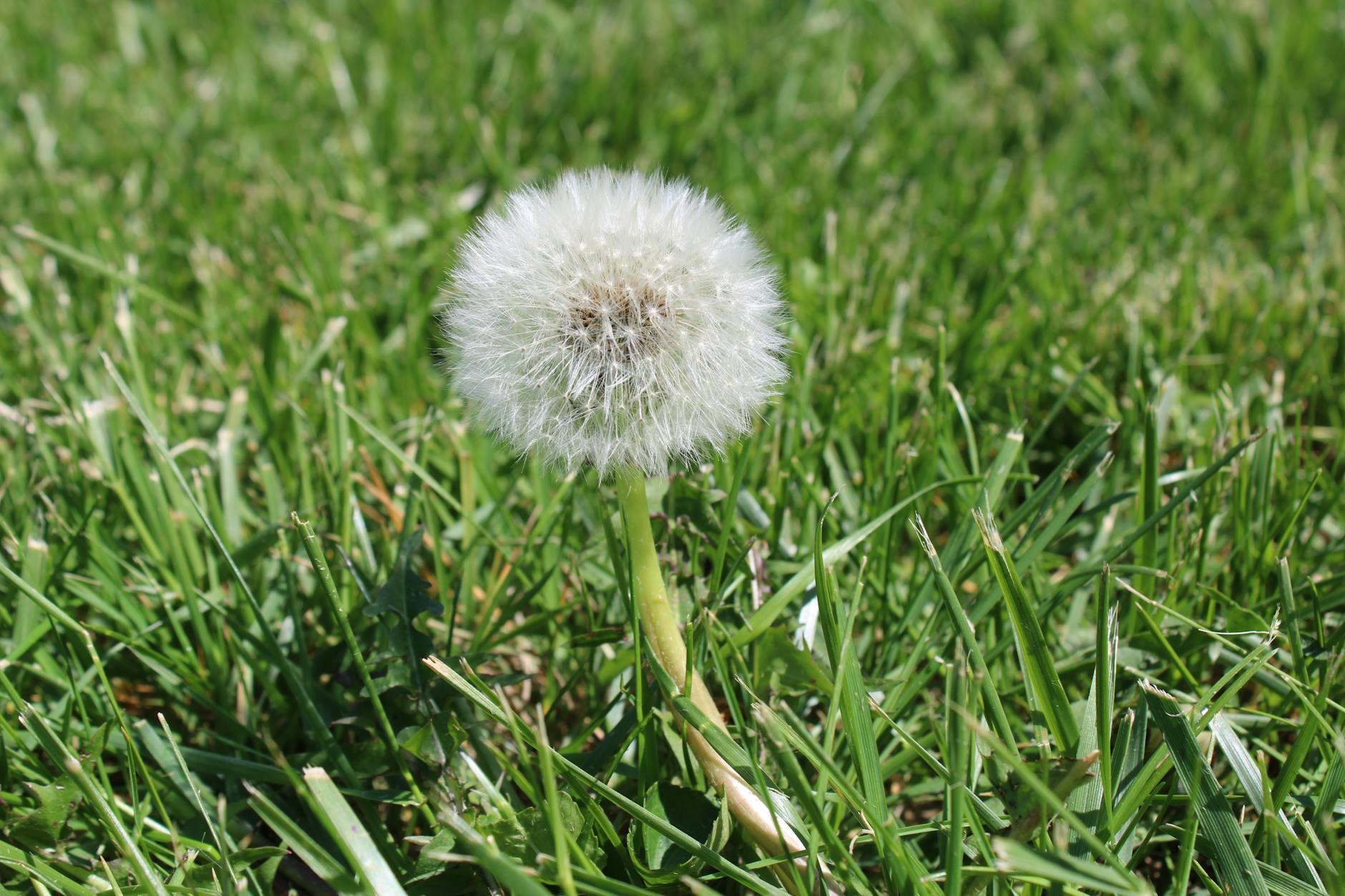
Photo by Keith Cassill
What works in Bermuda, Zoysia, and tall fescue (active ingredients and timing)
First, match timing to the weed’s life cycle. Chickweed and henbit are winter annuals . They germinate in fall, then show off in late winter and spring. Dandelion and wild violet are perennials , and they’re often easiest to set back in fall , when plants push energy down into roots.
For research-based guidance that fits Georgia lawns, UGA’s Weed Control in Home Lawns (PDF) is a solid reference.
Bermuda (warm-season)
Bermuda usually tolerates a wide range of selective herbicides when used per label. For mixed broadleaf patches (clover, chickweed, henbit, dandelion), a 3-way broadleaf mix built around 2,4-D + MCPP (mecoprop) + dicamba is a common starting point.
For tougher targets and faster burn-down, products that include carfentrazone can help, especially on small, actively growing weeds. Metsulfuron is used on some warm-season lawns for certain broadleaf weeds, but it can be turf-sensitive, so check Bermuda cultivar tolerance on the label.
Zoysia (warm-season, but more sensitive than Bermuda)
Zoysia can handle many of the same actives, but it’s less forgiving in heat or drought stress. The same 2,4-D + MCPP + dicamba backbone often works well when applied in mild weather.
Atrazine is labeled for use in some warm-season turf situations and can help on certain broadleaf weeds, but labels vary by grass type and product. Confirm Zoysia tolerance before you buy or spray. If wild violet is the problem, plan on triclopyr and repeated applications.
Tall fescue (cool-season)
Tall fescue is pickier, especially as temperatures rise. Stick with selective broadleaf actives labeled for fescue, commonly 2,4-D + MCPP + dicamba . Triclopyr is also widely used for hard broadleaf weeds (wild violet is the classic example), but it can still stress fescue if you spray during warm spells.
Avoid warm-season-only chemistry like atrazine on fescue, and be careful with products built for Bermuda lawns. If you plan to overseed in fall, herbicide timing matters even more.
For another UGA-based overview that ties timing and methods together, see Weed Control in Home Lawns (UGA bulletin page).
Practical spraying tips for Atlanta yards (and when to call a pro)
Sprays work best when weeds are growing and grass is not stressed. In Atlanta, that usually means late winter through spring on winter weeds, and fall for perennials.
A few rules keep you out of trouble:
- Temperature : Aim for mild days (often around 60 to 75°F). Avoid spraying when it’s hot, or when a hard freeze is expected that night.
- Rainfast window : Many herbicides need a few hours on the leaf before rain or irrigation. Follow the label exactly.
- Mowing interval : Don’t mow right before or right after spraying. Giving weeds more leaf surface improves uptake.
- Spot-spray first : Blanket sprays cost more and raise risk. Spot-treat clusters, then reassess in 14 to 21 days.
- Watch drift : Dicamba and triclopyr can ding ornamentals. Avoid wind, use a coarse spray, and keep it off beds and tree roots.
If you like seeing how labels list actives and turf tolerances, here’s an example of a herbicide label PDF with active ingredients. Always follow the label for your specific product and grass type.
Call a pro when wild violet has taken over shady areas, when you have mixed turf (Bermuda and fescue together), when weeds are wrapped into landscaping, or when repeated sprays haven’t slowed the problem. Pros can also time treatments around fescue overseeding, which is easy to mess up.
Getting atlanta weed identification right is half the battle. The other half is choosing the right active ingredient for your turf, then spraying in weather that helps, not hurts. Treat what’s there now, plan ahead for fall prevention, and keep the lawn thick with proper mowing and feeding. A dense stand of grass is still the most reliable weed control you can buy.