Atlanta Centipede Lawn Care Plan for Low Fertility Clay Soil
Centipedegrass is a great match for Metro Atlanta, but red clay and low organic matter can still make it look tired. If your lawn feels hard, drains slow, and stays pale even after you "feed it," the fix usually isn't more fertilizer. It's a smarter plan.
This centipede lawn care approach keeps inputs low on purpose. You'll lean on mowing height, deep watering, aeration, and light soil building so the grass can do what it does best, spread and thicken without being pushed.
Why centipedegrass does well in Atlanta clay (if you don't overfeed it)
Centipede is like a fuel-sipping car. It runs well on less, but it doesn't like being forced to sprint. On compacted clay, that matters because roots already fight for air and water.
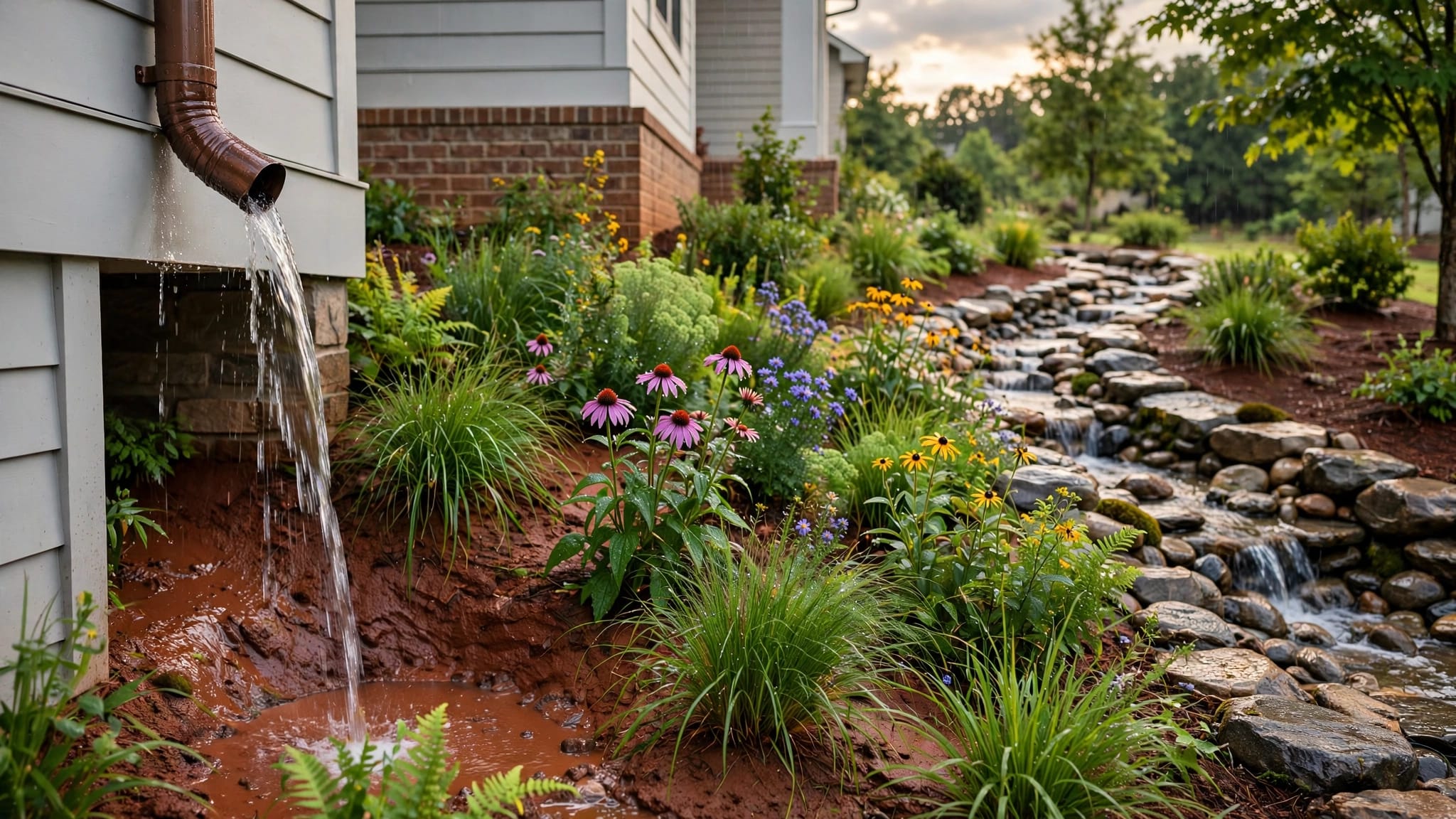
Clay soil holds nutrients tightly, yet it can still act "low fertility" for turf because compaction limits root growth and biology. When the surface seals over, rainfall runs off, and the root zone stays shallow. As a result, the lawn can look thin even if the soil technically has minerals in it.
Centipede also prefers slightly acidic conditions, which is common in Georgia. That's a plus, as long as you don't keep adding lime out of habit. Too much lime can push pH high and trigger yellowing that looks like "needs nitrogen," even when it doesn't.
Soil testing for centipede: pH first, then nutrients (and why lime is often the problem)
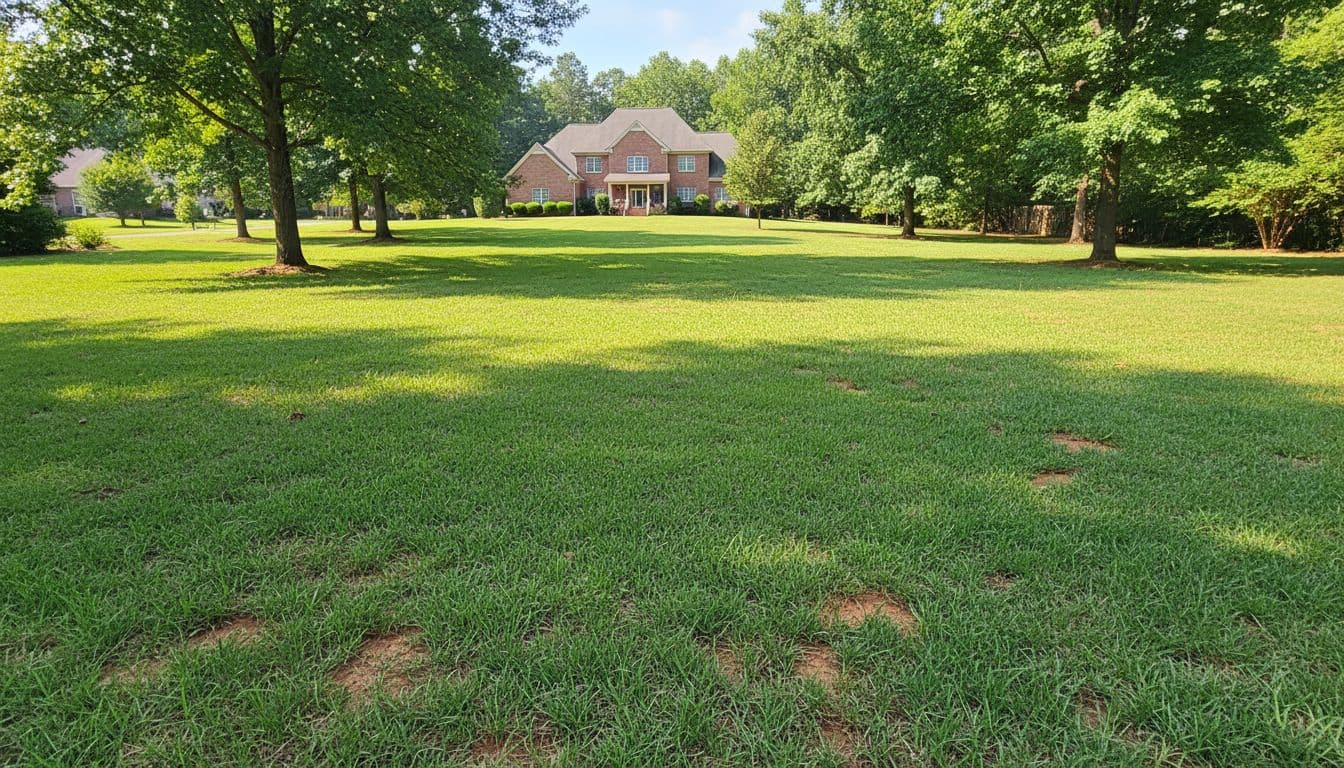
Before any fertilizer goes down, get a soil test. Think of it as turning on the headlights before driving a back road. You're looking for pH plus phosphorus (P) and potassium (K) levels, along with any notes on calcium, magnesium, and micronutrients.
Centipedegrass generally performs best around pH 5.5 to 6.0 (slightly acidic). If your pH is already in that range, skip lime. In Atlanta, lime is overused because many lawns "feel" like they need it, even when they don't. When pH drifts too high, centipede can turn chlorotic (yellow), especially on clay.
Use this simple way to act on results:
- Adjust pH only if the test calls for it (lime rates vary a lot by soil).
- Add P or K only if the test is low , because extra P can be wasted and can raise runoff concerns.
- Keep nitrogen modest , even if the lawn looks hungry at first.
If you remember one rule: don't lime without a soil test . It's one of the fastest ways to make centipede look worse.
Mowing and watering rules that keep centipede low-input in Georgia
Mowing sets the tone for the whole season. For established centipedegrass, aim for 1.5 to 2.0 inches most of the time. During heat stress or if your lawn dries fast, bump it up to 2.0 to 2.5 inches for more shade on the clay surface.
Also follow the one-third rule. If you remove more than one-third of the blade, the lawn gets set back. That stress often shows up as thinning and more weeds.
For a Georgia-specific reference on height ranges and what happens when you cut too low, see this internal guide on recommended mowing heights for centipede in Georgia.
Watering matters just as much. Clay can't absorb water fast, so shallow daily watering backfires. Instead, water deep and infrequent when the lawn needs it, usually totaling about 0.5 to 1.0 inch per week including rainfall. If runoff starts, split it into two shorter cycles an hour apart so it soaks in.
Morning watering helps leaves dry faster and lowers disease pressure.
Fix compaction and low organic matter with aeration, compost, and light feeding
On compacted red clay, centipede often "stalls out" because roots can't breathe. Core aeration is one of the best resets, but timing is everything. Aerate in late spring to early summer , after green-up, when centipede is actively growing and can recover quickly. Avoid aeration during dormancy or when the lawn is drought-stressed.
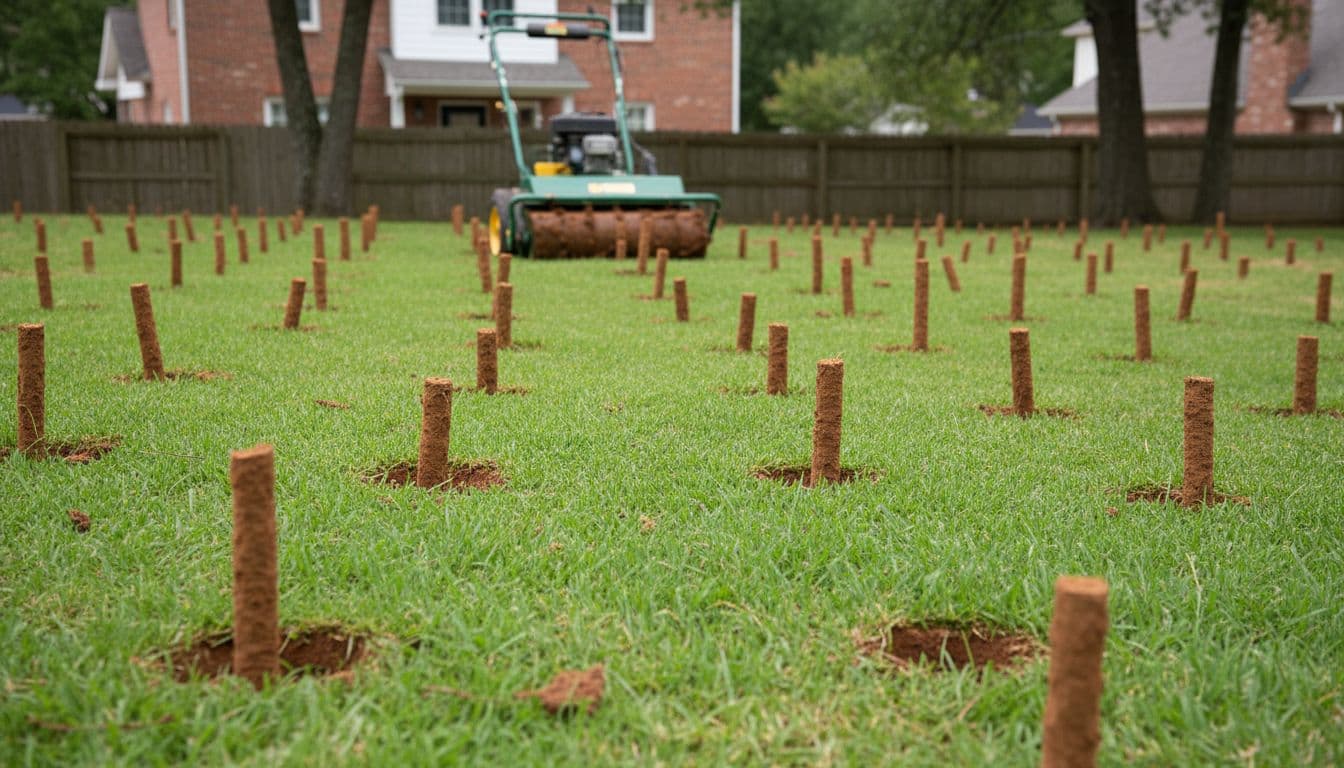
Right after aeration, topdress to build soil without smothering the turf. Spread 1/4 inch of screened compost and rake or drag it so it falls into the holes. Keep it light so stolons still see sun and air.
Now the fertilizer piece, keep it modest. A safe annual target for many Atlanta centipede lawns is about 1.0 to 2.0 pounds of nitrogen per 1,000 square feet per year , split into 2 feedings during active growth. On low fertility clay, start closer to 1.0 to 1.5 and watch the response. Slow-release nitrogen helps avoid flush growth and thatch.
If the lawn stays pale but growth is steady, iron may help color without pushing growth, but your soil test helps guide that choice.
Weed control timing for warm-season turf (using temperature cues, not calendar dates)
Weeds love thin centipede, so the best "herbicide" is a thicker lawn. Still, pre-emergent timing is worth getting right because it reduces how much post-emergent spraying you'll ever need.
In spring, apply a crabgrass pre-emergent when soil temperatures reach about 55°F for several days . Many homeowners use local bloom cues like early spring shrubs flowering, but soil temp is the more reliable trigger. In fall, apply a winter-weed pre-emergent as nights cool and soil temps drop toward 70°F , before annual bluegrass and chickweed germinate.
Common pre-emergent active ingredients include prodiamine, dithiopyr, and pendimethalin. For post-emergent broadleaf control, warm-season lawns often use selective herbicides, but centipede can be sensitive, especially in heat. Spot treat when possible, and avoid spraying during high temps or drought stress.
Here's a quick cue-based rhythm that fits Metro Atlanta:
| Season cue | What to focus on | Centipede-friendly approach |
|---|---|---|
| Soil temps ~55°F (spring) | Crabgrass prevention | Pre-emergent, then water it in per label |
| After green-up | Build density | Mow correctly, fix irrigation coverage |
| Late spring to early summer | Compaction relief | Core aeration, then 1/4 inch compost |
| Peak heat | Stress avoidance | Higher mow, deep watering, minimal nitrogen |
| Cooling nights (fall) | Winter weeds | Fall pre-emergent before germination |
Always follow the product label, local rules, and watering instructions. Labels control rates, timing, and turf safety, and they matter even more on centipedegrass.
Conclusion: a healthier centipede lawn comes from restraint
A strong Atlanta centipede lawn care plan doesn't revolve around frequent feeding. It revolves around pH discipline , smart mowing, deep watering, and slowly improving clay with aeration and compost. Keep nitrogen modest, and your lawn will usually thicken with fewer headaches. If you want the quickest next step, start with a soil test and adjust only what it proves you need.