Atlanta Photinia Leaf Spot Guide for Red Tip Shrubs
Red tip photinia can look sharp in a Metro Atlanta yard until the leaves start spotting, yellowing, and dropping early. The problem is usually photinia leaf spot , and the disease is commonly called Entomosporium leaf spot.
That matters because a few other shrub problems can look similar at first. If you want a real fix, the first step is a clean diagnosis, then a plan that fits North Georgia's wet springs and humid stretches.
Why red tip photinia gets leaf spot so often in Atlanta
Red tip photinia likes our climate a little too much. Warm rain, long humid spells, and crowded hedge plantings give the fungus what it wants. Once leaves stay wet for hours, infection moves fast.
The disease spreads by splashing water and wind-driven rain. That means a single infected shrub can keep feeding a whole hedge. Dense branches make it worse because air can't move through the plant.
In Atlanta, the worst damage often starts in spring. New growth is tender, and spring rains keep leaves wet just long enough for the disease to spread. By summer, the hedge may look thin from the bottom up.
That pattern is common across the Southeast. Many homeowners keep treating the same shrubs year after year, yet the spots keep coming back.
How to recognize Entomosporium leaf spot on red tip shrubs
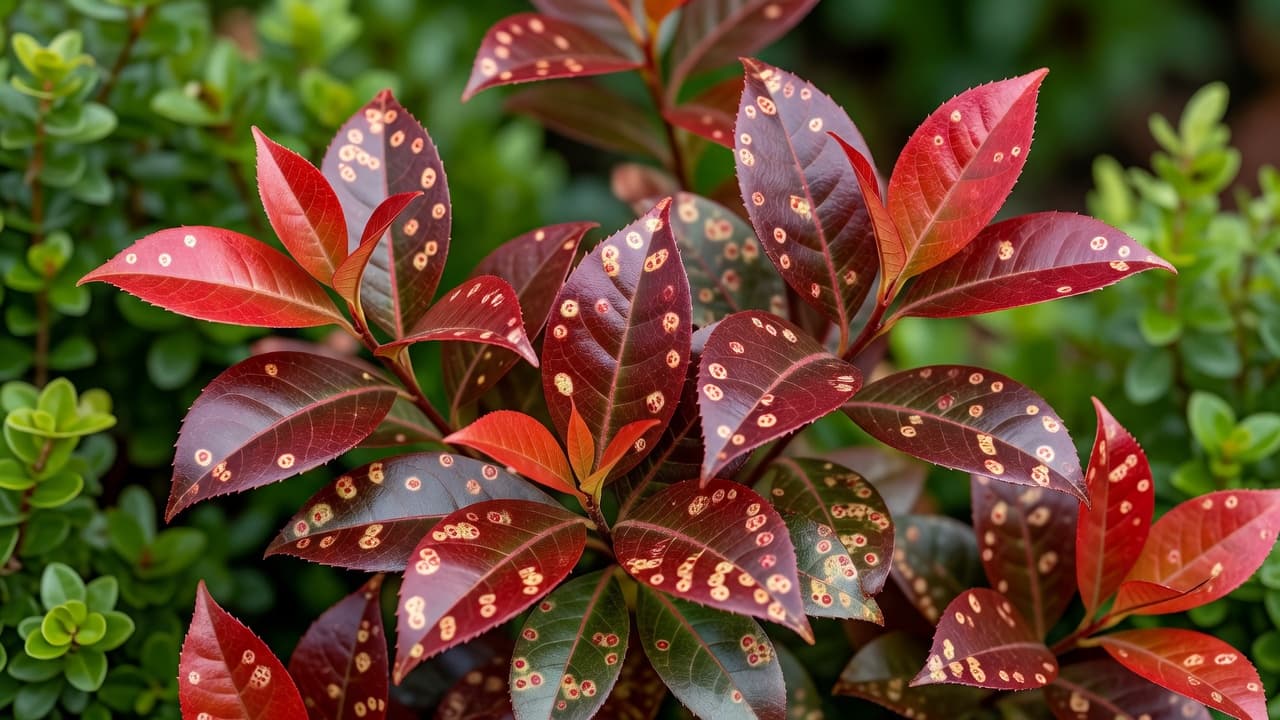
Entomosporium leaf spot usually starts as tiny circular marks on new leaves. The spots often have reddish-brown edges with tan or gray centers. As they grow, the spots may merge and create larger dead patches.
Older leaves can show the same pattern, then turn yellow and drop. When the disease gets ahead of the shrub, the lower half thins out first. A hedge that looked full in March can look patchy by early summer.
A quick comparison helps separate leaf spot from lookalikes:
| Problem | What you usually see | Helpful clue |
|---|---|---|
| Entomosporium leaf spot | Small round spots with reddish edges and pale centers | Follows wet weather, often starts on lower leaves |
| Drought stress | Browning edges, curling, dull color | Soil feels dry, plant may be in heat or reflected sun |
| Insect damage | Stippling, holes, or chewed edges | Pests, webbing, or irregular bites show up |
| Powdery mildew | White or gray film on the leaf surface | Looks dusty, not spot-like |
If the marks are neat, round, and ringed with color, photinia leaf spot is the likely culprit. If the damage looks uneven, check watering, insects, and site stress before you blame the fungus.
What helps when the disease shows up
Once spots are on the leaves, the damaged tissue won't heal. The goal is to protect new growth and slow the spread.
Sprays protect new leaves. They do little for leaves that already carry spots.
Start with cleanup. Remove fallen leaves under the shrub, and cut out the worst infected stems during dry weather. Keep your tools clean, and don't drag debris to another bed.
Next, change how water hits the plant. Water the soil, not the foliage. Early morning watering gives leaves time to dry, which helps a lot during humid weather.
Then open the shrub up. Light pruning improves airflow, but heavy shearing creates a dense shell that holds moisture inside. That makes the problem worse, not better.
A labeled fungicide can help if you start early, before the disease takes over the whole hedge. Timing matters more than power here. If the shrub had serious spots last year, begin protection in spring before the first long wet stretch.
A simple action plan looks like this:
- Rake out dropped leaves and old debris.
- Prune for airflow, then keep the plant shape open.
- Water at the base in the morning.
- Avoid overhead sprinklers on the hedge.
- Use a fungicide labeled for ornamental shrubs when new growth begins.
- Repeat sanitation after rain-heavy periods.
If you stay consistent, you may slow the cycle enough to keep the shrub presentable. Still, treatment works best on mild cases.
Spring and humid-weather care for North Georgia yards
Atlanta weather often gives photinia a head start in spring. Cool nights, rainy days, and fresh growth create the perfect setup for infection. That means early care matters more than late-season rescue work.
Check shrubs in March and April, then keep an eye on them through the first humid stretch. If you see fresh spots after rain, act fast with cleanup and pruning. Waiting until the hedge is thin usually means you're already behind.
Summer humidity brings its own problems. Even when rain slows down, thick shrubs can stay damp after morning irrigation or a storm. That lingering moisture keeps the fungus active.
Good bed care helps here too. Clean mulch, open space around the base, and steady airflow all make the site less friendly to disease. If your landscape bed is crowded, a fresh reset can help the whole area dry faster, and professional landscaping and mulch services can make that easier.
Fall cleanup matters as well. Remove fallen leaves before they sit through winter, because infected debris can carry the problem into the next growing season. In North Georgia, a little cleanup now can save a lot of frustration next spring.
When removal and replacement make more sense
Some red tip photinia shrubs keep getting leaf spot no matter what you do. That happens a lot in the Southeast, especially with hedges in shade, tight spaces, or irrigation-heavy beds.
If the plant defoliates every spring, the same spots return after each treatment, and the shrub looks bare by summer, replacement may be the better call. At that point, you're not managing a nuisance. You're fighting the site.
A good replacement choice should fit Atlanta heat, humidity, and your yard's light level. The best options are the ones that stay healthy without constant spraying and cleanup. A landscape pro or local nursery can help you choose shrubs that match the space instead of repeating the same problem.
When you remove an old hedge, clear out the roots, old leaves, and crowded soil around it. A clean planting bed gives the next shrub a better start. It also keeps the new plant from sitting in the same damp, disease-prone setup.
Conclusion
Red tip photinia can still work in Atlanta, but only if you stay ahead of photinia leaf spot . The disease is often Entomosporium leaf spot, and it thrives in spring rain, humid air, and crowded hedges.
Spot the disease early, clean up infected debris, and change the conditions that keep leaves wet. If the shrub keeps failing year after year, replacement is often the smarter move. A healthy yard starts with plants that fit the site, not plants that need constant rescue.