Atlanta Tree Root Flare Guide for Healthy Trees
A visible root flare is one of the easiest signs of a properly planted and maintained mature tree. If you're checking an Atlanta tree root flare , look for the trunk to widen naturally before the main roots spread into the soil.
Many problems begin when homeowners cover that widening with soil, mulch, or a raised planting bed. The safest correction depends on the cause, especially when drainage, grading, decay, or tree stability may be involved.
What the root flare should look like
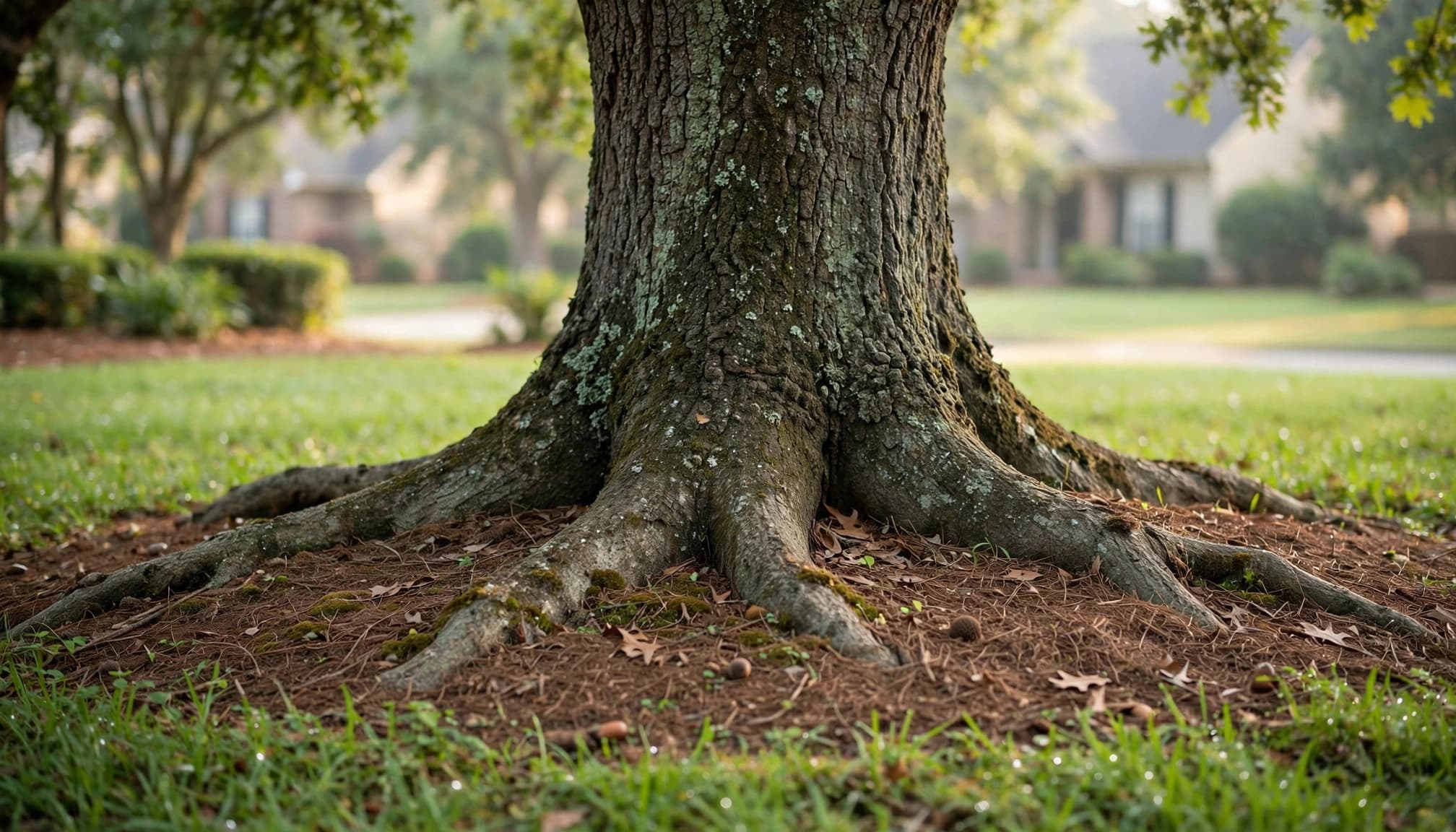
The root flare is the swollen area where the trunk transitions into the main roots. It should remain visible above the finished soil line, even when the tree has a thick mulch bed.
A mature tree may have roots that show across the lawn, but those roots aren't the same as the flare at the trunk base.
Root flare versus surface roots
Surface roots are lateral roots that grow outward from the trunk. They may become visible as the tree grows, soil erodes, turf thins, or nearby ground becomes compacted. Mature oaks, maples, sweetgums, and other shade trees can develop raised roots without being unhealthy.
The root flare stays close to the trunk. It looks like a gentle widening, rather than a single root ridge extending across the yard. The University of Georgia Extension recommends keeping this area visible and avoiding soil or mulch against the trunk.
Grass often struggles beneath a mature canopy because of shade, root competition, and limited moisture. Replacing weak turf with mulch or shade-tolerant ground cover is usually safer than trying to bury roots so the lawn looks flat.
The "telephone pole" warning sign
A trunk that appears to enter the ground like a straight telephone pole may have a buried flare. You should normally see some taper and widening where the trunk meets the soil.
Other warning signs include:
- Mulch or soil touching the bark.
- Wet or discolored bark at the base.
- A trunk that disappears beneath a raised bed.
- Roots circling close to the trunk.
- Mushrooms, cavities, or soft wood near the soil line.
These signs don't prove that the tree is failing. They do show that the base deserves closer attention before you add more material or begin digging.
Why buried soil and volcano mulch harm mature trees
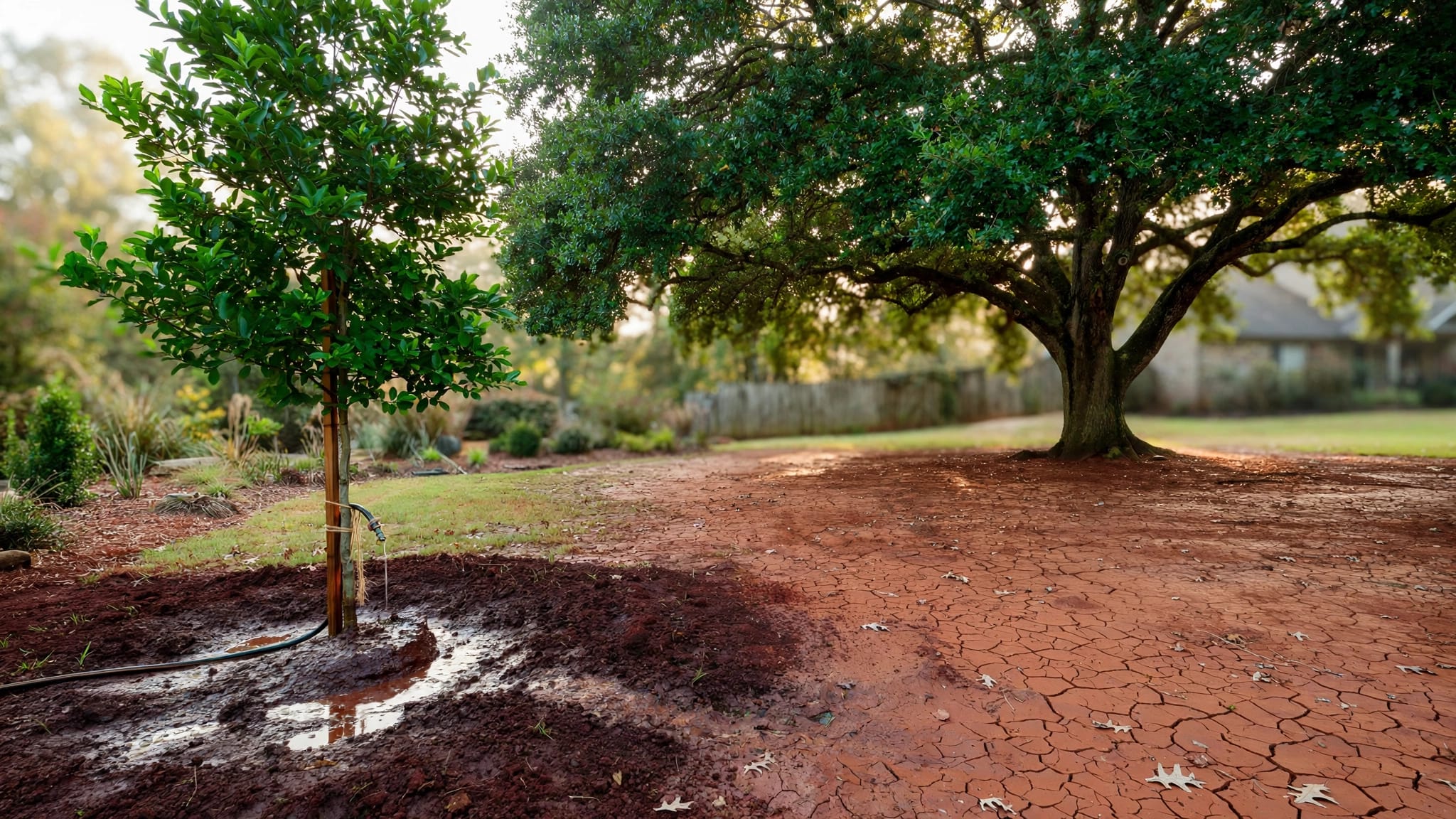
Adding soil around a tree often seems like a simple way to level a yard. However, covering the root flare changes the air, moisture, and drainage conditions around the trunk.
A cone of mulch piled against the trunk creates a similar problem. It may look neat after installation, but it keeps the bark damp and hides changes that should remain visible.
Moisture, decay, and girdling risks
Tree bark is not designed to stay buried or constantly wet. Soil and mulch pressed against the trunk can hold moisture against the bark, encourage decay, and reduce airflow. In Georgia's humid conditions, that moisture can remain a concern even when the surface looks dry.
Volcano mulching can also encourage fine roots to grow upward into the loose mulch. Those roots may later circle or press against the trunk. As they enlarge, they can restrict the movement of water and nutrients through the tree's tissues.
The Atlanta Tree Conservation Commission recommends a flat layer of mulch that stays away from the trunk. Mulch should protect the soil, not cover the flare.
Structural stability and drainage concerns
A buried flare can make a tree appear planted too deeply. It can also hide decay, girdling roots, erosion, or a gradual change in grade. Extra soil may reduce oxygen in the upper root zone and redirect water toward the trunk.
Drainage problems need special care. If water repeatedly pools beside the tree, adding fill around the base only hides the symptom. A grading change can also damage roots if equipment or trenches pass through the root zone.
Covering exposed roots may make the yard look smoother, but it can leave the tree with poorer oxygen, drainage, and trunk protection.
How to mulch around a mature Atlanta tree
Good mulch protects the soil, reduces mower damage, and limits competition from turf. It should also leave the trunk base open and easy to inspect.
For ongoing bed care, Atlanta landscaping and mulch services can help maintain a clean bed while keeping mulch depth and placement under control.
Use the right depth and trunk clearance
Published guidance varies slightly. The Atlanta Tree Conservation Commission recommends roughly 2 to 4 inches of mulch, while UGA Extension specifies about 3 inches. Both agree that mulch should not touch the trunk.
A practical homeowner approach is to keep the root flare fully visible, leave a clear space around the bark, and avoid piling material higher as it approaches the trunk. Guidance from Georgia sources places the clear area at several inches, with some recommending a larger no-mulch zone near the flare.
The exact distance matters less than the result: bark should stay exposed, dry, and easy to inspect. Never use mulch to cover a hollow, damaged trunk base, or visible decay.
Build a flat donut, not a mound
Spread mulch in a broad, shallow ring. A 2 to 4-foot ring may work well when space allows, but the bed should follow the tree and surrounding landscape rather than covering every root ridge.
Keep the layer even. Tapering slightly thinner near the trunk can help preserve clearance, but don't create a raised cone around the bark. Refresh displaced mulch instead of adding new layers over old material.
Avoid edging that requires a deep, continuous trench near the trunk. A natural mulch transition, a mowable strip, or low ground cover can define the bed with less root disturbance.
How to manage surface roots without damaging the tree
Surface roots are often a landscape problem rather than a tree emergency. They can lift turf, interfere with mowing, or raise pavers and edging. Cutting them may create a larger problem than the original obstruction.
Change the area around the roots
The safest repair usually changes the ground treatment instead of removing the root. Options may include:
- Expanding the mulch bed.
- Replacing thin turf with suitable ground cover.
- Creating a wider planting area.
- Adjusting mowing paths around raised roots.
- Repairing erosion that exposed the root.
Keep mower blades, string trimmers, trenches, and heavy equipment away from large roots. A shallow root can suffer serious bark damage from repeated contact, even when the root itself remains in place.
If a root is lifting a sidewalk or driveway, record the height change and inspect the tree before approving root cutting. A landscape contractor may adjust the surrounding surface, but an arborist should guide decisions involving major structural roots.
Diagnose the pattern before making changes
Walk the area after mowing and after heavy rain. Look for raised soil, exposed roots, thin grass, standing water, erosion channels, and dry patches that return in the same place.
A broad area of declining grass may involve shade, irrigation, compaction, drainage, insects, or disease rather than one root. Likewise, a root that enters a drainage or irrigation line may be responding to a leak or damaged joint.
Don't add topsoil to create a smooth lawn surface over exposed roots. Don't trench for edging or drainage close to the trunk without checking the root zone and underground utilities first.
What to do when the flare is buried
Start with observation rather than aggressive excavation. If mulch is covering the flare, remove excess material carefully by hand and inspect the trunk base. Simple mulch removal may solve the problem when the tree is otherwise healthy.
Soil, fill, or a raised bed requires more caution. The material may have been added over many years, and the flare may now be connected to decay, girdling roots, poor drainage, or altered grading.
Correct the problem gradually
Avoid stripping a large area around the trunk all at once. Sudden exposure can damage roots that have adapted to the existing conditions. It may also destabilize soil on a slope or reveal decay that requires a separate plan.
A gradual correction can include reducing unnecessary mulch, improving the bed edge, stopping irrigation overspray, and addressing the source of runoff. The right pace depends on how much material covers the flare and how the tree responds.
Never use a loader, excavator, or aggressive digging method against the trunk. Heavy equipment can crush roots and compact the surrounding soil.
Root collar excavation may need professional guidance
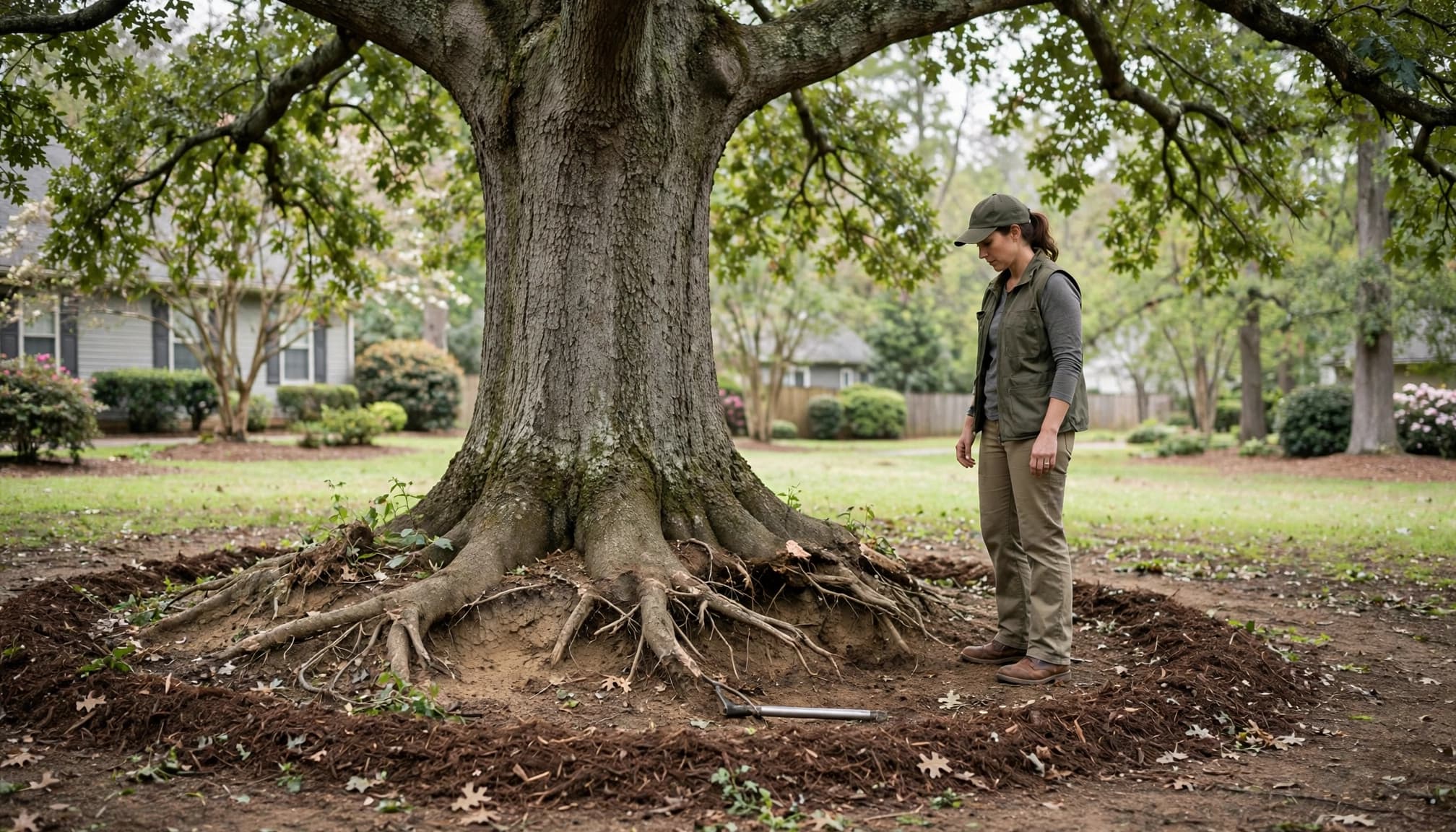
An arborist may recommend root collar excavation when the flare is buried, girdling roots are suspected, or the trunk base needs inspection. This is different from casually scraping soil away with a shovel or cutting roots to make room.
Professional evaluation is especially important when the tree has visible decay, canopy decline, a lean, exposed structural roots, or soil movement. The goal is to identify the cause and protect the tree, not expose every root or make the ground look perfectly level.
How drainage and grading affect the root flare
Water movement around a mature tree can change after construction, driveway work, bed installation, erosion, or repeated mowing. A tree may receive too much water at the trunk or lose soil from one side of the root zone.
Fix water movement at the source
After a storm, check whether water pools near the trunk, flows toward the house, or cuts channels through the mulch bed. Correcting the slope may help, but regrading near established roots requires a careful plan.
You can review Atlanta drainage solutions for soggy lawns when deciding whether the problem involves surface runoff, low spots, or saturated soil.
Don't build a raised ring around the tree to hold mulch or water. Don't bury an eroded root flare with fill before identifying where the soil went and why.
Protect roots during landscape projects
Drainage lines, patios, irrigation repairs, retaining walls, and new planting beds may require excavation near established roots. Atlanta grading and paving services can address slope and water flow, but tree protection should be part of the planning when mature roots are nearby.
Call 811 before digging for utilities. Also mark the tree's root zone, keep materials outside the canopy when possible, and ask how the work will avoid major roots. If the project requires root cutting, pause and get arborist guidance first.
When to call an arborist
Some root flare concerns are appropriate for routine landscape maintenance. Others involve the tree's structure and should not be handled as a mulch project.
Watch for signs of decline or instability
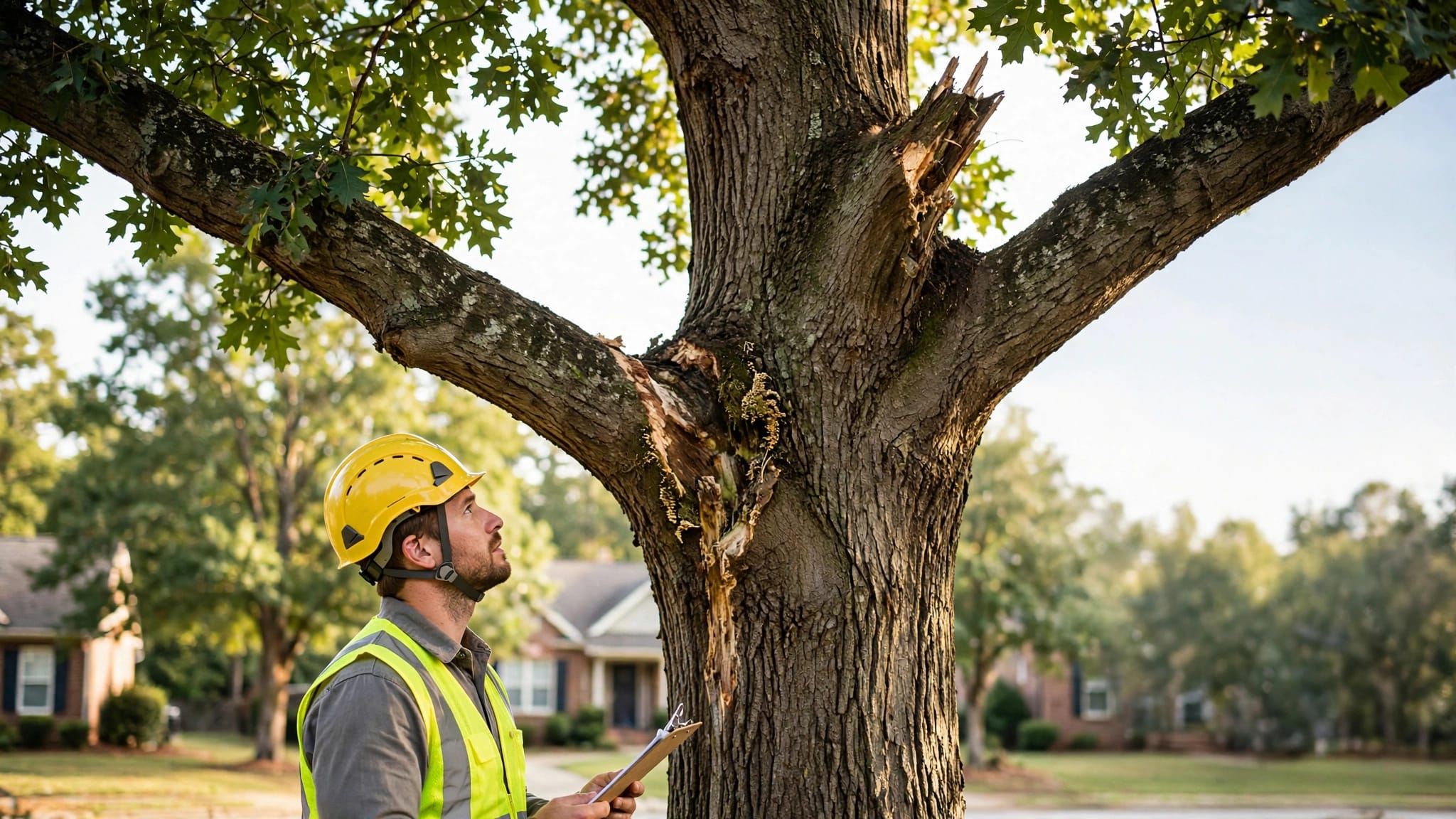
Arrange an inspection when you see a noticeable lean, cracked limbs, large dead branches, trunk cavities, mushrooms at the base, rapid canopy thinning, or new soil movement around the tree. A healthy canopy does not make aggressive root cutting safe.
Professional input also makes sense when roots affect a foundation, sidewalk, drainage line, retaining wall, or sloped area. The inspection should consider the whole tree, the root flare, surrounding soil, water movement, and nearby targets such as buildings or walkways.
RW Lawn Co's guide to an Atlanta tree risk assessment explains why an evaluation should cover the trunk base, major branches, canopy, and surrounding site.
Choose qualified help for major work
Ask who will inspect the tree, what qualifications they hold, and whether the company carries appropriate insurance. For non-emergency work, compare written scopes that identify the tree, proposed work, cleanup, and any equipment involved.
The Georgia Arborist Association provides a directory that can help property owners locate tree-care professionals. An arborist may recommend pruning, monitoring, root collar excavation, drainage changes, or removal, depending on the actual defect.
Key takeaways
- The root flare is the widened trunk base and should remain visible.
- Surface roots can be normal and don't automatically mean the tree is unhealthy.
- Soil and mulch against bark can trap moisture, hide decay, and encourage girdling roots.
- Mulch should form a shallow donut, never a cone.
- Do not cut major roots or excavate aggressively around a mature trunk.
- Address drainage and grading problems before covering exposed roots.
- Call an arborist when stability, decay, construction, or root cutting is involved.
FAQ about Atlanta tree root flare care
How much mulch should I use around a mature tree?
Use a shallow, even layer. Atlanta Tree Conservation Commission guidance allows roughly 2 to 4 inches, while UGA Extension recommends about 3 inches. Keep the root flare and bark uncovered, and don't add new mulch over a compacted pile.
Should I cut roots that are sticking out of the lawn?
Don't cut major roots simply because they are visible or interfere with mowing. They may provide important support. Change the surrounding landscape with a wider bed, mulch, or suitable ground cover, and ask an arborist before cutting a large root.
Can I add soil over an exposed root flare?
Avoid adding soil against the trunk or over the flare. It can restrict oxygen, hold moisture against the bark, and hide decay. If the grade needs to change for drainage or construction, have the work evaluated before bringing in fill.
Is removing mulch enough to fix a buried flare?
Sometimes, but not always. Removing excess mulch may help when the tree is healthy and the flare is only covered by a recent layer. Buried soil, girdling roots, decay, poor drainage, or instability need a more careful assessment.
Conclusion
A healthy Atlanta tree root flare should remain visible, dry, and free from piled soil or mulch. Surface roots can often be managed by changing the surrounding bed rather than cutting into the tree.
When drainage, grading, construction, decay, or stability is involved, gradual correction and professional guidance protect both the tree and the property. The best repair usually improves the area around the tree while leaving its major roots intact.