Atlanta Tree Risk Assessment Cost Guide for 2026
A tree can look stable from the driveway and still have decay, weak unions, or storm damage hidden inside the canopy. For most Atlanta homeowners, the tree risk assessment cost falls between $75 and $500, depending on the level of inspection and documentation required.
A basic consultation may be enough for general guidance, while a written report or advanced assessment costs more. The final quote also depends on tree size, the number of trees, access, urgency, and whether the property needs follow-up work. Here is what Atlanta property owners should budget for in 2026.
Quick Atlanta Tree Risk Assessment Cost Takeaways
For a typical residential property, use these ranges as planning figures:
- A basic arborist consultation often costs about $75 to $150 .
- A single-tree visual risk assessment commonly falls between $150 and $350 .
- A hazard-tree assessment may cost $150 to $500 , depending on access and tree condition.
- A formal written report for insurance or legal use often costs $300 to $500 .
- A standard tree appraisal may run $200 to $400 , while litigation-level work can reach $500 to $1,500 or more .
- Emergency or after-hours service may add 20% to 40% .
These figures cover assessment and documentation. They don't include pruning, removal, stump grinding, hauling, or lawn repair unless the estimate clearly says otherwise.
A low consultation price isn't always a low total project cost. The right service depends on the question you need answered.
Atlanta Tree Risk Assessment Price Ranges
The phrase "tree risk assessment" can describe several different services. Comparing prices only makes sense when the scope is similar.
Basic arborist consultation
A basic consultation is usually the least expensive option. In Atlanta, residential consultations commonly start around $75 to $150. Some providers list consultation pricing from about $95, with multi-tree or larger-property visits starting near $150.
This service generally involves a visual review of tree health, obvious structural problems, and recommended next steps. It may work well when you're deciding whether a tree needs pruning, removal, or a more detailed inspection.
Ask whether the consultation includes a written summary. Some companies provide recommendations verbally, while others leave notes or a short report. A consultation fee may also be credited toward follow-up work, but that policy isn't universal.
Visual risk assessments and formal reports
A single-tree visual assessment using a TRAQ-style process often costs about $150 to $350 in Atlanta. The arborist examines the trunk, roots, major limbs, canopy, site conditions, and potential targets such as homes, driveways, vehicles, and play areas.
Written documentation raises the price. A formal report for insurance, legal, or property-related purposes often costs around $300 to $500. A standard appraisal may fall between $200 and $400, while expert-witness or litigation work can reach $1,500 or more.
| Service type | Estimated Atlanta range | Common purpose |
|---|---|---|
| Basic consultation | $75 to $150 | General advice and recommendations |
| Single-tree visual assessment | $150 to $350 | Risk review for one tree |
| Hazard-tree assessment | $150 to $500 | Concerns about failure or storm damage |
| Written assessment report | $300 to $500 | Insurance or legal documentation |
| Standard tree appraisal | $200 to $400 | Tree value or property documentation |
| Litigation-level appraisal | $500 to $1,500+ | Expert support for disputes or claims |
These are estimated ranges, not guaranteed quotes. A large tree beside a house can cost more to assess than a smaller tree in an open yard.
What a Tree Risk Assessment Includes
A useful assessment connects the tree's condition to the people and property around it. The arborist isn't only looking for a dead branch. They are considering how likely a failure may be, what part could fail, and what could be damaged.
The visual inspection
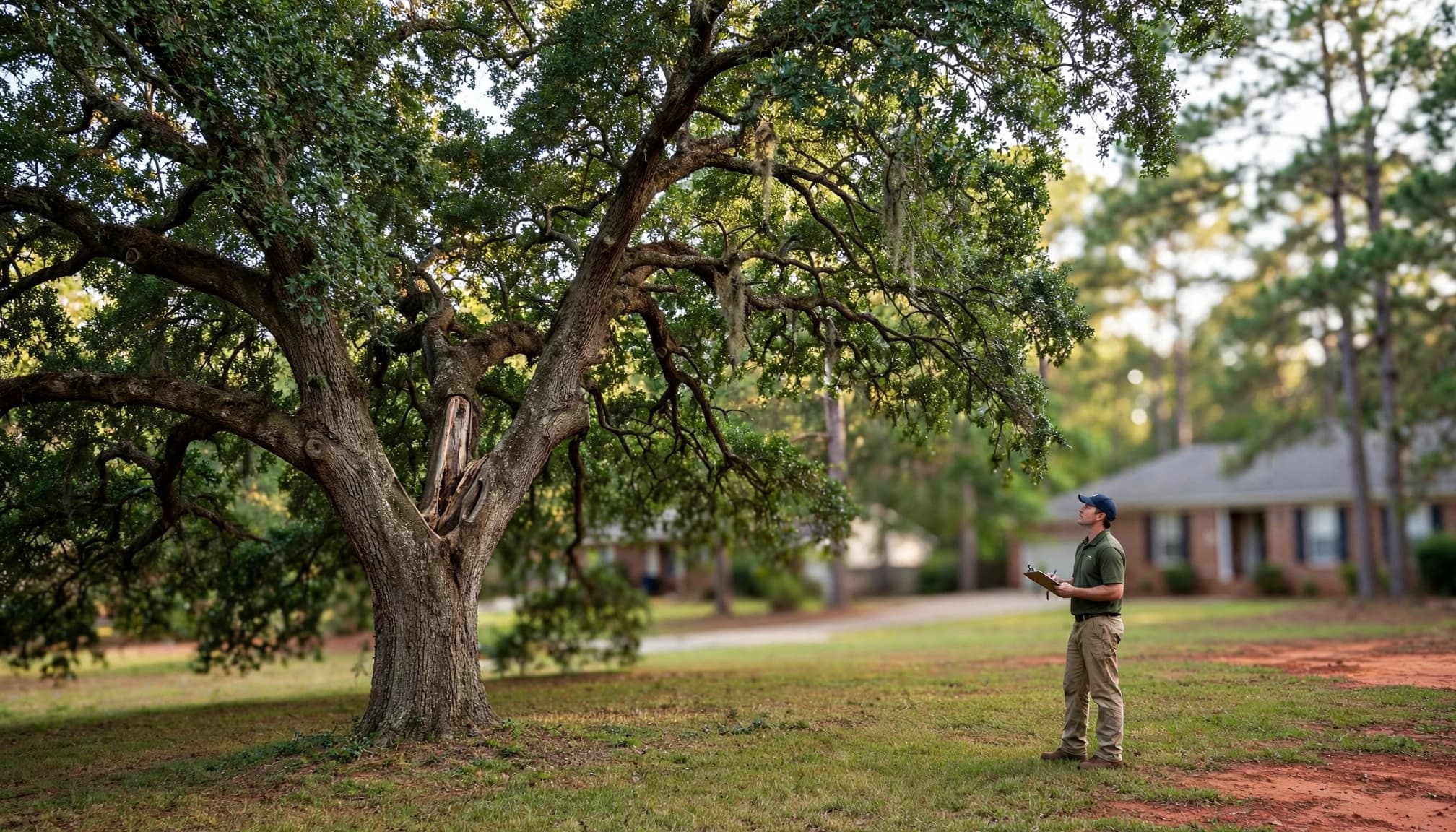
A visual inspection usually covers the trunk, root flare, major branches, branch unions, canopy, and surrounding soil. The arborist may look for cavities, cracks, deadwood, fungal growth, exposed roots, decay, leaning, or signs of past storm damage.
Atlanta's mature pines, oaks, and other large trees can develop problems that aren't obvious from a window. A tree may still have green leaves while carrying a split limb or weakened attachment.
The assessment should also consider the target. A dead limb over a shed presents a different risk from the same limb over an unused wooded area.
Recommendations after the assessment
The result may be routine monitoring, selective pruning, cabling or other corrective work, additional testing, or removal. Those recommendations should identify the concern and explain the proposed response.
Pruning can remove a hazardous branch, but it can't correct every structural defect. A tree with severe decay, a large cavity, or a split trunk may need a more detailed evaluation before anyone starts cutting.
What Makes the Quote Higher or Lower?
Two trees with similar height can produce very different assessment prices. The quote reflects the arborist's time, equipment, travel, access, documentation, and level of risk.
Tree size and condition
Large trees take longer to inspect because they have more limbs, greater height, and more possible failure points. A mature oak near a roof usually needs more careful review than a young ornamental tree in an open lawn.
Condition matters just as much. A noticeable lean, extensive deadwood, exposed roots, fungal growth, or storm-created split may require closer inspection. If the arborist recommends climbing, aerial inspection, resistograph drilling, sonic testing, or other diagnostics, the cost can rise beyond a basic visual assessment.
Number of trees and property size
Inspecting three trees isn't always three times the price of inspecting one. Some companies offer a project price for multiple trees, especially when the trees are close together and easy to access.
Large residential lots, commercial properties, and wooded parcels require more travel across the site. They may also involve more documentation. For larger clearing or site work, factors such as tree density, slope, access, and debris volume can affect the overall project. See this Atlanta land clearing cost guide for related property-planning costs.
Access, urgency, and site conditions
A tree behind a narrow gate, retaining wall, steep slope, pool, or crowded planting bed takes more time to reach and inspect. Limited parking can also affect setup.
Urgency changes pricing as well. Emergency or after-hours assessments may carry a 20% to 40% premium. A storm-damaged tree leaning toward a structure should receive prompt attention, but keep people and pets away until a qualified professional evaluates it.
Assessment Cost Versus Tree Work
A tree risk assessment answers a safety or condition question. It doesn't automatically include the work recommended afterward.
Pruning, removal, and stump work
Follow-up pruning is a separate service in most estimates. Atlanta routine tree-trimming projects often land around $379 to $565 for one medium tree, while difficult work can reach $800 to $2,500 or more. Those figures are for tree work, not the assessment itself.
Removal is also separate. A standard residential removal may cost about $800 to $2,500, with storm-damaged or highly difficult trees reaching much more. Stump grinding, hauling, and disposal may add to the project.
For a broader look at the next step after an assessment, review this Atlanta tree removal cost guide.
Cleanup and property restoration
Ask whether the tree-work estimate includes chipping, log hauling, raking, and removal of sawdust or branches. Some crews leave wood on-site, while others remove everything.
After removal or pruning, the lawn may need grading, topsoil, seed, mulch, or landscape repair. Smaller amounts of leaves and branches may fit into Atlanta spring and fall yard cleanup, but large logs and hazardous limbs usually require tree-service equipment.
When a Written Report Is Worth the Cost
A written report costs more because it records the tree's condition, the observed defects, and the recommended action. That documentation can help when several people need to rely on the same information.
Insurance, property sales, and disputes
A report may be useful after storm damage, during an insurance claim, before a property sale, or when a tree sits near a shared property line. Requirements vary by insurer, buyer, lender, authority, and situation, so ask what format they need before scheduling the inspection.
If a neighbor, contractor, or insurance adjuster is involved, a verbal opinion may not settle the disagreement. A dated report with photographs and clear recommendations gives everyone a common reference.
Large or visibly damaged trees
Paying for documentation can make sense when the tree has a large cavity, split trunk, substantial deadwood, exposed roots, fungal growth, or a noticeable lean. It is also useful when the tree is close to a home, road, utility line, parked vehicle, or high-use part of the yard.
How to Request Comparable Estimates
A clear request helps companies price the same problem instead of guessing at different scopes.
Questions to ask before scheduling
Ask what type of assessment the company will perform and whether the visit includes a written report. Confirm the arborist's qualifications, the report format, the expected price, and whether the fee can be applied to later work.
You should also ask whether advanced testing, climbing, travel, photographs, and follow-up recommendations are included. If tree work may follow, request separate prices for assessment, pruning, removal, stump grinding, hauling, and cleanup.
Details to provide
Send photographs of the whole tree, its trunk, the base, visible defects, nearby structures, and the access route. Mention recent storms, cracking sounds, dropped limbs, construction, soil disturbance, or changes in the tree's lean.
For non-emergency work, compare two or three written estimates from insured professionals. The goal isn't to choose the lowest number. It is to compare similar scopes, safety practices, documentation, and cleanup terms.
Atlanta Tree Risk Assessment FAQ
How much does a tree risk assessment cost in Atlanta?
Most residential assessments fall between $75 and $500, depending on the service. Basic consultations are usually near the lower end. A single-tree visual assessment often costs $150 to $350, while a formal written report may cost $300 to $500.
Does the assessment include tree removal or pruning?
Usually, no. Assessment and corrective tree work are separate services. Some companies may apply a consultation fee toward follow-up work, but you should confirm that policy in writing.
Should I get an assessment after a storm?
Yes, if you notice a split trunk, hanging limb, fresh crack, exposed roots, sudden leaning, or a branch over a structure. Keep people and pets away from the area. Emergency service can cost more because crews may respond outside normal scheduling.
Do I need a written report?
A written report is useful when an insurer, buyer, lender, neighbor, attorney, or property authority needs documented findings. For routine planning, a basic consultation with written recommendations may be enough.
Conclusion
For most Metro Atlanta homeowners, the tree risk assessment cost in 2026 is about $75 to $500, with formal reports and advanced diagnostics costing more. Tree size, condition, access, urgency, and documentation needs have the biggest effect on the quote.
Keep assessment fees separate from pruning, removal, hauling, and lawn restoration. A site-specific written estimate gives you a clearer budget and a safer plan than an online average, especially when a mature tree threatens a home or heavily used part of the property.