Atlanta Lawn Repair After Utility Trenching
Utility trenching can leave an Atlanta lawn with more than a bare strip. The work may disturb topsoil, compact Georgia red clay, change the grade, damage irrigation, and create a path for stormwater. Good Atlanta lawn repair starts with documenting the damage and correcting the soil and drainage before replacing the grass.
The right repair method depends on your turf, sunlight, season, and how quickly you need coverage. Use this process to coordinate with the utility or contractor, restore the trench properly, and help seed or sod establish.
Key Takeaways
- Photograph the trench, surrounding turf, hardscape, irrigation, and drainage conditions before making changes.
- Confirm who handles restoration and whether the utility or contractor must inspect the area first.
- Repair settlement, compaction, and drainage before applying seed or sod.
- Match the replacement grass to the existing lawn. Bermuda and Zoysia need different repair materials than tall fescue.
- Warm-season turf usually repairs during late spring through midsummer. Tall fescue is generally better suited to early fall work.
- Keep traffic and pets away until new seed has established or sod has rooted.
Atlanta Lawn Repair Starts With a Site Check
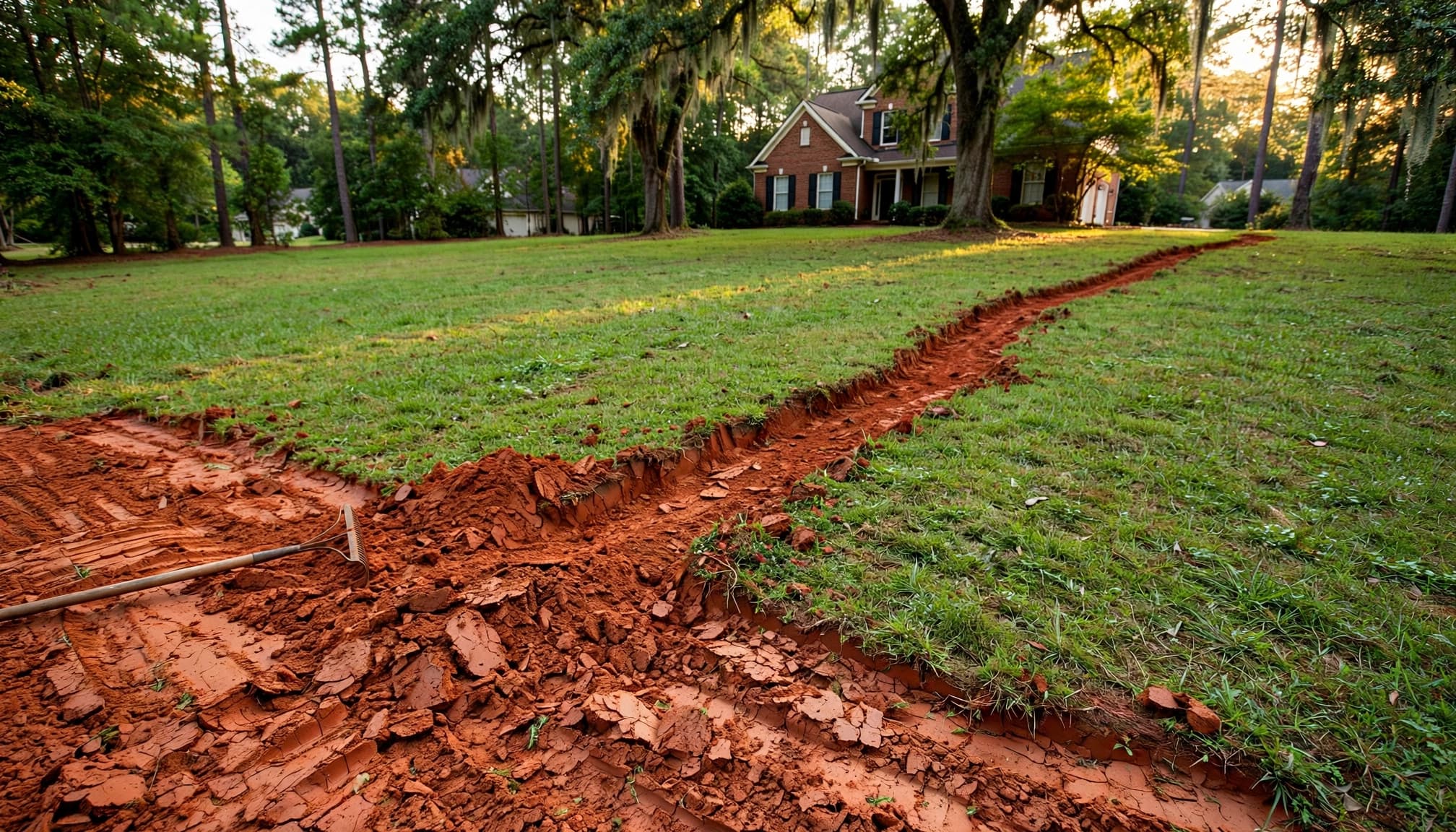
Utility work can hide several problems beneath an area that looks like ordinary bare soil. Walk the damaged strip after a dry day and again after rainfall. Look at the surface, the soil beneath it, and the way water moves across the yard.
Check for settlement and compaction
A trench may settle after the initial backfill, leaving a shallow depression that collects water or makes mowing uneven. Use a straight board across the damaged area to compare it with the surrounding lawn. Mark low areas that remain visibly lower than the existing grade.
Georgia clay can also become hard and airless after construction equipment passes over it. If a shovel barely enters the soil, roots will struggle to grow and water may run across the surface instead of soaking in. Heavy equipment can compact subsoil even when the top layer looks loose.
Inspect for:
- A sunken line that follows the trench.
- Hard, dense soil that resists a shovel or hand cultivator.
- Crusting, exposed roots, or construction debris.
- Water that pools after rain.
- Erosion channels at the edge of the repair.
- Damaged irrigation heads, edging, beds, walkways, or driveways.
Check the existing grass and sunlight
Identify the turf before buying repair materials. Metro Atlanta lawns commonly contain Bermuda, Zoysia, or tall fescue. Bermuda needs strong sunlight, while Zoysia handles somewhat more shade but still struggles in dense shade. Tall fescue grows best during Atlanta's cooler fall and spring weather.
Also check whether the trench crosses a naturally wet area, a downspout path, or a slope. A grass patch may fail because the site stays wet, not because the seed or sod was poor.
The Atlanta bare spot lawn repair guide explains why recurring bare areas often need soil, sunlight, and drainage corrections before turf replacement.
Document the Damage Before You Repair It
Contact the utility company, property owner, or excavation contractor before beginning restoration. Responsibility varies by project, easement, and work agreement, so get the restoration plan in writing.
Take clear records
Photograph the entire work area from several angles. Include close images of torn turf, exposed roots, soil piles, broken edging, damaged irrigation, rutting, and any drainage change. Take some photos that show the location in relation to the house, driveway, sidewalk, and property line.
Write down:
- The date the trenching occurred.
- The company or crew that performed the work.
- The affected lawn area and nearby features.
- Any new puddling, erosion, or settlement after rain.
- Repair estimates, receipts, and communication records.
Avoid cleaning up or spreading soil before the responsible party has inspected the damage if a claim or restoration agreement is still pending.
Confirm the repair scope
Ask whether the contractor will replace topsoil, regrade the trench, restore irrigation, replace turf, and remove excess spoil. Clarify whether the company will return after the soil settles or whether the first visit is only temporary stabilization.
If further digging is needed, confirm that buried utilities have been located. Georgia homeowners should use the appropriate utility-locating process, including 811 when applicable, before disturbing the trench or nearby soil. Never assume that a recently excavated area is safe to dig because one line has already been exposed.
Correct Soil Problems Before Replacing Grass
Grass cannot hide a poorly rebuilt trench for long. Seed may wash away, and sod may fail to root if the soil beneath it remains compacted, loose, uneven, or saturated.
Rebuild and firm the trench
Remove rocks, construction debris, dead turf, and loose material that will prevent good soil contact. Add suitable screened topsoil where the trench has settled below the surrounding grade. Blend the repair into the existing lawn rather than creating a raised ridge.
The soil should be firm enough to support turf without becoming packed hard. After lightly watering and settling the area, footprints should sink no more than about one-half inch. Avoid aggressively compacting wet clay because that can reduce air space and make drainage worse.
A soil test can help identify pH and nutrient problems before you add fertilizer or amendments. The repair base should be smooth, stable, and close to the final grade before seed or sod goes down.
Separate shallow leveling from major repair
A thin topdressing layer can help correct a shallow depression. One practical blend for warm-season turf is three parts clean, washed sand to one part screened compost. In heavy clay or damp areas, some projects use a more sand-heavy four-to-one blend.
Spread thin layers rather than dumping a deep load over living grass. Straight topsoil can clump and seal the surface, while pure compost may shrink and settle unevenly. The Atlanta lawn leveling guide covers this approach in more detail.
Topdressing is not a solution for water that stands longer than a day, a slope toward the foundation, or runoff entering from another property. Those conditions need drainage or grading work first.
Fix Drainage Before Installing Turf
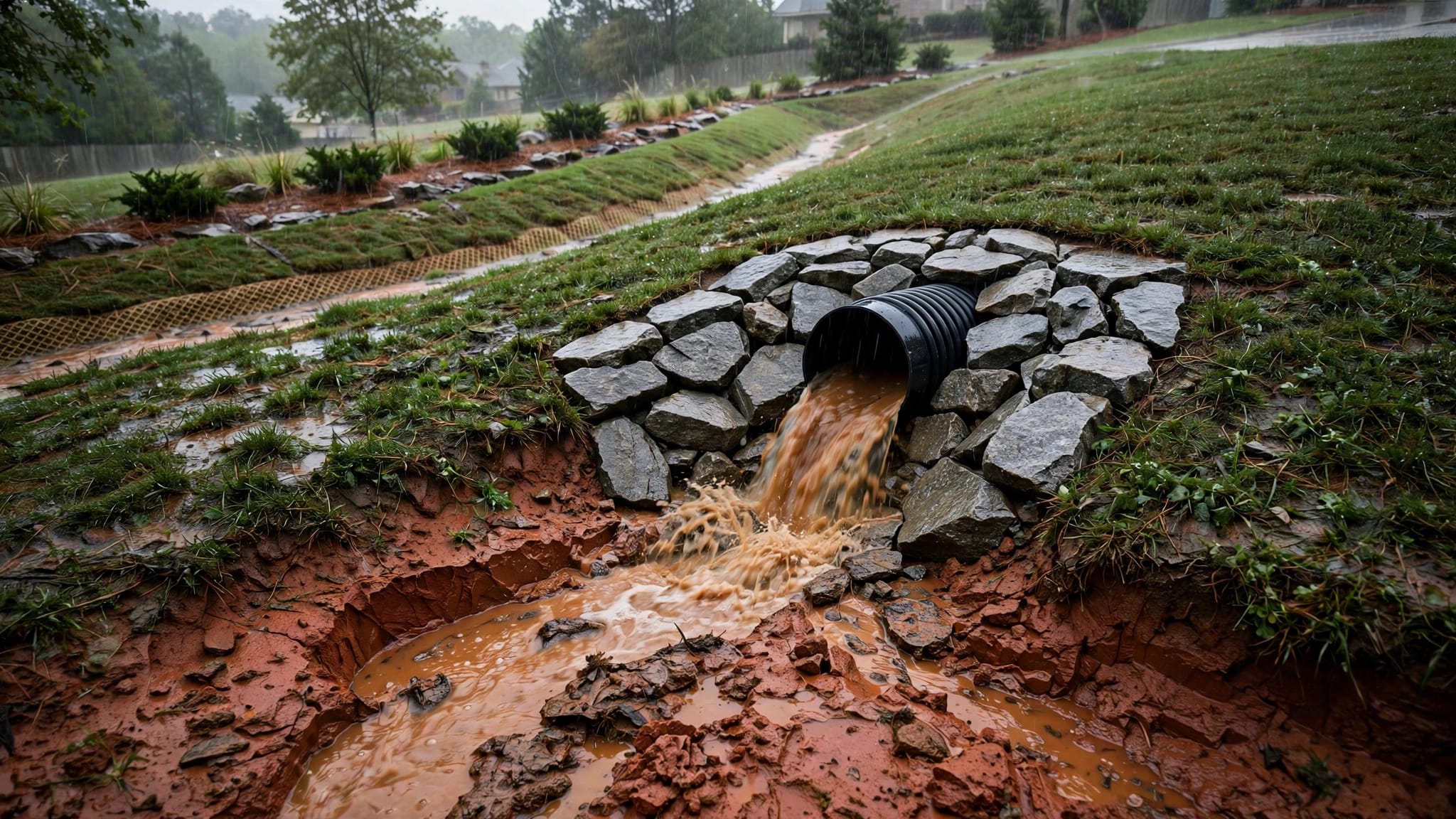
Utility trenching can create a low channel that collects water, or a raised strip that redirects runoff into the wrong part of the yard. Observe the area during and after a storm before deciding that new grass is the main repair.
Water should move away from the home and toward a safe discharge point. Avoid directing runoff onto a neighboring property, foundation, walkway, or septic area. Adjust downspout extensions and irrigation heads if they are adding water to the damaged strip.
Regrading may be enough when the trench created a shallow low spot or changed the surface slope. A swale can guide water through the yard without leaving a deep ditch. A French drain may fit a wet strip where water remains in the soil, but it needs a proper outlet, suitable fabric, and a slope that supports flow. The Atlanta lawn drainage solutions guide discusses those choices.
Once the grade is corrected, remove loose soil from the turf surface and firm the planting area. Do not cover a drainage failure with sod and expect the grass to solve it.
Choose Seed or Sod for the Damaged Strip
The best choice depends on your existing grass, the season, erosion risk, and how quickly you need the lawn to look finished.
Match the grass to the existing lawn
Bermuda can be repaired with seed, sprigs, or sod in suitable sunny areas. Zoysia is commonly repaired with plugs or small sod pieces. Matching the existing variety helps the repaired strip blend with the surrounding lawn.
Tall fescue is generally established from seed. It grows best during Atlanta's cooler fall and spring conditions and may thin during hot summer weather. Seed can also work well when the repair covers a large area and you can keep the surface consistently moist during germination.
Do not use a different grass simply because it is available at the store. A patch that differs in color, texture, mowing height, or seasonal dormancy can remain visible after the trench disappears.
Weigh speed, cost, and site conditions
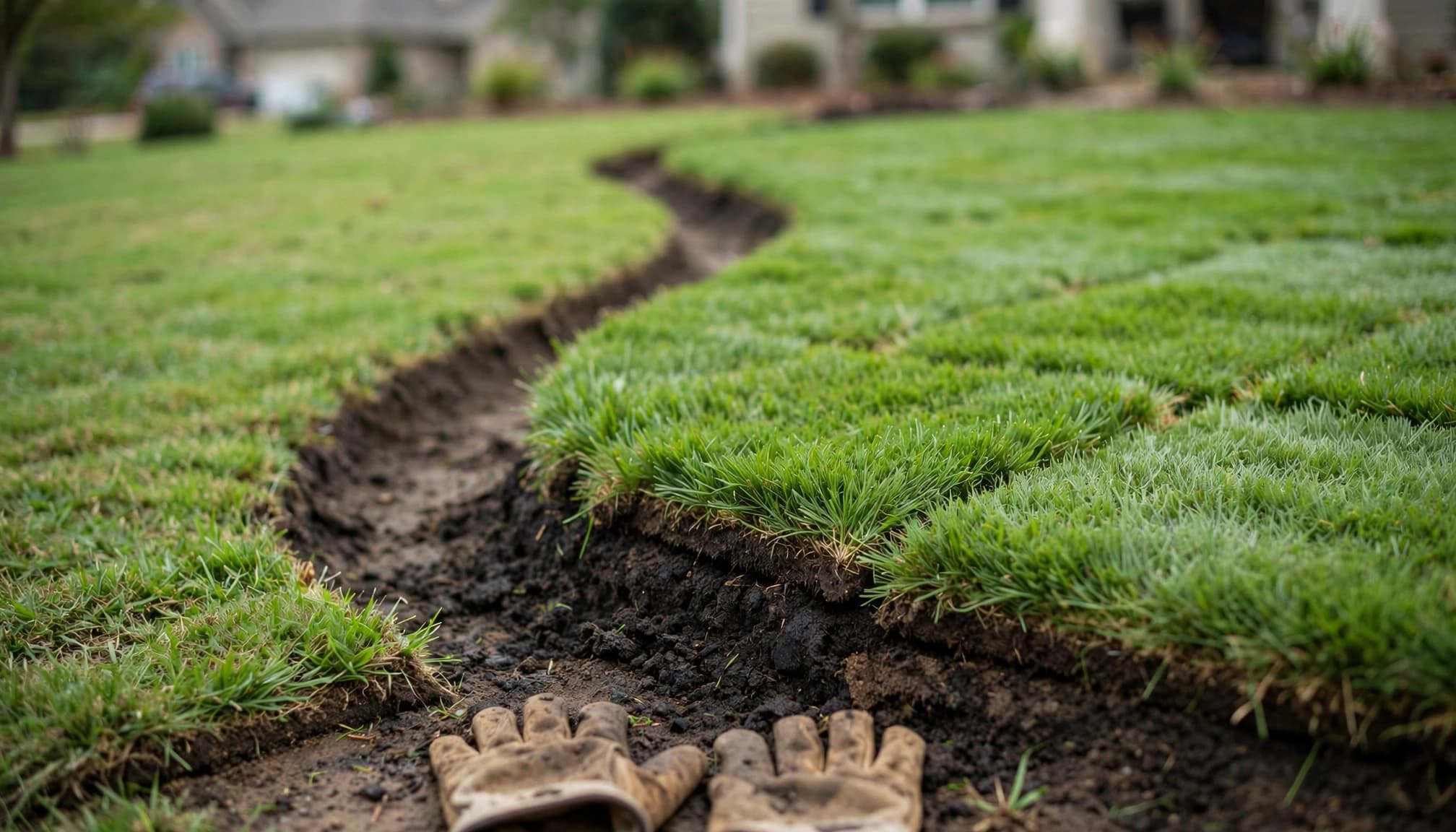
Sod gives fast surface coverage and helps protect exposed soil from erosion. It can make sense on a moderate slope, near a walkway, or where mud and dust would create a problem. However, sod still needs root contact and time before it can handle heavy traffic or summer heat.
Seed usually costs less in material and makes future spot repairs easier. It requires closer moisture control and takes longer to fill in. Seed works best on a stable, gently graded area where rain will not wash it away.
For 2026, straightforward installed sod in Metro Atlanta is commonly cited around $1 to $3 per square foot. Removal, grading, drainage work, or difficult access can raise the range to roughly $4 to $6 per square foot. These figures are planning ranges, not a guaranteed quote. The Atlanta sod installation guide covers preparation and early care.
Time the Repair for Atlanta's Seasons
Warm-season grasses such as Bermuda and Zoysia repair best during active growth, usually from late spring through midsummer. Warm soil helps roots spread before the next dormant period. Avoid major warm-season renovation when the grass is slowing down in late fall or winter.
September and October are generally better suited to tall fescue repair or overseeding. The cooler conditions support establishment before the hottest part of the following year. A February inspection can identify settlement, drainage, and soil problems, but heavy renovation of Bermuda or Zoysia may need to wait until the grass is actively growing.
Weather matters more than a calendar date. Do not work saturated clay, spread seed before a major storm, or install turf during an extended period of severe heat without a reliable watering plan.
Protect the New Repair
Newly seeded soil needs consistent moisture during germination. After roots develop, gradually shift toward deeper, less frequent watering that suits the grass and weather. Avoid runoff, standing water, and repeated light watering that keeps compacted clay wet near the surface.
Sod should have firm contact with the prepared soil. Keep people, pets, and equipment off the strip until it has rooted. Before mowing, check that the turf resists a gentle tug and that the soil can support the mower without rutting. Keep blades sharp and remove no more than one-third of the leaf height.
Hold fertilizer until sod is rooted and actively growing. A common window is three to four weeks, ideally after two or three mowings. Applying nitrogen too early can push leaf growth before the roots are ready. Soil test results or professional advice should guide any additional fertilizer.
For large disturbed areas or continuing grade problems, Atlanta residential grading services may be more appropriate than repeated turf patching.
Frequently Asked Questions
Can I place sod directly over the utility trench?
No. First check for settlement, compacted soil, drainage changes, and construction debris. Sod covers the surface, but it does not correct a low grade or a hard soil layer underneath.
Should I seed or sod a Bermuda lawn?
Either may work if the area is sunny and properly prepared. Sod gives quicker coverage, while seed can cost less and suit larger repairs. Match the variety to the existing Bermuda lawn and protect the area while it establishes.
What if water still pools after the trench is repaired?
Stop adding turf until the water problem is identified. The area may need regrading, a swale, downspout correction, or another drainage solution. Topdressing alone will not fix standing water or runoff toward the foundation.
Who should pay for lawn restoration?
That depends on the utility easement, contract, damage records, and local requirements. Document the condition before repair and ask the utility or contractor to confirm the restoration scope in writing.
Conclusion
A successful Atlanta lawn repair after utility trenching follows a clear order: document the damage, coordinate with the responsible party, correct the soil and grade, address drainage, then install matching seed or sod. The grass choice matters, but preparation matters more.
Give the repaired strip the right season, steady moisture, and protection from traffic. A level, well-drained soil base gives new turf a fair chance to become part of the existing lawn instead of leaving a permanent trench line.