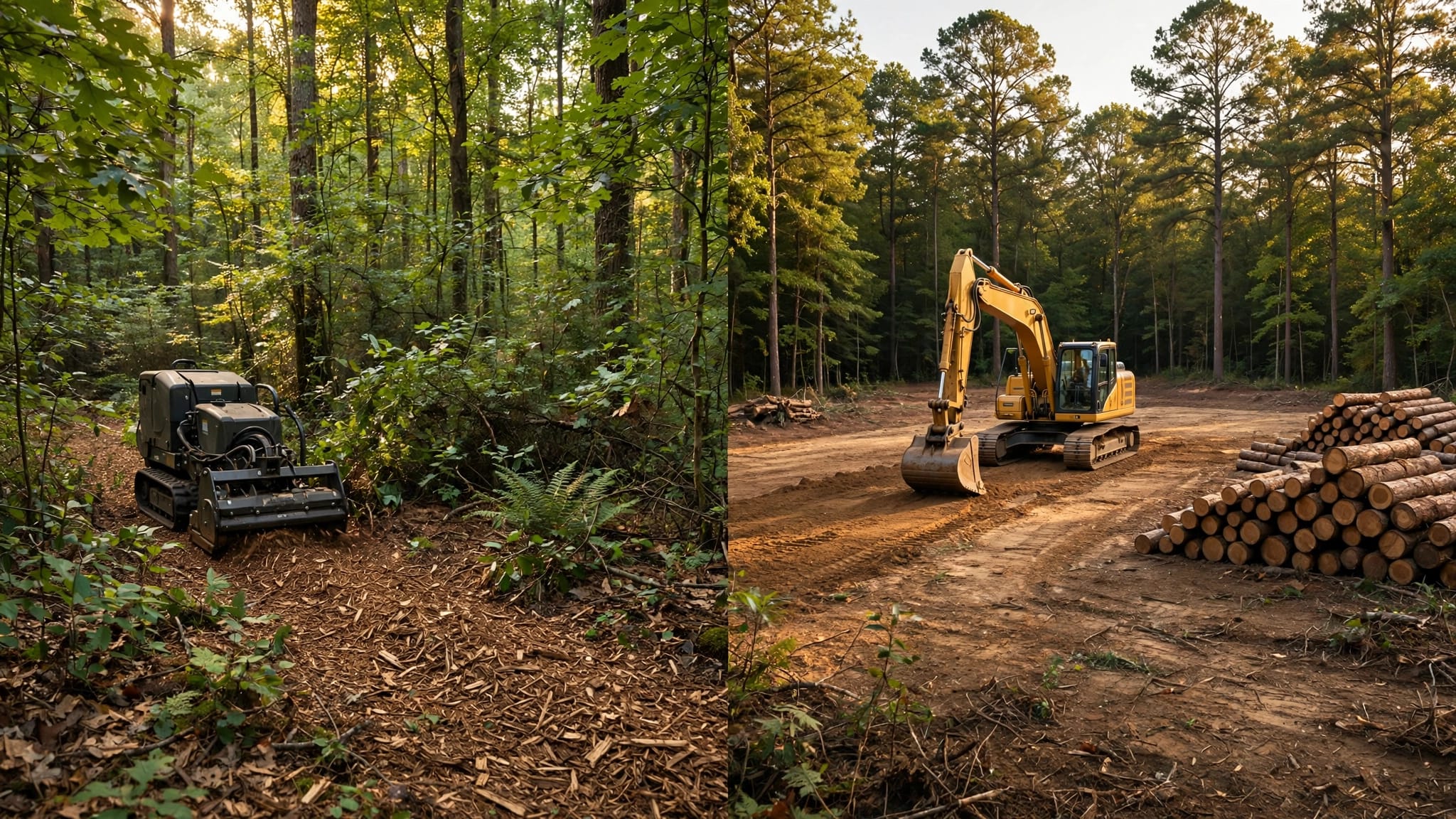
Atlanta Lawn Leveling Guide for Bermuda and Zoysia, how to fix low spots without smothering turf

RW Lawn Co • February 5, 2026

Share this article

That dip that holds water after every storm is more than annoying. It scalps when you mow, turns muddy under foot traffic, and in Atlanta’s clay soil it can stay soggy longer than it should.

This lawn leveling atlanta guide walks you through a simple, homeowner-friendly way to fill low spots in Bermuda or Zoysia using thin topdressing layers, so the grass grows up through the mix instead of getting buried.

What causes low spots in Metro Atlanta, and when to level

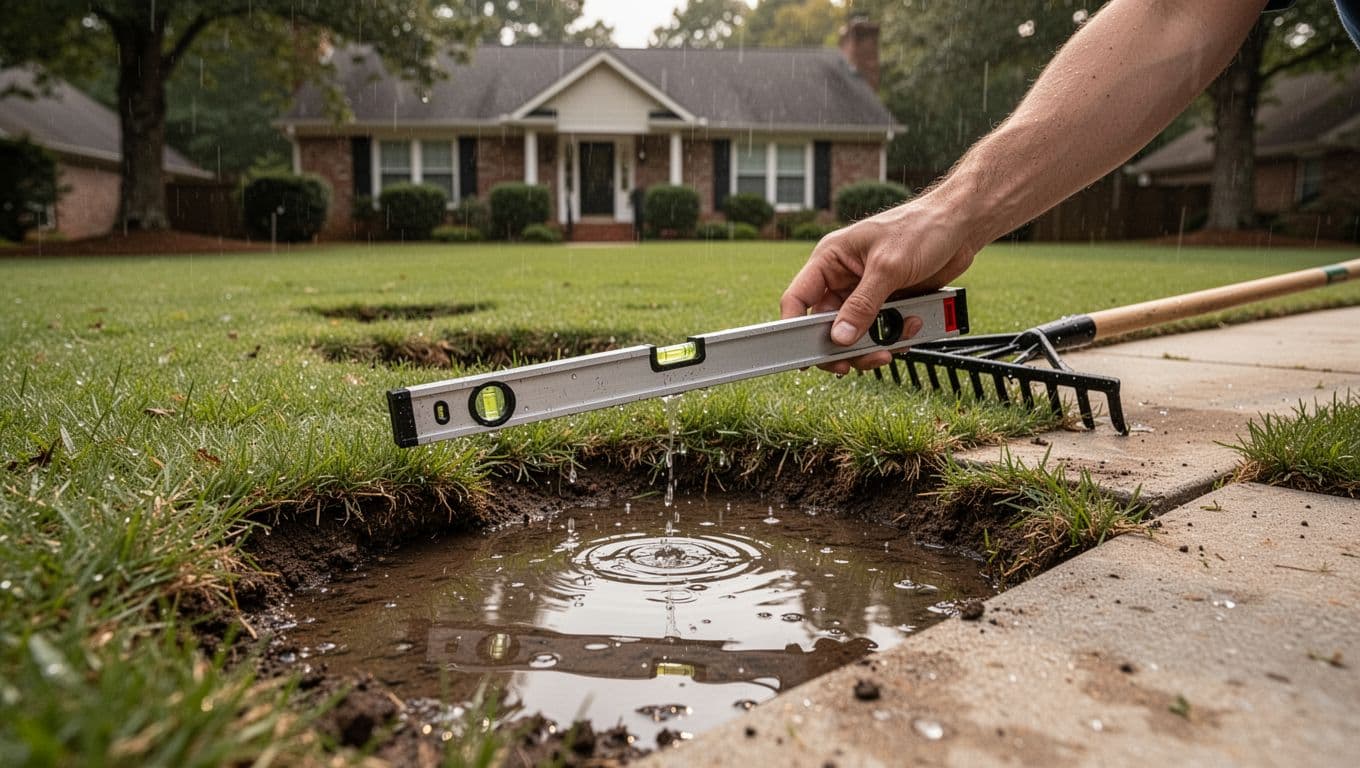
Photorealistic instructional image of a slightly uneven Bermuda lawn in a suburban Atlanta yard after rain, showing water pooling in a low spot near a concrete walkway. A hand holds a bubble level pointing to the dip with a rake nearby on the grass. Pooling water in a shallow low spot is a common sign the lawn needs leveling, created with AI.
Low spots usually come from boring stuff, not mystery problems. Soil settles where builders backfilled utility trenches, where kids cut the same corner daily, or where downspouts dump roof runoff. Add Atlanta’s red clay, which compacts hard and sheds water fast, and you get storm runoff that scours tiny channels and slowly reshapes your yard.

Timing matters as much as the technique. In February, Atlanta typically sits around the upper 50s for daytime highs and near 40°F at night, so Bermuda and Zoysia are still mostly dormant. When warm-season turf isn’t growing, it can’t recover quickly if you smother blades or create bare spots. Plan leveling for active growth , usually mid-spring into early summer (many lawns hit their stride once soils warm and green-up is underway). For Georgia-specific lawn calendars and turf care basics, use the UGA Extension lawn care and landscaping resources as a baseline.

If you’re staring at puddles now, use late winter to flag problem areas. After a rain, mark the edges with small landscape flags, then measure the depth with a straight board and tape.

Choose a topdressing mix that won’t crust over clay

Atlanta leveling fails most often for one reason: the fill material is too heavy, too sticky, or applied too thick. Straight topsoil can clump, seal the surface, and block sunlight. Pure compost can shrink and settle unevenly. The most forgiving blend for warm-season turf is a sand-forward mix that spreads thin and drains.

A practical starting point is 3 parts clean, washed sand to 1 part screened compost (by volume). In heavy clay or where water tends to sit, many homeowners bump it to 4:1 for better drainage. The sand should be coarse enough to avoid packing tight, not beach sand, and not mortar or masonry sand.

Layer thickness is the other big deal. Bermuda spreads and recovers faster than Zoysia, so it can handle slightly heavier topdressing, as long as blades still show.

Turf type Safe layer per application What “too much” looks like Practical note
Bermuda 1/4 to 3/8 inch grass disappears under a blanket recovers fast, but high spots scalp easily
Zoysia 1/8 to 1/4 inch matting and slow green-up in the spot slower to push through, keep layers lighter

Before you start, set mowing up for success. A rotary mower that’s too low will scalp high spots and expose your work. If you want a local reference for height ranges by grass type, see this Atlanta mowing height guide for Bermuda and Zoysia. For a Georgia-focused overview of topdressing low areas in thin layers, this lawn leveling low spots guide lines up well with what works in our region.

Step-by-step lawn leveling in Atlanta (thin layers, no smothering)

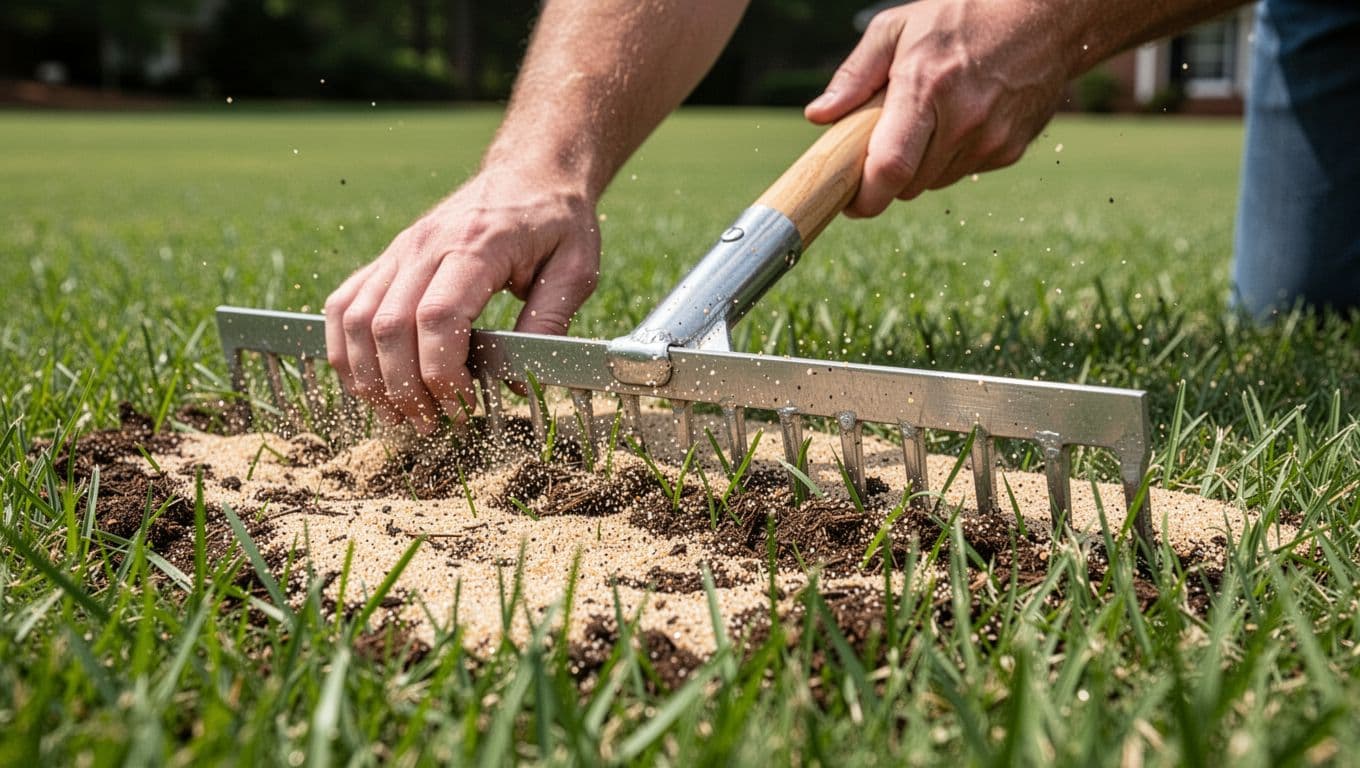
Close-up low-angle view of hands using a lawn leveling rake to spread a thin layer of sandy topdressing mix over dense Zoysia grass blades in a suburban Atlanta yard, with individual sand particles settling lightly and grass blades remaining visible. Spreading a thin sand-based mix while keeping grass blades visible, created with AI.
You don’t have to fix the whole yard at once. For most homeowners, the cleanest win is targeting the worst low spots first, then repeating lightly until the surface feels even.

Quick prep checklist (5 minutes): a wheelbarrow, shovel, landscape lute or leveling rake, push broom, hose sprinkler, and your sand-compost mix.

  1. Mow and clean the surface. Mow at your normal in-season height, then blow off leaves and sticks. You want the mix to contact the soil, not debris.
  2. Loosen the low spot lightly. In compacted clay, scratch the surface with a rake. Don’t till deep, you’re not trying to start a new lawn.
  3. Dump small piles, not a mountain. Place a few shovel piles inside the low area. It’s easier to spread evenly.
  4. Pull the mix across with a leveling rake. Work from the edges toward the center. Keep the layer within the thickness range for your grass type.
  5. Brush grass blades back up. Use a push broom to stand blades up and knock mix off leaf tips. If you can’t see grass, you applied too much.
  6. Water to settle, not to wash. Run a short cycle to dampen the mix and help it drop into the canopy. Avoid heavy watering that floats sand into piles.
  7. Stay off the spot for a couple days. Footprints undo the leveling while it’s still loose.
  8. Repeat only after the lawn grows through. The yard should look “dusty,” not buried.

A simple gradual schedule keeps you out of trouble:

Timing What you do Goal
Week 0 First thin topdress and broom start raising the depression
Week 2 Second light layer (if blades are fully visible again) refine the grade
Week 4 Third touch-up (only where needed) blend edges and remove the last dip

For most lawns, do not exceed about 1 inch total topdressing in a year . If you need more than that, the lawn is telling you this is bigger than minor leveling.

When leveling won’t solve it (drainage, grade, and when to call a pro)

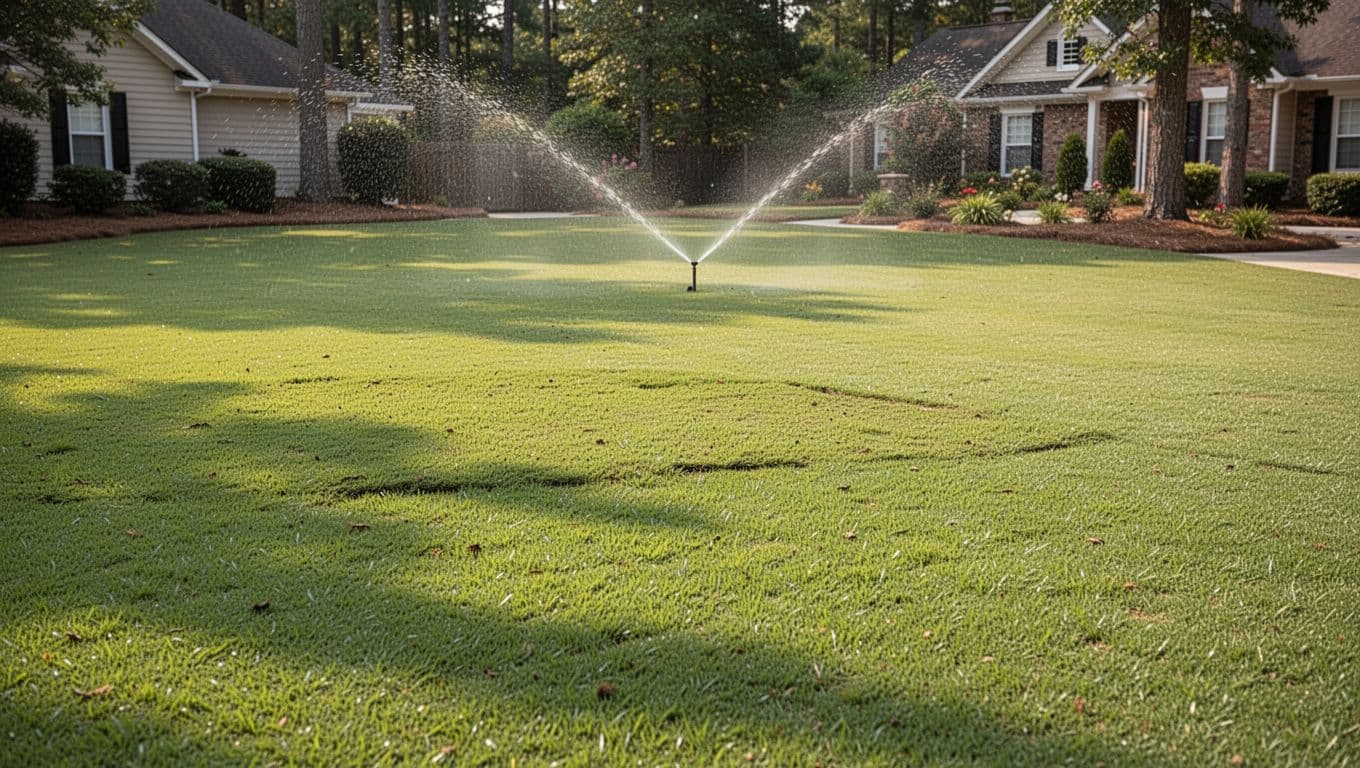
Wide eye-level view of an evened-out suburban Atlanta yard lawn, 3 weeks after leveling, showing a smooth surface with healthy vibrant green Bermuda and Zoysia turf blend and subtle grade improvement. In the background, a garden sprinkler waters the area lightly under natural daylight. An even surface after gradual topdressing, with healthy turf growing through, created with AI.
Leveling fixes shallow depressions, not broken drainage. If water stands longer than a day, if runoff funnels from a neighbor’s yard, or if the lawn slopes toward your foundation, topdressing alone can turn into a cycle of mud and rework.

Call a pro (or at least pause DIY) if:

  • The dip is deeper than 2 inches across a wide area.
  • Downspouts or sump lines dump water onto turf.
  • You see erosion channels after storms.
  • The fix requires changing the overall slope, adding drains, or re-sodding.

For renovation basics and what healthy turf establishment should look like in Georgia, reference UGA’s Lawns in Georgia: Establishment. It’s a helpful reality check before you commit to major changes.

Conclusion

Low spots are common in Atlanta, especially with clay soil and heavy storms. The safest fix is thin, repeatable topdressing layers that let Bermuda or Zoysia keep seeing sunlight. Stick to the Week 0, 2, 4 approach, brush blades up, and avoid the temptation to “finish it” in one heavy dump. When the problem is really drainage or grade, the best move is getting help before you bury a healthy lawn under a problem that won’t go away.

By RW Lawn Co February 25, 2026
A sharp bed edge is like a picture frame for your yard. It makes mulch look cleaner, plants pop more, and mowing feels easier. If you've tried bed edging atlanta style before, you already know the challenge: our heavy rains, fast-growing warm-season grass, and compacted soil c...
By RW Lawn Co February 24, 2026
Atlanta summers don't play fair. Warm nights, sudden storms, and heavy humidity can turn a healthy lawn into a spotted mess fast. That's why a good Atlanta lawn fungicide plan isn't about constant spraying, it's about timing, scouting, and fixing the conditions that keep grass...
SHOW MORE