Atlanta Lawn Weed ID Guide (with photos and look-alikes), crabgrass vs dallisgrass vs goosegrass vs signalgrass

RW Lawn Co • February 6, 2026

Share this article

If your Atlanta lawn suddenly has a lighter-green patch that grows faster than everything else, it’s usually one of the “summer grassy weeds.” The hard part is that they look alike until you know where to look .

This Atlanta lawn weed identification guide focuses on the four grasses homeowners mix up most: crabgrass, dallisgrass, goosegrass, and signalgrass. You’ll get photo examples, look-alikes, and a quick checklist you can print and keep in the garage.

The fastest way to ID these weeds in Atlanta lawns (don’t start with the leaf)

Most people start by comparing leaf width or color. That’s understandable, but it’s also how mis-ID happens. For practical Atlanta lawn weed identification, start in this order:

  1. Seedhead (if present) : It’s the closest thing to a “fingerprint.” If you can find a seed stalk, you’re 80 percent done.
  2. Crown and growth habit at the base : Is it a flat wagon-wheel rosette, or a tight clump? Is the center whitish or silvery?
  3. Hair or no hair on leaves and sheaths: Run your fingers from base to tip. Some species feel slightly fuzzy, others are slick.
  4. Ligule and collar area : This is the small junction where the leaf blade meets the sheath. It’s tiny, but it’s consistent.

One caution that saves time: don’t rely on one trait alone . Heat, mowing height, shade, and drought can change how a weed looks. Use two to three traits to confirm.

If you want an Atlanta-specific science-based list of common grass weeds (including dallisgrass and signalgrass), UGA’s GeorgiaTurf page on grass-like weeds is a solid reference.

Good mowing also helps you spot problems early. When grass is cut too short, weeds blend in until they’re mature. This Atlanta mowing height guide for Bermuda, Zoysia, and Tall Fescue explains what “too low” looks like in real lawns.

Crabgrass vs dallisgrass vs goosegrass vs signalgrass (photo guide + best differentiators)

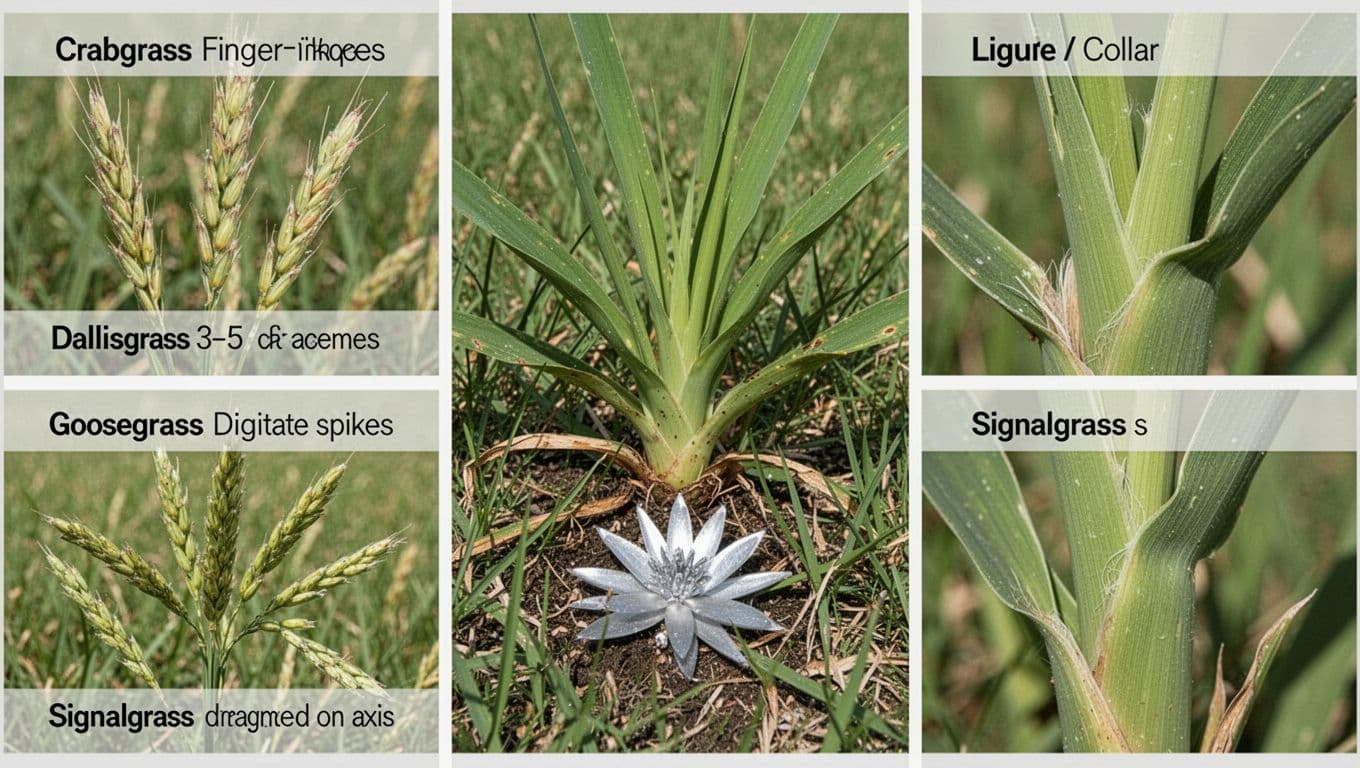
Ultra-clear macro comparison panels of seedheads, crowns/bases, and ligule regions for crabgrass, dallisgrass, goosegrass, and signalgrass, designed for Atlanta lawn weed identification guide. Side-by-side comparison of key ID zones (seedhead, crown/base, ligule area), created with AI.
Crabgrass (Digitaria spp.)

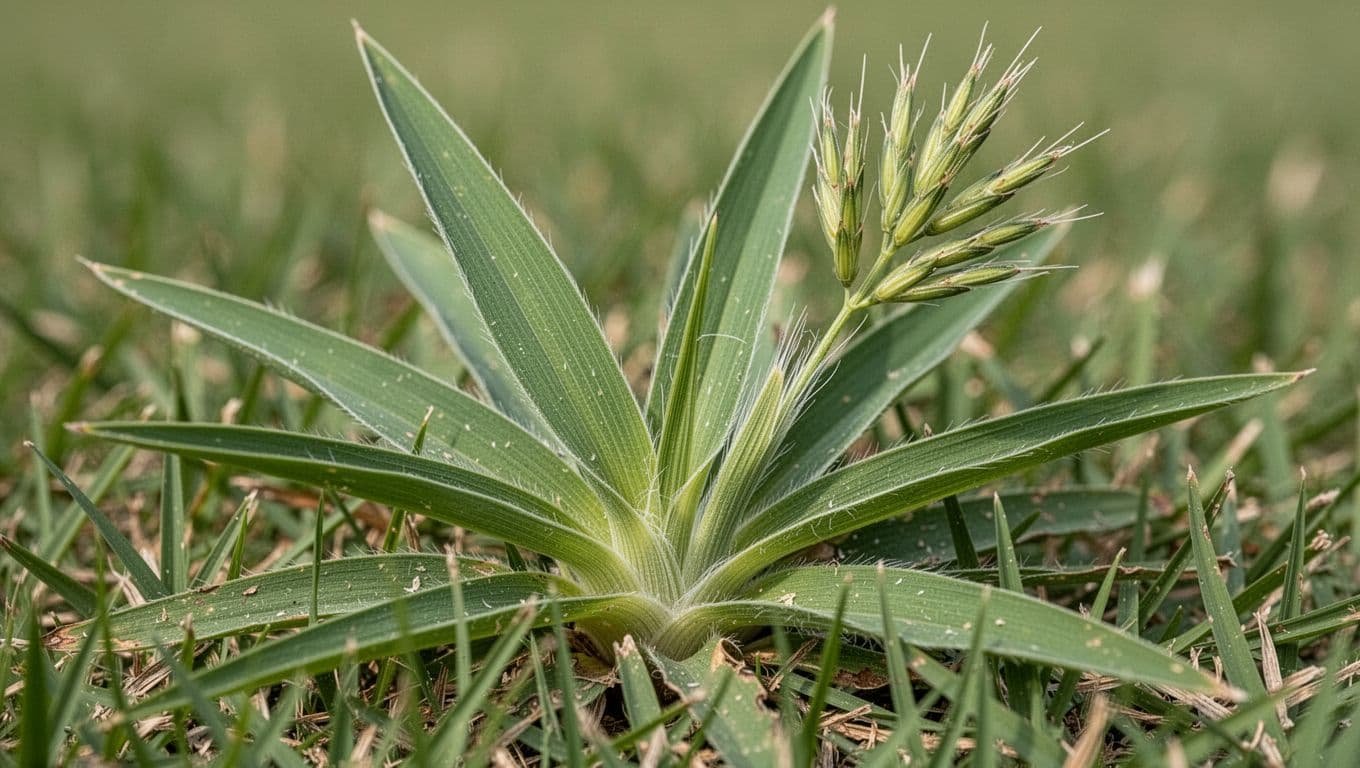
Ultra-clear macro photograph of crabgrass (Digitaria spp.) in bermuda grass, showcasing prostrate rosette growth, wide blades with midrib, prominent ligule, and mature finger-like seedheads for educational weed identification. Crabgrass showing a low rosette, wide blades, and finger-like seedheads, created with AI.
Best differentiator first: crabgrass usually forms a low, spreading rosette that hugs the ground, then sends up seed stalks with several finger-like spikes .

Secondary traits that help in Atlanta warm-season turf (Bermuda, zoysia, centipede, St. Augustine):

  • Leaves are often light green and can be hairy or mostly smooth , depending on the species.
  • The plant spreads outward from a central point, especially in thin spots near driveways and sidewalks.

Common look-alikes: goosegrass and signalgrass . If you see a very whitish, flattened center , that points away from crabgrass and toward goosegrass.

Dallisgrass (Paspalum dilatatum)

Macro close-up of dallisgrass (Paspalum dilatatum) in zoysia grass turf, showcasing coarse clumping growth, rolled leaf vernation, collar, ligule, and seedhead with 3-5 racemes for educational weed identification. Dallisgrass clump and its spaced raceme seedhead structure, created with AI.
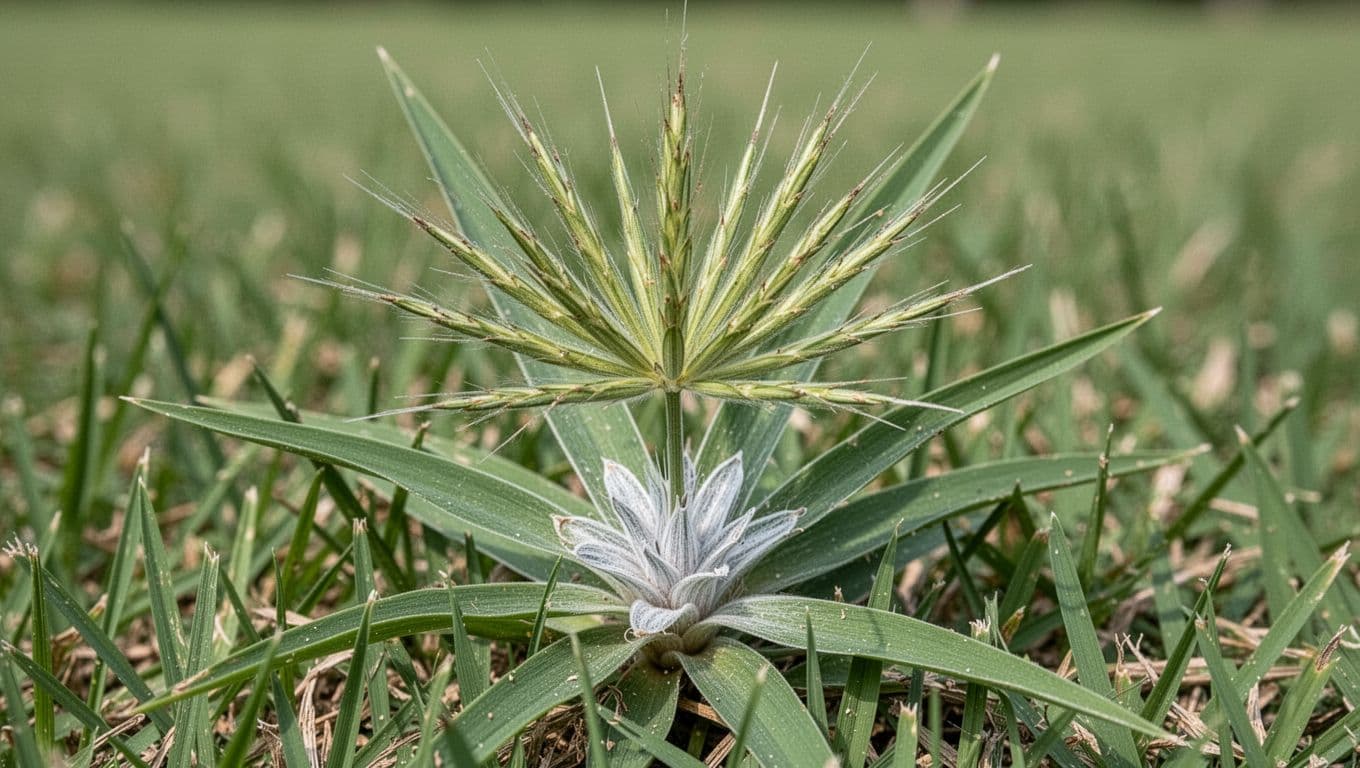
Best differentiator first: dallisgrass is a perennial clump (it comes back), and its seedhead typically has 3 to 5 racemes spaced along a central stem , not all “fingers” from one point.

Secondary traits:

  • It looks coarse and tall compared with Bermuda or centipede.
  • It grows in tight bunches that thicken over time.

Common look-alikes in Metro Atlanta: bahiagrass and sometimes mature crabgrass. The clump habit is the giveaway. Crabgrass sprawls, dallisgrass bunches.

Goosegrass (Eleusine indica)

Macro botanical image of goosegrass (Eleusine indica) in centipede grass lawn, featuring whitish crown, rosette growth, smooth leaves, and digitate seedhead for weed identification. Goosegrass showing the classic pale center and wagon-wheel growth, created with AI.
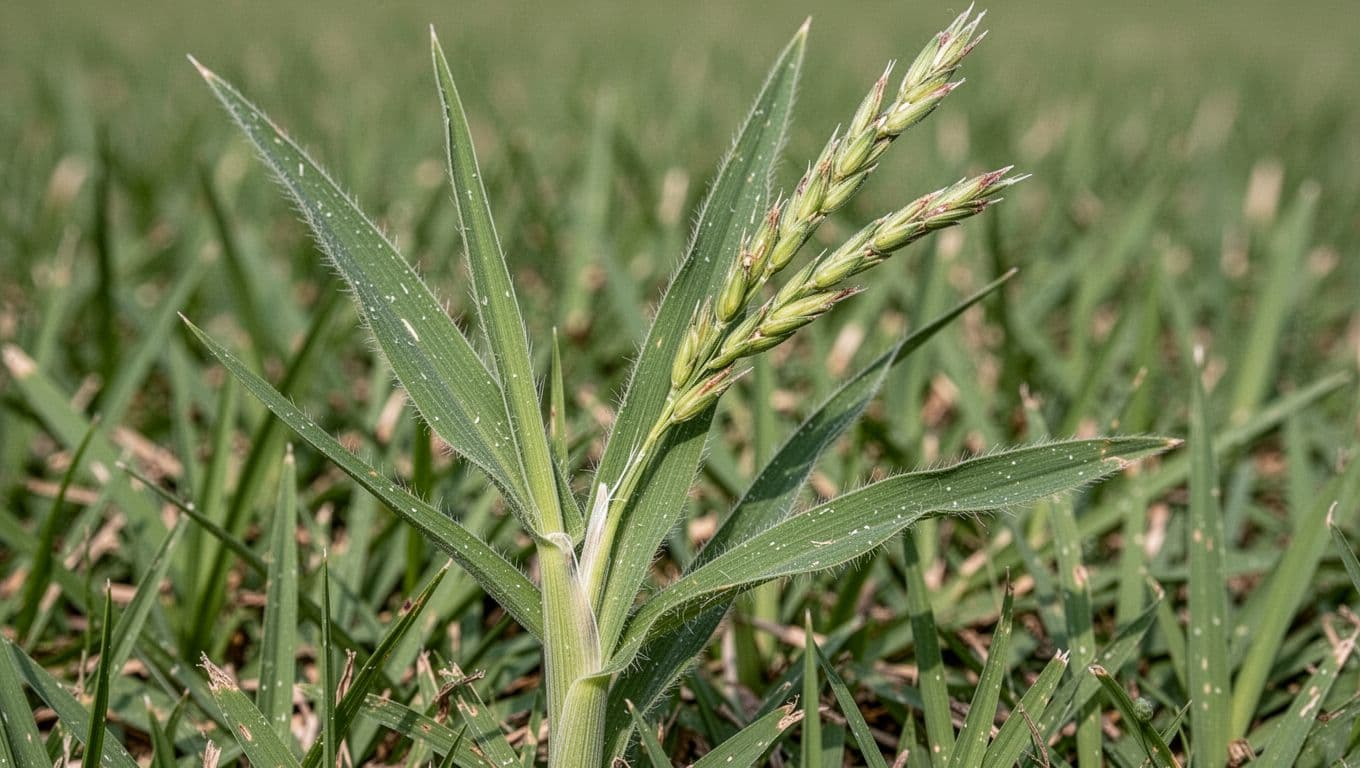
Best differentiator first: look at the base. Goosegrass often has a flattened, whitish to silvery center at the crown, with leaves radiating like a wagon wheel.

Secondary traits:

  • Leaves tend to be smooth (less hairy) .
  • It loves compacted soil (common along paths, where kids cut corners, or where mowers turn).

Common look-alike: crabgrass. If you’re stuck, compare the crown color. Goosegrass is pale at the center , crabgrass usually isn’t.

Signalgrass (Urochloa/Brachiaria spp., often broadleaf signalgrass)

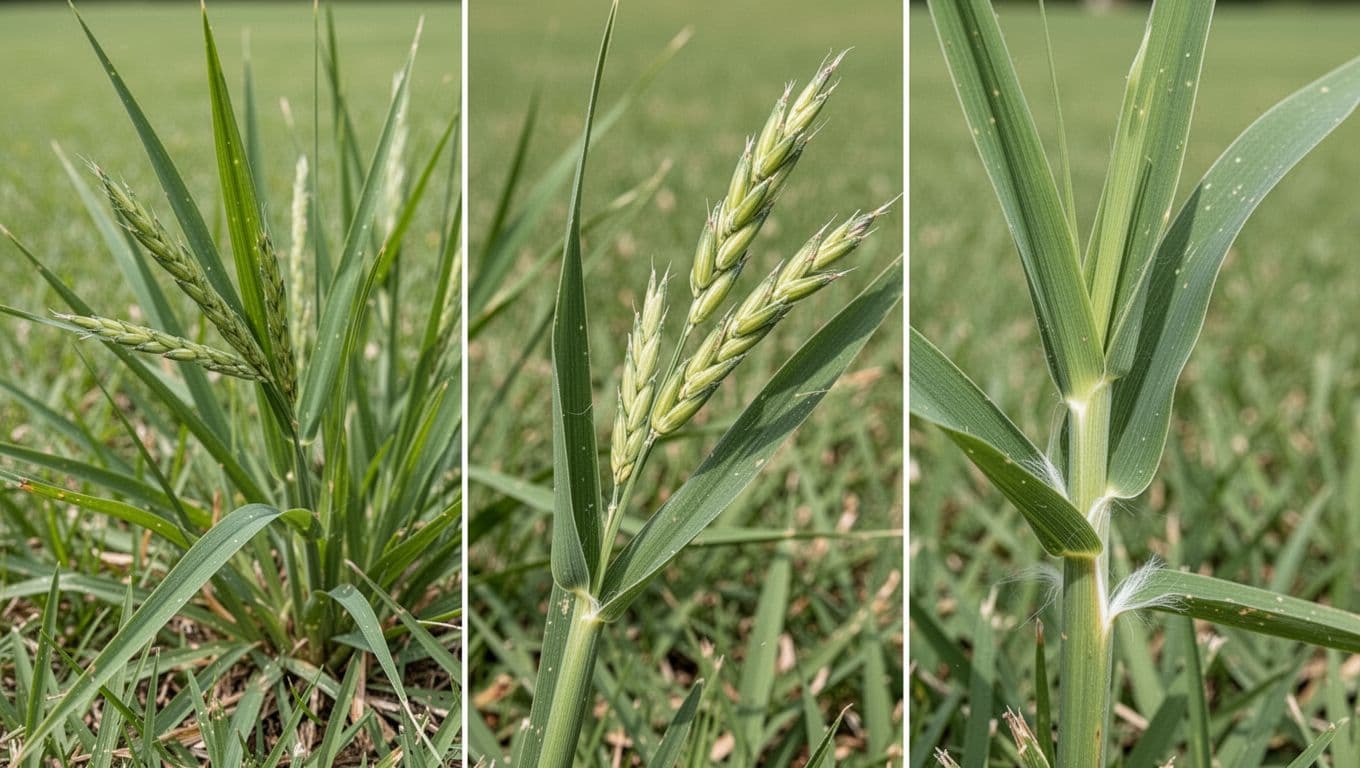
Ultra-clear macro botanical image of signalgrass (Urochloa/Brachiaria spp.) in St. Augustine turf, showcasing spreading growth, hairy leaves, sheath, ligule, and seedhead with racemes. Signalgrass with a spreading habit and racemes along a central axis, created with AI.
Best differentiator first: signalgrass seedheads usually show several racemes attached along a central axis , more like a ladder than a hand.

Secondary traits:

  • Often has slight hairiness , especially on the sheath.
  • Spreads, but tends to look more upright and “patchy” than crabgrass as it matures.

Common look-alike: crabgrass. When seedheads aren’t present yet, check the sheath and ligule area for subtle hair and structure.

The mis-ID scenarios Atlanta homeowners run into most

Goosegrass mistaken for crabgrass: This is the classic one. Both are summer annuals and both can form low rosettes. The quick check is the crown. Silvery, flattened center points to goosegrass, while crabgrass is usually more uniformly green at the base.

Dallisgrass mistaken for crabgrass (or bahiagrass): Dallisgrass is a repeat offender year to year because it’s perennial. If the patch returns in the same spot each summer and it’s a coarse clump , suspect dallisgrass. Seedheads with racemes spaced along the stem confirm it.

Signalgrass mistaken for crabgrass: Early on, they can look similar in mowed turf, especially in St. Augustine and zoysia. Wait for seedheads if you can, or look closely at the sheath and ligule zone for hair and structure differences.

One more Atlanta-specific note: shaded or north-facing lawns sometimes have tall fescue (even when the rest of the yard is Bermuda or zoysia). In mixed lawns, grassy weeds can hide at the edges where sun and shade meet, so check transition zones.

For control timing and safe options by turf type, UGA’s bulletin on Weed Control in Home Lawns is worth bookmarking.

Printable quick checklist (plus a mini glossary of terms)

Quick checklist you can print

Use this as a quick walk-through with your phone camera and a kneeling pad:

  • Seedhead present? Photograph it close-up first.
  • Base shape: Rosette/wagon wheel, or tight clump?
  • Crown color: Any whitish or silvery flattening at the center?
  • Leaf feel: Smooth or slightly hairy?
  • Clues from the site: Compacted edge, thin sunny spot, or damp low area?
  • Confirm with two traits: Seedhead plus crown, or crown plus hairiness.

Late winter matters in Atlanta. In February , you’re close to pre-emergent season for summer annuals (crabgrass, goosegrass, signalgrass). Timing is often tied to soil warming, many folks target applications before soils hover around the mid-50s Fahrenheit for several days.

Mini glossary (plain language)

Ligule: A tiny membrane or fringe where the leaf blade meets the sheath.
Collar: The “shoulder” on the back of the leaf at the blade-sheath junction.
Sheath: The lower part of the leaf that wraps around the stem.
Vernation: How the new leaf is folded in the bud (rolled or folded), useful for some grass IDs.

Conclusion

The quickest wins in Atlanta lawn weed identification come from two places: the seedhead, and the crown at ground level. If you’re not sure, take a close photo of both and compare again after a week of growth.

When you want help confirming the weed and setting a plan that fits Bermuda, zoysia, centipede, St. Augustine, or shaded fescue areas, it’s worth getting a local set of eyes on it. The sooner you ID it, the less lawn you’ll have to win back later.

By RW Lawn Co February 25, 2026
A sharp bed edge is like a picture frame for your yard. It makes mulch look cleaner, plants pop more, and mowing feels easier. If you've tried bed edging atlanta style before, you already know the challenge: our heavy rains, fast-growing warm-season grass, and compacted soil c...
By RW Lawn Co February 24, 2026
Atlanta summers don't play fair. Warm nights, sudden storms, and heavy humidity can turn a healthy lawn into a spotted mess fast. That's why a good Atlanta lawn fungicide plan isn't about constant spraying, it's about timing, scouting, and fixing the conditions that keep grass...
SHOW MORE