Atlanta Oak Leaf Blister: Recognize Spring Symptoms
Oak leaf blister produces raised, puckered patches on oak leaves, making fresh spring foliage look uneven or curled. For Atlanta homeowners, the most useful clue is leaf shape , especially a swollen upper surface with a matching depression underneath.
Color changes alone can be misleading because insects and other leaf problems also produce yellow or brown patches. Start with newly emerged foliage, then compare both sides of several leaves before deciding what the damage means.
Key Takeaways
A close look tells you more than the overall color of the canopy.
- Look for raised, rounded patches on the upper leaf surface and corresponding depressions underneath.
- Inspect several accessible leaves, including fresh growth and nearby leaves that look normal.
- Keep routine landscape care focused on protecting bark, roots, and growing space rather than reacting to every marked leaf.
Oak leaves, holly leaves, and boxwood leaves can all look blistered. However, similar descriptions don't mean the plants have the same problem.
How to Recognize Oak Leaf Blister
Look for raised patches on the upper surface
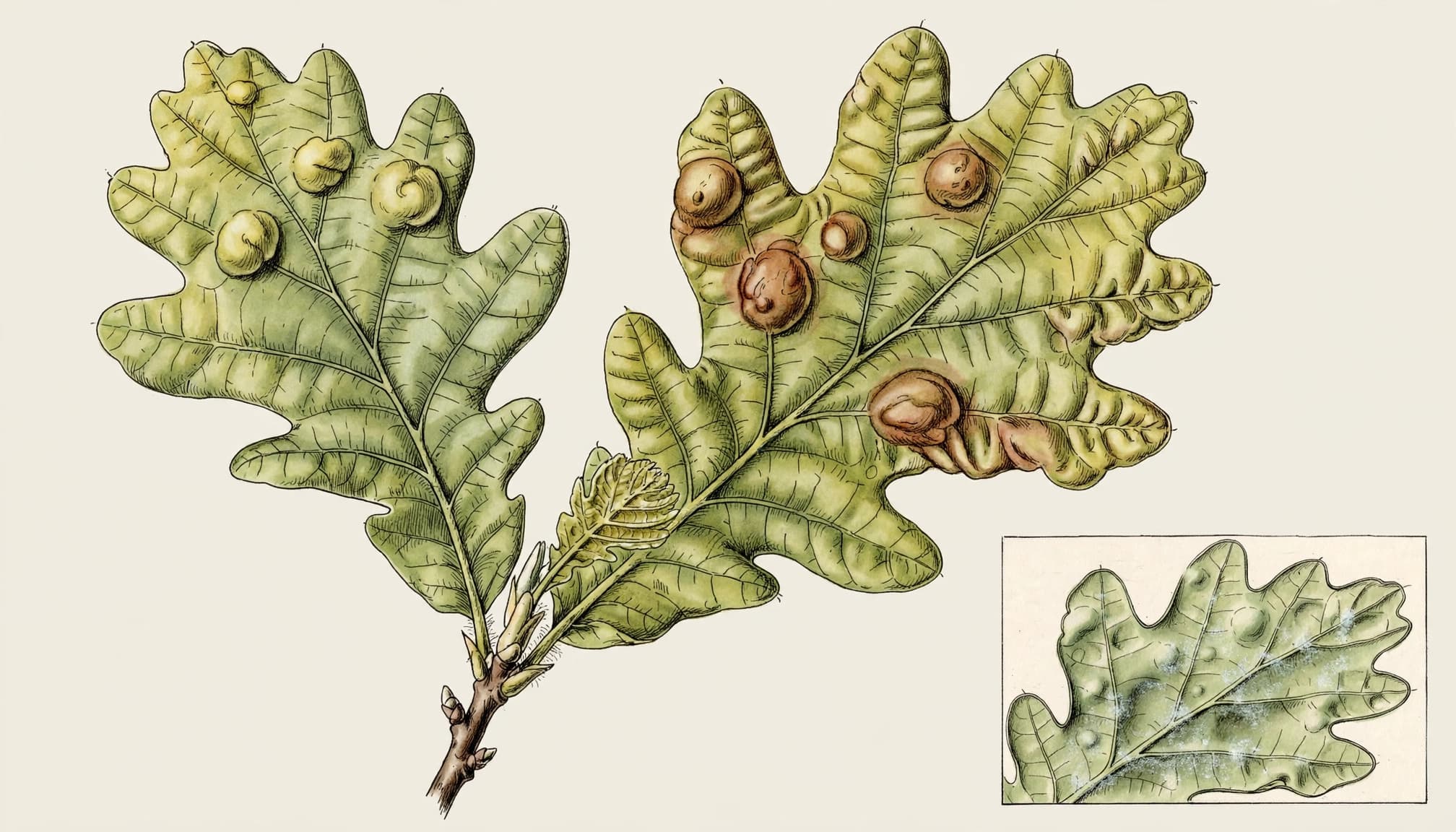
Oak leaf blister creates localized swelling within the leaf blade. The affected areas can look pale green or yellow-green against the surrounding tissue. Some patches develop reddish or brown coloring.
Look across the leaf at a shallow angle. Raised areas stand out more clearly than they do when viewed straight down. Several nearby blisters can make the blade look puckered, curled, or uneven.
The distortion matters more than a single color. A flat yellow patch, a browned edge, and a raised blister describe different symptoms. Note whether the swelling sits between veins, whether patches overlap, and whether the rest of the leaf keeps its normal outline.
Turn the leaf over
The underside often provides the clearest companion clue: a depression beneath the raised area above. Some affected surfaces may also show a faint whitish coating.
Compare the same spot on both sides. A matching bulge and depression is more informative than a general impression that the leaf looks unhealthy.
Use a naturally fallen leaf or foliage you can reach from the ground. There's no need to climb, pull down branches, or stand beneath a damaged limb for a closer view. Also, compare several leaves because one torn or folded specimen can hide the pattern.
Inspect Newly Emerged Foliage in Spring
Let the leaves guide your inspection
When an oak opens fresh foliage, look closely at those new leaves rather than relying on the tree's appearance from the driveway. Their soft, unfolding blades give you a useful place to examine shape and surface texture.
Metro Atlanta yards contain different oak species and different growing positions. Therefore, use the foliage actually present on your tree as your inspection guide instead of choosing one calendar date.
Notice whether leaves are still unfolding or already fully expanded. Record that detail alongside the symptoms. It gives your observations more context than writing only "yellow leaves."
Make comparisons within the same canopy
Compare an affected leaf with an apparently normal leaf nearby. Then look at another accessible branch rather than assuming the entire canopy matches the first sample.
Keep the comparisons consistent. Leaves from different trees may differ naturally in shape, size, and color, even when both trees are oaks.
Photograph the upper surface, underside, and the twig carrying the leaves. A wider photograph should show where that twig sits within the canopy. Together, those views preserve details that a tightly cropped picture of one brown patch leaves out.
Separate Blistering From Other Leaf Damage
Several landscape problems share words such as "blistered," "curled," and "yellow." The host plant and the structure of the damage help separate them.
Use these visible differences to describe what you're seeing.
| Visible feature | What to examine |
|---|---|
| Raised leaf tissue | Look underneath for a corresponding depression. |
| A distinct lump or growth | Notice whether it projects beyond the normal leaf surface. |
| A flat brown blotch | Examine the margins and surrounding tissue for discoloration. |
| A winding trail inside a leaf | Look for a narrow track rather than broad surface puckering. |
| Ragged missing tissue | Examine the edges of the missing section. |
These observations narrow the description; a single feature doesn't establish every possible diagnosis.
An oak gall, for example, can form a distinct growth on a leaf. That's different from a broad area of the leaf blade becoming blistered. Likewise, a flat blotch lacks the matching raised-and-depressed structure described above.
Plant identity matters, too. Our guide to blistered holly leaves describes leaf miner damage on hollies. Its insect clues shouldn't automatically carry over to an oak.
Also, look beyond one tree when distortion appears across the yard. Similar changes on unrelated plants are useful context, especially when the affected foliage faces the same lawn edge or planting bed.
Protect the Oak's Growing Space
Keep lawn equipment away from bark
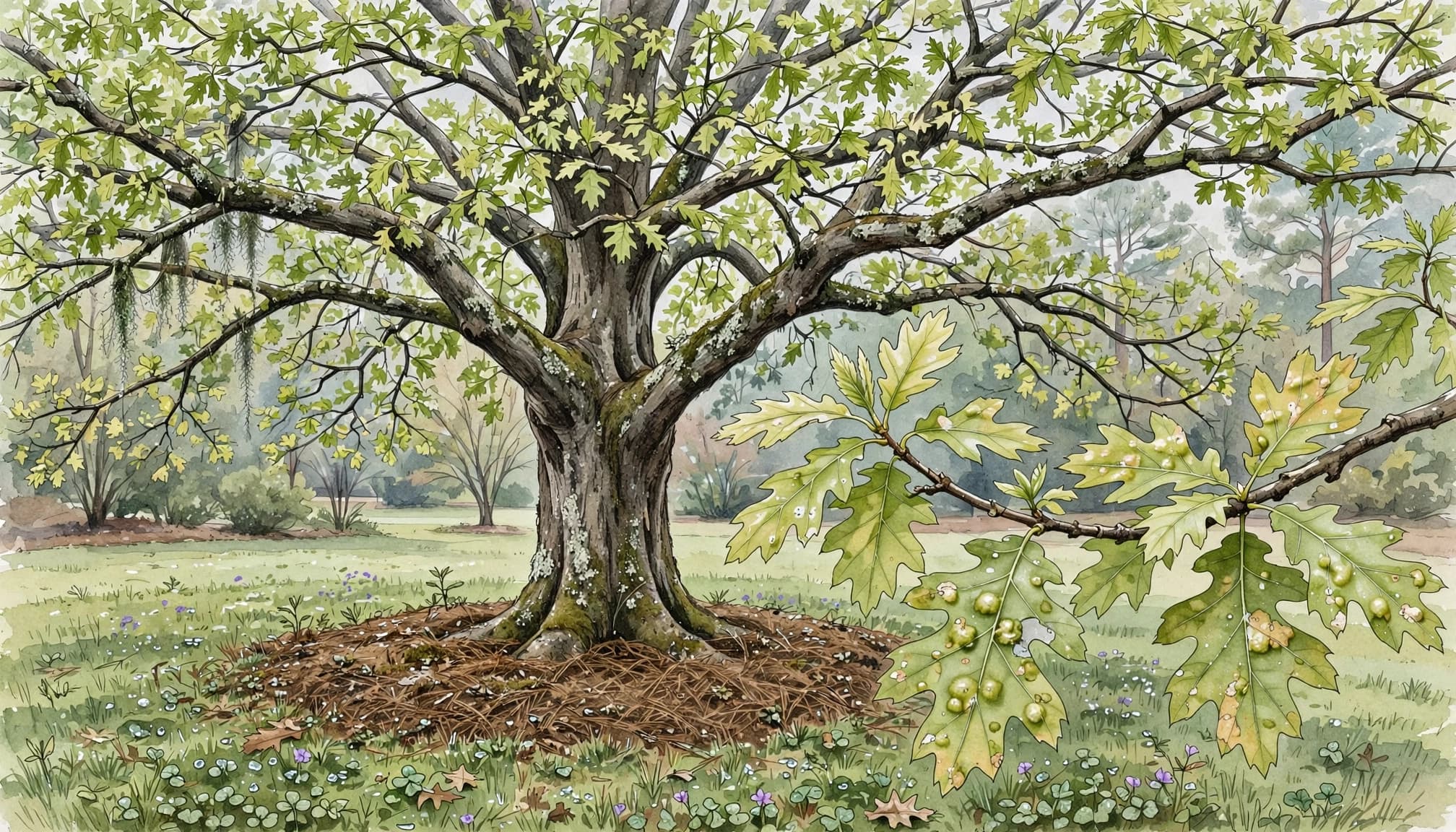
Spring lawn work brings mowers, string trimmers, wheelbarrows, and other equipment close to trees. Keep those activities from adding physical damage while you're watching the foliage.
Leave room to turn a mower without scraping the trunk or riding over exposed roots. Around narrow spaces, avoid forcing equipment between the tree and a retaining wall, fence, or bed border.
String trimmers also need clearance from bark. A neat grass edge doesn't require cutting against the trunk. Where a mulch bed already separates turf from the tree, maintain that working space rather than shrinking it for another strip of lawn.
Keep soil and materials off the trunk base
The base of the trunk should remain visible. Avoid stacking fresh mulch, soil, or landscape debris against it during spring bed work.
Also, consider where equipment and materials sit. Repeated traffic, parked machinery, and heavy stockpiles place unnecessary pressure on the ground around an established oak.
Before changing a bed, notice exposed roots and existing soil levels. Building up soil to hide roots or cutting through them to straighten an edge can damage the tree.
These are general tree-care practices. Keep decisions about the leaf symptoms separate from routine mowing, mulching, and landscape improvements.
Read the Whole Tree, Not One Leaf
A close-up photograph captures surface detail, but it leaves out the tree around it. Step back after examining accessible foliage and look at the canopy as a whole.
Notice whether leafing appears even across the crown. Compare branch tips, interior foliage, and the sides facing open lawn or nearby buildings. Write down what differs without assuming every difference has the same explanation.
The trunk and larger branches deserve a separate look. Cracks, hanging limbs, or a newly leaning trunk raise safety questions that leaf photographs cannot answer. Keep people and equipment away from an unstable area and involve a qualified tree professional.
Also, distinguish an affected leaf from an affected branch. A blistered blade, a bare twig, and a broken limb are separate observations. Combining them into one description such as "the oak looks bad" loses information.
Separate foliage observations from structural concerns. That distinction helps you avoid overlooking a hazard while concentrating on small leaf patches.
Fit Leaf Observations Into Regular Yard Care
You don't need to turn every lawn visit into an intensive tree inspection. Instead, make useful observations while walking the property before mowing or working in landscape beds.
Look for fallen twigs that could interfere with equipment. Notice standing water, exposed roots, and places where foot traffic has worn away the grass. Those site details belong in your notes alongside changes in the foliage.
Keep access around the tree practical. Tools, stored bags, and temporary project materials can hide the trunk base or make routine observation harder.
Our Atlanta leaf cleanup plan helps organize the broader workload in yards with oaks, sweetgums, and pines. That planning is useful for property upkeep without turning every fallen leaf into a disease-control decision.
At RW Lawn Co, our landscaping, mulch, and seasonal cleanup services support regular yard maintenance. Tree symptom observations can sit alongside that work without replacing attention to the lawn, beds, and safe equipment access.
Frequently Asked Questions
Are yellow leaves enough to identify oak leaf blister?
No. Yellowing describes a color change, while blistering describes a change in the leaf's structure. Look for raised patches above and corresponding depressions below. Also, distinguish localized patches from yellowing across the entire blade. Those details give you a more useful description than color alone.
Can a curled leaf still show useful symptoms?
Yes, although curled edges can hide parts of the blade. Examine the visible surfaces without forcing the leaf flat or tearing it. A second, less distorted leaf may show the raised areas more clearly. Comparing several specimens also helps distinguish actual swelling from folds created as the leaf opened.
What should I record about the tree's location?
Record nearby pavement, lawn irrigation, landscape beds, recent ground disturbance, and places where equipment travels. Also, note which side of the canopy carries the leaves you photographed. These details describe the site without assuming they explain the blisters. Keep observations factual, such as "beside driveway," rather than assigning a cause.
Give New Foliage a Careful Look
Recognizing oak leaf blister starts with the leaf's structure: raised patches above, matching depressions below, and localized puckering. Compare several leaves before drawing conclusions from one yellow or brown area.
Keep that observation separate from the rest of your landscape work. Protect bark and root space, preserve useful photographs, and give structural hazards their own attention.
A clear description of the foliage is more useful than a rushed response to an uneven-looking spring canopy.