Atlanta Tree Canopy Thinning: Causes and When to Act
Tree canopy thinning in Atlanta can result from drought, damaged roots, pests, disease, or a combination of stresses. Some leaf loss is seasonal, but bare branches that persist through the growing season deserve attention.
The pattern of change matters more than a single thin spot. Knowing what to look for can help you decide when to monitor a tree, adjust its care, or call an arborist.
Seasonal Leaf Loss or Persistent Decline?
Deciduous trees such as oaks, maples, and dogwoods normally lose their leaves in fall and grow new ones in spring. A bare crown during winter isn't, by itself, a sign that a tree is dying.
Evergreens also shed older foliage. On many pines, older needles near the inside of branches turn yellow or brown and fall while newer needles remain green at the tips. Some interior shedding can occur each year.
Persistent decline looks different. A tree may leaf out sparsely, lose leaves well before fall, or carry bare branch tips through summer. One section might grow noticeably thinner than the rest, or the crown may become less full over several growing seasons.
Compare the tree with its own appearance in previous years. Trees of the same species nearby can offer context, although differences in sunlight, soil, and construction history affect their growth too.
A slow spring start doesn't always mean a tree has failed. But if much of the crown remains bare after similar trees have leafed out, arrange an assessment rather than waiting another year.
Signs That Tree Canopy Thinning Needs Attention
Look at the whole crown from a safe position on the ground. A few small dead twigs can be normal, especially inside a shaded canopy. Larger dead limbs, spreading bare areas, or weak growth at the branch tips deserve a closer look.
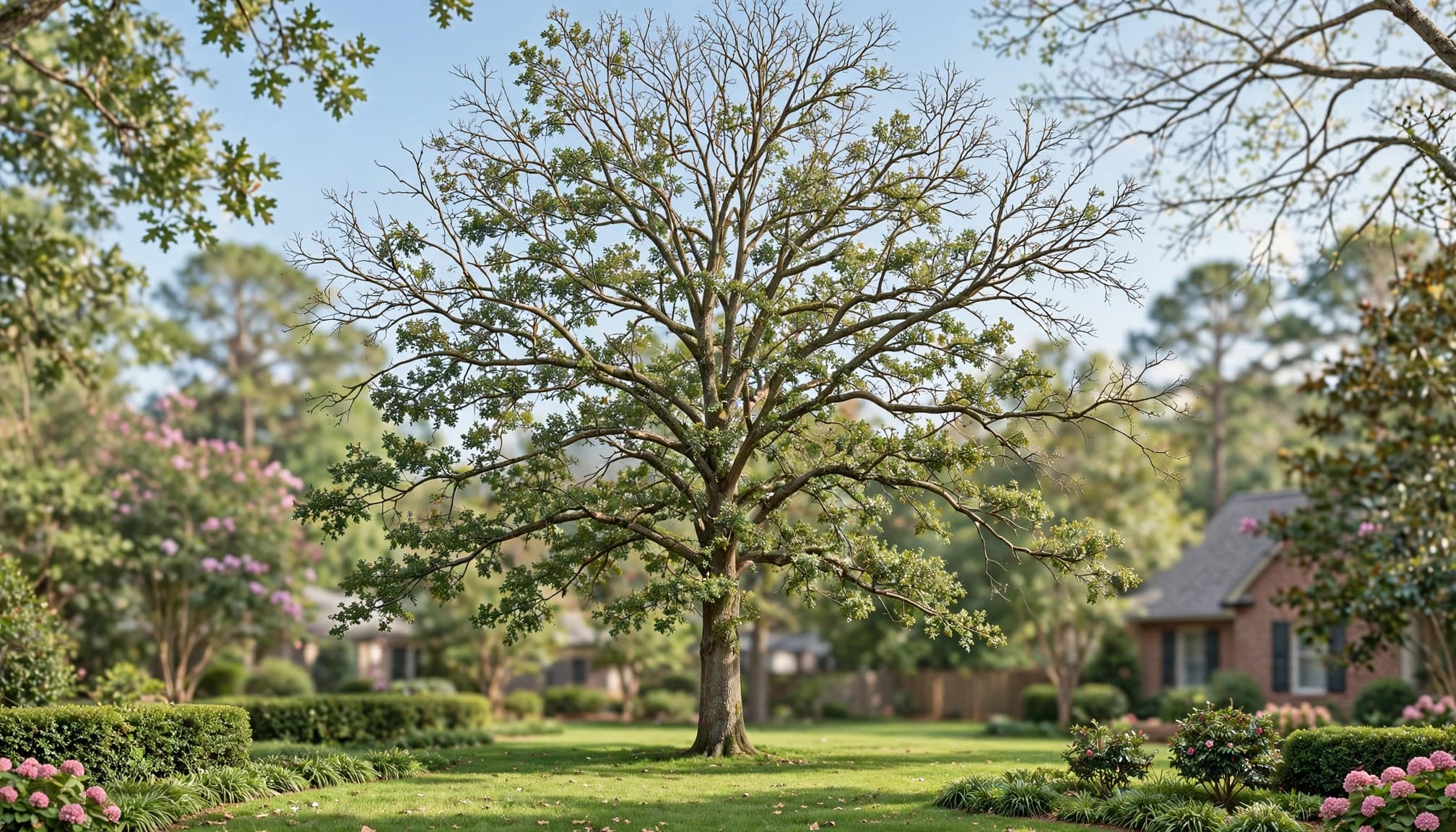
Notice whether leaves are smaller than usual, discolored, spotted, or dropping early. Also look for branches that failed to leaf out while neighboring limbs developed normally. On a dogwood, for example, compare affected branches in June and July and note whether dieback spreads.
The trunk and surrounding ground can provide clues. Cracks, cavities, loose bark, fungal growth, damaged roots, and recent soil disturbance may be relevant. None of these signs alone identifies the cause, and a cavity doesn't automatically mean a tree will fall.
Take dated photos from the same safe viewing points. Include the whole crown and any visible symptoms on the trunk. Photos help an arborist understand how quickly the condition has changed, especially when the canopy looks different between visits.
Environmental Stress and Root-Zone Problems
Atlanta trees can experience both saturated soil and dry stretches. Construction, foot traffic, and lawn equipment add pressure around roots, sometimes long before the canopy shows a problem.
Drought, Heat, and Excess Water
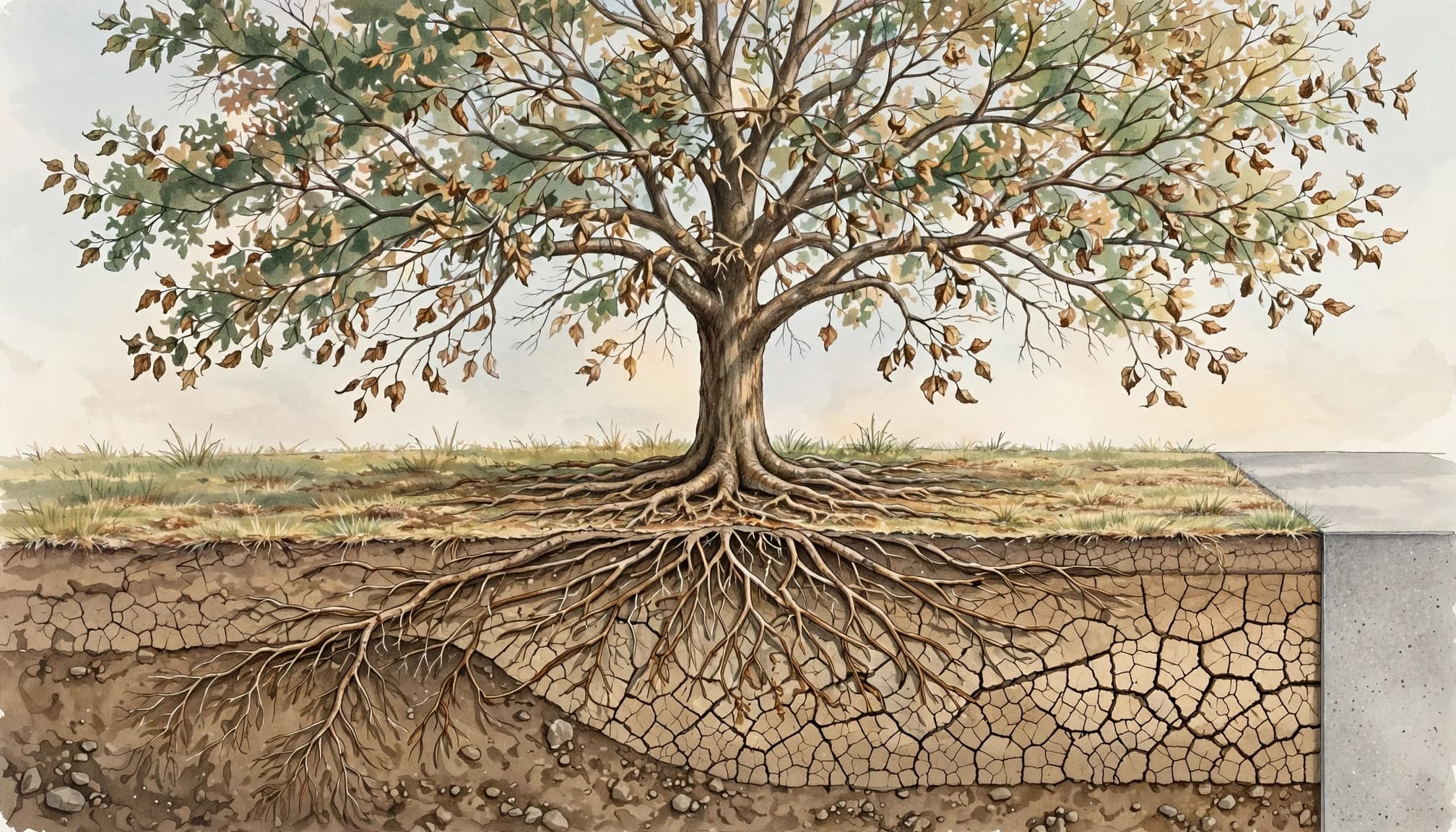
During hot, dry weather, a tree may wilt, shed leaves early, or show browning along leaf edges. Newly planted trees are especially sensitive because their roots haven't established as widely as those of mature trees.
Too much water can also stress roots. Soil that stays saturated limits the oxygen they need, and symptoms may include yellowing leaves and thinning growth. Dry-looking foliage doesn't always mean the answer is more irrigation.
Feel the soil several inches below the surface before watering. If it remains wet, pause irrigation and consider whether runoff or poor drainage is contributing. If it's dry, water slowly enough for moisture to enter the soil instead of running off hard clay.
Compaction and Root Damage
Roots need room for water and oxygen. Repeated equipment traffic, parked vehicles, trenching, and added soil can restrict that space or damage roots outright. Canopy changes may appear gradually after the disturbance.
Surface roots are common around mature trees and aren't automatically a defect. Avoid cutting them to make mowing easier. Our guide to protecting roots while repairing lawns offers options for areas where turf and exposed roots compete for space.
Pests and Diseases That Can Thin Atlanta Trees
Insects and diseases can cause foliage loss, but the symptoms vary by tree and problem. Identifying the cause matters because a treatment that helps one condition may do nothing for another.
Dogwood Disease and Other Leaf Problems
Dogwood anthracnose can cause spotted foliage, twig dieback, and thinning sections of the crown. Cool, wet conditions around bud break favor the disease, although leaf spots alone don't establish a diagnosis.
Inspect dogwoods during the growing season and note whether damage spreads into twigs and branches. Removing fallen leaves and twigs after leaf drop can reduce material that may contribute to infection the following spring. Our guide to dogwood anthracnose symptoms and treatment covers the signs in more detail.
Leyland cypress trees can develop cankers that kill branches and leave brown sections in a privacy screen. Affected outer branches may be manageable with selective pruning, while cankers on the main stem present a more serious problem. Trimming can't rebuild damaged trunk tissue.
Insects That Damage Foliage or Wood
Scale insects can leave sticky residue and black sooty mold on foliage or bark. Heavy feeding may accompany weak growth and thinning branches. Bark beetles attack beneath the bark of pines and can interrupt the movement of water and nutrients.
Brown needles, sticky bark, or small holes don't identify an insect on their own. When a pine declines quickly, have a qualified professional assess it and nearby trees. Avoid applying an insecticide before the pest and appropriate treatment are identified.
How Normal Aging Affects a Tree's Crown
As a tree matures, its shape and growth rate change. Lower branches may die when they receive less light, and an older tree may put on less visible new growth than a young one. A small amount of interior deadwood doesn't necessarily mean the entire tree is declining.
Age can also make existing problems more consequential. A mature tree has had more time to accumulate storm damage, pruning wounds, soil disturbance, and decay. However, an old tree can remain healthy for many years when its structure and growing conditions are sound.
Look for change across the whole crown rather than assuming age explains every bare limb. If thinning continues across growing seasons, or deadwood becomes extensive, an arborist can assess whether the tree needs care or poses a risk.
When to Act on a Thinning Canopy
The urgency depends on both the symptoms and what sits beneath the tree. A sparse crown over an unused wooded area calls for a different response than a damaged limb above a driveway.
Arrange a Prompt Inspection for Decline
Schedule an arborist assessment when thinning persists through the growing season, spreads to new branches, or comes with early leaf drop. An inspection is also appropriate when several nearby trees show similar symptoms or a pine changes color rapidly.
Tell the arborist about recent trenching, grading, drainage changes, or storm damage. Those details can help narrow the possible causes. For non-emergency work, dated photos and notes about when symptoms appeared are useful to have ready.
Keep People Away From Immediate Hazards
Treat hanging limbs, a newly developed lean, a split trunk, and large cracks as urgent concerns. Keep people, pets, and lawn equipment away from the area beneath and around the tree. Don't climb it or try to remove damaged wood yourself.
If a tree or branch is touching a power line, stay away and contact the utility. Call emergency services if the situation poses an immediate danger.
Pruning a dead limb can remove that branch's hazard, but it won't make a severely decayed trunk structurally sound.
What an Arborist Assessment Can Clarify
An arborist examines the tree as a whole, including the crown, branch attachments, trunk, root flare, and surrounding site. The assessment considers both tree health and structural risk . Those aren't always the same: a leafy tree can have a serious defect, while a sparse tree may need care rather than removal.
An ISA Certified Arborist can help distinguish drought stress from disease symptoms, root disturbance, or insect activity. Depending on the condition, the assessment may involve closer inspection, soil evaluation, or additional testing. A leaf photo alone may not reveal what is happening below ground or inside a trunk.
Ask for the findings and recommended work in writing. For pruning, the scope should identify which limbs will be removed and whether cleanup is included. Avoid topping, the practice of cutting major limbs back to stubs, because it can stress the tree and encourage weak regrowth.
If decay, a split, or extensive deadwood is present, ask how the recommended work addresses that defect. Removing visible branches may reduce one hazard while leaving another unresolved.
Practical Steps to Protect Tree Health
Good yard care can reduce avoidable stress while you monitor a tree or arrange an assessment. Start with the conditions around its roots.
Water and Mulch With the Site in Mind
Water slowly during dry periods, and adjust for rainfall and soil moisture. Direct water toward the soil over the root area rather than relying on frequent light sprays over the leaves. Newly planted trees need closer attention than established trees.
Spread about 2 to 3 inches of organic mulch over the root zone where practical. Keep it several inches away from the trunk and root flare. A broad, even layer is more useful than a mound against the bark.
Protect Roots During Lawn Care
Keep mowers and string trimmers away from the trunk, and avoid driving across the root zone when soil is wet. Where raised roots make mowing difficult, a mulched bed can reduce repeated equipment contact without cutting the roots.
Don't add fertilizer simply because a crown looks thin. A soil test or arborist assessment can establish whether nutrients are part of the problem. Likewise, avoid heavy pruning to make a struggling tree look fuller.
At RW Lawn Co, we help Metro Atlanta property owners maintain landscape beds and handle seasonal yard cleanup. For a declining or potentially hazardous tree, a qualified arborist should direct the diagnosis and tree work.
Give a Thinning Tree the Right Attention
A thinner canopy can be seasonal, but persistent bare branches or a steady loss of foliage point to a condition worth investigating. The cause may involve roots, weather, pests, disease, or several stresses at once.
Protect the area beneath a potentially unsafe tree and arrange an assessment when decline spreads. With a clear diagnosis, you can choose care that fits the tree instead of guessing at a treatment.