Atlanta Tree Staking: When and How to Support a New Tree
A new tree can look secure on planting day, then lean after the first hard rain. That doesn't mean every tree needs stakes. Atlanta tree staking makes sense when the tree can't stand upright on its own or the root ball shifts in the soil.
For a stable tree, leave the stakes out. If support is needed, keep it temporary, protect the trunk, and check the setup as the roots establish.
When Atlanta tree staking makes sense
Watch the root ball, not the branches
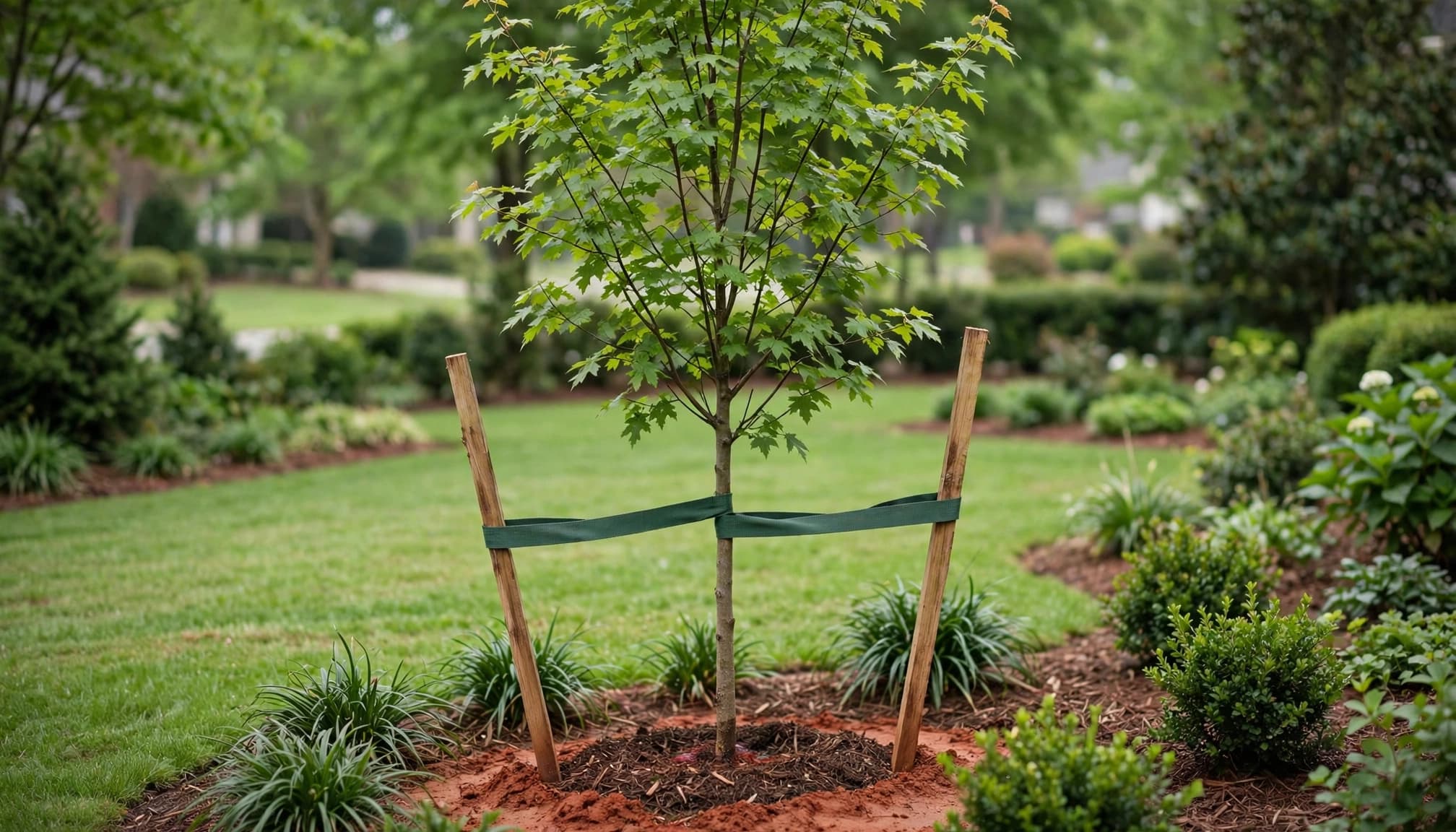
A little movement in the upper trunk is normal. The useful test is closer to the ground: does the root ball lift, rotate, or rock when wind moves the tree? Does the trunk lean again after you straighten it?
If the tree stands upright and the soil around its roots stays still, it may need no support. If the whole root ball moves, first check whether the planting hole was backfilled and watered properly. Stakes can hold a tree while roots establish, but they won't correct a poorly planted tree.
Account for the site
An open corner lot may catch more wind than a sheltered backyard. Recent fill, a slope, or soil softened by repeated rain can also affect stability. Atlanta's storms make it sensible to reassess a new planting after severe weather.
Don't stake a tree solely because it's tall or because the nursery delivered it with supports. Judge the installed tree in its actual location. A large or persistently unstable tree calls for a qualified planting professional or arborist.
Check the ground before adding support
Look for a planting problem first
A tree that leans immediately may sit in an oversized, loose hole or have a root flare buried below grade. The root flare is the widening at the base of the trunk where the upper roots begin. If it's buried, adding stakes won't fix the planting depth.
Gently inspect the soil around the root ball. Watering can settle fresh backfill, so fill obvious gaps without burying the flare. If the ball rocks substantially or the tree keeps leaning, ask the installer to assess the planting before adding hardware.
Plan around utilities and drainage
Call 811 before driving stakes into the ground. Check for private irrigation lines and landscape lighting too, since those may need separate locating. Keep the work clear of visible roots, pavement edges, and areas where mowing equipment will strike the supports.
Water standing around a new tree points to a different problem. Stakes won't improve saturated soil or redirect runoff. Where pooling affects the planting area, grading services for improved property drainage may be more useful than stronger supports.
Stake a newly planted tree step by step
Once you've confirmed that the root ball needs help, aim for the least support that holds it steady . The exact layout depends on the tree, its root ball, and the available ground. Get site-specific advice if there's little room to place supports safely.
- Mark the root ball's edge. Identify where the planted root mass ends before choosing locations for supports. Avoid driving a stake through the ball or damaging nearby roots.
- Set supports in firm ground. Keep them clear of buried lines and irrigation. Follow the tree supplier's or planting professional's guidance on the number, arrangement, and depth needed for that site.
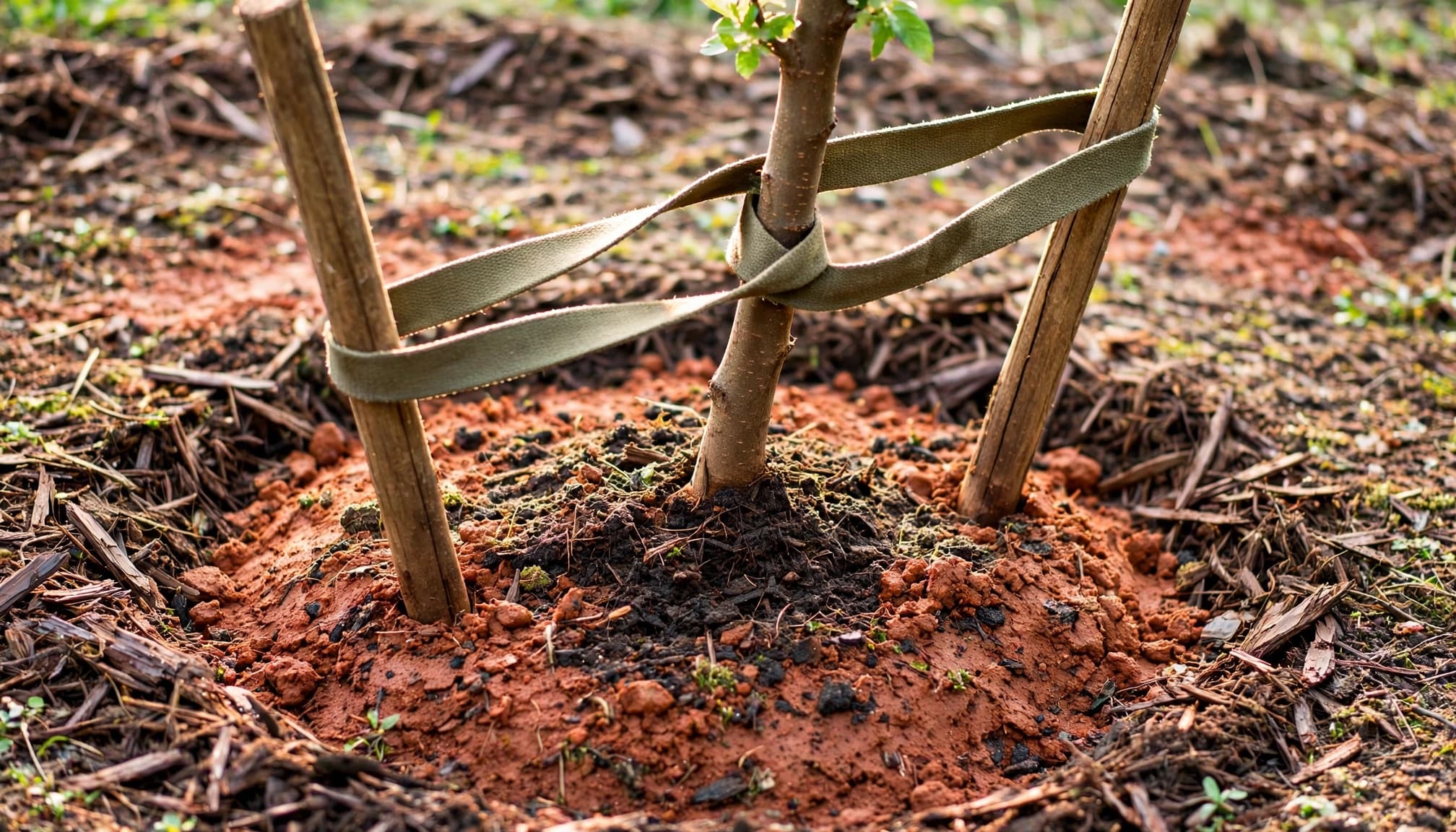
- Fit broad, flexible ties. Connect the tree to the supports without pulling the trunk rigid. The ties should hold it upright while allowing slight movement above the root ball.
- Test the setup gently. Watch the base while the trunk moves. If the root ball still rocks, reassess the support or planting instead of tightening the ties against the bark.
- Record a follow-up check. Tell anyone who maintains the property that the stakes are temporary. Include tie inspections and eventual removal in the care plan.
Keep stakes out of mower paths where possible. On a maintained lawn, a support that gets clipped by equipment can loosen, damage the tree, or become a hazard.
Make the ties loose enough for healthy movement
Protect the bark
A narrow cord or bare wire can rub or cut into a growing trunk. Use a broad, flexible tree tie suited to the tree, and keep hard fasteners away from the bark. Check that no rough edge presses against the trunk when the wind shifts it.
The tie should have room to move without sliding down or scraping repeatedly. Its exact height and arrangement depend on the planting stock and support method, so follow qualified guidance rather than copying the setup on a different-sized tree.
Don't make the trunk rigid
A newly planted tree needs some natural movement. If its top sways gently while the root ball remains steady, the support is doing its job. A trunk held completely still may be tied more tightly than necessary.
Also look for a tree leaning toward a support. Tightening the opposite tie may pull it upright briefly, but it can hide a shifting root ball. Recheck the planting and the firmness of the supporting ground first.
Inspect the setup after storms and lawn visits
Check for rubbing and growing pressure
Each time you tend the lawn or beds, look at the ties and the bark beneath them. As the trunk grows, a once-loose tie can become tight. Replace damaged ties and adjust any that begin to chafe or leave an indentation.
Check the stakes as well. Soil softened by heavy rain can let a support lean or work loose. Keep mower and string-trimmer heads away from both the hardware and the trunk.
Reassess the tree after severe weather
Once conditions are safe, look for fresh leaning, movement at the soil line, broken supports, and torn ties. A tree that suddenly leans after a storm needs more than a quick tug on its straps. Its root ball or the surrounding soil may have shifted.
Nearby construction can change stability too. Equipment traffic and grading can damage roots or alter drainage around a planting area. When work is planned near established trees, follow sound practices for protecting Atlanta trees during construction and grading. Keep clear of any tree or support caught in a power line, and contact the utility.
Remove stakes when the tree can stand alone
Staking is a temporary response to instability. During follow-up visits, assess whether the tree stands straight and the root ball stays put as the trunk moves. Don't leave supports in place simply because the original planting plan included them.
Ask the installer or a qualified arborist when to test removal for your tree. Before taking out all supports, loosen the ties and observe the tree in calm conditions. If the root ball shifts, get the planting reassessed rather than leaving tight ties in place indefinitely.
Once the tree is stable, remove the ties and stakes completely. Check for bark damage, fill stake holes as appropriate, and keep the trunk clear for mowing. If the tree still can't stand without help, investigate planting depth, root-ball condition, drainage, and exposure. More time in stakes alone may not solve the cause.
Give the roots a better start than stakes can
Water according to soil conditions
New roots need moisture in and around the root ball. Water slowly at planting, then monitor the soil through the first growing season. Atlanta heat can dry a small root zone quickly, while clay that stays wet after rain needs a lighter touch.
Check below the surface before watering again. A dry-looking lawn doesn't prove the root ball is dry, and wet grass doesn't prove it has enough moisture. Adjust for rainfall, drainage, tree size, and the planting site's exposure.
Mulch without covering the trunk
A mulch ring helps limit weeds and keeps mowers away from the bark. The Atlanta Tree Conservation Commission recommends roughly 2 to 4 inches of mulch, while UGA Extension advises about 3 inches. Both keep mulch off the trunk.
Leave the flare visible, and avoid adding a new layer every time the bed is refreshed. For a closer look at depth and trunk clearance, see how to keep a tree's root flare healthy. If several planting beds need attention, Atlanta mulch installation and landscape bed care can be planned alongside the tree's regular upkeep.
Key Takeaways
- Stake a new tree only when it can't stand upright or its root ball moves in the soil.
- Check planting depth, backfill, drainage, and buried utilities before adding supports.
- Use flexible ties that protect the bark and allow slight trunk movement.
- Inspect the setup after storms and during lawn care, then remove it once the tree is stable.
- Keep watering and mulch care on the schedule; stakes can't replace healthy root conditions.
FAQ
Does every newly planted tree in Atlanta need staking?
No. If a properly planted tree stands upright and its root ball stays steady, it usually doesn't need stakes. Wind exposure and soil conditions can change that decision, so check the tree at its planting site rather than following a blanket rule.
Can I tighten the ties when my tree leans?
First, look at the base. If the root ball rocks, tighter ties may hide an unstable planting and injure the bark. Have the planting and supports reassessed. If only a tie has slipped, adjust it so it supports the tree without gripping the trunk.
How do I know when to remove the stakes?
The tree should stand upright while its root ball remains steady during normal trunk movement. Ask the installer or a qualified arborist to assess an uncertain tree. Remove temporary hardware once support is no longer needed, rather than letting ties tighten around growing bark.
A steadier start for your new tree
The first storm can reveal a planting problem that wasn't obvious on installation day. Check the root ball before reaching for stakes , then use temporary support only if the tree needs it.
Loose ties, regular inspections, and timely removal protect the trunk. Good watering, visible root flare, and suitable drainage give the roots their chance to hold the tree on their own.