Atlanta Tree Protection During Home Construction and Grading
A tree can look untouched after a house project while its root system has already been damaged. Atlanta tree protection starts before the first excavator arrives, especially when grading, trenching, fill soil, and drainage changes are part of the plan.
Atlanta's red clay, heavy rain, summer heat, and compacted construction soil create added stress for mature trees. A practical plan protects the root zone, keeps equipment on defined routes, and verifies the rules for the specific city or county property.
Key Takeaways
- Tree damage can occur without a scrape on the trunk. Root cutting, soil compaction, grade changes, and altered drainage often cause delayed decline.
- The City of Atlanta uses a root-save-area calculation tied to trunk diameter. Required tree-save fencing must protect at least 67% of that area.
- In Atlanta, trees measuring 6 inches or more in diameter at breast height, or DBH, may require a permit when work will remove, destroy, or injure them.
- DeKalb County uses its own process and requires a tree survey as the initial document in its tree-protection plan submittal.
- Fencing must go up before construction traffic begins. Once equipment enters the protected area, even a good plan can fail.
- Local requirements differ across Atlanta, DeKalb, Fulton, Cobb, and nearby municipalities. Confirm the current rules before clearing, grading, or trenching.
Why Atlanta Tree Protection Starts Before Grading
The safest construction plan identifies valuable trees before anyone moves soil. Waiting until grading begins makes it harder to change driveway routes, utility alignments, or foundation locations.
Schedule the arborist review early
For projects that may affect trees, the City of Atlanta requires an arborist meeting with Arborist Plan Review staff before permit submission. This requirement took effect June 25, 2025, under Ordinance 25-O-1341.
The City of Atlanta's rewritten Tree Protection Ordinance became effective January 1, 2026. The city issued additional corrections and clarifications on February 2, 2026, under Ordinance 26-O-1015.
That timing matters. An arborist can identify trees that should remain, document likely conflicts, and help the design team plan access before the site plan becomes difficult to change.
Survey trees before equipment arrives
Mark each tree that could be affected by the house, driveway, septic area, retaining wall, utility trench, or drainage work. Record the species, trunk diameter, visible defects, and nearby structures.
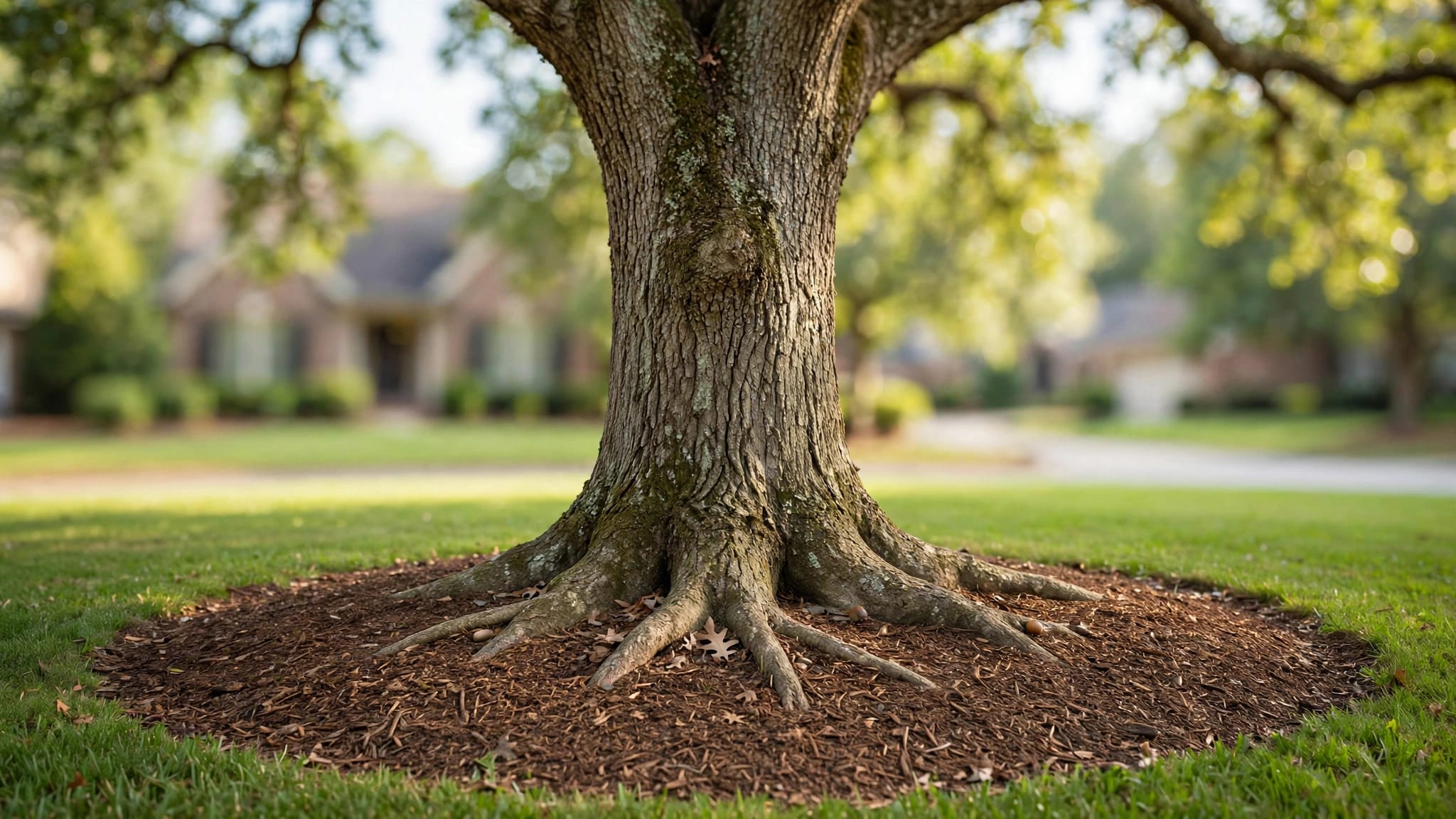
A large oak may extend roots well beyond its canopy. Surface roots are also common in Atlanta's dense clay, especially where erosion, shade, or years of mowing have changed the soil. Cutting or burying those roots to make grading easier can create long-term problems.
For larger residential projects, coordinate the tree survey with the civil, landscape, and utility plans. RW Lawn Co's Atlanta land clearing services include site preparation and grading work that can be planned around trees worth saving.
Atlanta Tree Protection Rules for Construction
The City of Atlanta rules apply within the city limits. They don't automatically apply to unincorporated DeKalb, Fulton, Cobb, or another municipality. Always verify the governing jurisdiction before relying on a threshold or permit process.
Understand DBH and permit triggers
Atlanta requires a permit for removing, destroying, or injuring a regulated private-property tree measuring 6 inches or more DBH. DBH is measured across the trunk at the standard measurement height, not at the base.
Public or city-owned trees require a permit regardless of size. Dead, dying, diseased, or hazardous trees aren't automatically exempt. Their condition may change the application route, but the property owner still needs to confirm the required process.
Some city guidance discusses a 12-inch threshold for pines, while the code includes the 6-inch DBH regulated-tree threshold. Treat those figures as project-specific details that need confirmation with Arborist Plan Review staff.
Calculate the root-save area
For a free-standing tree without apparent root restrictions, Atlanta defines the root-save area as a circle with a radius of 1 foot for every 1 inch of DBH. A 20-inch tree therefore has a calculated radius of 20 feet, subject to the site's actual conditions and approved plan.
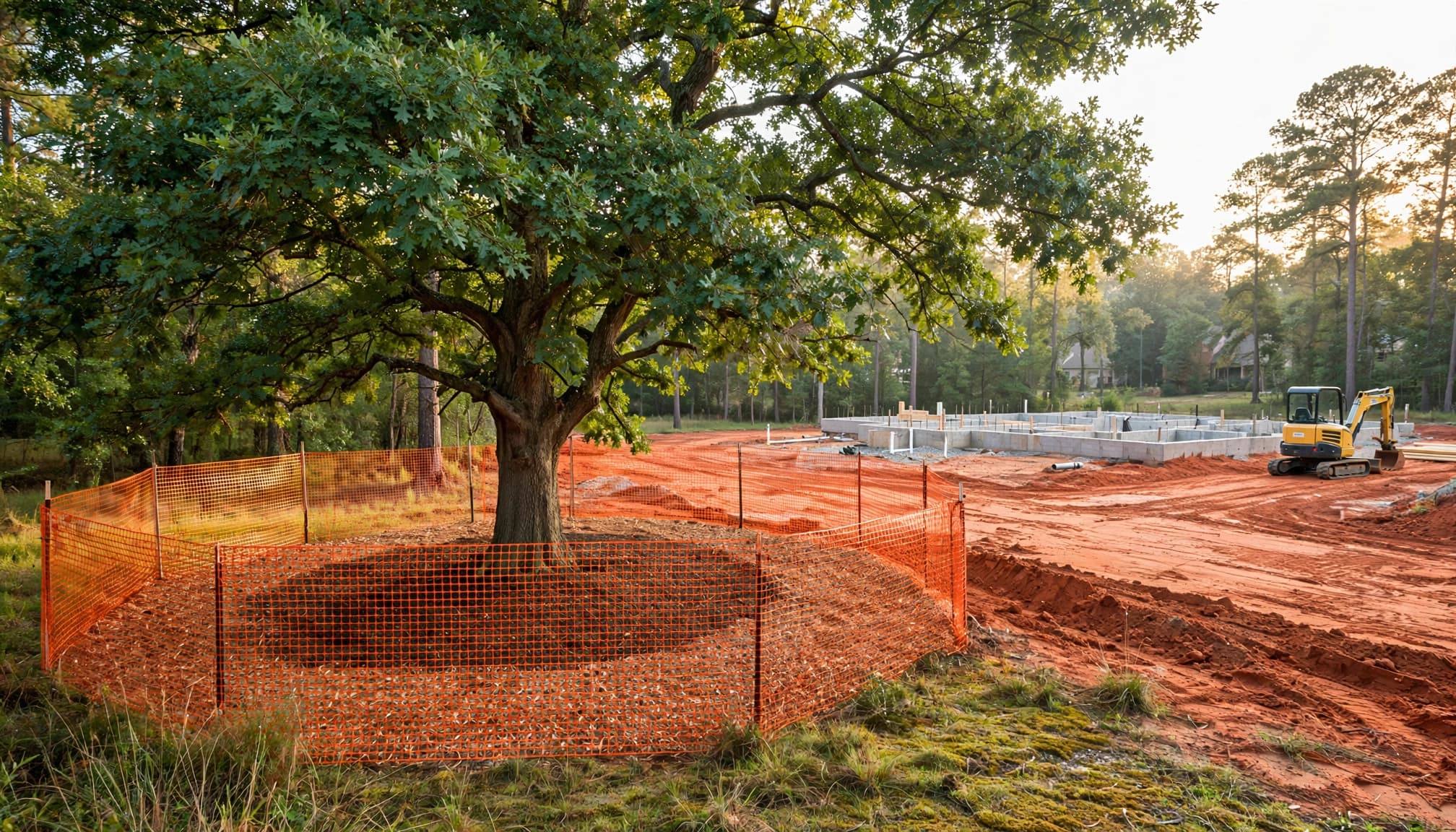
Required tree-save fencing must protect at least 67% of the root-save area. The structural root plate must remain undisturbed. Fencing isn't a decoration or a suggested boundary. It marks an area where vehicles, spoil piles, stored materials, and unnecessary foot traffic should stay out.
Limit grading and trenching near trees
On lots or subdivisions under 1 acre, Atlanta limits grading, trenching, and other land disturbance within required root-save areas. Allowed work is generally tied to necessary hydrologic or erosion-control measures and required access corridors.
A foundation, sewer line, irrigation route, or drainage swale may still create a conflict. The solution is to address the conflict in the plan, not to let the crew decide after excavation begins. In some cases, the design can shift. In others, an arborist or city reviewer may need to approve the proposed work.
How Construction Damages Trees Before Symptoms Appear
Tree decline often develops weeks or months after construction. By then, the original excavation crew may be gone, and the cause can be difficult to identify.
Root cutting and soil compaction
A trench that cuts through major roots can reduce the tree's ability to absorb water and nutrients. It can also remove roots that help anchor the tree during storms. Damage becomes more serious when cuts occur on several sides.
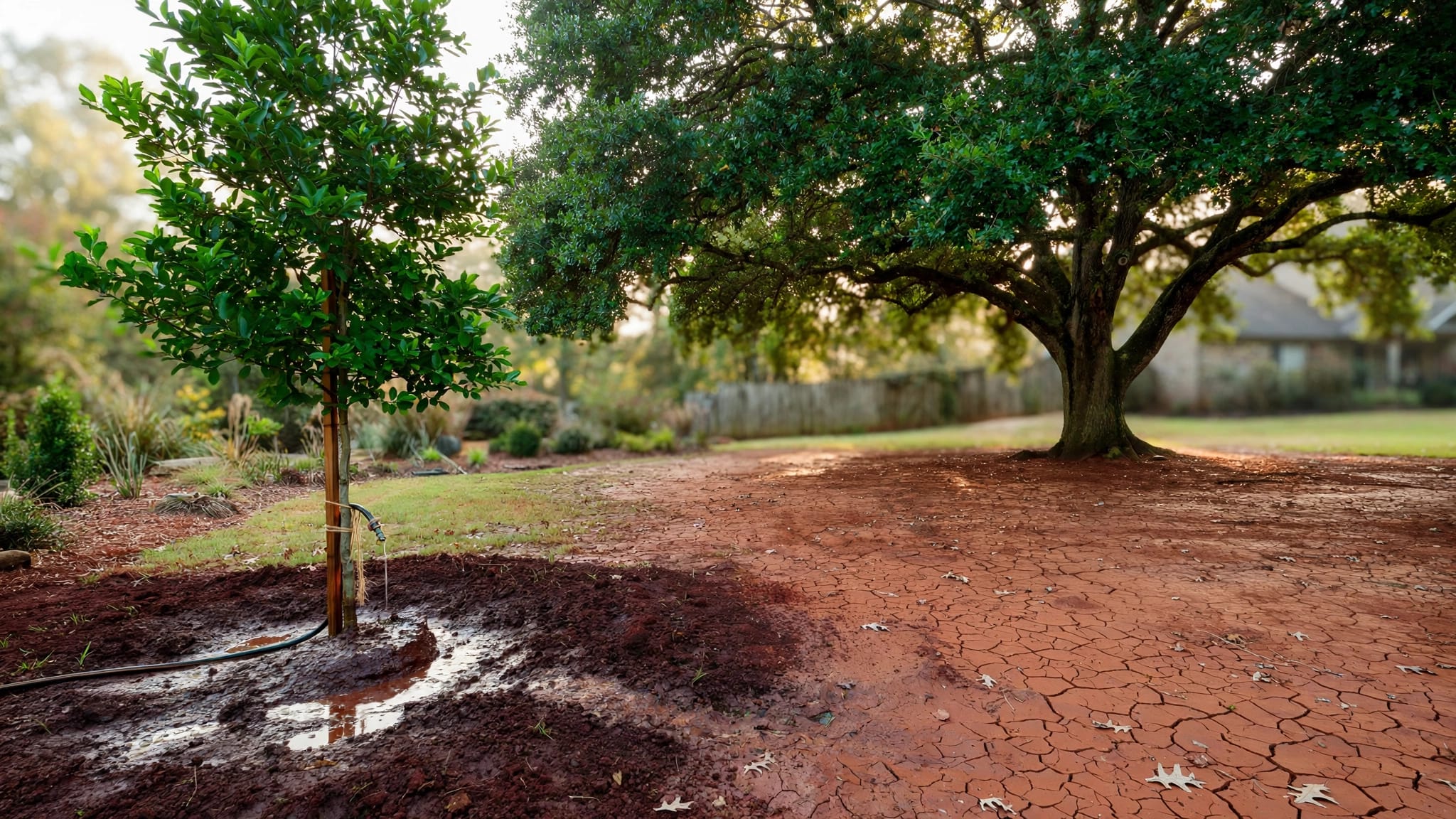
Heavy equipment creates another problem. Repeated passes compress the soil, closing air spaces that roots need. Atlanta clay becomes sticky when wet and hard when dry, so construction traffic on damp ground can leave long-lasting compaction.
Compaction may not look severe after rough grading. The surface can be covered with topsoil or sod while the soil below remains dense and poorly drained. Trees may later show small leaves, thin canopies, premature leaf color, dead branches, or increased storm vulnerability.
Keep materials and machines outside the fence
Excavators, skid steers, dump trucks, concrete deliveries, and material stacks all need designated locations. If the only convenient route crosses the root zone, revise the access plan before work starts.
Install sturdy fencing before clearing or grading. Use visible signs and inspect the barrier after storms, deliveries, and subcontractor changes. A fence that falls over for several days no longer protects the tree.
Avoid parking, refueling, washing equipment, or dumping concrete near protected roots. Petroleum, cement washout, excess fill, and construction debris can harm soil and roots even when no digging occurs.
How Grading and Drainage Changes Affect Trees
A tree's roots need both moisture and oxygen. Construction can disturb that balance by raising the soil level, removing soil, redirecting runoff, or creating a low area that stays wet.
Avoid burying or exposing roots
Adding fill soil over major roots reduces oxygen near the surface. A thick layer can also hold moisture against the trunk and hide the root flare. Mature trees rarely adjust well to a sudden grade increase around the trunk.
Removing soil can expose roots to heat, drying, and equipment damage. It may also cut the smaller roots that support water uptake. Surface roots are often a normal response to Atlanta's clay, shade, erosion, and changing soil conditions. Covering them with deep soil isn't a safe repair.
When a grade must change, keep the finished contours outside the protected root area where possible. Use mulch or an appropriate ground cover instead of forcing turf into dense shade. Keep mulch several inches away from the trunk and avoid deep layers over roots.
Direct water without flooding the root zone
A new driveway, foundation, swale, or retaining wall can change where stormwater flows. Water that once moved across a slope may collect beside a tree, while a former wet area may become dry after a drainage outlet is installed.
Coordinate downspouts, swales, erosion controls, and outlets with the tree plan. Atlanta grading and paving services can address slope correction and drainage work, but the design still needs to protect roots and prevent concentrated discharge.
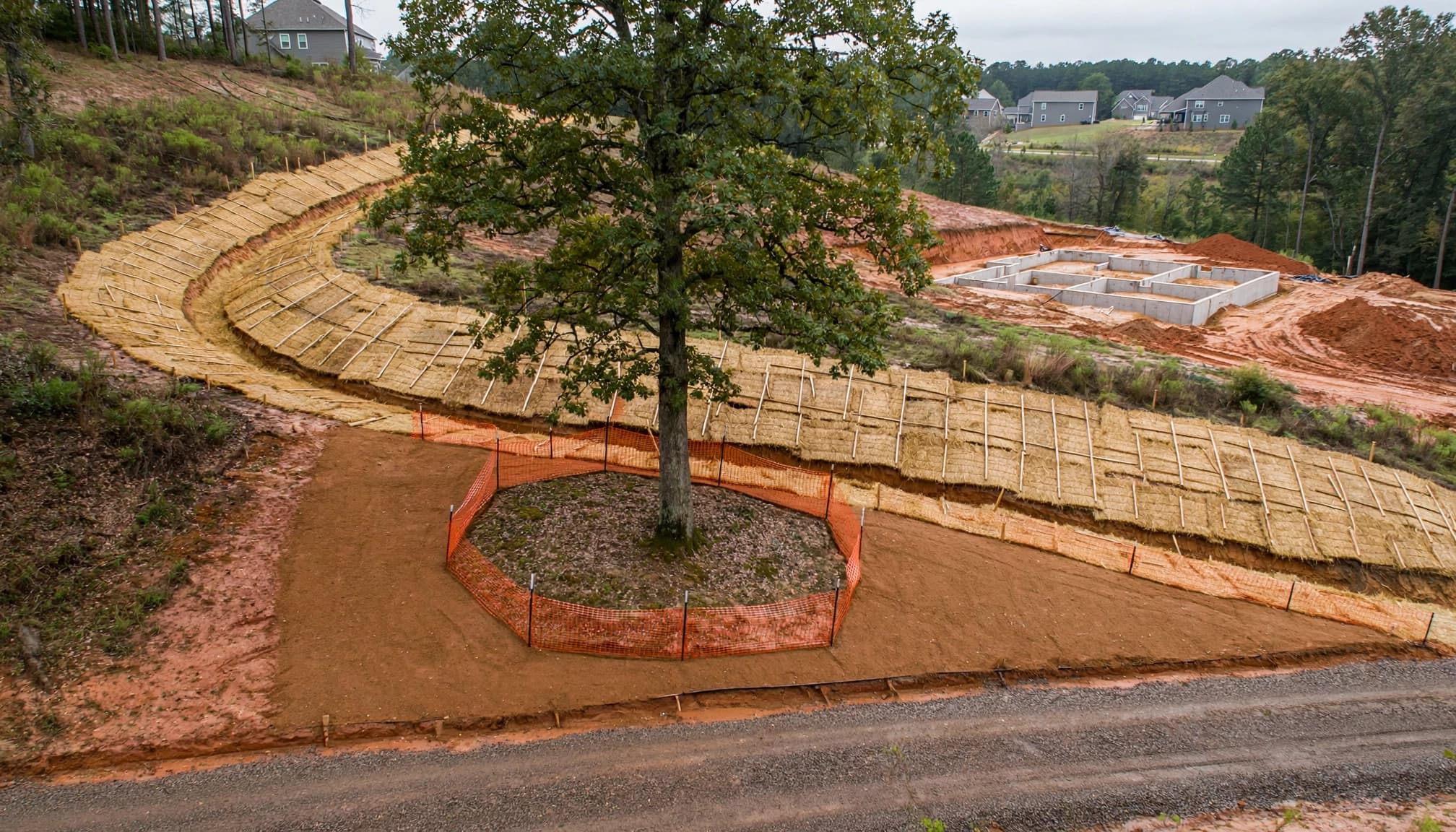
A shallow swale may be safer than an abrupt cut through the root zone. Erosion-control blankets, mulch, and stabilized outlets can also reduce soil loss while the site is being finished. For difficult drainage problems, compare solutions carefully because a French drain, regrading, and a dry creek bed address different conditions. RW Lawn Co's guide to Atlanta drainage solutions for soggy lawns covers those differences.
DeKalb County Uses a Separate Process
A project outside Atlanta city limits may follow different tree-protection rules, even when the property is only a short drive away. Do not carry an Atlanta permit assumption into a DeKalb County site.
Start with the required tree survey
DeKalb County identifies the tree survey as the initial required document in its tree-protection plan submittal process. The survey supports the plan review and helps show which trees are being saved, removed, or affected by construction.
The project may also require protection details, replacement information, or other documents based on the site and permit type. Confirm the current checklist before submitting plans.
Verify nearby jurisdictions before bidding
Fulton County, Cobb County, Sandy Springs, Decatur, Marietta, and other jurisdictions may use different definitions, thresholds, forms, and review steps. A permit in one jurisdiction may not satisfy another.
Before preparing a bid or starting work, confirm:
- Which government controls the parcel
- Whether a tree survey is required
- Which trees are regulated
- Whether an arborist review is needed
- Where fencing must be installed
- How grading, trenching, and drainage work are reviewed
A Practical Preconstruction Checklist
Good tree protection depends on coordination more than a single fence. Include the requirements in the site plan, subcontractor scope, and daily work expectations.
Before clearing and grading
Complete these steps before equipment arrives:
- Walk the property with the owner, builder, grading contractor, and arborist when needed.
- Mark trees to save, remove, or inspect further.
- Confirm the applicable city or county rules and permit status.
- Call 811 before digging for utilities, even when the excavation seems minor.
- Choose equipment routes that avoid protected roots and wet soil.
- Set locations for fill soil, dumpsters, concrete washout, fuel, and material deliveries.
- Photograph trees, grades, fences, driveways, and drainage conditions before work begins.
A written plan prevents a common failure: one crew installs fencing, then another crew removes it to reach a trench.
During construction and final grading
Inspect the protection fence throughout the project. Stop work if a trench enters the protected area, soil is piled against the fence, or equipment crosses the boundary.
Keep irrigation leaks, mower traffic, temporary roads, and stored materials away from major roots. If roots become exposed, cover them with damp protective material and contact the project arborist promptly. Don't cut large roots because they interfere with a driveway, planting bed, or utility route without professional guidance.
After grading, check for standing water, exposed roots, new erosion, buried root flares, deep mulch, and tire ruts. The final landscape should support the tree's long-term health, not only make the site look finished on move-in day. For excavation planning and soil movement, review the Atlanta excavation cost guide before finalizing the scope.
Atlanta Tree Protection FAQ
Does a tree need a permit if the trunk is not damaged?
Possibly. Atlanta rules address injury, destruction, and removal, not only visible trunk damage. Root cutting, severe compaction, major grade changes, and trenching can injure a regulated tree.
How far should construction fencing be placed from a tree?
Atlanta's code uses a root-save-area calculation rather than one universal fence distance. For a free-standing tree, the calculated radius is 1 foot for every inch of DBH, and fencing must protect at least 67% of that area. Confirm the approved layout for the specific site.
Can fill soil be placed around an existing tree?
Adding fill around mature roots can reduce oxygen and alter drainage. Keep soil changes outside the protected root area whenever possible. If grade changes are unavoidable, have the plan reviewed before placing soil.
Does a dead or hazardous tree avoid the permit process?
Not automatically. Atlanta guidance indicates that dead, dying, diseased, or hazardous trees still require confirmation and may follow a different application route. Document the condition and verify the current requirement before removal.
Protect the Tree Before You Protect the Schedule
The least disruptive construction plan gives trees room before grading begins. Surveying trees, reviewing local requirements, fencing root zones, and coordinating drainage can prevent damage that may not appear until long after the house is complete.
Atlanta's clay soil and intense storm runoff make careful soil movement especially important. When a project requires root cutting, major grade changes, or work near a valuable tree, professional review is usually less costly than trying to repair a declining tree later. Good Atlanta tree protection keeps the construction site moving while preserving the shade, stability, and property value those trees provide.