Boxwood Leafminer in Atlanta: Yellow and Blistered Leaves Guide
Boxwood leaves that turn yellow and look blistered can send homeowners into guesswork fast. In Atlanta, that guesswork matters, because several common boxwood problems start with the same faded look.
Boxwood leafminer damage often shows up on newer growth first, then spreads through a hedge in patches. If you catch it early, you can tell pest damage apart from drought stress, winter burn, or trimming injury.
What boxwood leafminer damage looks like on Atlanta shrubs
Leafminer damage starts inside the leaf, so the first clues are subtle. The leaf surface may look puffy, pale, or uneven, like it has small blisters under the skin. Later, the same leaves often turn yellow, then tan or brown.
The damage usually shows up on the outer parts of the shrub first. Look at the tops, edges, and sunniest sides of the boxwood, because those areas often show stress sooner. On a hedge, one side may look patchy while the shaded inner leaves still look healthy.
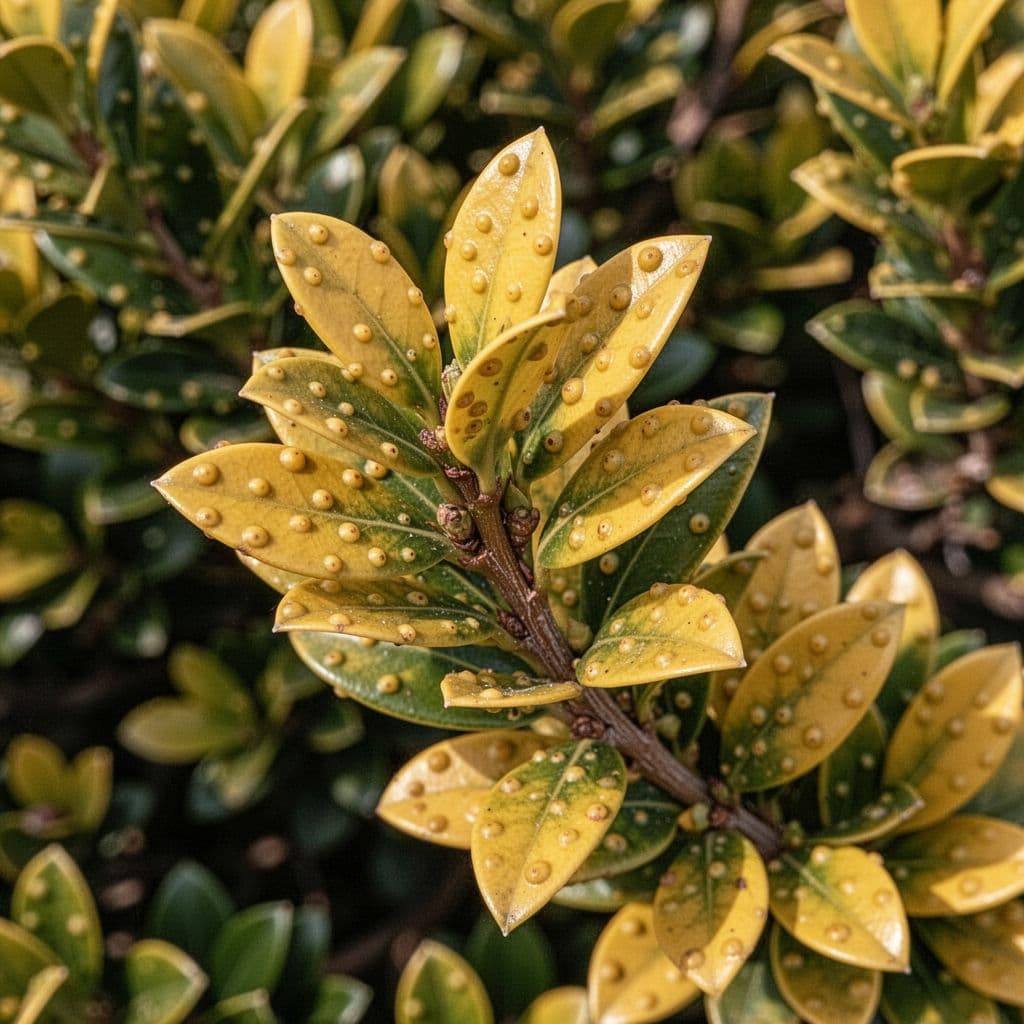
A close look matters because the shrub may still look fine from across the yard. Walk around it and inspect the newest leaves, especially on the outer face of the plant. If the leaves feel bumpy or look slightly folded, that is a stronger clue than color alone.
Yellowing from leafminer often appears in the same clusters as the blistering. In other words, the leaf color change is part of the story, not the whole story. A boxwood with only a few yellow leaves may be dealing with something much simpler.
How to confirm boxwood leafminer before treating
A good diagnosis starts with a few sample leaves, not with a spray can. Pick leaves from the blighted-looking sections and open one or two with your fingernail. If leafminer is active, you may see a small orange or cream-colored larva inside the leaf tissue.
Timing helps too. In North Georgia, the best inspection window is spring, when boxwoods push fresh growth. By late spring and early summer, the feeding damage can become easier to spot. By late summer, the leaves may look worn out even if the insect is no longer active.
Before you decide it is boxwood leafminer, compare the symptoms with a few other common problems.
| Clue | Boxwood leafminer | More likely another issue | What to do |
|---|---|---|---|
| Raised, blistered leaves | Common | Uncommon | Open a few leaves and look inside |
| Yellowing on outer new growth | Common | Sometimes drought stress | Check watering and leaf texture |
| Brown tips after a cold snap | Possible, but less likely | Winter burn | Watch for fresh spring growth |
| Widespread pale leaves with no blisters | Less likely | Soil or root stress | Check drainage and irrigation |
The table gives you a quick filter, but the leaves still tell the final story. If the surface looks blistered and the damage sits on newer growth, leafminer rises to the top of the list. If the plant is yellow without blisters, look harder at water, soil, or root health.
Leafminer damage starts inside the leaf, so surface color alone does not tell the whole story.
That is why accurate diagnosis matters before any treatment. A boxwood with dry roots, winter burn, or poor drainage can look almost the same from a distance. The wrong fix wastes time and can leave the real problem untouched.
Atlanta timing for inspection, pruning, and treatment
Atlanta weather makes boxwood care a little tricky. Warm spells can arrive early, then a dry stretch can follow. That mix can hide insect damage and make a hedge look stressed even when the real issue is inside the leaf.
For boxwood leafminer, spring is the key inspection season. Check the shrubs as soon as new growth appears and again after the first flush begins to harden. If you wait until the hottest part of summer, you may only see the end result, not the active stage.
Pruning needs the same sense of timing. Light shaping is safest after the spring flush, when the plant has had time to settle. Heavy shearing during peak heat can stress the shrub and make the foliage look thin. A few careful cuts are better than a hard reset.
Regular yard care helps too. When the rest of the property stays neat with professional Atlanta lawn mowing, it is easier to spot pale edges and early blotching on the boxwood line. Clean surroundings also make it easier to see which shrubs are changing and which ones are holding color.
Good boxwood timing in Atlanta usually follows this simple rhythm:
- Inspect in spring when new growth appears.
- Prune lightly after the spring flush.
- Water deeply during dry spells instead of giving frequent shallow drinks.
- Watch sun-exposed sides of the hedge first.
- Recheck the shrubs after heat waves or cold snaps.
That kind of routine keeps small problems from hiding in plain sight. It also gives you a better read on whether the leaves are reacting to weather or to pests.
When the damage is mostly cosmetic, and when to call for help
A few yellow, blistered leaves do not always mean the shrub is in trouble. If the damage is scattered and the boxwood still has strong, full growth, the problem may be mostly cosmetic. In many cases, the plant can keep going with steady water and simple monitoring.
That said, some situations deserve a closer look. Professional help makes more sense when:
- The same shrubs show damage every spring.
- Most of the hedge looks blotchy or thin.
- The boxwoods are young or newly planted.
- You cannot tell leafminer from winter burn, mites, or drought stress.
- The hedge needs to look clean and even for the front of the property.
Atlanta clay soil can make diagnosis harder. One bed may hold too much water, while another dries out fast. That uneven stress can make the yellowing look patchy and confusing. If the root zone is part of the problem, spraying the leaves will not solve it.
Professional treatment is most useful when the issue is confirmed and the timing still matters. The right window is before the larvae are sealed deep inside the leaves, not after the shrub has already worn the damage for months. A careful inspection can save a lot of guesswork.
Conclusion
Boxwood leafminer is easier to manage when you read the leaves the right way. Yellow color matters, but blistering, where the damage appears, and when it shows up tell the real story.
In Atlanta, spring inspection is the habit that pays off. Check a few leaves, confirm the problem before you act, and treat only when the shrub truly needs it. A quick look now can keep a boxwood hedge healthy, full, and easier to maintain through the season.