Atlanta Euonymus Scale Guide for Foundation Shrubs
A thin, tired-looking foundation shrub often has a pest problem hiding in plain sight. With euonymus scale , the damage usually starts small, then the hedge fades, spots appear, and whole twigs die back.
Atlanta yards make that problem harder to spot. Heat, reflected sunlight, and crowded foundation beds can let scale spread before you notice it. The good news is that the signs are clear once you know where to look, and the fix works best when you move at the right time.
How to spot euonymus scale on leaves and stems
Euonymus scale shows up in two main forms, and both matter. On leaves, the male scale often looks like tiny white flecks or narrow, elongated covers. On stems, the female scale looks more like a small oyster shell, brown to gray, flat, and stuck tight to the bark.
That difference helps with identification. Many homeowners see the white spots first and assume the plant has dust or mildew. Then they miss the older scales on stems, where the pest does most of its harm.
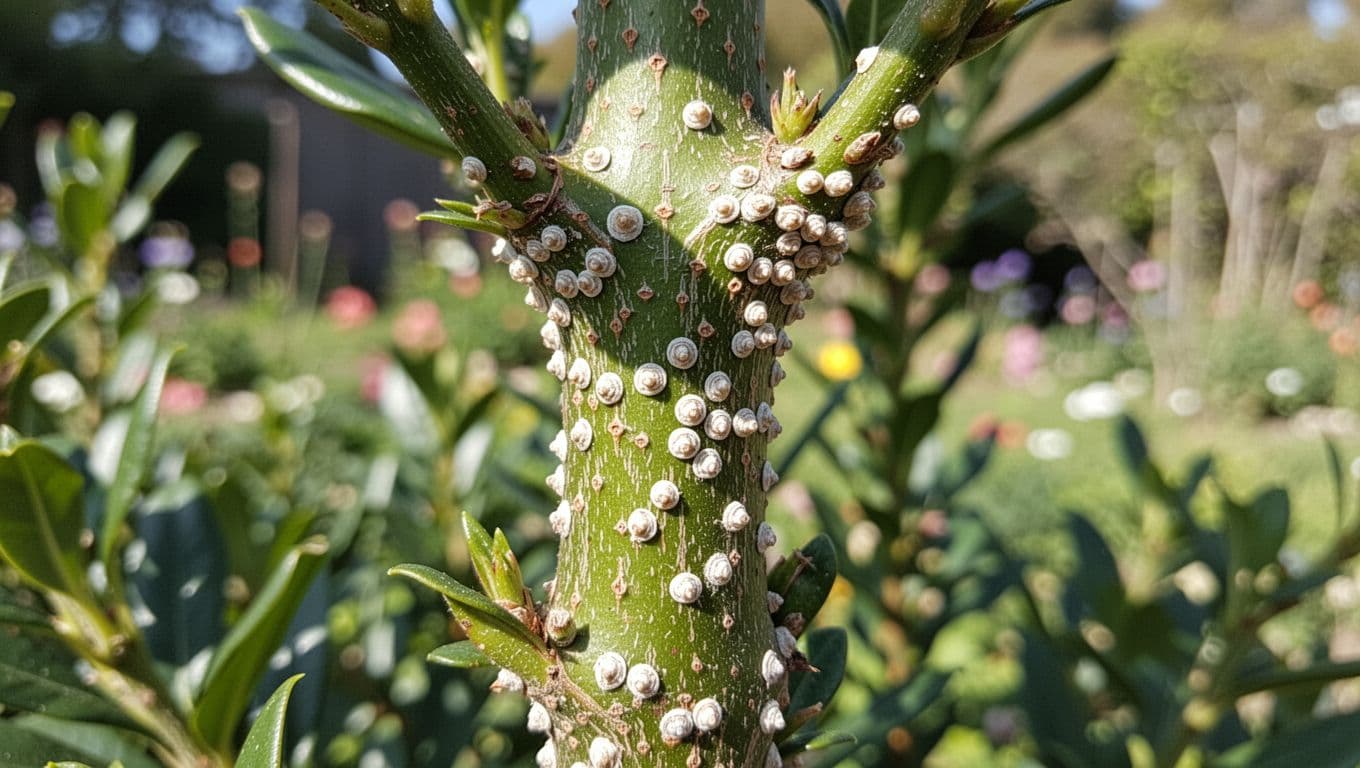
A quick inspection tells you a lot. Look closely at the undersides of leaves, lower twigs, and shaded interior branches. If you can gently scrape a cover with your fingernail, the insect underneath may come away with it. If the plant has many older scales, the covers may stay behind even after the insect is gone.
Here's a simple field check for homeowners:
| Where to look | What you may see | What it means |
|---|---|---|
| Leaf undersides | White specks or narrow white covers | Active male scale or young infestation |
| Stems and twigs | Brown, oyster-shaped bumps | Mature female scale |
| Lower inside canopy | Yellowing leaves and thin growth | Long-term feeding stress |
| Twig tips | Dieback or bare ends | Heavy feeding damage |
The damage often starts with yellow stippling on leaves. After that, leaves drop early, stems thin out, and the shrub loses the dense shape that makes foundation plantings look neat. In severe cases, the plant looks patchy from the street and bare from the porch.
Treat the crawler stage, not the armored shells. The shells are the symptom, but the moving young insects are the target.
Why foundation shrubs in Atlanta get hit harder
Foundation plantings sit in a tough spot. They get reflected heat from brick, stone, or siding. They also deal with dry soil under rooflines and roots that compete with turf or nearby trees. All of that stress makes shrubs less able to recover from scale feeding.
Atlanta weather adds another layer. Warm winters can help some scale populations survive. Long, humid summers give them time to build back fast if the infestation is missed early. That is why euonymus scale in Atlanta often becomes a repeat problem instead of a one-time event.
Crowded beds make it worse. Dense shrubs block airflow, hide stems, and make it hard to spray thoroughly. Heavy mulch piled against trunks can also trap moisture near the crown and weaken the plant over time. A cleaner bed edge, right-sized mulch depth, and regular inspection all help.
If your foundation shrubs are part of a bigger property care routine, professional residential landscaping services can help keep the bed area open, clean, and easier to inspect. That kind of upkeep does not replace pest control, but it does help shrubs stay stronger.
A practical IPM plan for Atlanta homeowners
Integrated pest management works best because it tackles the pest and the plant stress at the same time. For residential landscapes, the steps need to be simple, timed well, and realistic.
Start with a close inspection
Check your shrubs every few weeks during the growing season. Focus on the inside canopy, lower stems, and leaf undersides. Use a white card or your hand to make the white male covers easier to see.
If one shrub has scale, inspect the nearby ones too. Foundation beds often share the same conditions, so the pest usually does not stop at one plant.
Prune and clean up the worst growth
Remove dead twigs and the most heavily infested branches first. That lowers the scale load and opens the shrub for better spray coverage. Pruning also helps air move through the plant, which makes the site less friendly to repeat infestations.
Do not overcut the plant. Euonymus shrubs can look worse before they look better if you strip too much at once. Stick with selective thinning and deadwood removal.
Treat when crawlers are active
The best treatment window is when the young crawlers hatch. At that stage, they move before building their shells. Sprays and oils work far better then than they do on mature, armored covers.
Use a product labeled for scale on ornamental shrubs, and follow the label exactly. Horticultural oil is a common choice for many homeowners. Some infestations call for a systemic option, but only if the label allows it and the shrub can handle the treatment.
Heat matters in Atlanta. Avoid spraying stressed shrubs in the hottest part of the day or when temperatures are high. Early morning or a cooler stretch of weather is safer for the plant.
Follow up and protect the plant
Scale often has more than one hatch in a long warm season. That means a single treatment can miss part of the problem. Severe infestations may need repeat treatments, especially if crawlers keep appearing later in summer.
Healthy shrubs recover better, so water deeply during dry spells. Keep mulch a few inches away from stems. Also avoid heavy nitrogen fertilizer, since fast, soft growth can attract more pests.
A short follow-up checklist helps:
- Recheck treated shrubs in two to three weeks.
- Look for fresh crawlers on new growth.
- Prune any branches that stay heavily covered.
- Repeat treatment only if new activity appears.
- Keep watching through late summer and early fall.
Seasonal timing for Atlanta yards
Timing matters as much as product choice. In Atlanta, euonymus scale activity often stretches across a long season, so inspections need to start early and continue through warm weather.
| Season | What to look for | Best move |
|---|---|---|
| Late winter to early spring | Old scale covers, twig dieback, weak growth | Prune dead wood and plan ahead |
| Late spring | New white crawlers on leaves and stems | Treat while crawlers are active |
| Mid to late summer | Fresh spots, thinning, and new yellowing | Reinspect and repeat if needed |
| Fall | Stress from heat and dry soil | Water deeply and clean up beds |
Spring is the best time to catch the first wave. Summer follow-up matters because Atlanta stays warm long enough for scale to rebound. Fall is the time to help the shrub recover and set it up for winter.
If you only inspect once a year, you can miss the crawler window completely. That is the window that saves the most plant material. By the time the stems are crusted with shells, the shrub has already taken a beating.
Conclusion
Atlanta foundation shrubs can hide euonymus scale until the damage is obvious. Once you know the signs on leaves and stems, the pest is much easier to spot early.
A good plan is simple, inspect often, prune the worst growth, treat during the crawler stage, and follow up when needed. In a warm city like Atlanta, repeat checks matter just as much as the first treatment.