Why New Construction Lawns Struggle in Metro Atlanta
You can water a brand-new lawn every day and still watch it thin out, yellow, or turn to mud. That frustrates a lot of Metro Atlanta homeowners, especially when the yard looked fine the day they moved in.
The problem usually starts before the first blade grows. New construction lawns often sit on compacted clay, thin topsoil, and rough grading, then summer heat and fast storms finish the job.
If your yard feels soggy in one spot and baked dry in another, the issue is probably bigger than watering. The real story starts with the soil under the grass.
Why new construction lawns start behind
Most new home sites are built on disturbed ground. Topsoil gets scraped away, heavy machines pack the subsoil, and the finish grade gets rushed before sod or seed goes down.
That leaves the grass with very little to work with. Roots need loose, air-filled soil. Instead, they often land on hard clay, buried construction debris, or a thin layer of soil that dries out fast.
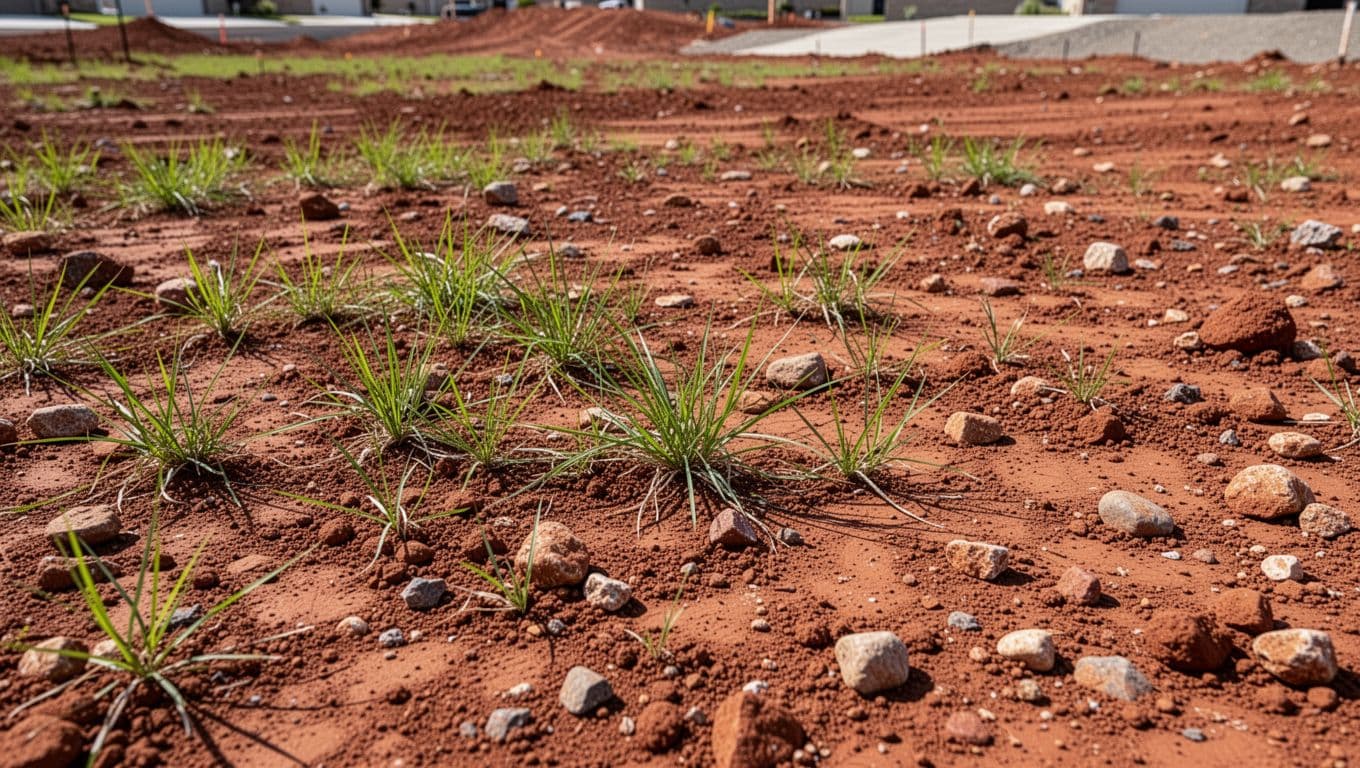
Builder landscaping can make the problem worse. Sod is sometimes laid over soil that has not been loosened, and seed is sometimes spread before the yard is truly ready.
The lawn may look finished from the street, but the root system is still weak. That is why the grass can green up early, then fade as soon as the weather turns hot or dry.
Irrigation coverage adds another wrinkle. New systems often miss edges, overspray sidewalks, or run for short cycles that keep the surface damp but never soak the root zone.
In other words, the lawn may look watered while the roots stay stressed.
Metro Atlanta weather turns small problems into bigger ones
Metro Atlanta gives new lawns a rough mix of heavy clay, high summer heat, and sudden downpours. Each part of that pattern pushes turf in a different direction.
Clay soil holds water tightly when it is wet, then turns brick-hard when it dries. That means a yard can stay muddy after one storm and crack dry a few days later. Grass roots hate both extremes.
Summer heat adds another layer of stress. Young turf loses moisture fast, especially when the wind picks up or the lawn sits in full sun. A fresh install that looks healthy in April can struggle hard by July.
Stormwater makes grading problems show up fast. On a slope, water runs downhill before it can sink in. Near downspouts, driveways, or sidewalk edges, the runoff can cut channels, wash seed away, and leave bare patches behind.
If water runs off before it soaks in, more watering won't fix the lawn. The soil has to accept water first.
Shade can create its own trouble. A backyard under trees may stay cooler, but it also dries slowly and gets less direct light. That makes it harder for grass to thicken, especially in spots that already received poor soil prep.
Signs your lawn is failing for more than one reason
When a new lawn struggles, the clues usually show up in more than one place. Thin grass is only part of the story.
Look for these signs around your yard:
- Footprints stay visible after you walk across the grass.
- Water beads up or runs off instead of soaking in.
- Sod seams lift, curl, or separate at the edges.
- Bare spots cluster near downspouts, slopes, or driveway edges.
- Grass turns gray-green first, then tan, during hot afternoons.
- A screwdriver or shovel hits hard resistance in the top few inches.
If several of these show up together, the lawn is probably dealing with compaction, drainage problems, and weak rooting at the same time.
That matters because the fix changes with the cause. Brown grass from drought needs a different response than soggy grass with rotten roots. A patch that fails near a gutter line may need grading work, while a section that stays thin across the whole yard may need soil improvement.
Mowing can make a weak lawn look worse, too. Cutting too short removes the leaf surface the grass uses to recover. On a new yard, that slows rooting and leaves the soil exposed to more heat.
The fastest way to sort out the problem is to stop looking only at the blades. Check the soil, water pattern, and slope around the lawn. The grass is usually telling you where the real trouble started.
How long sod and seed really need
A lot of new homeowners expect quick results. That is understandable, but new turf needs time to knit into the ground.
Sod looks like the fast answer, yet even sod needs roots before it can handle traffic or heat. Seed takes longer to fill in, but it can settle better when the soil is ready.
Here is a simple way to think about the recovery timeline:
| Lawn type | Early progress | Typical recovery window | Main risk |
|---|---|---|---|
| Newly laid sod | Color improves first, roots come later | 2 to 4 weeks for rooting, 6 to 8 weeks to feel settled | Edges drying out, seams separating |
| Sod patch repair | Fresh growth appears in small spots | 4 to 12 weeks | Uneven watering, foot traffic |
| Seeded lawn | Tiny sprouts show first | 7 to 21 days for germination, 3 to 6 months for fuller cover | Washout, heat stress, birds |
The biggest mistake is expecting the calendar to do the work. A yard installed in heavy clay, during hot weather, or on a slope will take longer.
A lawn can also look good before it is actually strong. That is common with sod. The top may stay green while the roots lag behind below the surface.
If the site was graded hard or water keeps running off, add more time. Recovery slows down when the lawn never gets a full chance to settle into the soil.
What actually helps a new construction lawn recover
The fix starts with the ground, not the grass. If the soil stays tight or the water keeps moving the wrong way, the lawn will keep struggling.
First, solve drainage and compaction. Low spots may need regrading. Dense clay may need aeration later, once the turf is established enough for equipment. Thin soil sometimes needs compost or topsoil added before the grass can hold moisture and root properly.
Next, water in a way that reaches the root zone. Short daily watering keeps the surface damp, but it also teaches roots to stay shallow. Deep, less-frequent watering is usually better once the turf is anchored.
Mow carefully. Keep blades sharp, avoid scalping, and never take off too much at once. New turf needs leaf surface to feed the roots. If the lawn is still loose, wait until it resists a gentle tug before mowing it aggressively.
The right mowing schedule helps after the lawn is stable. A regular visit from professional residential lawn mowing in Atlanta keeps the grass at a healthy height while it fills in.
Soil testing helps too. Many new lawns get fertilizer before anyone checks the pH or nutrient balance. That can waste money and push weak grass harder than it should go.
For damaged sections, spot repair often beats starting over. Small bare areas can be patched with matching sod or overseeded once the grade and drainage are fixed. If the water keeps washing across the yard, patching alone won't hold.
Conclusion
New construction lawns in Metro Atlanta fail for a few predictable reasons. The soil is compacted, the grading is often rushed, and the weather pushes every weak spot harder.
Once you see whether the real problem is drainage, compaction, watering, or mowing, the yard gets easier to manage. That first year is usually about repair and rooting, not perfect curb appeal.
A lawn can recover in this climate, but it needs better soil conditions and steady care that fits the site. When the grass keeps struggling after regular watering, the answer is usually hiding below the surface.