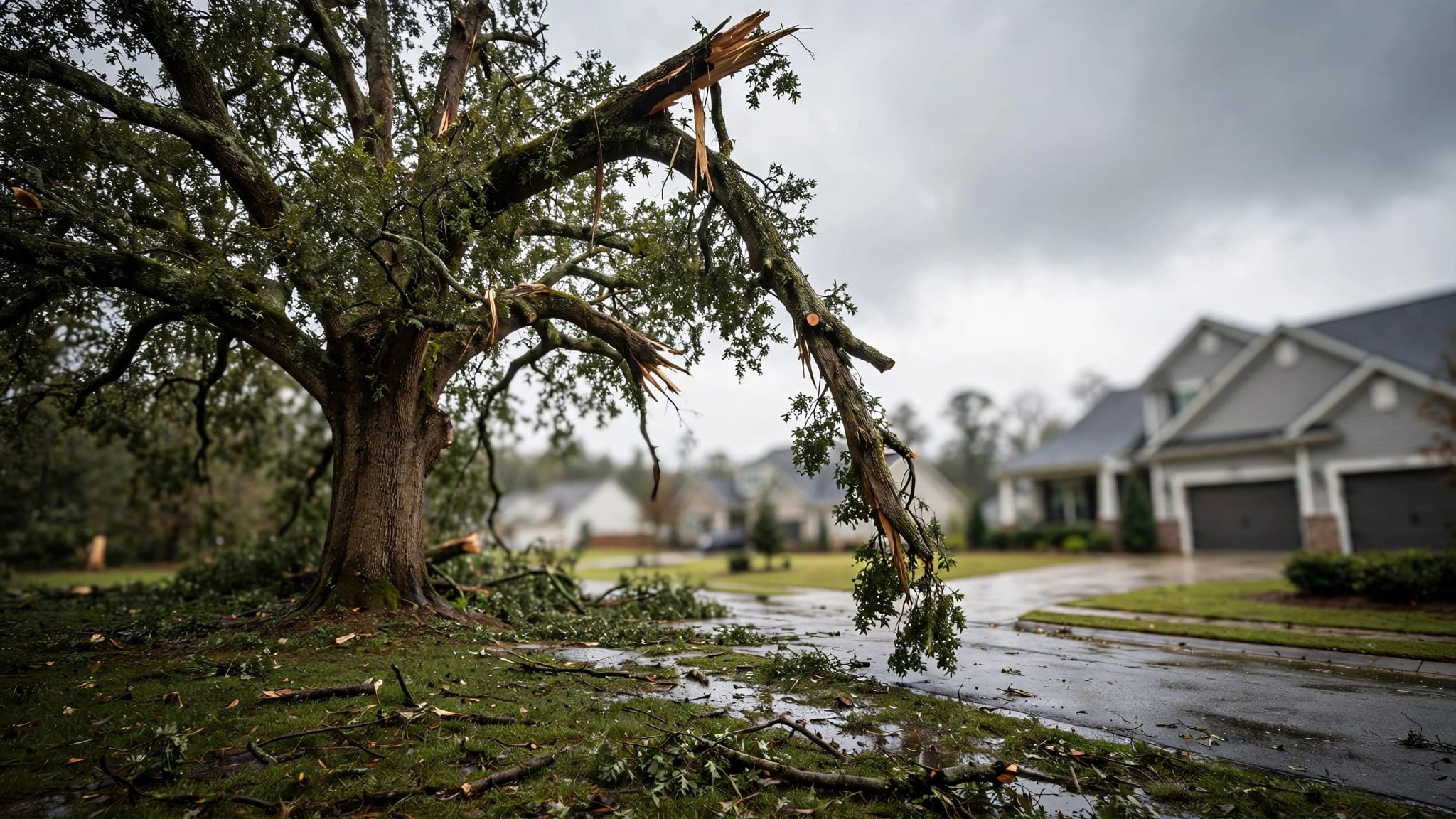
Why Mushrooms Pop Up in Atlanta Lawns After Rain
A rainy week in Atlanta can make mushrooms appear almost overnight. One day the yard looks normal, and the next day small caps are poking through the grass like surprise visitors.
That sudden burst is usually tied to moisture , humidity , shade, and the organic material already tucked into the soil. In most cases, the mushrooms are not the main problem. They are a sign that the lawn stays damp long enough for fungi to fruit.
Why rain wakes up mushrooms in the lawn
Mushrooms are the visible part of a fungus that already lives underground. The roots are not the issue here, because the fungus itself is often spreading through soil, mulch, dead roots, or buried wood long before you see anything above ground.
Rain gives that hidden fungus the conditions it needs. The soil softens, air stays moist, and the fungus sends up mushrooms to release spores. That is why mushrooms in lawn areas often show up after a good soaking, then fade when the weather dries.
Atlanta weather makes this even more likely. Warm temperatures, high humidity, and regular summer rain create a long wet window. Lawns that already hold water tend to stay damp even longer.
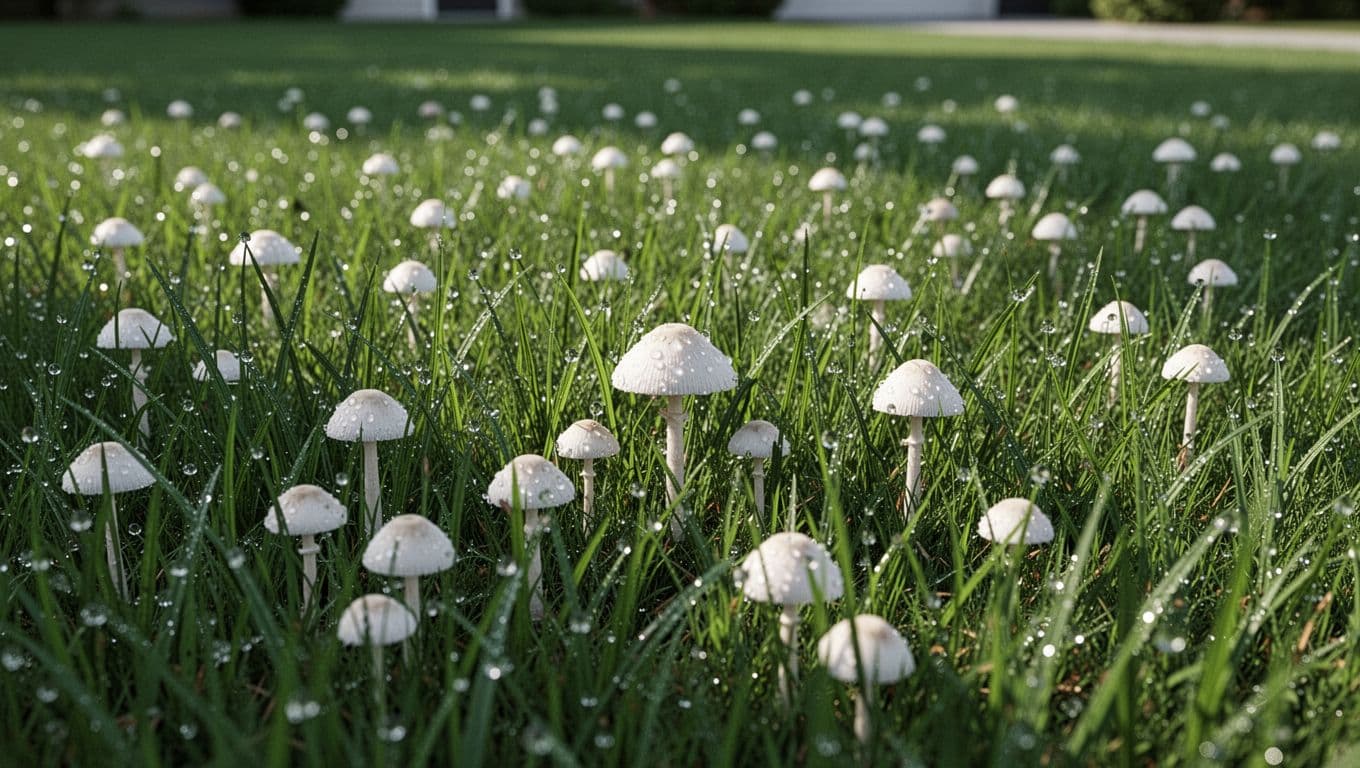
After rain, mushrooms often look sudden, but they rarely are. The fungus has usually been there for days, weeks, or longer.
Atlanta lawn conditions that make mushrooms common
Some yards in Metro Atlanta are more likely to grow mushrooms than others. Shade is a big reason. Grass that grows under trees, near fences, or beside buildings dries more slowly after rain.
Clay soil adds another layer. A lot of Atlanta-area soil holds water instead of draining it fast. When that happens, the surface stays wet, and fungi have more time to spread and fruit.
Decaying material also feeds the process. Buried stumps, old roots, wood chips, and bits of construction debris can all break down under the surface. Mushrooms love that kind of food source.
Excess thatch can matter too. Thatch is the layer of dead grass and stems between the soil and the green blades. A thin layer is normal, but a thick one traps moisture and blocks airflow.
A few conditions usually show up together:
- Heavy shade keeps the ground damp longer.
- Clay soil slows drainage.
- Old roots or buried wood give fungi fuel.
- Thick thatch holds water near the surface.
- Overwatering keeps the lawn wet when it does not need it.
When several of those factors line up, mushrooms can appear again and again after rain. The rain is the trigger, but the lawn conditions are the real reason they keep coming back.
Are mushrooms in the yard harmful?
Most lawn mushrooms are harmless to the grass. They usually do not damage healthy turf in a direct way. In fact, they often help break down organic matter in the soil.
That said, harmless to the lawn does not always mean harmless to people or pets. Some wild mushrooms are poisonous. You should not let children or dogs eat any mushroom from the yard, even if it looks small or ordinary.
If a mushroom appears after rain, the lawn is usually telling you it stays wet too long.
The safest approach is simple. Pick mushrooms only if you need to remove the appearance, wear gloves, and keep them out of reach of kids and pets. If a pet or child eats one, call a vet, poison control, or a doctor right away.
You should pay closer attention when mushrooms appear in these spots:
- near play areas
- where dogs spend time
- around buried stumps or old mulch
- in low spots that stay soggy
- under dense shade that never dries out
A few mushrooms after rain are common. Repeated patches in the same place point to a moisture or decay issue under the surface.
How to keep mushrooms from coming back
The best fix starts with the cause, not the caps. Fungicides are rarely the answer because they do not remove the decaying wood, compacted soil, or excess moisture that keeps the fungus active. They may reduce visible growth for a short time, but the mushrooms can return.
Focus on the lawn conditions instead.
- Improve drainage . Fill low spots, correct grading problems, and reduce standing water after storms.
- Water less often . Skip irrigation when the lawn has already had enough rain. Water early in the day only when the grass needs it.
- Reduce thatch . Dethatch if the layer is thick and spongy. Too much thatch traps moisture and feeds fungus.
- Increase sunlight where possible . Trim low branches and thin dense shade. Even a little more light can help the lawn dry faster.
- Remove buried wood and debris . Old roots, stumps, and construction scraps are common mushroom fuel.
- Aerate compacted soil . Compaction slows drainage and keeps roots and surface growth in a wet environment.
- Keep up with mowing . Regular mowing helps the lawn dry more evenly and keeps weak growth from piling up.
If the grass around the mushrooms feels soft, soggy, or sunken, look deeper. That spot may have a drainage problem, a decaying stump, or a buried piece of lumber under the soil.
Consistent lawn care also makes a difference. A reliable lawn maintenance for Atlanta homes can help keep turf trimmed, debris cleared, and problem areas easier to spot before they turn into repeated mushroom patches.
When mushrooms point to a bigger lawn issue
A few mushrooms after rain are normal. A pattern of recurring growth is a clue.
Watch for areas that stay wet long after the rest of the yard dries. Those spots often have compacted soil, poor grading, hidden wood, or dense shade. If you keep seeing mushrooms in the same place, the lawn is trying to tell you something.
Signs worth checking include:
- water pooling after storms
- grass thinning in the same patch
- a soft or bouncy feel underfoot
- a musty smell in one area
- a ring of mushrooms that returns after each rain
These signs often mean the soil is holding too much moisture or feeding fungi with decay below the surface. In that case, the mushrooms are only the visible part of a larger maintenance issue.
Conclusion
Mushrooms after rain are common in Atlanta because the weather, soil, and shade often give fungi exactly what they want. Moisture wakes them up, humidity keeps them alive, and buried organic matter feeds them.
Most of the time, they are a sign of a wet or decaying spot in the lawn, not a disease that is attacking the grass. Keep kids and pets away from wild mushrooms, then focus on drainage, sunlight, mowing, and moisture control. That is the real path to fewer surprise clusters after the next Atlanta rain.