Atlanta Ligustrum Whitefly Guide for Sticky Black Leaves
If your ligustrum leaves feel sticky and look dusty black, whiteflies are a likely culprit. These small pests feed on the undersides, leave behind honeydew , and that sticky film grows a black coating called sooty mold.
Atlanta's warm spring weather and long warm season can keep the cycle going longer than many homeowners expect. Once you know what to look for, you can catch it early and keep the shrub from turning into a glossy mess.
Start under the leaves, because that's where the problem usually begins.
Why ligustrum leaves turn sticky and black
Ligustrum, often called privet, is a common hedge plant around Atlanta. Whiteflies like it because the leaves are dense, shaded, and easy to feed on.
The insects sip sap from the plant and excrete honeydew. That honeydew lands on leaves below, then it feeds a black fungus called sooty mold. The mold sits on the leaf surface, so the plant usually looks dirty before it looks sick.
A sticky hedge can also attract ants. They often show up where honeydew is present. If you see ants crawling through the shrub, that is another clue that something is feeding underneath the leaves.
The black film is a symptom, not the insect. Whiteflies live underneath the leaf, and the mold grows on their sticky waste.
If you rub a leaf and black residue comes off on your fingers, that still points to sooty mold. The real fix is to deal with the whiteflies first.
How to spot a ligustrum whitefly infestation
Whiteflies are easy to miss until the damage starts to stack up. A quick check under a few branches can tell you a lot.
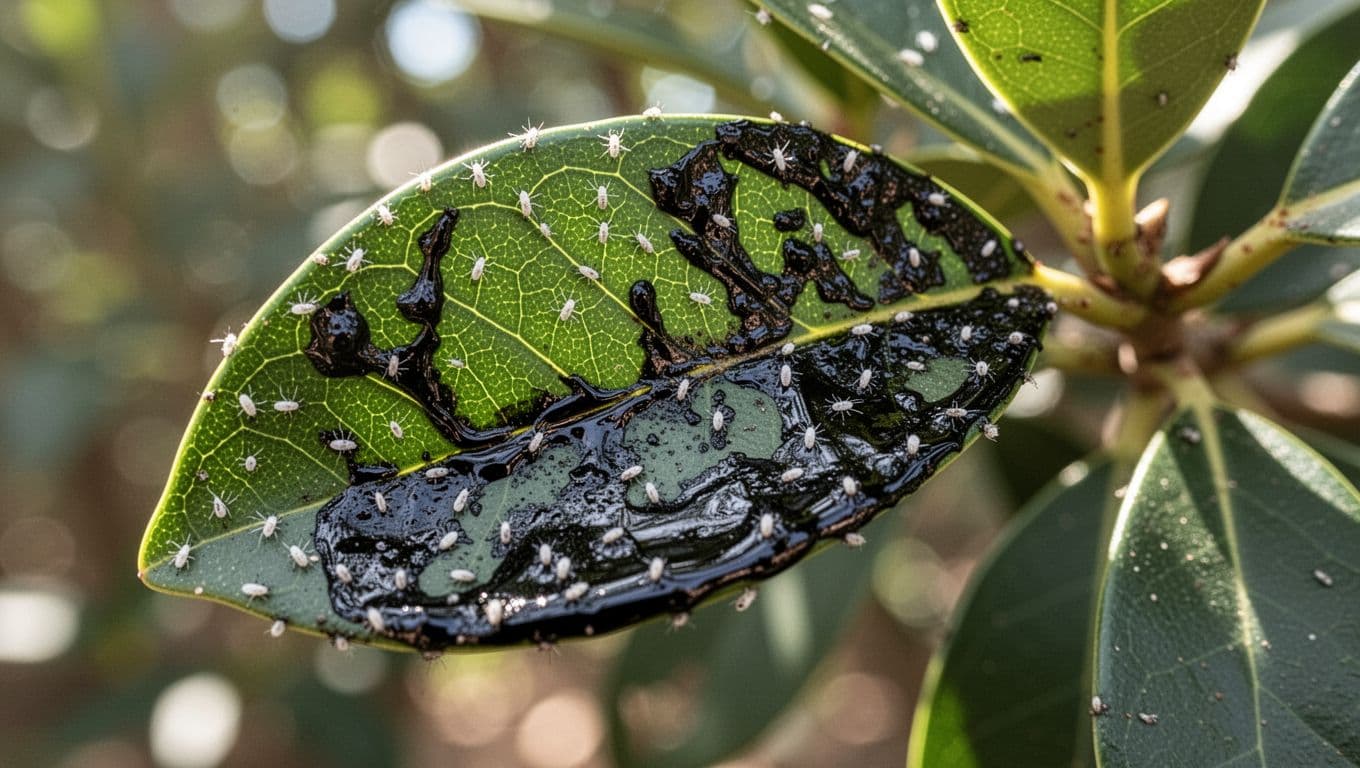
Try a simple inspection before you spray anything. Tap a branch over a sheet of white paper or your hand, then watch for tiny white insects lifting off.
| Sign | What you may see | What it means |
|---|---|---|
| Sticky sheen | Leaves feel tacky or shiny | Honeydew is present |
| Black coating | Dark film on the top side of leaves | Sooty mold is feeding on the honeydew |
| White specks | Tiny insects flutter up when shaken | Adult whiteflies are active |
| Pale bumps | Small flat spots on the underside | Nymphs are feeding there |
| Yellowing or thin growth | Dull leaves, leaf drop, curled tips | The shrub is under stress |
The underside matters more than the top. Whiteflies stay close to the leaf surface, and their immature stages can look like tiny pale scales.
Check the leaf undersides first
Flip several leaves from different parts of the shrub. Focus on new growth, inner branches, and lower areas near the soil line.
Whitefly nymphs often sit still, so they blend in with the leaf. Adults may fly up in a small cloud when the branch is shaken. That quick burst is easy to miss, but it tells you the pest is active.
Watch the plant, not just the bug
A healthy ligustrum can handle some feeding. A stressed one shows damage much faster.
Look for thin foliage, curled leaves, and a hedge that no longer looks full. Drought stress, poor drainage, root damage, and heavy pruning all make the plant easier to weaken. In other words, whiteflies are more trouble when the shrub is already off balance.
Atlanta weather and the best time to inspect
Atlanta gives whiteflies a long runway. Warm springs, humid summers, and mild falls let them build fast on ligustrum.
Check shrubs closely from March through May, when tender new growth appears. Then check again in late summer and early fall, when warm weather often lingers. If winter has been mild, start your inspections even earlier.
Dense hedges are the worst place to miss an infestation. They hold moisture, block airflow, and protect the underside of the leaves. That creates a quiet pocket where whiteflies can keep feeding.
Shade also helps them hide. Foundation plantings, fence lines, and hedges near brick or siding often need closer attention because heat and shelter stay trapped there.
One more timing tip matters. Inspect after dry spells and after heavy rain. Both can stress ligustrum, and stressed plants show pest damage sooner.
Safe homeowner steps that help right away
Homeowners can lower the pressure without harsh sprays or risky shortcuts.
- Inspect several branches each week, especially new growth.
- Rinse the undersides with a steady spray of water, then check again a few days later.
- Prune the worst tips if the hedge is crowded, then bag the clippings.
- Watch for ants around the stems and base, because they feed on the honeydew and protect the infestation.
- Skip heavy fertilizer for now, and water deeply during dry weather instead of shallowly every day.
- Use insecticidal soap or horticultural oil only if the label fits ligustrum, and spray on cooler mornings.
A strong rinse does not cure a heavy outbreak, but it lowers the pest load. That makes follow-up treatment work better.
Keep spray timing in mind. Atlanta heat can be rough on stressed leaves, so avoid the hottest part of the afternoon. If the plant is already wilted, wait for a cooler day.
What treatment can realistically fix
Whitefly control on ligustrum works best when you target the young stages. Adults fly off fast, but the nymphs stay on the leaf and are easier to reach.
Soaps and oils work by contact. That means coverage matters more than brand names or strong pressure. You need to hit the undersides, and you often need more than one round. Eggs and young nymphs hatch in waves, so a single treatment rarely closes the case.
The black sooty mold will not disappear overnight. Once whiteflies stop feeding, rain and washing will slowly clear the film from newer leaves. Older leaves may stay stained for a while, even after the pest is gone.
Clean-looking leaves do not always mean the problem is over. The undersides can still hold whiteflies after the top looks better.
Broad-spectrum sprays can cause trouble if they wipe out helpful insects without solving the source. Use products that fit the job, follow the label, and avoid guesswork. If the hedge is already drought-stressed or yellowing, keep the treatment gentle.
Realistic expectations help here. A badly infested ligustrum may look better in a few weeks, but full recovery can take longer. The plant needs time to push out clean new growth.
When professional help makes sense
Professional help makes sense when the shrub is tall, dense, or part of a long hedge. It also helps when the same whitefly problem returns every year.
A pro can reach the underside of the leaves, time the treatment around Atlanta weather, and check nearby shrubs that may be feeding the cycle. That matters when ligustrum is part of a front-yard screen or a property line hedge that affects curb appeal.
If the infestation comes with overgrown beds, poor cleanup, or general yard upkeep, residential lawn and landscaping services can keep the rest of the property in shape while the shrubs recover. That way, the hedge is not fighting the pest problem alone.
Call for help sooner if the leaves are dropping fast, the black coating is spreading across multiple shrubs, or your own treatments are not reaching the undersides. Those are signs that the problem is bigger than a quick rinse.
Conclusion
Sticky black ligustrum leaves usually point to two things working together, whiteflies underneath and sooty mold on top. Once you know that pattern, the problem gets easier to spot and easier to manage.
Atlanta homeowners get the best results by checking early in spring, watching again in late summer, and treating the shrub before the whole hedge turns sticky. Washing, pruning, and careful product use can help a lot when the infestation is still small.
When the problem keeps coming back, regular inspection matters more than stronger sprays. The sooner you find the whiteflies, the less black coating you have to fight later.