Atlanta Camellia Leaf Gall Guide for Swollen Spring Leaves
Swollen, pale camellia leaves in spring can look alarming, especially after a wet Atlanta winter. In many yards, the problem is camellia leaf gall , and it often looks worse than it is if you catch it early.
The trick is spotting it before the leaves turn white and fuzzy with spores. Once you know the signs, you can trim, clean, and thin the plant with confidence instead of guessing or cutting too much.
What camellia leaf gall looks like in Atlanta spring
Camellia leaf gall shows up most clearly on tender spring growth. The leaves look thick, puffed up, pale green, yellow-green, or almost white, and they may twist or fold in odd ways. Some feel fleshy, almost like they grew too fast and lost their shape.
Atlanta weather sets the stage for it. Cool nights, mild days, and spring rain give the fungus a good opening on new growth. That is why the problem often jumps out in March and April, right when camellias are pushing fresh leaves.
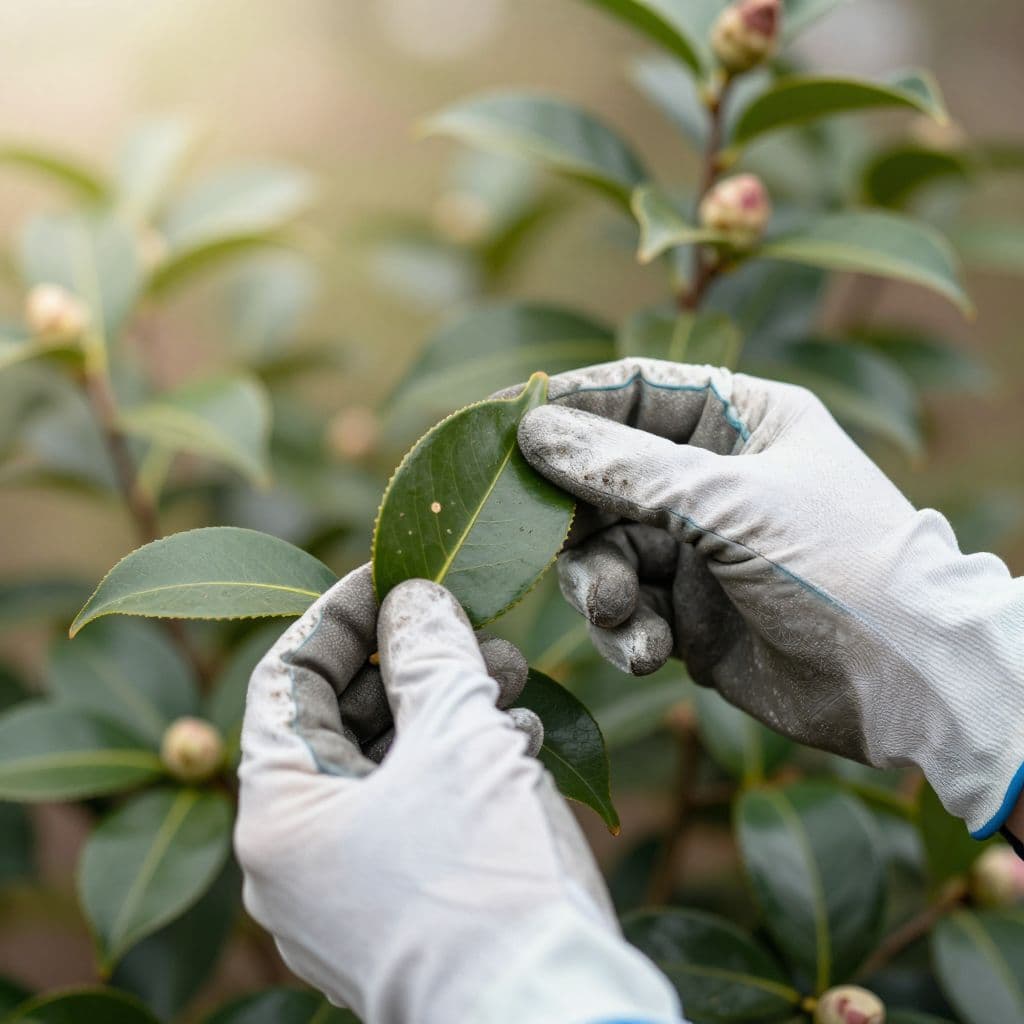
In many cases, the shrub still looks healthy overall. The galled leaves are the odd part, not the whole plant. That is why this issue is usually more unsightly than dangerous when you deal with it promptly.
The fungus attacks young tissue, then the plant tissue swells around it. Later, the galls can produce a white coating of spores. Once that stage starts, the plant has already put energy into the damaged growth.
How to tell it from other spring problems
Camellias can show several kinds of stress at the same time, so a close look matters. A swollen leaf is not the same as a yellow leaf, a burned leaf, or a leaf with insects on it.
Use this quick comparison when you are checking your shrubs:
| Problem | What it looks like | Clue that helps you tell it apart |
|---|---|---|
| Camellia leaf gall | Thick, swollen, pale, twisted new leaves | The whole leaf looks puffed up and distorted |
| Scale | Small bumps or waxy spots on stems and leaves | Leaves keep their shape, but the plant may feel sticky |
| Nutrient issues | General yellowing or pale color | Many leaves are affected, not just a few swollen shoots |
| Frost damage | Brown, blackened, or scorched tissue | Damage looks dry or burned after a cold snap |
| Normal new growth | Soft, light green flush | Leaves open evenly and keep a normal shape |
The biggest clue is shape. Camellia leaf gall changes the leaf itself , while scale usually sits on the surface and nutrient trouble changes color first. Frost injury leaves a browned edge or a scorched patch, not a thick, puffy leaf.
If the leaf is swollen before it turns white, you still have time to act fast.
Normal spring growth can look tender and light green, so do not panic over every soft new leaf. Instead, look for leaves that stay misshapen, feel thicker than the rest, or seem to balloon instead of unfurl.
What to do when you spot swollen leaves
Act early if you see gall forming on spring camellia growth. The goal is to remove the damaged tissue before the white spore coating appears.
- Pick off the swollen leaves as soon as you notice them.
If the leaf is still green and soft, removal is simple. A quick hand-pick often works on small outbreaks. - Prune only the affected shoot if the distortion has spread.
Use clean pruners and cut back to healthy tissue. Do not shear the whole shrub just because a few tips look ugly. - Bag or gather the removed growth right away.
Leave it under the bush and the problem lingers there. Clearing debris keeps the area cleaner and lowers the chance of repeated spread. - Check the plant again a week later.
A second pass catches new flushes that were hidden the first time.
The best window is early spring, while the galls are still green and before the white spore layer shows up. If you wait until the growth turns powdery, you have lost the easiest cleanup stage.
Pruning should stay selective. Camellias set buds for later bloom, so a hard cut can remove more than you planned. A light correction is better than a full haircut.
Keeping camellias cleaner next spring
Good airflow helps camellias dry faster after rain. That matters in Metro Atlanta, where spring moisture can hang around for days. When branches crowd each other, wet leaves stay wet longer, and that gives the fungus more time to work.
After the shrub finishes blooming, you can thin only the crowded growth that blocks air and light. Remove crossing branches, old weak stems, and interior twigs that keep the plant dense. Save heavier shaping for after bloom, so you do not strip away the next round of buds.
Late winter and early spring are the best times to inspect the shrubs. Walk the yard after a rainy stretch and look closely at fresh growth. A quick check every week or two can catch the problem before it spreads through the whole flush.
Cleanup around the base matters too. Rake up fallen leaves, old galled growth, and other debris that sits under the plant. If the bed has become crowded or messy, a fresh layer of mulch and a tidy edge make future inspections easier, and professional residential landscaping and mulch services can help when the whole bed needs a reset.
Water at the soil line when you can. Wet foliage dries slower, and damp plants stay under stress longer. A few small habits make the camellia less welcoming to repeat problems.
When the damage needs a closer look
A few swollen leaves in spring are common. A shrub covered in distorted growth calls for more attention.
Watch for these signs:
- The same shrub shows heavy gall every year.
- Most of the new growth is twisted or pale.
- You also see sticky residue, black sooty film, or crawling insects.
- The leaves turn brown and burnt after a cold snap.
- The whole plant looks weak, not just the newest tips.
Those clues point to more than one issue, or to a plant that needs better spacing, drainage, or pruning. Scale can ride along with gall. Nutrient stress can also make the shrub look pale and tired. Frost damage is different again, because the tissue looks burned instead of swollen.
If you are unsure, look at the newest leaves first. Gall changes their shape. Scale leaves the shape alone. Frost burns the edges. Nutrient problems spread a dull color across many leaves.
A camellia that looks rough in spring can still recover well. The key is to catch the gall early, clean it out, and keep the shrub open enough to dry after rain.
Conclusion
Swollen camellia leaves in Atlanta usually show up when spring weather turns cool and wet. That is why camellia leaf gall is often most visible right as new growth appears.
If you spot it early, remove the affected leaves, prune only where needed, and clean up the fallen debris. After that, better airflow and regular spring checks can keep the next flush cleaner and easier to manage.
A camellia that looks misshapen in April does not have to stay that way. Careful timing makes a big difference.