Atlanta Loropetalum Decline: Fix Leggy Purple Shrubs
A purple loropetalum can look full one year and stringy the next. In Atlanta, that shift often shows up after hot, humid summers, a winter cold snap, or years of quick shearing.
If your shrub is bare in the middle, it doesn't always mean the plant is dying. Sometimes the problem is old pruning, bad light, or clay soil that stays wet too long. The real challenge is telling a shape issue from true loropetalum decline .
Why Atlanta loropetalum gets leggy or declines
Loropetalum likes well-drained soil, steady moisture, and enough sun to hold rich purple color. Atlanta yards often give it partial sun, heavy clay, and uneven watering instead. That mix can push a shrub into slow, weak growth.
Shade is a common reason for legginess. Many shrubs are planted under trees, beside tall fences, or between houses where they get filtered light. The plant reaches for the sun, so the stems stretch and the lower branches thin out.
Clay soil adds another layer of stress. After heavy rain, water can sit around the roots. Then a hot week arrives, the top of the bed dries fast, and the plant goes from soggy to thirsty. That swing is rough on roots.
Pruning habits matter too. If loropetalum gets clipped into the same round shape every season, the outside stays green while the inside loses light. The result is a shell of leaves around a bare center.
Cold snaps can also leave a mark. Atlanta winters are usually mild, but one hard freeze can burn tender tips and make spring growth uneven. A shrub may leaf out again, yet still look thin and tired.
Spot the difference between normal legginess and true decline
Some bare wood is normal on older loropetalum. A healthy plant can have a leafy top and a more open base, especially if it has been shaped hard for years. True decline looks different. The whole shrub starts to weaken, not just the middle.
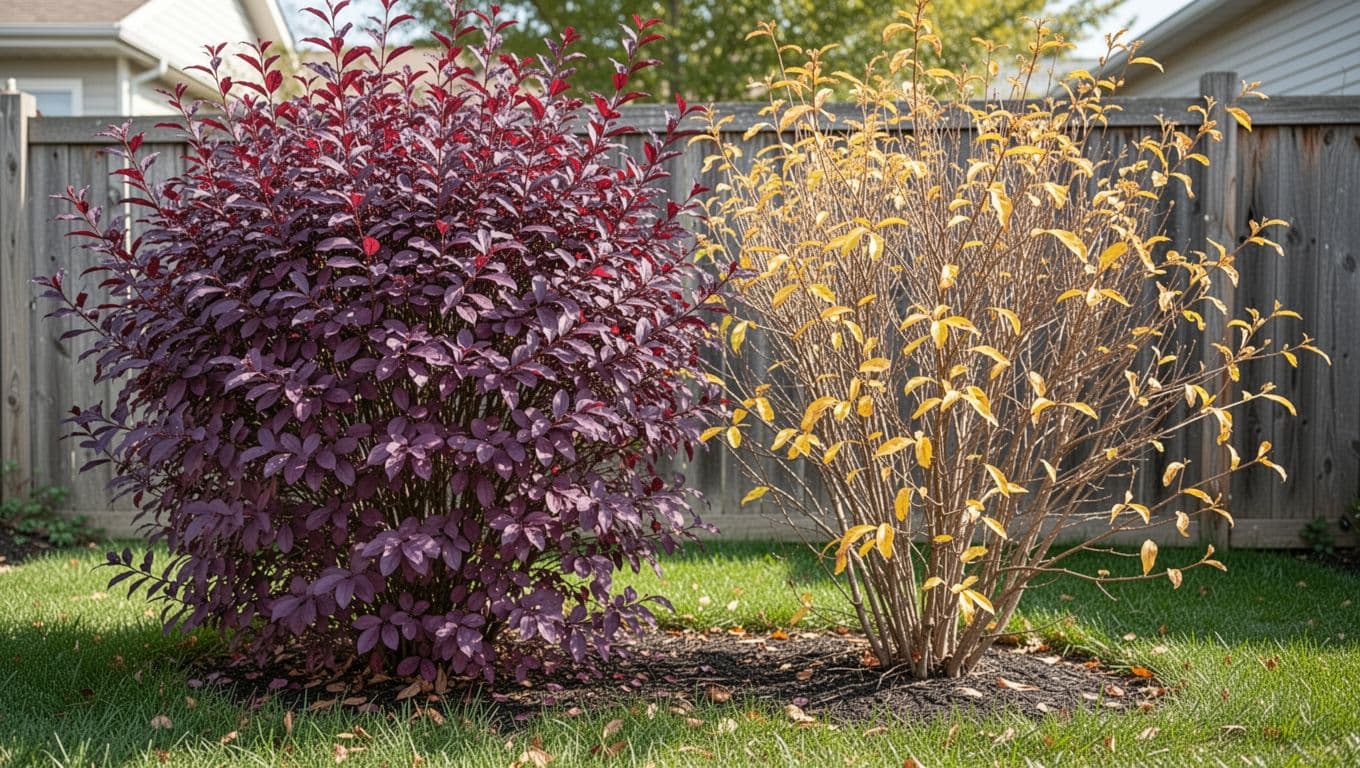
If the top is green and the base is bare, pruning or shade may be the main issue. If the whole plant looks weak, check the roots and soil first.
Use the signs below to sort out what you're seeing.
| What you see | What it usually means |
|---|---|
| Green tips, bare center | Old growth, shade, or repeated shearing |
| Strong bloom, weak shape | Recoverable pruning problem |
| Yellowing across the whole shrub | Water stress, root trouble, or nutrient issues |
| Dead twigs deeper in the canopy | Winter injury or root damage |
| Soil that stays wet for days | Drainage problem, often in clay beds |
| Leaves that scorch or drop fast | Heat stress, dry roots, or too much sun |
The pattern matters more than one symptom. A few naked stems can be fixed. Widespread dieback usually means the site needs work before the shrub can recover.
Rejuvenation pruning that brings shape back
Timing matters. In Atlanta, the safest time for a hard reset is after the main bloom flush, usually in spring or early summer. That gives fresh growth time to harden before winter arrives. Heavy pruning late in the fall is a bad idea, because new shoots can get hit by cold.
Thin the shrub instead of clipping it like a hedge. Shearing makes the outside look neat for a short time, but it also keeps light out of the center. Over time, the inside turns bare and weak.
A better approach is to cut with purpose.
- Remove dead, crossed, or rubbing stems first.
- Cut one or two of the oldest stems back to the base.
- Shorten long branches by cutting to a side branch, not to a random stub.
- Step back often and open the center so light can reach inner growth.
If the plant is badly overgrown, do the work in stages. Remove about one-third of the oldest growth in the first season, then repeat next year. That keeps the shrub from going into shock.
Shearing hides the problem for a season, then the bare center comes back even thinner.
After pruning, watch the new shoots. If they come back strong and evenly, the plant had a shape problem more than a health problem. If growth stays weak, the roots or the site may be the real issue.
Water, mulch, and drainage fixes that matter in clay soil
Pruning won't help much if the roots keep fighting bad soil. Atlanta's clay often holds too much water after rain, then bakes hard in summer heat. Loropetalum hates that swing.
Water deeply, then let the top layer dry before watering again. A slow soak once or twice a week in dry weather is better than quick daily watering. Keep the hose at the root zone, not over the leaves.
Mulch helps the soil hold steadier moisture and keeps the bed cooler. Aim for 2 to 3 inches, and keep it pulled back from the trunk. Fresh mulch also makes the bed look clean again, which matters when the shrub is the front-yard focal point. If the bed needs a full refresh, professional residential landscaping and mulch services can help reset the space before you prune or replant.

Photo by Kaiya Inouye
Drainage is the part many homeowners miss. If water pools after storms, the roots may be sitting in a swamp for hours or days. In that case, mulch alone won't solve the problem. The bed may need regrading, better soil, or raised planting space.
Fertilizer should be used with care. A light feeding in spring is enough for a healthy shrub. Too much nitrogen can push soft growth that breaks down in heat or cold. If the plant is yellow and the soil stays wet, fix the drainage first. Feeding a stressed root system only adds more pressure.
When replacement is the smarter call
Some loropetalum shrubs bounce back. Others keep declining because the site is wrong for them. If the plant has deep dieback, weak roots, or constant leaf loss, replacement may save time and money.
These signs point toward replacement:
- The shrub never fills back in after a full growing season.
- The base is hollow, cracked, or mostly dead wood.
- Roots smell sour or stay wet after normal rain.
- The plant gets far too large for the space, then gets hacked back every year.
- The bed stays in heavy shade, so color and growth stay poor.
If you like the look of loropetalum, choose a size that fits the spot. A compact or dwarf form usually works better near walkways, windows, and tight foundation beds. In brighter light, it can hold its color and shape with less work. In deep shade, though, even a better cultivar may still stretch.
Sometimes the best move is to switch plants altogether. A bed that stays wet, stays shaded, or sits under a thirsty tree may never be a good home for this shrub.
The next move for a struggling shrub
A leggy loropetalum is often fixable, but only when you treat the real cause. In Atlanta, that usually means better pruning, steadier watering, and a harder look at drainage.
If the shrub still has strong roots and healthy new growth, give it a reset. If the base is failing or the site keeps working against it, replacement is the cleaner answer. A purple shrub should add shape, not constant frustration.