Atlanta Ascochyta Leaf Blight Guide for Tall Fescue Lawns
Brown patches in a tall fescue lawn can cause a lot of stress, especially when the grass looked fine a week ago. In Metro Atlanta, ascochyta leaf blight often shows up after a stretch of cool, wet weather followed by heat, mowing stress, or uneven watering.
The good news is that many lawns recover without a fungicide. Most of the time, the fix is simpler: ease the stress, mow higher, water smarter, and give the turf time to grow out of the damage.
How Ascochyta leaf blight looks on tall fescue
Ascochyta leaf blight attacks the leaf blades first. It usually leaves behind straw-colored, bleached, or gray-looking spots that can make a healthy lawn look burned.
The damage often appears in irregular patches. Sometimes the lawn looks as if it was hit with a weak spray paint mist, then dried out in place. The roots and crowns are usually still alive, which is why recovery is possible.
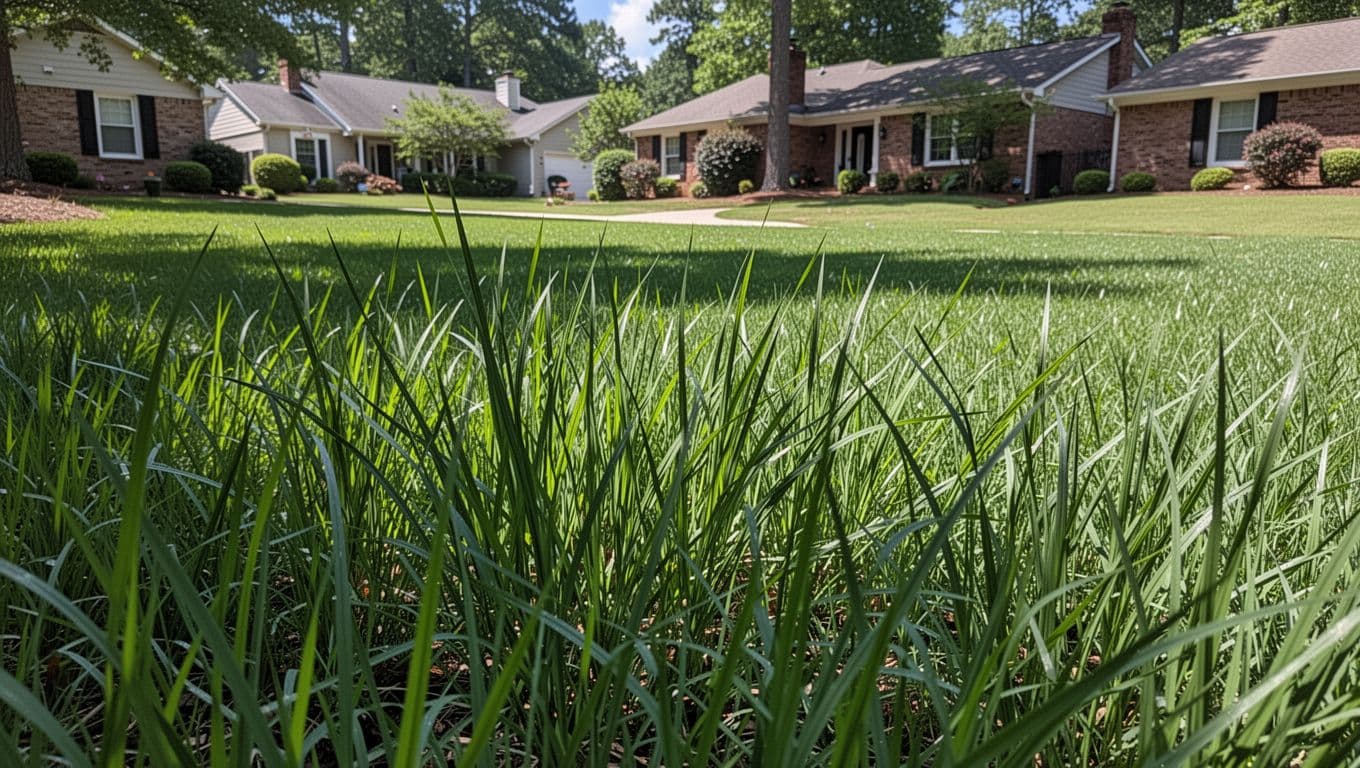
Healthy tall fescue should look dense, even, and deep green, with upright blades and no blotchy straw spots. When your lawn starts to lose that look after a wet, cool spell, it's time to inspect it closely.
A few things make Atlanta lawns more vulnerable. Tall fescue already dislikes summer heat here, and clay-heavy soil can hold water unevenly. Add close mowing or a dry stretch, and the grass gets stressed fast.
Ascochyta leaf blight or drought stress?
The symptoms can overlap, so it helps to compare them side by side. A quick look at the whole lawn, not just the damaged patches, usually tells the story.
| Clue | Ascochyta leaf blight | Drought stress |
|---|---|---|
| Leaf color | Bleached, tan, or straw-colored blades | Uniform dull green, then gray-green or brown |
| Patch shape | Irregular spots or scattered areas | Larger, more even dry zones |
| Soil moisture | Soil may still feel damp | Soil is dry, crusty, or hard |
| Where it starts | Often after mowing or weather stress | Often in hot, sunny, exposed areas |
| Recovery | New green blades appear when stress eases | Recovery starts after a deep watering |
The biggest clue is timing. If the lawn looked fine after rain, then turned patchy after mowing or a sudden heat spike, Ascochyta becomes more likely.
Still, the two problems can happen together. A lawn that is too dry, cut too short, and then hit with rain can show both drought stress and leaf blight at the same time.
What to do after you spot the damage
Start with the simplest changes first. Most lawns do better when you reduce stress right away.
- Raise the mower deck. Tall fescue needs a higher cut, especially in Atlanta heat. If you've been trimming too low, stop now and let the grass recover.
- Mow only when the lawn is dry. Wet blades tear easily and spread stress across the yard. Sharp blades matter too, because a clean cut helps the turf heal faster.
- Water only when the soil needs it. A deep soak in the early morning is better than frequent light sprinkling. If the ground is already moist, wait.
- Hold off on heavy fertilizer. Extra nitrogen can push weak, stressed growth at the wrong time. Let the lawn calm down first.
If you're not sure how often to mow, the Atlanta lawn mowing frequency guide can help you keep the schedule realistic for tall fescue.
A fungicide is usually not the first move. In many Atlanta lawns, it doesn't solve the real problem because the real problem is stress. Recovery comes from new growth, not from trying to revive leaf tissue that has already died.
If the patch is dry, thin, and worsens after mowing, focus on stress reduction first. Fungicide rarely fixes a lawn that's being cut too low or watered the wrong way.
Watering and mowing habits that keep it from coming back
Atlanta weather can be tricky for tall fescue. Spring can swing from cool rain to sudden heat, and early summer often turns rough fast. That's when a lawn that was doing fine in April starts looking tired.
A good seasonal guide to watering Atlanta grass helps you match watering to the weather instead of guessing. For tall fescue, deep watering matters more than frequent light watering. You want the moisture to reach the root zone, then you want the surface to dry a bit before the next soak.
Mowing height matters just as much. Tall fescue does better when it stays around 3.5 to 4 inches high. If it gets scalped, the blades lose too much leaf surface and the lawn loses moisture faster.
A sharp blade also makes a difference. Torn tips dry out faster and make the lawn look worse, even when the grass is still alive. If you want a simple height reference, the proper mowing heights for Atlanta grass types page is a useful guide for keeping tall fescue in the safe zone.
You can keep the routine simple:
- Water deeply when the lawn actually needs it.
- Cut high and keep the mower blade sharp.
- Avoid mowing during heat stress or right after rain.
- Watch for shade, compaction, and sprinkler coverage gaps.
Those basics do more for recovery than most products on a shelf.
When fungicide makes sense, and when it doesn't
For many home lawns, fungicide is optional, not necessary. If the damage is mild and the grass is still growing, the lawn often rebounds on its own once the stress eases.
Fungicide may make more sense if the problem keeps returning every year, spreads fast during cool, wet weather, or is confirmed by a lawn professional. Even then, timing matters. A treatment applied after most of the damage is already done won't restore the brown blades.
That's why diagnosis matters. If the problem is really drought, heat, or scalping, a fungicide won't help. If the lawn is underfed, compacted, or watered unevenly, the disease pattern will keep coming back until those issues change.
For homeowners in Atlanta, the best long-term fix is usually a stronger turf routine. Tall fescue likes cooler weather, steady care, and less abuse in late spring and summer. When those pieces line up, the disease pressure drops with them.
How recovery works in Atlanta's heat
Recovery is usually slow but visible. Once the weather settles and the lawn gets better care, new green blades should start filling in from the base of the plant.
If the outbreak happens in spring, you may see improvement in a couple of weeks. If it hits in June or later, Atlanta heat can slow recovery a lot. The lawn may survive, but it might not look perfect until cooler weather returns.
That's normal for tall fescue here. The grass is a cool-season type, so it has a harder time when summer heat stacks up. Patches that looked severe in May can improve enough to blend in by fall, while the worst spots may need reseeding or repair.
Shade, compacted soil, and poor irrigation coverage can also slow the bounce-back. If one part of the yard keeps showing the same problem, the issue may be in the site conditions, not the fungus itself.
Conclusion
A brown patch on tall fescue doesn't always mean a big disease problem. In Atlanta, ascochyta leaf blight is often a stress response first and a fungus second.
That's why the smartest first move is simple. Mow higher, water deeply only when needed, and give the turf a chance to grow out the damage. If the same pattern keeps coming back, the lawn is telling you something about heat, mowing, or moisture that needs to change.