Atlanta Poa Trivialis Control for Shady Fescue Lawns
A shady tall fescue lawn in Atlanta can look fine in spring, then turn soft, pale, and patchy before summer hits. That shift often points to Poa trivialis , a weed that loves cool, damp, low-light spots and spreads fast once it settles in.
For homeowners, the hard part is not just killing it. The real challenge is knowing what it is, where it came from, and whether the lawn can be repaired without starting over. Good poa trivialis control begins with a clean ID and a realistic plan.
Why shady fescue lawns in Atlanta are such easy targets
Tall fescue already works hard in North Georgia. It prefers cool weather, handles shade better than many grasses, and still needs enough sun, airflow, and drainage to stay dense.
Shady lawns often miss one of those pieces. Tree roots dry out the soil in some areas, while heavy canopies keep the grass wet longer after rain or irrigation. That mix gives Poa trivialis the kind of setting it likes most.
The problem gets worse when the lawn is thin. Once open spots appear, the weed can creep into them and spread by stolons, which are short runners along the surface. In other words, the weed does not wait politely for an opening, it takes over the opening you already have.
Atlanta lawns also face long, hot summers. Tall fescue weakens under heat stress, especially in shade. Poa trivialis can keep its foothold in those same cool, moist pockets, so the weed keeps its advantage while the turf falls behind.
How to spot Poa trivialis before you spray
Good treatment starts with the right eyes. Many people notice the color first. Poa trivialis often looks lighter green or yellow-green than the surrounding fescue. It can also look soft, flat, and a little shiny.
The growth habit gives away more than the color. Tall fescue grows upright and bunchy. Poa trivialis often spreads low across the soil and forms mats. When you pull at an infected patch, you may see thin runners tied to the base of the plant.
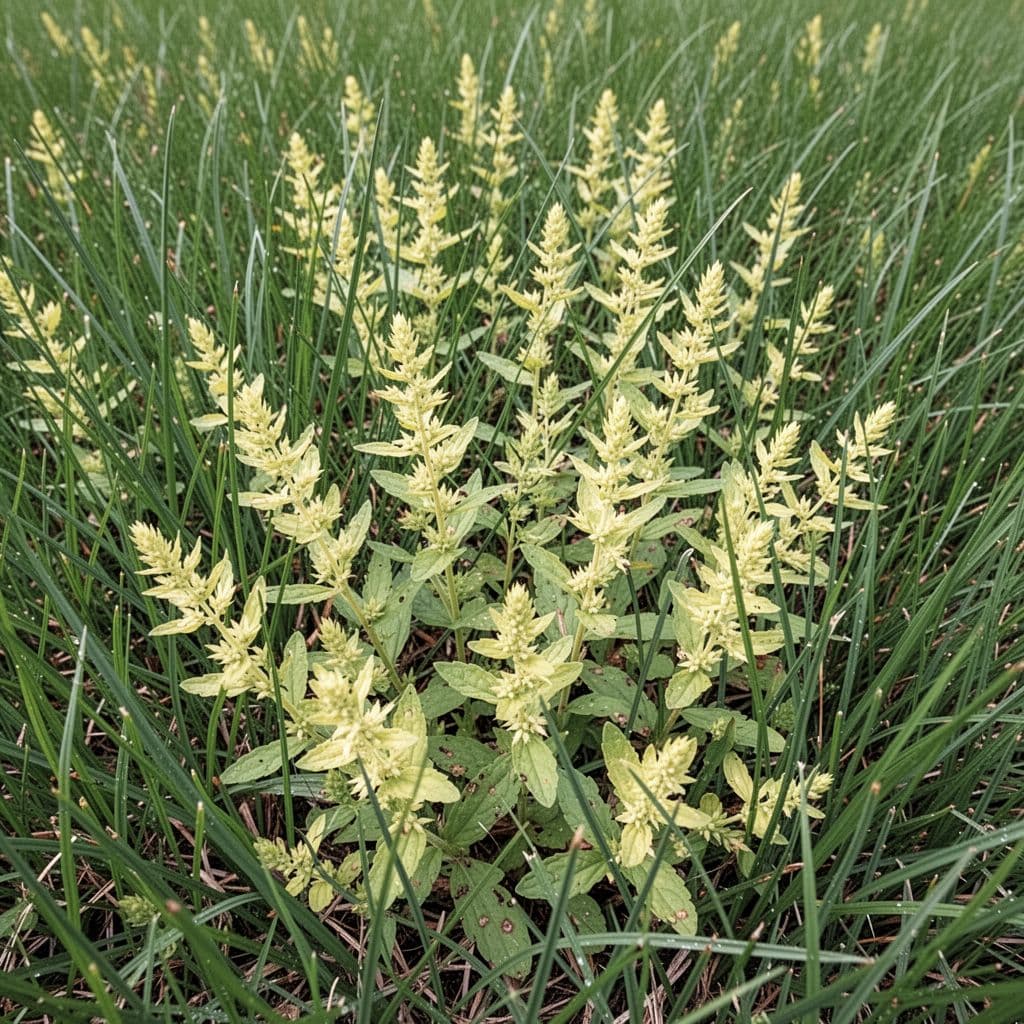
Wet, shady areas make the difference easier to see. A patch may look almost smooth compared with the rougher texture of the fescue around it. In summer, the weed can brown out or thin badly in heat, but it often survives in shade or under irrigation.
A quick field check helps. If the area is lighter, spreads sideways, and feels more like a mat than a clump, Poa trivialis is a strong suspect. Still, color alone is not enough. Nitrogen issues, disease, and other cool-season weeds can fool the eye.
The safest approach is to inspect the growth pattern, not just the hue. That matters because a wrong diagnosis can send you toward the wrong herbicide, and that wastes time in a lawn that already has little margin for error.
Why control gets harder once it spreads
Poa trivialis is frustrating because it thrives in the same places where fescue struggles. Shade, moisture, and thin turf all help it expand. If the lawn has low airflow or stays damp after evening watering, the weed often gets a head start.
Selective control is limited, too. Some herbicides can reduce growth or help with younger infestations, but established patches are hard to erase completely without harming the fescue around them. That is why many homeowners think they treated the weed, then see it return the next season.
A mature patch usually needs a reset. Waiting for it to "thin out on its own" often gives it more room to spread.
That is especially true under trees. If the shade issue stays in place, the weed and the turf keep fighting on uneven ground. Removing the plant without fixing the site can leave the same weak spots open again.
For that reason, poa trivialis control is part herbicide, part lawn repair, and part site management. Removing one piece and ignoring the others rarely holds up for long.
Selective and non-selective options, with real limits
Homeowners often ask for a simple spray that kills Poa trivialis and leaves tall fescue untouched. In many lawns, that answer does not exist.
Here is the practical comparison:
| Method | What it can do | Main limit | Best use |
|---|---|---|---|
| Selective herbicide | May suppress small or young infestations | Often misses mature mats and can be temperature-sensitive | Early detection and follow-up work |
| Non-selective spot treatment | Kills all green tissue it touches | It also kills the fescue around the patch | Small, isolated areas before renovation |
| Full renovation | Gives you a clean reset | Takes planning and time | Large patches in shade or repeated infestations |
Selective products can help in the right situation, but the label matters. So do air temperature, turf species, and whether the lawn will be seeded soon. A product that fits one lawn may be wrong for another.
Non-selective spot treatment is stronger, but it is less forgiving. It works when the patch is isolated and you are ready to re-establish the area. If the weed has spread through a large shady section, spot treatment can leave a rough, uneven look unless you follow with renovation.
The cleanest answer is often to treat the patch, remove dead material, and re-seed or sod at the right time. That sounds like more work, because it is. It also gives you a better chance of ending the cycle.
A seasonal plan for North Georgia lawns
Timing matters in Atlanta. Tall fescue and Poa trivialis both respond to cool weather, but they do not handle summer stress the same way. That creates a useful window for planning.
Late winter and early spring are good times to mark problem areas. The weed is easier to spot when the lawn starts waking up and the lighter patches stand out. At that point, you can judge how wide the infestation really is.
Late spring and summer are the decision months. If the patch is small and the label allows treatment, a targeted approach may help. If the weed has already taken over a shady section, start planning for renovation instead of hoping for a quick fix.
Late summer into early fall is the best renovation window for tall fescue in North Georgia. New seed establishes better when the heat starts easing and soil temperatures begin to fall. That is the right time to remove damaged turf, prepare the seedbed, and bring the lawn back into shape.
A simple seasonal rhythm can help:
- Late winter to early spring : identify patches and confirm the weed.
- Spring : decide whether the area is treatable or needs renovation.
- Late summer to early fall : repair or re-seed fescue.
- Fall into winter : keep the new turf dense and avoid overwatering shaded spots.
After recovery, consistent mowing and care matter. If your lawn needs steadier upkeep, routine lawn maintenance and edging can help tall fescue stay thick enough to resist new invasion.
Good label reading matters at every step. Check the grass type, the temperature range, re-seeding restrictions, and the wait time before planting again. Those details decide whether a treatment helps or sets the lawn back.
Conclusion
Poa trivialis is a poor fit for shady tall fescue lawns because it thrives where the turf is already stressed. That is why the best results come from accurate ID, honest expectations, and a plan that matches the size of the problem.
Small patches may respond to careful treatment. Larger infestations in shaded Atlanta lawns often need renovation, plus better mowing, watering, and site conditions. When the lawn keeps you guessing, the safest move is to treat the cause, not just the color.