Atlanta Camellia Petal Blight Guide for Brown Spring Blooms
A camellia can look perfect one day and turn into a brown, limp mess the next. In Atlanta, that often points to camellia petal blight , a fungus that targets the blooms while leaving the shrub itself standing.
The damage shows up fast in cool, wet spring weather. If you want to know what you are seeing, what to clean up, and what actually helps next season, the clues are easy to miss at first but simple to read once you know where to look.
How camellia petal blight shows up on blooms
The first sign is often a flower that looks water-soaked or bruised. Petals may develop tan, brown, or gray patches, then soften and collapse. A bloom that should feel crisp and fresh can start to look mushy, heavy, and tired before it has fully opened.
That matters because camellia blooms age in a different way. Old petals usually dry out and drop with a papery feel. Petal blight makes flowers decay faster and can leave them blotchy, soft, and stuck together. In Atlanta gardens, that difference often shows up after a stretch of rain or foggy mornings.
Fallen blooms can be just as telling. Infected flowers often drop early and land in a flattened, brown pile beneath the shrub. If you lift one, the petals may still feel damp or slimy rather than dry.
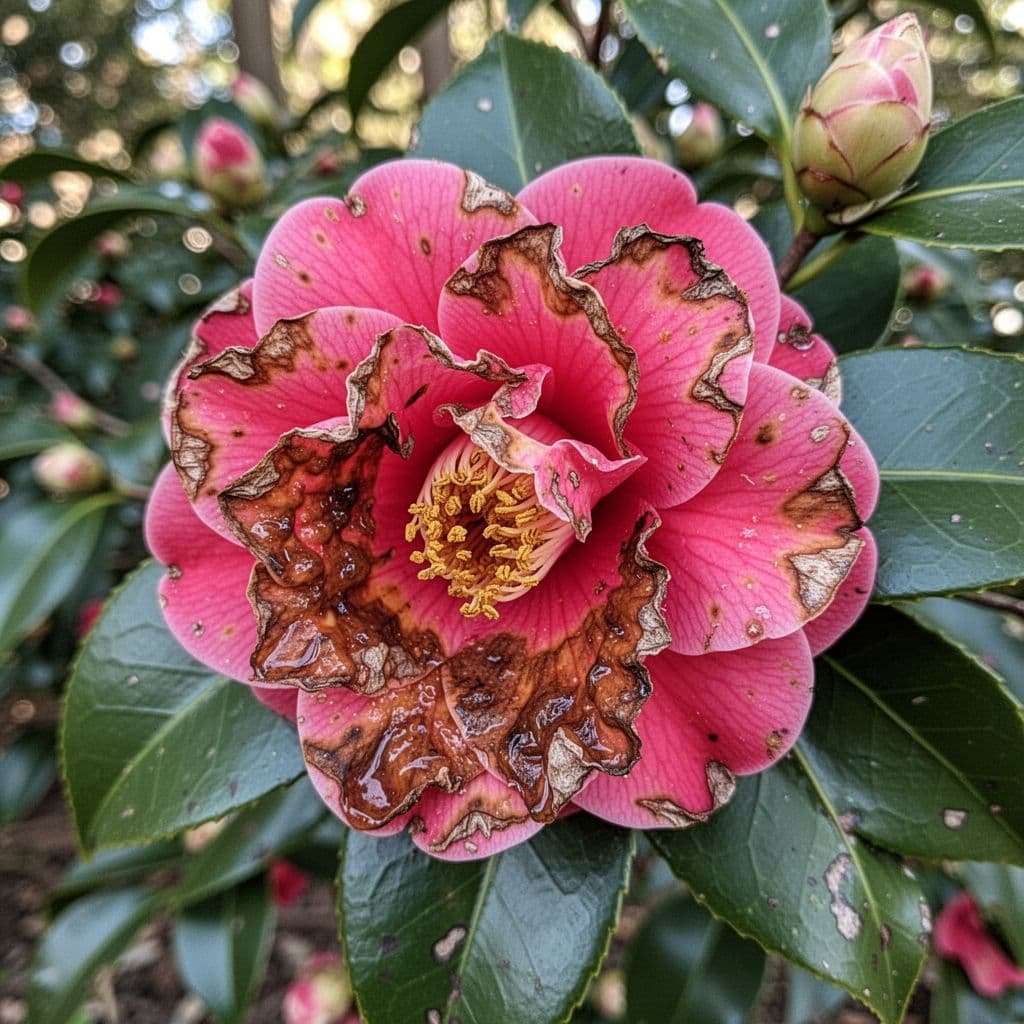
A freeze can brown petals too, but freeze damage usually looks more even and dry. Petal blight tends to spread through a bloom collection, not just one exposed side of the shrub. If several flowers open brown at once, the fungus is a strong suspect.
Once petals are infected, they don't recover. The goal is to stop the next bloom cycle.
Why Atlanta weather gives the fungus a head start
Atlanta spring weather often gives petal blight a friendly runway. Mild temperatures, rain, and high humidity help fungal spores move from one bloom to the next. When petals stay wet for long periods, the disease has an easier time taking hold.
Dense camellia shrubs can make the problem worse. Flowers tucked deep inside the canopy dry slowly, and fallen petals collect under the plant like wet confetti. That creates a spot where spores can keep cycling through the season.
Shaded beds also stay damp longer than sunny ones. A camellia planted too close to a wall, fence, or other shrubs may hold humidity around the blooms. That does not mean the plant is doomed. It means the flower bed may need better airflow and a cleaner floor.
Old petals are part of the problem because they are part of the disease cycle. The fungus can survive in the debris around the shrub and spread again when new blooms open. That is why cleanup matters so much in Atlanta gardens after rainy spells.
What to do as soon as you spot infected blooms
Quick action won't save a brown flower, but it can reduce the mess around the plant. Start with the blooms that are already soft or dropping too fast. Then move on to the ground below the shrub.
- Remove infected blooms from the plant and from the soil surface.
- Bag the flowers or place them in yard waste, since compost piles may not get hot enough to kill the fungus.
- Clear up petals tucked into mulch, leaves, and plant crevices.
- Wash pruners after use if you cut spent blooms or small twigs.
Use care when handling the flowers. Shake or rake as little as possible, because disturbed debris can spread spores around the bed. If the shrub is in a high-traffic front yard, clean it more than once during bloom season.
A larger cleanup can help, too. If your yard needs a broader reset after a wet spring, professional spring and fall landscape clean up can clear the debris that keeps camellia beds damp.
The goal is not perfection. The goal is to keep infected material from sitting under the plant long enough to feed the next round of blooms.
Sanitation and cleanup that break the cycle
Camellia petal blight lives in the kind of debris many people ignore after flowering. That makes sanitation a bigger deal than most homeowners expect. A clean bed dries faster, and a dry bed gives the fungus fewer chances.
Start under the shrub, where dropped blooms gather in layers. Rake or hand-pick petals, then remove leaves, sticks, and any old mulch that has become matted. Wet mats hold moisture against the soil, and moisture is the enemy here.
If you mulch camellias, keep the layer even and loose. Two to three inches is usually enough. Pull mulch back a few inches from the trunk so the crown does not stay buried and damp. Deep mulch piled against the stems can trap water and slow drying.
Timing matters after a storm. If flowers fall in a long rainy stretch, clean them sooner rather than later. Waiting lets them break down into a soft layer that is harder to remove. A fast cleanup also keeps the bed looking neat, which matters in front yards and entry spaces.
Regular attention pays off more than one big effort. If the shrub blooms heavily, plan to check it every few days through peak flower time. That is when Atlanta weather can turn a tidy bed into a petal trap.
Mulch, spacing, and watering that help prevent repeats
A camellia that stays airy is easier to manage. Good spacing lets wind move through the plant, and wind helps petals dry after rain or morning dew. If a shrub is pressed into a tight corner, airflow can be poor for years.
Pruning can help, but keep it light and timed well. Camellias bloom on old wood, so heavy cutting after flower season can remove next year's buds. Focus on removing dead wood, crossing branches, and crowded growth after blooming ends.
Watering habits matter just as much. Camellias prefer steady moisture at the roots, but they do not like wet flowers. Use drip irrigation or water near the base early in the day. That gives the leaves and blooms time to dry before nightfall.
Overhead watering is a bad match for petal blight. It keeps flowers wet and splashes debris around the plant. In a rainy Atlanta spring, you may not need much extra water at all. Check the soil first, and water only when the top layer starts to dry.
Fertilizer can also play a role, though it is easy to overdo. Excess nitrogen pushes soft growth that stays dense and shady. Healthy growth is good, but crowded growth can trap moisture and make cleanup harder. Keep feeding balanced and modest.
What treatment can and cannot do
There is no spray that turns a brown bloom white again. Once the petal is infected, the flower is finished. That is the hard truth, and it is why prevention beats rescue every time.
Some gardeners use preventive fungicides before blooms open, especially on camellias that get blight year after year. Those products work best as a shield, not a cure. They need to be applied before infection starts and repeated on the schedule listed on the label.
That makes timing the real issue. If you spray after petals turn brown, the disease has already done its work. The better plan is to clean up well, improve airflow, manage watering, and protect new blooms before they open in a wet spring.
If your camellias keep blighting every year, step back and look at the whole site. Dense shrubs, poor drainage, thick mulch, and overhead watering all add up. Fixing those parts of the bed will usually help more than chasing a one-time treatment.
Conclusion
Brown camellia blooms in Atlanta are frustrating, but they usually point to a clear set of causes. Wet spring weather, crowded growth, and poor cleanup give camellia petal blight the opening it needs.
The best response is simple and steady. Remove infected blooms, clean fallen petals, keep mulch light, water at the base, and give the shrub more air around its branches.
When you treat the bed like a place that needs to dry out fast, next spring has a better chance of looking the way you want.