Atlanta Arborvitae Browning: Fixing Privacy Screens
When a privacy screen starts turning brown, the damage can spread before you identify the cause. Arborvitae browning often follows Atlanta's hot summers, dry spells, compacted clay, or a short winter freeze.
Atlanta receives roughly 47 to 50 inches of rain each year, yet heavy storms don't prevent drought stress. Water may run off hard clay instead of reaching roots, or remain trapped around them after rainfall. A careful inspection will tell you whether the plant needs better watering, improved drainage, pest control, or replacement.
Why Atlanta Conditions Cause Arborvitae Browning
Emerald Green arborvitae can grow well in Metro Atlanta when the site drains properly and the plants receive steady moisture. Problems start when heat, wind, soil compaction, and irrigation mistakes affect the roots at the same time.
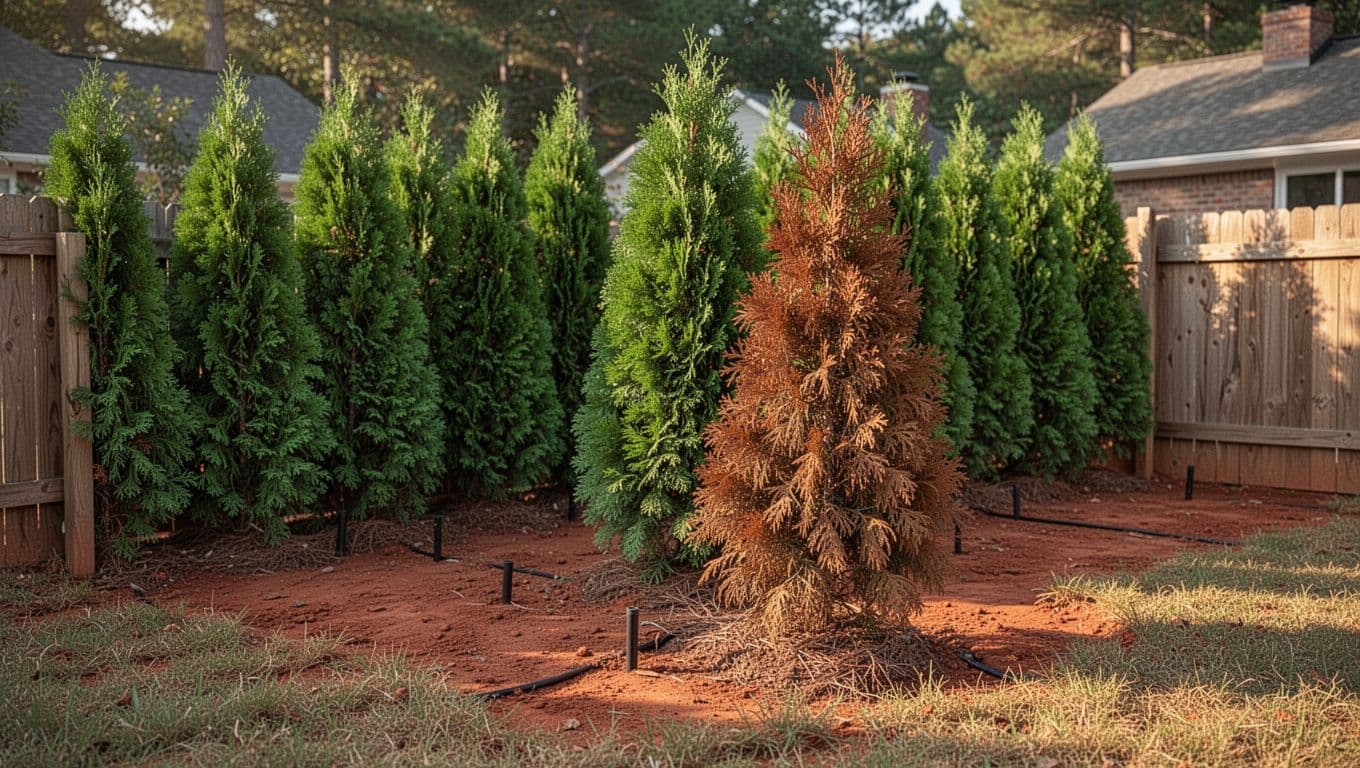
Heat and drought stress dry exposed foliage
Atlanta summers often bring temperatures in the upper 80s and low 90s, along with high humidity and strong sun. A newly planted arborvitae or one growing beside hot pavement can lose moisture faster than its roots can replace it.
Browning usually begins on the sunny or wind-exposed side. The outer tips may look tan, dry, or scorched while shaded interior branches remain green. Plants near driveways, walls, and south-facing fences often show the most damage.
Recently planted screens need closer attention because their roots have not spread into the surrounding soil. Even established plants can suffer during a dry stretch between thunderstorms.
Heavy clay can hold too much water
Atlanta's red clay creates a different problem. Compacted clay may repel water at the surface, then remain saturated around the root ball after irrigation or heavy rain. Roots need oxygen as well as moisture, so soggy soil can cause yellowing, weak growth, and gradual dieback.
Overwatering can create the same conditions as poor drainage. Watering a declining plant every day may worsen root damage rather than correct it. If water sits near the screen or the soil stays wet several days after rain, review the site before adding more irrigation.
For persistent pooling, compare options in this guide to Atlanta drainage solutions for soggy lawns.
How to Diagnose Arborvitae Browning in Atlanta
The pattern of damage provides useful clues. Examine several plants, the soil around their roots, and the side of the screen facing the sun, street, or prevailing wind.
Drought stress and winter burn affect exposed sides
Drought stress often produces dry, brittle foliage on the outer tips. Severe stress can move inward, especially on plants that have gone too long without deep watering. Scratch a small twig with your fingernail. Green tissue beneath the bark indicates that section is still alive.
Winter burn can appear after a cold, sunny, or windy period. Atlanta winters are usually mild, but brief freezes can still dry evergreen foliage when frozen roots cannot replace lost moisture. Damage often appears on the windward side, branch tips, or upper portions of the plant.
Don't prune immediately after a winter event. Wait until new growth begins in spring, then remove sections that remain clearly dead. Brown foliage won't turn green again, but living buds may fill the damaged areas over time.
Brown foliage alone doesn't identify the cause. Brown foliage plus wet soil points toward a different problem than brown foliage on the sunny side of a dry planting bed.
Root problems and pests leave different clues
Root damage usually affects the whole plant gradually. Look for pale foliage, thinning branches, poor new growth, and decline that continues even after rain. Pull back a small amount of soil near the root ball without damaging roots. A sour smell, dark mushy roots, or soil that stays saturated suggests a drainage problem.
Spider mites can cause fine yellow stippling, bronzing, and premature foliage loss. They prefer hot, dry conditions. To check, shake a branch over a sheet of white paper and look for tiny moving specks.
Bagworms leave small hanging cases made from silk and plant material. Their feeding can remove foliage from individual branches or create bare sections in the screen. Pick off visible cases and discard them. Treating a pest you haven't identified can injure the plant and waste time.
Use pesticides only after confirming the pest. Follow the product label, avoid spraying during extreme heat, and never apply more than the label allows. Horticultural oils and other products can burn stressed foliage when used in unsuitable weather.
Can Arborvitae Browning Be Reversed?
Recovery depends on how much living tissue remains and whether the original problem has stopped. A plant can survive substantial exterior damage, but dead foliage will not return to green.
Check branches, buds, and the root zone
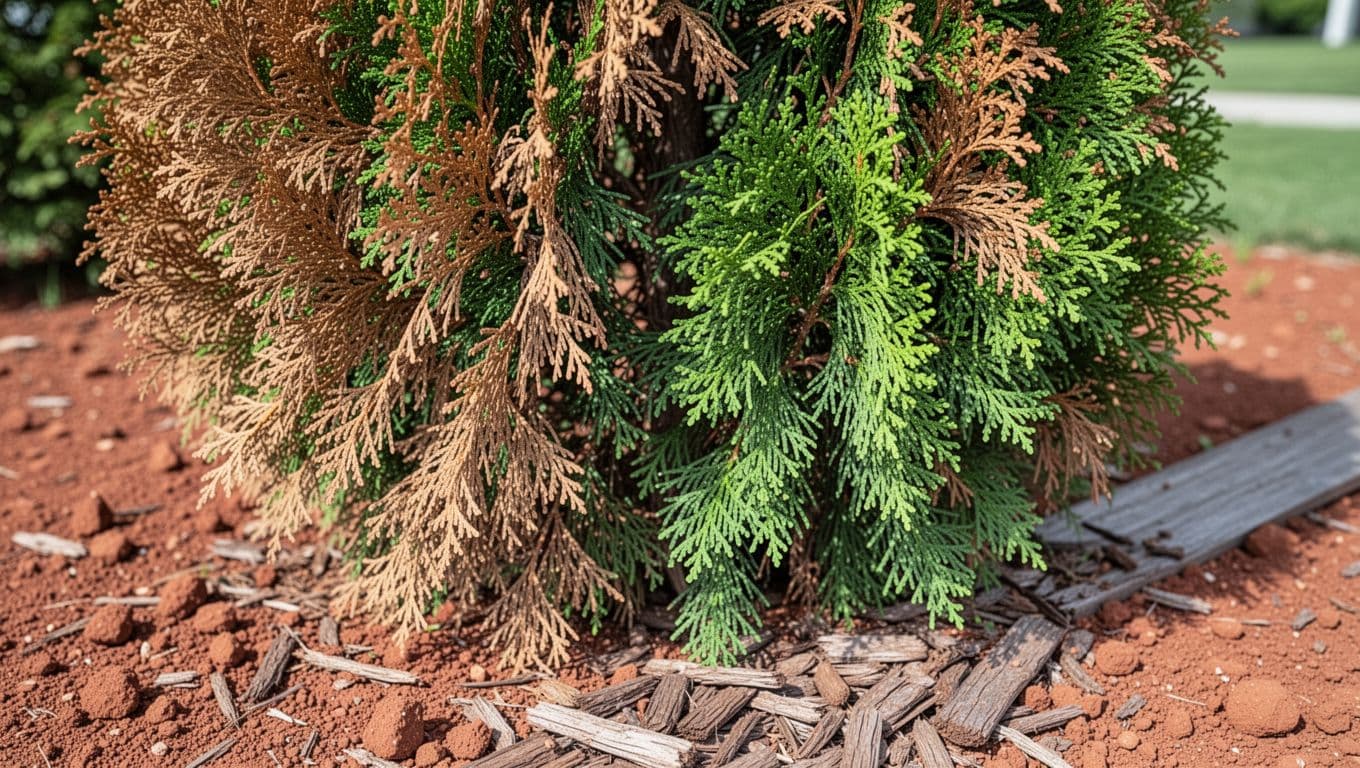
Scratch several small branches in different parts of the plant. Green tissue under the bark, flexible twigs, and live buds are encouraging signs. New green tips during the growing season provide stronger evidence that the plant can recover.
Browning that stops spreading after you correct watering or drainage is another positive sign. The plant may look thin for a while, but stable green growth matters more than the appearance of older brown foliage.
Inspect the root zone at the same time. A living top cannot recover if its roots remain waterlogged. Clear excess mulch, check for standing water, and adjust irrigation based on soil moisture rather than a fixed daily schedule.
Know when replacement makes more sense
Removal becomes practical when most branches are brittle, the trunk and major limbs fail the scratch test, or dieback continues across the entire plant. Large dead zones also create permanent gaps because arborvitae rarely refill deeply pruned, leafless wood quickly.
A screen with repeated root problems may lose more plants even after one replacement. Before replanting, correct the soil and drainage conditions that caused the decline. Otherwise, the new arborvitae may follow the same path.
When one plant dies in an otherwise healthy row, replace it after checking planting depth, irrigation coverage, and nearby competition. When several plants decline together, investigate the site before buying replacements.
Correct Care Without Adding More Stress
Care changes should address the likely cause. Avoid stacking several treatments at once, because heavy pruning, fertilizer, frequent watering, and pesticide use can compound stress.
Water deeply, then let the soil drain
Check moisture several inches below the surface near the root ball. If the soil feels dry, water slowly at the base until moisture reaches the full root zone. Newly planted arborvitae may need this attention more often during hot weather, while established plants usually need less frequent but thorough watering.
A soaker hose or drip line can reduce runoff on sloped or compacted ground. Water early in the day, and pause when the soil remains wet after rain. Sprinkling the foliage does little for drought-stressed roots and can keep the screen damp for long periods.
Maintain a 2- to 3-inch layer of mulch to reduce evaporation and moderate soil temperatures. Keep mulch several inches away from each trunk. A mulch mound touching the bark holds moisture against the stem and can encourage decay.
Prune lightly and skip emergency fertilizer
Remove only branches that are clearly dead. Cut back to a living side branch when possible, and avoid shearing the entire screen to hide brown patches. Deep cuts into bare interior wood often leave open holes that arborvitae cannot quickly cover.
Fertilizer is not a first response to browning. It won't repair winter burn, restore oxygen to waterlogged roots, or remove spider mites. Applying high-nitrogen fertilizer to drought-stressed or root-damaged plants can increase stress and push weak growth.
Wait until the plant stabilizes before considering a soil test or feeding plan. If you do fertilize, follow the product directions and keep granular products away from the trunk.
Protect the rest of the privacy screen
Inspect every plant, but don't automatically treat the entire row. One arborvitae may be dry because of a blocked emitter, while another may be sitting in a low spot that collects water.
Clean pruning tools between plants when cutting diseased or severely declining material. Remove pest-infested clippings rather than placing them in the compost pile. Also, avoid redirecting extra irrigation toward neighboring shrubs until you know whether the problem is drought or poor drainage.
Routine Atlanta residential landscaping and mulch services can help maintain clean beds, proper mulch depth, and consistent shrub care around a privacy screen.
Replacing a Failed Arborvitae Screen
A new screen will perform better when the planting site is prepared before the first replacement goes into the ground.
Fix compaction and drainage first
Break up compacted soil across the planting area instead of creating one loose pocket around each root ball. A loose hole surrounded by dense clay can collect water around the roots. Set the root flare at or slightly above the surrounding grade, especially where water tends to gather.
If the yard slopes toward the screen, correct the flow before planting. Residential grading and drainage improvements may be more useful than repeated watering or fertilizer applications when runoff and low spots cause the problem.
Don't place a replacement in the exact position of a dead plant without assessing the soil. Remove old roots and debris, confirm that water moves away from the bed, and give each plant enough room for mature growth.
Plan for Atlanta's seasonal swings
Planting during mild weather gives roots time to establish before summer heat. Keep the new root zone evenly moist, but avoid daily saturation. Maintain mulch around the planting bed, leaving space around the trunks.
A replacement screen also needs inspection during two high-risk periods: hot, dry summer weather and late winter after cold, windy nights. Early signs are easier to correct than a row of completely brown plants.
If the site repeatedly stays wet, consider a different screening plan or correct the grade before committing to another row. Plant choice matters, but site conditions decide whether the screen lasts .
Conclusion
Atlanta arborvitae browning usually reflects a mismatch between moisture, drainage, exposure, and plant health. Check the foliage pattern, scratch-test branches, inspect the clay soil, and look for mites or bagworm cases before pruning or spraying.
Living buds and green tissue give a damaged plant time to recover. Widespread deadwood, advancing dieback, and chronic wet roots point toward removal and site correction. A privacy screen stays healthy when watering supports the roots without saturating them, and when every replacement starts with the soil beneath it.