Atlanta Billbug Damage Guide for Zoysia Lawns
Zoysia billbug damage can look a lot like drought stress at first, and that delay costs homeowners time. In Atlanta, patchy zoysia often shows up after the first long warm stretch of spring, when billbug adults start feeding and laying eggs.
If you wait until the whole lawn turns brown, the small spots can spread fast. A few simple checks can tell you whether billbugs are the problem, or if something else is wearing the turf down.
How billbug damage shows up in zoysia
Billbug injury usually starts as irregular yellow or straw-colored patches. The grass may look thirsty even after watering, and the blades can lose their springy feel.
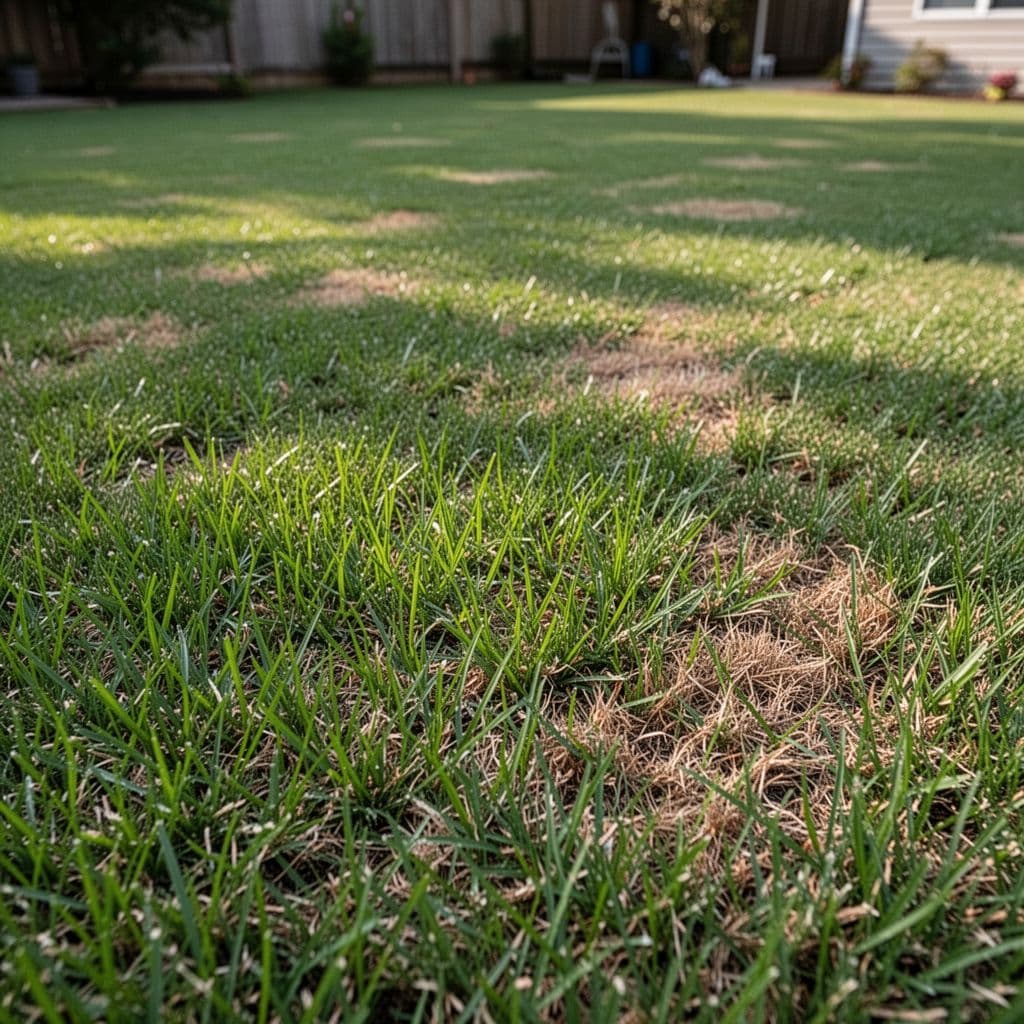
The key clue is how the turf behaves when you touch it. Damaged zoysia often pulls up more easily than healthy grass, especially along the edge of a patch. The roots may stay in the soil, but the crown and stems break apart.
That difference matters. Drought can make zoysia dull and weak, but billbugs chew at the base of the plant. As a result, the lawn thins in clumps before it opens into wider bare spots.
Billbug damage also shows up in patterns that feel uneven. You may see one side of a lawn go first, or a sunny strip near a driveway fade before the rest of the yard. Those hot, stressed spots are where you should look first.
How to confirm billbugs before you treat
Before you spray anything, confirm that billbugs are active. A quick inspection saves money and keeps you from treating the wrong problem.
- Pick a patch edge early in the day, when the grass is easier to inspect and insects are less likely to move.
- Use a hand trowel or knife to lift a small piece of turf.
- Pull the grass apart at the crown and split a few stems near the base.
- Look for small, white, legless larvae with brown heads, or dark adult weevils with a snout.
- Check several spots, because one bad area can hide the real source of the damage.
If the turf lifts like a loose rug, check the crown before you water or fertilize.
If you only find white grubs deeper in the soil, billbugs may not be the issue. Grubs usually feed lower in the root zone and leave a different pattern of damage. If the soil is dry, the blades are crisp, and the crowns stay firm, drought stress is more likely.
Take samples from more than one spot. Atlanta lawns often have mixed problems, especially near sidewalks, compacted edges, or places that get extra afternoon heat. A patch can be part pest damage and part water stress at the same time.
Billbug damage vs. other common Atlanta lawn problems
Atlanta lawns can wear the same symptoms for different reasons. This quick comparison helps narrow it down.
| Problem | What you see | Quick clue |
|---|---|---|
| Billbugs | Irregular brown patches, turf loosens at the base | Check the crown and stems, look for small larvae or snout beetles |
| Drought stress | Gray-green blades, crisp texture, footprints stay visible | Soil feels dry and the stress is often broad, not just patchy |
| Brown patch | Round or ring-shaped tan areas | Leaves stay rooted, and the damage sits more on the blades than the crown |
| Grubs | Large dead areas, turf peels back easily | White C-shaped grubs are in the soil, below the roots |
| Dog urine or fertilizer burn | Sharp-edged spots with dark green rings nearby | The damage follows a pattern, often with a strong center point |
The crown tells the real story. If the grass pulls up easily and the stems look chewed near the base, billbugs move to the top of the list.
Brown patch can confuse people because it also shows up in warm, wet weather. Still, fungus usually changes the leaf color first, while billbug injury attacks the plant structure. That difference helps you avoid the wrong treatment.
Why Atlanta timing matters
In North Georgia, billbugs become most active as spring warms up. Damage often shows up from late May into July, especially after several warm nights in a row. Zoysia can hide the first signs for a while, then thin fast once larvae start feeding.
That timing matters because zoysia recovery slows down under heat stress. A lawn that already had winter injury, compacted soil, or thin irrigation coverage is easier for billbugs to weaken. Sunny slopes, strip areas along pavement, and lawns that were scalped earlier in the season are common trouble spots.
Regular mowing helps too. Keeping zoysia at the right height reduces stress and makes damage easier to spot early. Professional lawn mowing services in Atlanta can help keep cuts even when growth speeds up in late spring.
Watering habits matter just as much. Deep, less frequent watering keeps roots working. Light daily watering can leave the surface damp without helping the plant recover. Sharp mower blades also matter, because ragged cuts make stressed zoysia look worse.
What to do after you confirm billbugs
Once you confirm billbugs, don't rush to fertilizer. Extra nitrogen can push weak new growth before the pest problem is under control. That growth often collapses again.
Use a product labeled for billbugs and follow the label directions closely. Timing matters, so active adults or young larvae are the best target. If the lawn is badly damaged, or if the infestation keeps spreading, a local lawn pro can help choose the right treatment window and check whether the damage is still active.
After the pest pressure drops, focus on recovery. Remove dead material, loosen compacted areas, and keep the soil evenly moist. Zoysia fills in slowly, so bare spots often need plugs or sod instead of a quick fertilizer fix.
It also helps to check the whole lawn, not just the worst patch. Billbugs often show up where the turf is already stressed by heat, weak mowing habits, or patchy irrigation. Fixing those conditions lowers the chance of another round.
Keeping zoysia ahead of billbugs
Billbug damage is easier to manage when you catch it early. In Atlanta, that means watching zoysia from late spring through mid-summer and checking any odd brown patch before guessing.
A close look at the crown tells you more than the blade color alone. If the turf lifts easily, inspect before you water heavily, fertilize, or assume fungus is to blame.
Healthy mowing, steady irrigation, and a fast response to new patches can keep a small problem from taking over a whole yard. Zoysia is tough, but it still rewards a careful eye.