Cherry Laurel Shot Hole Disease in Atlanta
Cherry laurel leaves can look like they've been peppered with tiny holes after a wet Atlanta spring. That damage often points to cherry laurel shot hole disease , but the same symptom can come from insects, weather, or simple stress.
Humidity, heavy rain, and crowded shrubs give the problem room to spread. Before you spray anything, it helps to read the leaves, the weather, and the way the plant is growing.
Spot the signs before you spray anything
Shot hole disease usually starts as small leaf spots. As the center tissue dies and drops out, the leaf ends up with a clean-looking hole.
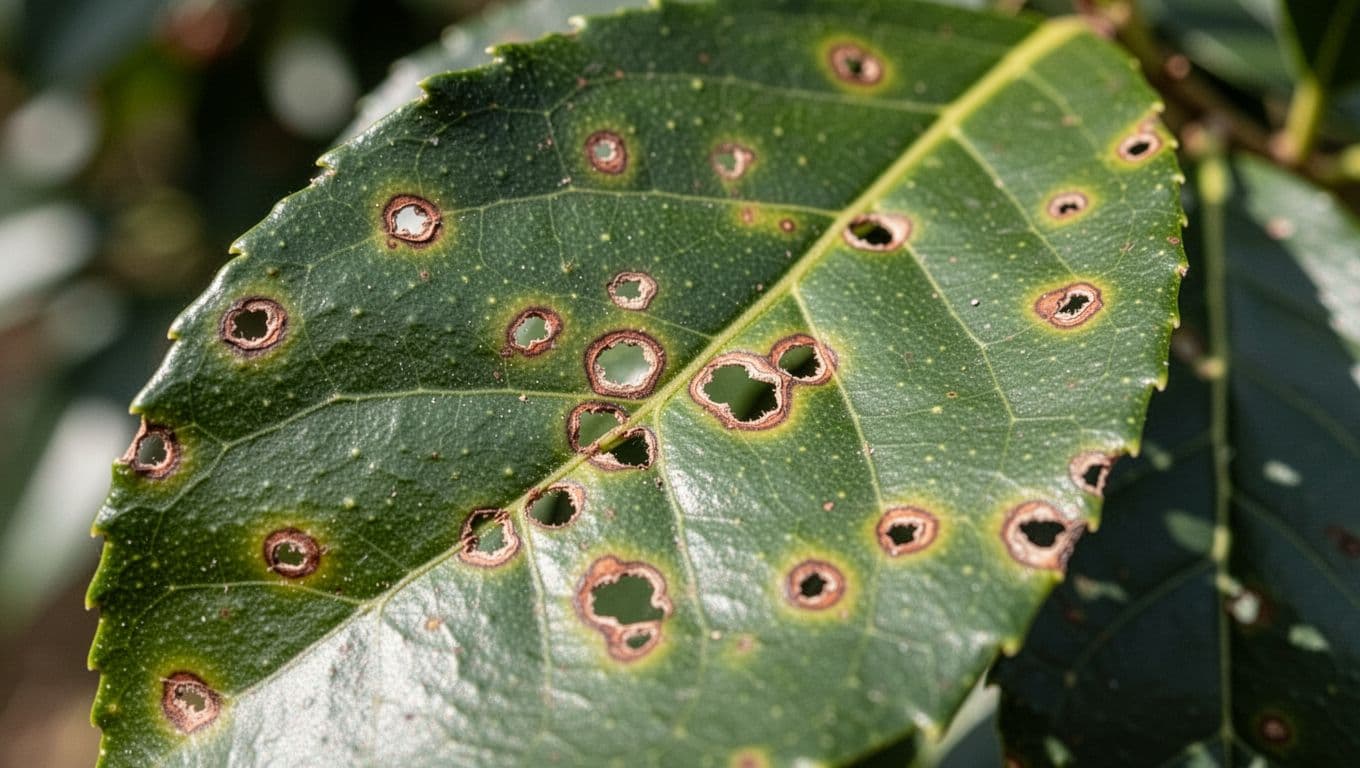
The leaves often show a few clear clues:
- Round spots with dark edges that later fall out
- Brown, purple, or reddish halos around the damaged tissue
- Yellowing or leaf drop after a rainy stretch
- More damage in shaded, crowded areas of the shrub
A leaf that looks torn by chewing is different. Insect damage often leaves ragged edges or uneven bites. Shot hole disease usually leaves a neater opening with a spot around it first.
You may also see older damage mixed with fresh spots. That can make the shrub look worse than it is. The plant may still be alive and healthy at the base, even if the top looks rough.
A quick look at the underside of the problem matters too. If leaves are sticking together, staying wet, or resting against one another, the plant is holding moisture longer than it should.
Why Atlanta weather makes cherry laurel problems worse
Atlanta gives leaf spot disease the kind of conditions it likes. Long humid spells, frequent rain, and warm nights keep foliage wet. That wetness lets the disease keep moving.
Cherry laurel hedges are common along fences, driveways, and property lines. Those spots often have poor airflow. When branches sit close together, leaves dry slowly after rain or irrigation.
Overhead sprinklers can make the problem worse. Water that lands on the leaves every morning adds more wet time, especially when the yard stays shaded until late morning. Even a good lawn system can splash a hedge if sprinkler heads are aimed too high.
Soil drainage matters too. If the bed stays damp after rain, roots can struggle, and stressed plants show damage faster. Heavy mulch piled too thick can also trap moisture near the stems.
Routine yard work around shrub beds, including reliable lawn care services for Atlanta homes, keeps the space cleaner and easier to inspect after rain. That kind of upkeep also makes it easier to spot trouble before it spreads through a hedge.
Wet leaves and tight spacing are a simple recipe for more leaf spot damage.
Spring is usually the busiest season for this disease in Metro Atlanta. New growth is tender, rain is common, and pruning wounds or stress can make the plant more vulnerable. By summer, the shrub may still show old damage, even if the active infection slows down.
How to tell it from chewing, drought, or other leaf spots
Good treatment starts with a good diagnosis. That matters because cherry laurel leaf holes can come from several different causes, and each one needs a different fix.
A simple check helps narrow it down:
- Look for spots before the holes.
If each hole began as a small dead patch with a halo, shot hole disease is likely. - Check the edges of the damage.
Clean, rounded openings point to a leaf spot problem. Ragged tears usually point to chewing insects, wind, or hail. - Look at the weather history.
Damage that follows rain, humidity, or frequent sprinkler use often fits a fungal or bacterial leaf spot pattern. - Compare the whole shrub.
If the inside of the hedge is worse than the outside, poor airflow is part of the problem.
Drought stress can confuse the picture. Leaves may curl, brown, or drop early when the plant is thirsty. That damage usually looks dry and scorched, not spotted first. Nutrient issues can also show up as yellowing, but they rarely make the neat round holes tied to shot hole disease.
Sometimes more than one problem is happening at once. A hedge can be crowded, wet, and stressed from shallow watering. In that case, the disease is only part of the story.
The safest move is to inspect the plant before you treat it. If the leaves show true shot hole patterns, you can focus on the growing conditions instead of chasing the wrong fix.
Prevention that fits Southeast yards
Prevention works best when you change the conditions that help the disease move. In Atlanta and across the Southeast, that means less leaf wetness, better airflow, and cleaner beds.
Spring: thin the hedge before the next flush
Late winter and early spring are good times to open dense cherry laurel shrubs. Remove crossing branches and trim out crowded growth from the middle. That gives air a path through the plant.
Also, clear old leaves and damaged twigs from under the hedge. Fungal and bacterial problems can hang around in debris. A cleaner bed dries faster after rain.
Avoid heavy shearing when the foliage is already wet. Wet blades and wet leaves spread trouble from one part of the shrub to another.
Summer: water the roots, not the leaves
Atlanta summers are hot, but that doesn't mean shrubs need frequent light watering. That kind of watering keeps the surface damp without helping the roots much.
Water deeply at the soil line, and do it in the morning. The goal is to wet the root zone, then let the foliage dry before nightfall. If you use sprinklers nearby, make sure they are not soaking the hedge every time the lawn runs.
If the bed stays wet for days after rain, check the grading and drainage. Low spots and compacted soil can keep roots in wet ground longer than they should stay there.
Fall and winter: clean up and reset
Fall cleanup matters in Atlanta because leaf litter can hold disease through the cooler months. Rake away fallen leaves under cherry laurel and trim out broken branches before winter storms set in.
Dry weather in winter gives you a good window for pruning. Use that time to reduce crowding and improve airflow. The shrub will enter spring with a better shape and less trapped moisture.
A few simple habits go a long way:
- Keep mulch thin and pulled back from stems
- Avoid daily shallow watering
- Open up crowded beds so air can move
- Remove damaged leaves and fallen debris after storms
When those basics are in place, the hedge dries faster and the disease has a harder time taking hold.
When fungicides make sense, and when they don't
Fungicides can help in some cases, but they are not the first answer for most homeowners. They work best when the disease has been confirmed, the product is labeled for ornamental leaf spot diseases, and the timing is right.
That timing matters. Fungicides protect new growth. They do not repair leaves that already have holes. If the shrub is badly crowded, soaked by overhead watering, or buried under old debris, a spray alone will not solve the problem.
Use fungicides as a support tool when:
- The shrub has a history of repeat outbreaks
- Wet spring weather keeps pressure high
- Pruning and watering changes have not done enough
- New growth needs protection during a fresh outbreak
When people skip diagnosis, they often spray too late. By then, the visible damage is already set. The better plan is to clean up the plant, improve airflow, and only then decide if a targeted treatment makes sense.
If you're unsure, a landscape professional can help read the pattern. That step is worth more than guessing, especially on large hedges where the same shrub may have multiple issues at once.
Conclusion
Cherry laurel shot hole disease looks ugly, but it usually gives clear clues if you slow down and inspect the plant. Round spots, brown halos, and holes that appear after wet weather all point you in the right direction.
In Atlanta, the biggest pressure points are easy to spot too, humidity, rain, overhead watering, and tight, shaded hedges. Fix those conditions first, and you give the shrub a much better chance to recover.
The cleanest result comes from accurate diagnosis , steady cleanup, and simple watering habits that keep the leaves dry. When the hedge dries faster, it stays healthier and looks better through the whole season.