Atlanta Crape Myrtle Cercospora Leaf Spot Guide
Atlanta crape myrtles take a lot of heat, and so does crape myrtle leaf spot . When small dark spots start showing up in late spring or summer, many property owners worry the tree is failing. Most of the time, it is a leaf disease that looks worse than it is, but repeated infections can still cause early leaf drop and a tired-looking tree.
That matters in Metro Atlanta, where hot, humid weather gives leaf spot a long season to spread. If you manage a home, rental, or commercial property, the goal is simple, spot it early, reduce stress, and keep the tree healthy enough to handle the next round of summer weather.
What Cercospora leaf spot looks like on the tree
Cercospora leaf spot usually starts as tiny round spots on older leaves first. They often look dark brown, black, or reddish brown, and many have a yellow ring around them. As the spots spread, whole leaves turn yellow, then drop early.
The disease often starts low in the canopy or inside the tree where air moves slowly. In crowded plantings, that patchy look can spread fast enough to make a crape myrtle look thin by midsummer. Flowers usually still appear, but the foliage loses its clean summer look.
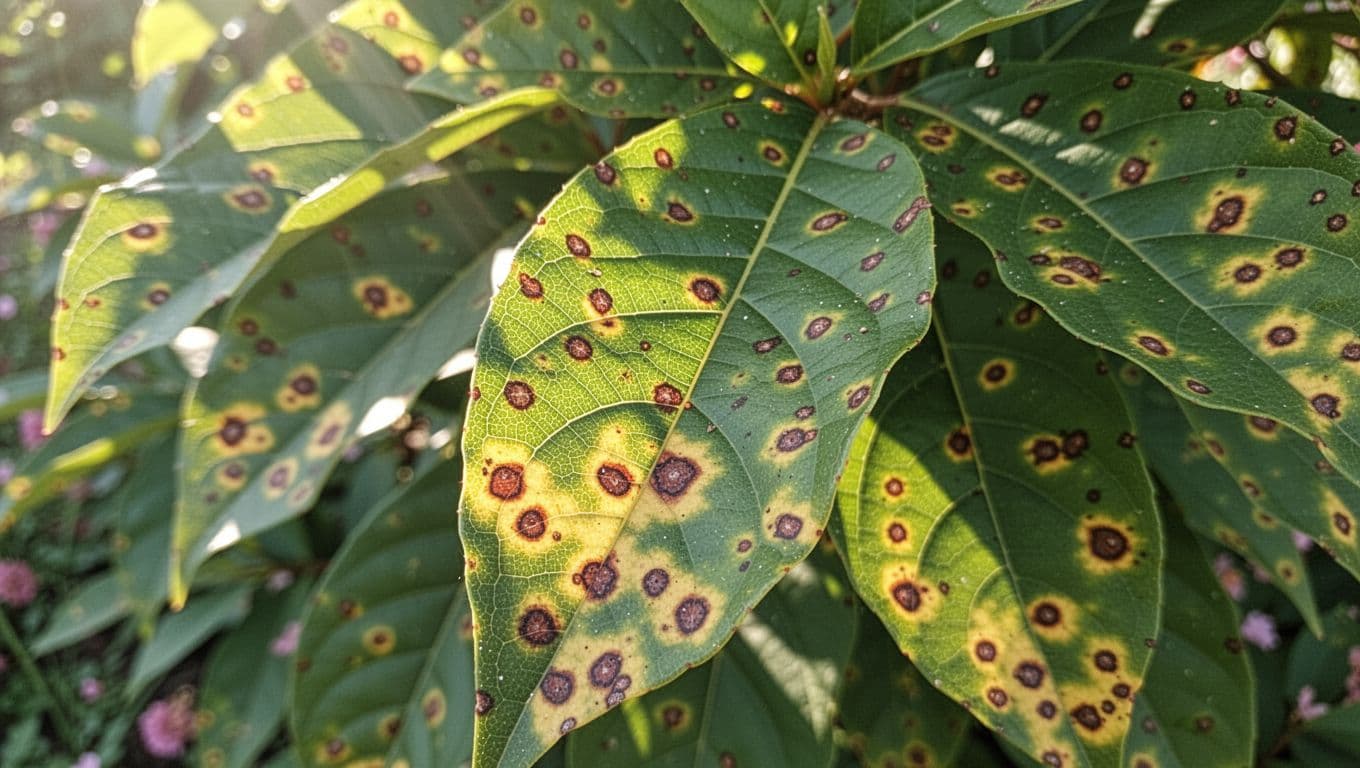
The disease is usually more cosmetic than fatal, but that does not mean it should be ignored.
Healthy crape myrtles can live with some leaf spot. The bigger problem is repeated defoliation that weakens the tree over time.
Why Atlanta weather makes it show up so often
Atlanta summers are built for leaf spot. Warm days, sticky nights, frequent rain, and long stretches of humidity give spores the conditions they like. A crape myrtle in full sun with good airflow may handle that pressure well, while one tucked beside a wall, hedge, or dense shrub bed can struggle.
Overhead sprinklers make the problem worse because they wet the leaves. So does a tree with thick, crowded growth. When branches stay packed together, the leaves dry slowly after rain or irrigation. That slow drying gives the disease a longer window to move.
Stress matters too. Poor soil, compacted ground, drought, and heavy shade can all make a tree more vulnerable. In Atlanta neighborhoods, it is common to see crape myrtles planted in narrow strips, parking islands, or tight foundation beds. Those spots often look tidy on day one, then become humid traps by July.
For homeowners who want the surrounding beds kept clean and open, residential landscape services can help keep mulch areas, borders, and nearby plants from crowding the tree.
How to tell it apart from other crape myrtle problems
Cercospora leaf spot can look a lot like other summer issues. A quick comparison helps you avoid chasing the wrong fix.
| Problem | What the leaves look like | Other clues | What it usually means |
|---|---|---|---|
| Cercospora leaf spot | Small dark spots with yellow halos, then leaf yellowing and drop | Starts on older, lower leaves first | Leaf disease, often worse in humid weather |
| Drought stress | Leaves curl, dry at the edges, or turn dull | Soil feels dry, leaf drop follows heat | The tree needs deeper watering |
| Powdery mildew | White, dusty coating on leaves or shoots | More common in shaded, crowded areas | A different fungus, often visible on new growth |
| Nutrient stress | General yellowing without clear spots | Often more even across the plant | Soil or root issues may be involved |
The main clue is the spot pattern. If you see defined dark specks and yellowing around them, leaf spot is a strong suspect. If the leaf damage is broader and flatter, look harder at watering, soil, or sun exposure.
What helps most in Atlanta yards
The best plan is a mix of cleanup, pruning, and better growing conditions. One tactic alone usually does not solve the problem, especially when Atlanta weather keeps pressure high through summer.
Start with these basics:
- Rake and remove fallen leaves : Spots can overwinter in leaf litter. Picking up dropped leaves helps lower the amount of disease around the tree.
- Water at the soil line : Deep watering is better than frequent light watering. Keep the leaves dry when you can.
- Prune for airflow : Open the canopy in late winter or very early spring. Remove crossing branches and crowded interior growth.
- Avoid heavy nitrogen in summer : Fast, soft growth can be more prone to leaf problems.
- Keep mulch even, not piled high : A modest mulch layer helps hold moisture in the soil. Just keep it off the trunk.
- Watch trees with a yearly pattern : If the same crape myrtle loses leaves early every summer, the problem may need a stronger plan.
For larger properties, regular cleanup from professional lawn care and mowing can also make it easier to spot dropped leaves and keep the area around the tree neat.
A fungicide can help in severe or recurring cases, but it works best as a preventative step, not a rescue plan. Timing matters, and the label matters even more. If you wait until most leaves are spotted, the damage is already in motion. For many Atlanta trees, cultural care gives the best return first.
When a closer look is worth it
A single season of leaf spot is usually not a crisis. A tree that drops leaves early every year needs more attention.
That is especially true if the crape myrtle sits in a narrow planting bed, gets watered overhead, or grows in shade for part of the day. In those spots, the tree may keep fighting the same conditions over and over. If several trees on the property show the same issue, the problem may be site-wide rather than tree-specific.
An on-site arborist or plant health evaluation can help when the symptoms are severe, recurring, or mixed with other problems. That matters for property managers, because a crape myrtle with leaf spot may also be dealing with root stress, poor soil, or pruning damage. A closer inspection can separate cosmetic leaf spotting from a deeper issue that needs a different fix.
For mixed landscapes, recurring cleanup and bed care also help. Open space, better light, and less debris give crape myrtles a better chance to stay full through summer. That kind of steady maintenance is often easier than trying to react after leaves have already started falling.
Conclusion
Atlanta's heat and humidity make crape myrtle leaf spot a familiar summer problem, but it does not have to take over the tree. Once you know the spots to look for, the next steps are straightforward, reduce leaf wetness, improve airflow, and keep the tree under less stress.
Most crape myrtles can live with some leaf spot and still look good. The real goal is to stop the repeated early defoliation that leaves the tree thin and worn out by late summer.