Atlanta Commercial Landscape Contract Checklist 2026
A commercial property can look neglected after one missed mowing, delayed cleanup, or unchecked irrigation leak. In Atlanta, warm weather, heavy summer growth, clay soil, and sudden storms make vague maintenance agreements expensive.
A strong commercial landscape maintenance contract turns expectations into measurable duties, dates, prices, and response times. Before signing in 2026, review each item below with your property manager, HOA board, or business owner.
Key Takeaways
- Define every service, frequency, performance standard, and exclusion in the scope of work.
- Match the schedule to Atlanta's growing season, weather patterns, and storm risks.
- Compare pricing models, then document payment dates, add-on rates, and change orders.
- Verify insurance, workers' compensation, licensing, pesticide credentials, and safety responsibilities.
- Set clear renewal, cancellation, emergency response, and dispute terms before work begins.
Start With the Property and Scope of Work
The contract should identify the legal names of both parties, the service address, billing contact, and every property included. If a company manages several office buildings, retail sites, or HOA entrances, list each location separately. Attach a property diagram or marked aerial image when possible.
That detail prevents disputes about which lawns, medians, parking islands, slopes, and common areas the crew must maintain. It also helps the contractor price the work accurately.
A useful scope describes measurable tasks instead of broad promises such as "maintain grounds." For example, it might require weekly mowing, line trimming, edging, and hard-surface blowing for specified turf areas. It can also list shrub pruning four times each year, bed weeding, mulch installation, seasonal color, fertilization, and irrigation inspections.
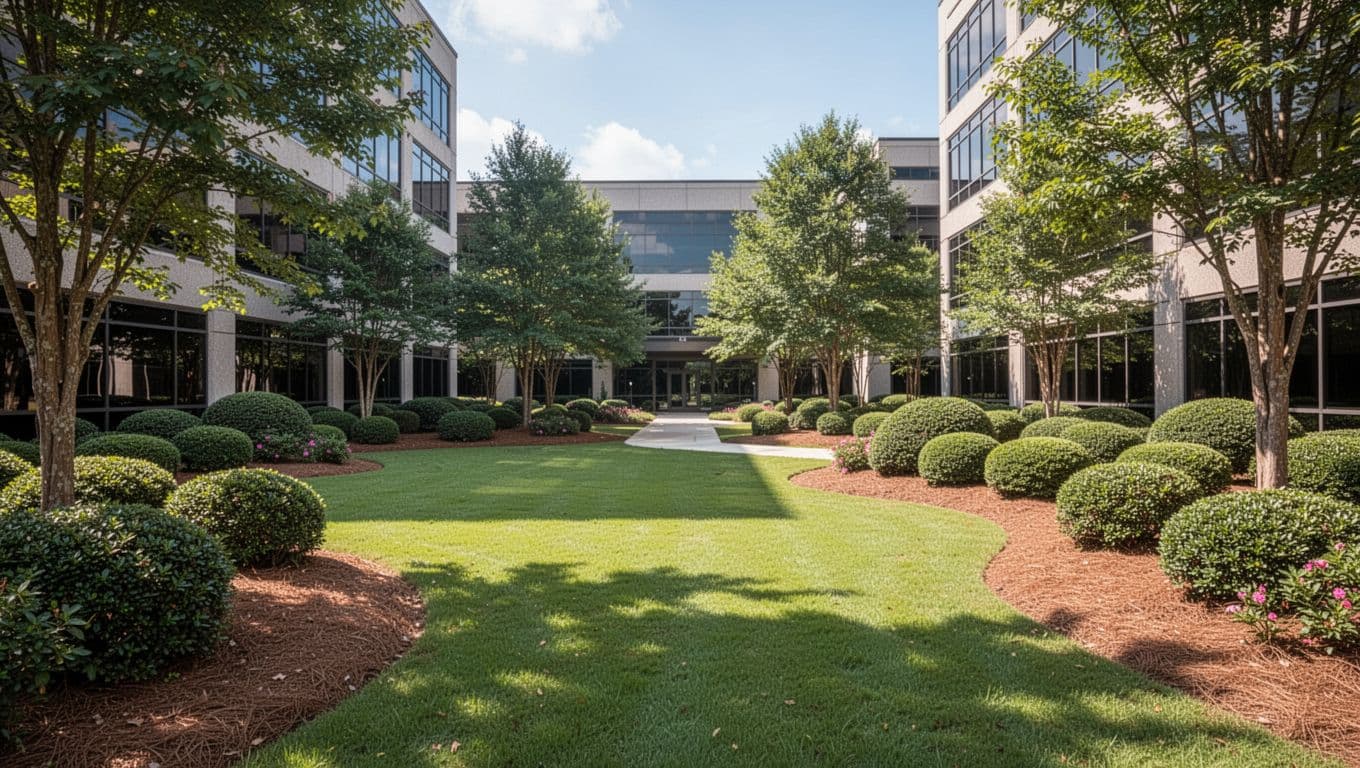
The agreement should state the expected result, not only the activity. A turf standard might require grass to remain between 3 and 4 inches after mowing. Bed maintenance could require weeds to stay below a stated height or percentage of visible coverage. Mulch specifications should include material, color, application depth, and whether the price includes delivery and spreading.
For a commercial landscape maintenance checklist, confirm that the scope answers these questions:
- Which turf areas are included, and what square footage does the price cover?
- How often will crews mow, edge, prune, weed, fertilize, inspect irrigation, and remove debris?
- Are leaf cleanups, haul-away, plant replacement, and irrigation repairs included?
- What happens to grass clippings, branches, and storm debris?
- Are tree services limited by height, trunk diameter, equipment, or crew type?
- Does the provider handle beds, sidewalks, curbs, entrances, loading areas, and parking lots?
Exclusions deserve equal attention. Tree trimming above 8 feet, pet waste, major storm debris, irrigation parts, plant replacements, and leaf removal may cost extra. The contract should say that work outside the written scope requires a quote or approved change order.
For reliable commercial lawn care, compare the written scope with the provider's actual Atlanta commercial property landscape maintenance services. The service description should match what the contract promises.
Set an Atlanta Seasonal Service Schedule
Atlanta properties need different attention throughout the year. A contract that repeats the same monthly schedule in every season can leave turf overgrown in summer and beds untidy after fall leaf drop.
Many commercial agreements use weekly mowing from April through October, then reduce mowing to every other week in November. The exact schedule depends on turf type, rainfall, property use, and growth rate. Put the dates or seasonal triggers in writing so both parties understand when service frequency changes.
Seasonal work should have its own timing and limits. For example, shrub pruning may occur every four months, while fertilization may include four applications scheduled around active growth. Irrigation inspections might occur monthly during the growing season and less often during winter.
The agreement also needs a weather policy. Atlanta rain can make mowing unsafe or damage wet turf. State when rain delays service, how soon the crew will return, and whether a missed visit is rescheduled or credited. A practical clause might require service to resume on the next suitable business day after excessive rain.
Storm response is another major concern. Tropical remnants and severe thunderstorms can bring fallen limbs, blocked entrances, and scattered debris. Define what counts as emergency work, how quickly the provider must respond, who can authorize it, and whether a separate hourly or equipment rate applies.
A complete schedule should cover:
- Routine service days and acceptable arrival windows.
- Holiday and weather-delay procedures.
- Spring and fall cleanup dates.
- Irrigation startup, inspections, winterization, and repairs.
- Fertilizer and weed-control application windows.
- Emergency storm response times and after-hours contacts.
Also identify property-specific restrictions. A medical office may require work before patients arrive. A shopping center may restrict equipment during peak business hours. An HOA may require advance notice before crews enter gated areas.
Choose Pricing and Change-Order Terms Carefully
A commercial landscape maintenance contract usually uses a fixed monthly retainer, per-visit pricing, or a hybrid structure. Each model can work, but the agreement must show exactly what the price covers.
A fixed monthly retainer provides predictable budgeting. It often works well when the contractor handles recurring mowing, bed care, pruning, and seasonal visits. Per-visit pricing can fit properties with irregular schedules or limited service needs. A hybrid arrangement may combine a monthly base fee with separate charges for mulch, irrigation repairs, storm cleanup, or extra visits.
| Pricing model | Works well for | Contract details to check |
|---|---|---|
| Fixed monthly retainer | Consistent year-round maintenance | Included visits, seasonal changes, annual increase |
| Per-visit pricing | Smaller or irregular properties | Unit rate, minimum charge, missed-visit policy |
| Hybrid pricing | Routine care plus occasional projects | Base services, add-on rates, approval process |
Ask whether the monthly price is billed in advance or arrears. Confirm the due date, accepted payment methods, deposit, late fee, and any annual adjustment. The contract should also explain whether fuel, disposal, materials, and equipment transport are included.
For current local budgeting, review this Atlanta commercial landscape maintenance pricing guide. The final quote will still depend on acreage, visit frequency, slopes, turf condition, access, and service complexity.
Change orders protect both sides when site conditions change. Require written approval before extra work begins, with email or text accepted if that matches the client's approval process. Each request should state the added task, price, timing, and any effect on the regular schedule.
An emergency authorization limit can prevent delays. For example, the client may authorize storm work up to $250 without a signed estimate, while larger costs require written approval. Don't leave "necessary additional work" undefined. That phrase can produce unexpected invoices.
Verify Insurance, Licensing, and Site Safety
Before signing, request current certificates of insurance. Commercial and HOA clients commonly require at least $1 million in general liability coverage per occurrence. The provider may also need commercial auto insurance and workers' compensation coverage.
Georgia generally requires employers with three or more employees to carry workers' compensation under O.C.G.A. § 34-9-2. Ask the contractor to confirm coverage with current documentation, especially if multiple crews or subcontractors will enter the property.
The agreement should identify who pays for damage to buildings, vehicles, irrigation systems, fences, signs, curbs, and underground utilities. It should also address pre-existing damage, drought stress, severe weather, and conditions the contractor can't control.
Pesticide and herbicide work requires extra care. Identify who applies products, which credentials are required, how occupants receive notice, and where application records are kept. The contract should name any restricted areas, pet or child safety procedures, and re-entry instructions.
Access responsibilities belong in writing as well. Include gate codes, lockboxes, parking rules, water access, and service windows. Commercial clients should mark private irrigation lines, invisible fences, and other hidden features that public utility markings may not show.
The client may need to remove hoses, furniture, toys, vehicles, and other obstacles before service. If the crew can't reach an area, define whether the visit is rescheduled, partially completed, or charged. The provider should use its own equipment unless the contract clearly states otherwise.
The contract should also establish a communication process. Name the account contact, preferred method, response expectations, inspection reports, and procedures for reporting damage or missed work. Photos can document completed seasonal work and help resolve quality concerns without guesswork.

Define Term, Renewal, and Cancellation Rules
Most commercial agreements state a 12-month term, but the start and end dates must be clear. The contract should also explain what happens when the service year ends. An automatic renewal clause needs plain language, including the deadline for non-renewal notice.
A common structure requires 60 to 90 days' notice before the anniversary date for non-renewal. Separately, either party may receive a right to terminate with 30 days' written notice. Those two provisions serve different purposes, so don't assume one replaces the other.
Immediate termination may apply to serious breach, non-payment, lack of required insurance, unsafe conduct, or repeated failure to perform after written notice. State whether the client owes the remaining balance, receives a prorated refund, or pays only for completed work after a mid-term cancellation.
The agreement should describe a reasonable correction process. A client might report missed mowing, poor edging, damaged turf, or incomplete cleanup in writing. The provider then receives a defined period to correct the issue. Repeated failures can trigger a service credit or termination right if the parties include that remedy.
Finally, choose the process for disputes. The contract may require good-faith discussion, mediation, arbitration, or court proceedings in a named Georgia county. It should identify the governing law and the venue, such as Fulton County Superior Court, if that is what both parties accept.
Before execution, confirm that authorized representatives sign and date the agreement. Keep the master agreement with a property-specific exhibit containing the map, scope, schedule, rates, exclusions, and site notes.
Conclusion
A commercial landscape maintenance contract should make the property easier to manage, not create new questions. Clear service standards, seasonal dates, pricing rules, insurance documents, access instructions, and cancellation terms give both sides a workable reference.
Before the first crew arrives, compare the contract against the actual property and mark every area that needs care. When the agreement records what good service looks like, a missed mowing or surprise add-on is easier to address quickly and fairly.