Atlanta Lawn Fertilization Cost Guide for 2026
A green Atlanta lawn doesn't come from fertilizer alone. It comes from applying the right nutrients when warm-season grass is actively growing, then pairing that work with consistent mowing and watering.
For most homeowners, Atlanta lawn fertilization cost is easier to budget when you know your turf type, lawn size, and whether weed treatments are included. A low starting price can look appealing, but an incomplete plan may leave you paying for needed treatments later.
Use the estimates below to compare services with confidence and request a quote that fits your actual yard.
Fertilize Atlanta Grass at the Right Time
Metro Atlanta lawns commonly contain bermudagrass, zoysiagrass, centipedegrass, or St. Augustinegrass. These warm-season grasses wake up gradually in spring, then slow down as temperatures cool.
The University of Georgia Extension advises homeowners to fertilize warm-season turf during its active growing season, rather than during winter dormancy. That timing has a direct effect on the number of service visits you may need each year.
Wait for full green-up, not a date on the calendar
Spring weather can vary across Metro Atlanta. A warm March doesn't always mean grass roots are ready for nitrogen.
Fulton County UGA Extension recommends waiting until the lawn has fully greened up and soil temperature at four inches is reliably 65 degrees Fahrenheit and rising. For many Atlanta yards, that begins in late April or May.
Applying nitrogen too early can encourage winter weeds and tender growth that gets damaged by a late cold snap. Most professional programs then space treatments through summer and reduce or stop higher-nitrogen applications by late August or early fall.
Grass type changes your treatment schedule
Centipedegrass needs less nitrogen than most other Atlanta turf. As a result, it may need only two seasonal fertilizer applications in a typical year.
Bermuda and zoysia often need three to five treatments, depending on soil results, sun exposure, and how intensively you want to maintain the lawn. St. Augustine also has a higher nutrient demand than centipede.
For a closer look at timing for common local grasses, see this Atlanta fertilizer schedule for Bermuda and Zoysia.
Atlanta Lawn Fertilization Cost Estimates for 2026
The following figures are estimated 2026 ranges , not fixed local price lists. They reflect common U.S. metro lawn-care pricing patterns applied to typical Atlanta residential lawns.
These estimates assume an accessible, established lawn and a fertilizer-only visit. A provider may charge more for a steep yard, difficult gates, extensive beds, severe weeds, or specialized products.
| Lawn size | Estimated 2026 fertilizer-only cost per visit | Typical fit |
|---|---|---|
| About 5,000 square feet | $50 to $90 | Small city, townhome, or compact suburban yard |
| About 10,000 square feet | $70 to $130 | Average suburban lawn |
| About 15,000 square feet or more | $100 to $180+ | Larger lot or more open turf area |
Your Atlanta lawn fertilization cost may include a minimum service charge, even if your grass area is smaller than 5,000 square feet. On the other hand, a large, open, level lawn can sometimes cost less per square foot than a smaller yard broken up by slopes, gates, trees, and landscape beds.
What the per-visit price should cover
A fertilizer-only visit commonly includes product, labor, travel, equipment, and an even application with a spreader. Some companies also give basic watering instructions or flag visible turf concerns.
Ask what material the crew will apply. Slow-release nitrogen often costs more than a basic quick-release product, yet it can provide steadier feeding over time. UGA recommends soil testing before making fertilizer and lime decisions, especially when a lawn has recurring color or growth problems.
A price only makes sense when the quote identifies the number of visits, the fertilizer type, and any treatments that are not included.
What a Professional Fertilization Visit Should Include
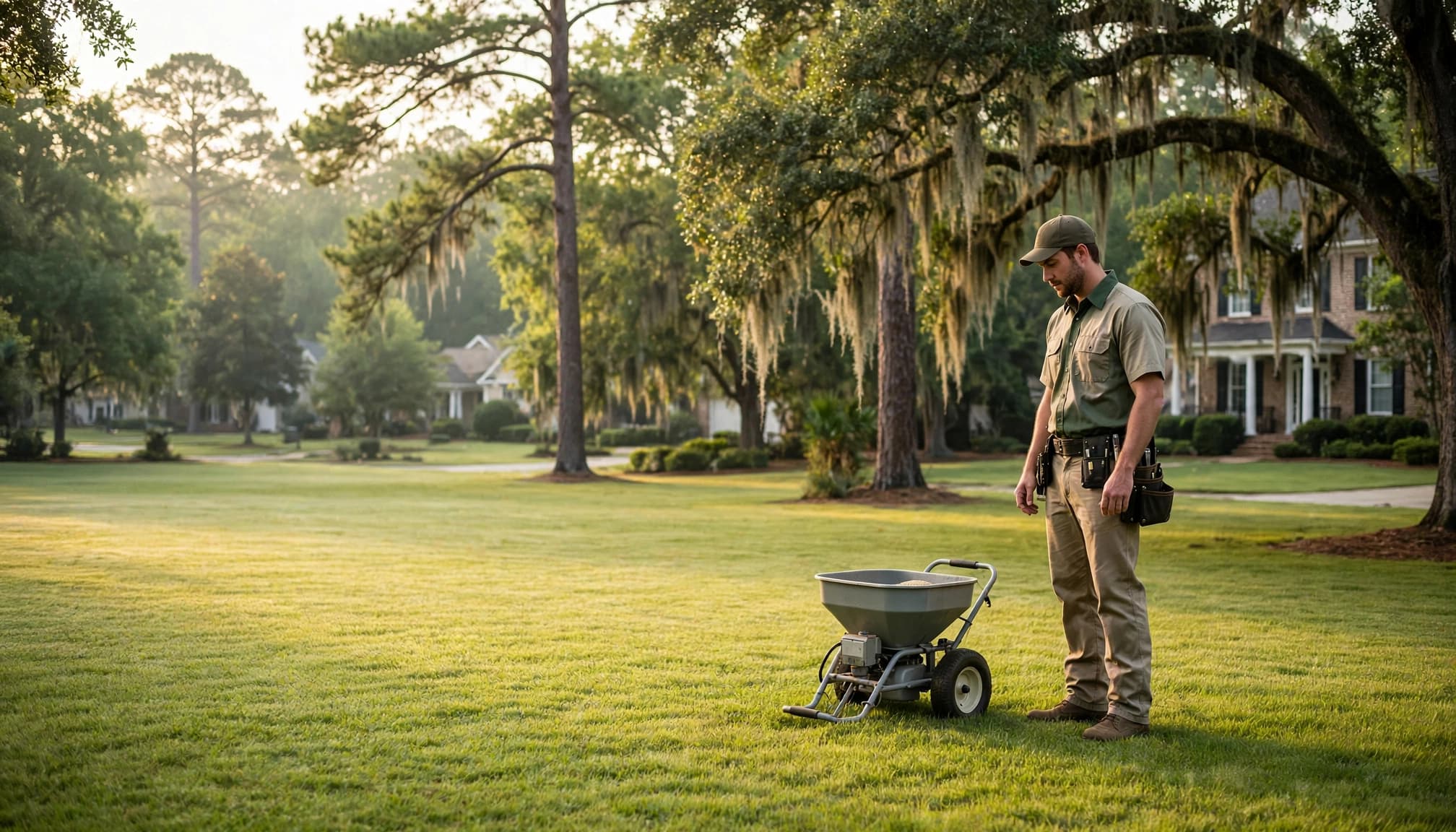
A dependable lawn service starts with the condition of your yard, not a one-size-fits-all bag of fertilizer. The provider should confirm the grass type, measure the treatment area, and look for obvious issues such as compacted soil, shade, drought stress, or poor drainage.
A soil test can prevent wasted applications
Yellow grass doesn't always need more nitrogen. Low pH, poor drainage, compacted soil, insect damage, and uneven irrigation can all produce a weak-looking lawn.
A soil test shows pH and nutrient levels, so the provider can recommend lime or other amendments only when the results support them. Bermuda and St. Augustine generally perform best in soil around pH 5.5 to 6.5. Zoysia prefers a somewhat higher range, while centipede often tolerates more acidic soil.
Application practices matter as much as product choice
Fertilizer should stay off driveways, sidewalks, and storm drains. Crews should apply it evenly and avoid treating wet leaf blades, since fertilizer can burn stressed grass.
Most granular products need watering after application. Before the crew arrives, clear toys, hoses, and pet waste from the lawn. That makes the work faster and helps the treatment reach turf evenly.
Factors That Raise or Lower Your Quote
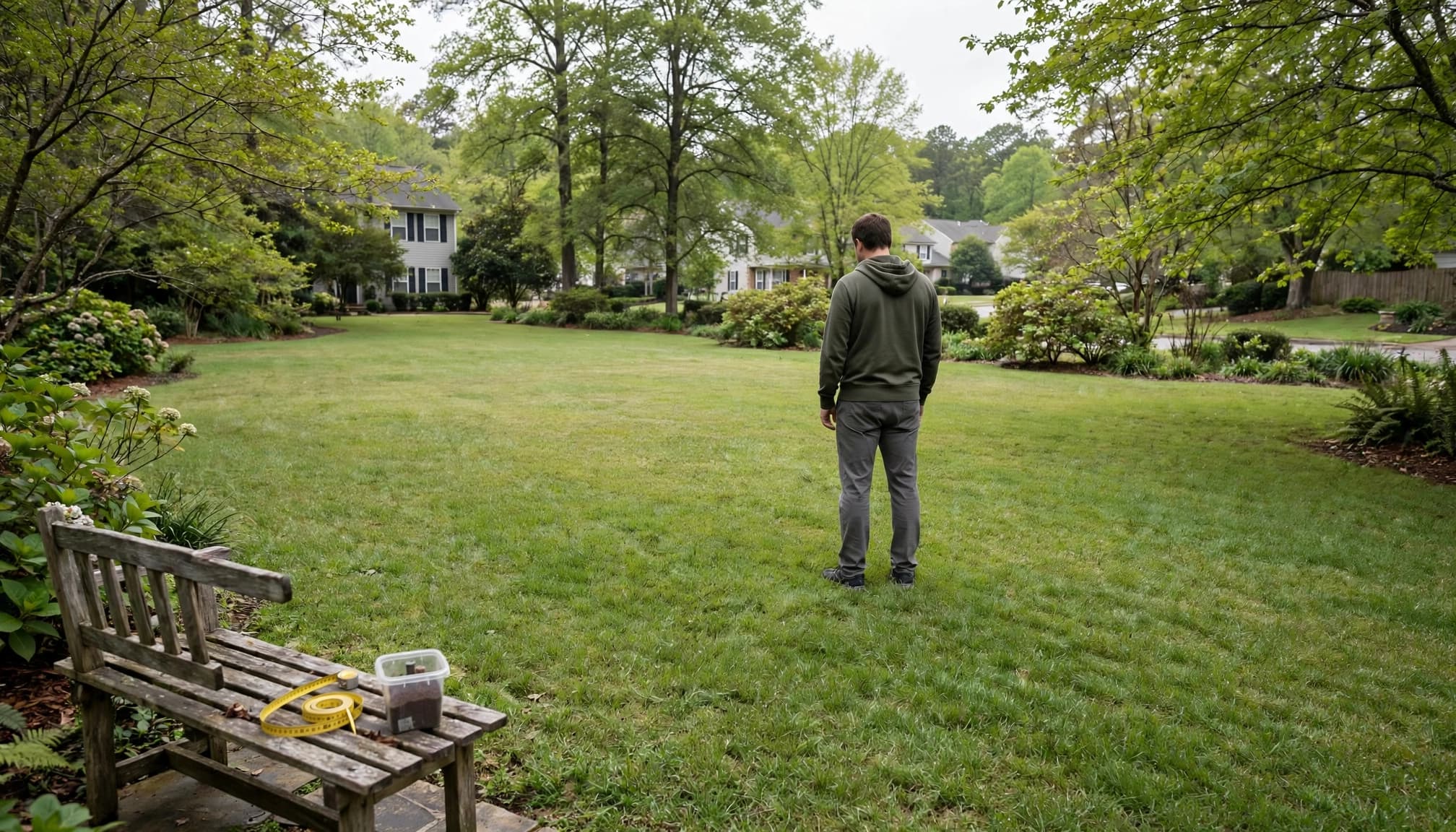
Two lawns with the same lot size can receive very different estimates. The usable turf area matters more than the size printed on a real estate listing.
Lawn conditions affect product and labor needs
A shaded zoysia lawn may need a different plan than a sunny bermuda yard. Likewise, centipede's lower nitrogen needs may reduce both product use and visit frequency.
Costs can rise when a lawn has steep slopes, fenced sections, narrow access points, exposed roots, or several separated turf areas. New sod, thin turf, and soil that needs lime or other amendments can also increase the first-season budget.
Bundled services can make the annual total higher
Many lawn-care programs combine fertilization with pre-emergent weed prevention, post-emergent weed control, lime, grub treatment, aeration, or shrub-bed care. Those services may be useful, but they should appear separately on the quote.
A bundled plan can cost more upfront while reducing the need to schedule separate visits. However, don't assume weed control or insect treatment is part of a fertilization price unless the written scope says so.
The Georgia Department of Agriculture regulates fertilizer and certain soil additives, but product regulation doesn't make every application right for every lawn. Soil results and turf type still guide a sound recommendation.
One-Time Service vs. an Annual Fertilization Plan
A one-time application suits a homeowner who needs a spring feeding, has already handled soil corrections, or wants to test a provider before committing. It also gives you flexibility if you maintain much of the lawn yourself.
However, one visit rarely supports a warm-season Atlanta lawn for an entire growing season. Bermuda and zoysia often need repeat feedings while grass is actively growing.
When a one-time application makes sense
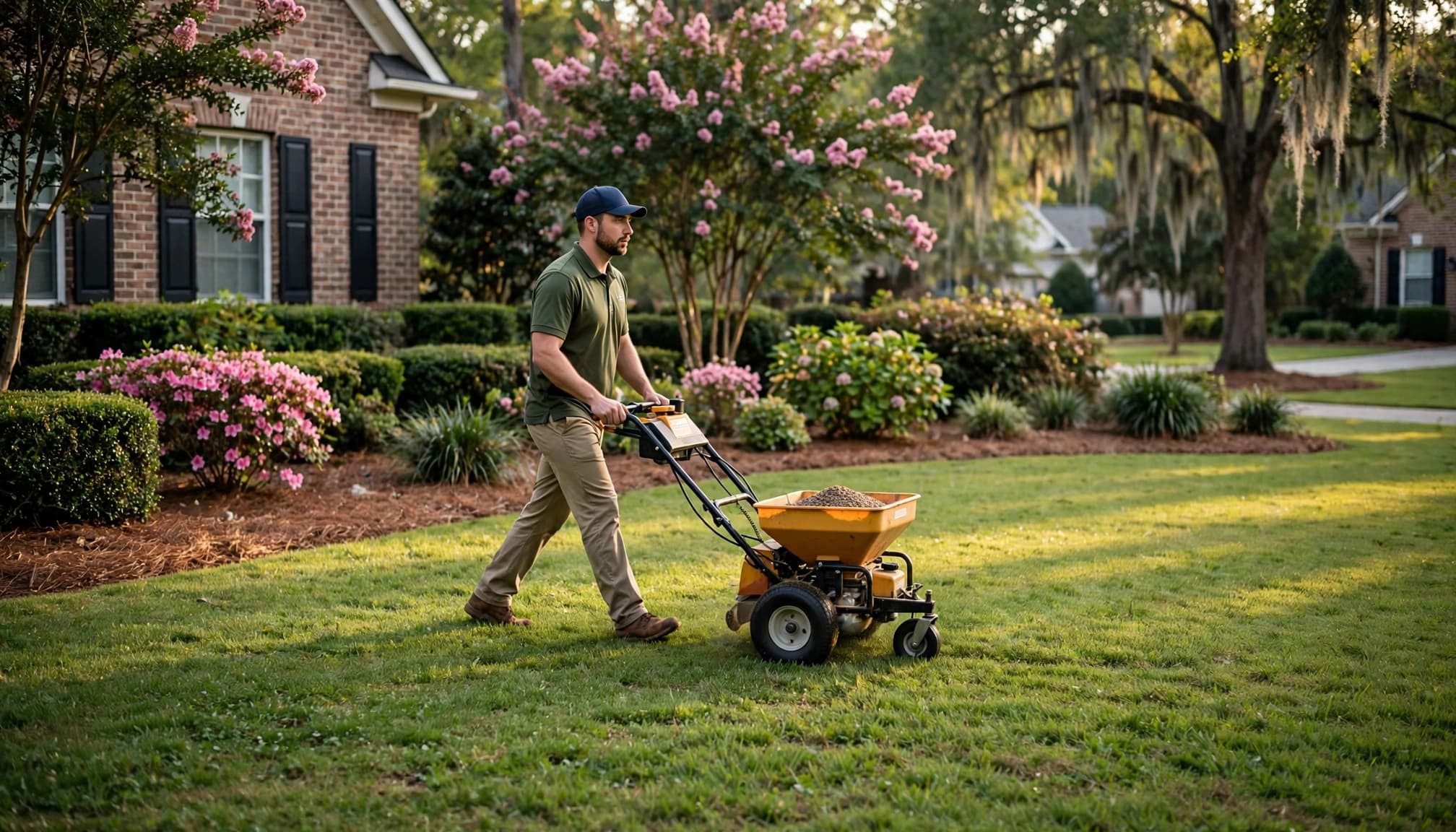
Choose a one-time service when your lawn has a clear seasonal need and you know what it requires. A soil test can make this choice less of a guess.
This option works best for established grass with manageable weeds and no major health problems. Request the application rate and product details, especially if you plan to handle later treatments yourself.
Annual plans offer steadier seasonal care
An annual plan spaces treatments across the growing season. It can also make budgeting easier because the provider sees the lawn more than once and can adjust the plan as weather changes.
The table below shows simple fertilizer-only arithmetic using the estimated per-visit ranges above. It assumes four or five paid applications and does not include weed control, lime, aeration, or insect treatments.
| Lawn size | Estimated 2026 cost for 4 visits | Estimated 2026 cost for 5 visits |
|---|---|---|
| About 5,000 square feet | $200 to $360 | $250 to $450 |
| About 10,000 square feet | $280 to $520 | $350 to $650 |
| About 15,000 square feet or more | $400 to $720+ | $500 to $900+ |
A bundled annual plan can exceed these ranges because it may add herbicides, return visits, premium fertilizer, or soil amendments. Ask for the total annual cost and the price of each optional service before you compare proposals.
Keep Fertilizer From Becoming a Bandage
Fertilizer helps healthy turf fill in and maintain color. It won't correct mowing too short, poor drainage, compacted soil, heavy shade, or a persistent weed problem.
Pair feeding with proper mowing and watering
Mow at the recommended height for your grass, and avoid removing more than one-third of the blade during a single cut. Frequent scalping weakens turf and can make even a well-fed lawn look rough.
Water deeply when rainfall falls short, rather than giving the lawn frequent shallow sprinkles. Consistent Atlanta lawn care and mowing services also keep excess clippings and uneven growth from hiding underlying problems.
Avoid paying for treatments your lawn doesn't need
A provider should explain why each application belongs in the program. For example, a soil test may show that lime is unnecessary, or centipedegrass may need fewer nitrogen treatments than a neighbor's bermuda lawn.
Ask whether the quote includes follow-up inspection, spot weed treatment, or a service guarantee. Those details matter when you compare a lower bid against a more complete plan.
How to Compare Lawn Fertilization Quotes
Get at least two written, lawn-specific quotes before choosing a service. Give each company the same information, including your approximate turf square footage, grass type if known, prior lawn issues, and whether you want weed control included.
Request an itemized scope of work
A useful proposal should state the number of visits, estimated service months, fertilizer type, and the total annual price. It should also clarify whether the company includes pre-emergent, post-emergent weed control, lime, soil testing, watering guidance, and return visits.
Don't rely on a verbal starting price. Written details prevent surprises when a provider treats only the front yard, adds a material charge, or bills separately for weed treatments.
Compare the same level of service
One company may quote four fertilizer applications, while another offers five visits with pre-emergent weed control. The lower total isn't automatically the better value.
Review the price per visit, product approach, service calendar, and included treatments side by side. Then choose the company that gives your lawn a clear, appropriate plan instead of the lowest number on a broad estimate.
Final Thoughts on Atlanta Fertilization Costs
A realistic Atlanta lawn fertilization cost depends on more than square footage. Grass type, soil condition, product choice, access, visit frequency, and bundled services all shape the final number.
For an average Atlanta lawn, fertilizer-only care often begins around $70 to $130 per visit, while recurring plans should be priced by the treatments they actually include. Get written, lawn-specific quotes and choose a schedule that feeds your turf during active growth, not simply when the calendar changes.