Atlanta Lawn Compaction Repair Guide for Georgia Clay
A lawn can look dry an hour after a heavy Atlanta storm, yet the soil beneath it may still be wet and airless. That is often a compaction problem, especially where Georgia red clay has been packed by construction equipment, foot traffic, or years of mowing.
Lawn compaction repair helps water move into the ground, gives roots room to grow, and improves how grass handles summer heat. The right fix starts with a simple test, then matches the repair to your grass type, yard conditions, and season.
Why Atlanta's Red Clay Compacts So Easily
Georgia clay contains fine particles that press tightly together under pressure. When it dries, the surface can become hard enough to shed water. When rain arrives, water may puddle or race downhill instead of soaking in.
New-build yards often have the toughest conditions. Heavy machinery compresses the subsoil before sod or seed goes down. A thin layer of topsoil can hide the problem for a season, but shallow roots soon expose it.
Foot traffic and mowing patterns create hard paths
Repeated pressure compacts the same spots first. Look near gates, play areas, trash cans, sidewalks, and the route used by a mower. Grass often turns thin along these paths because roots cannot spread through dense soil.
Parking lawn equipment on the turf also creates a compacted patch. So can mowing when the ground is soft after a storm. A heavy mower's wheels press wet clay together, then the clay hardens as it dries.
Compaction often looks like a grass problem
Thinning turf, patchy weeds, slow growth, and runoff can all point to compacted soil. However, brown grass does not automatically mean the ground is dense. Grubs, shade, poor irrigation coverage, disease, low soil fertility, and wrong mowing height can create similar symptoms.
Check several locations before planning lawn compaction repair. Compare a struggling area with a healthy part of the yard. The contrast often tells you more than the lawn's surface alone.
How to Test Lawn Compaction Repair Needs
You do not need a laboratory tool to spot many compaction issues. Test when the soil is moist but not muddy, usually a day or two after a normal rain. Avoid testing bone-dry clay because even healthy soil feels hard in those conditions.
Start with the screwdriver test
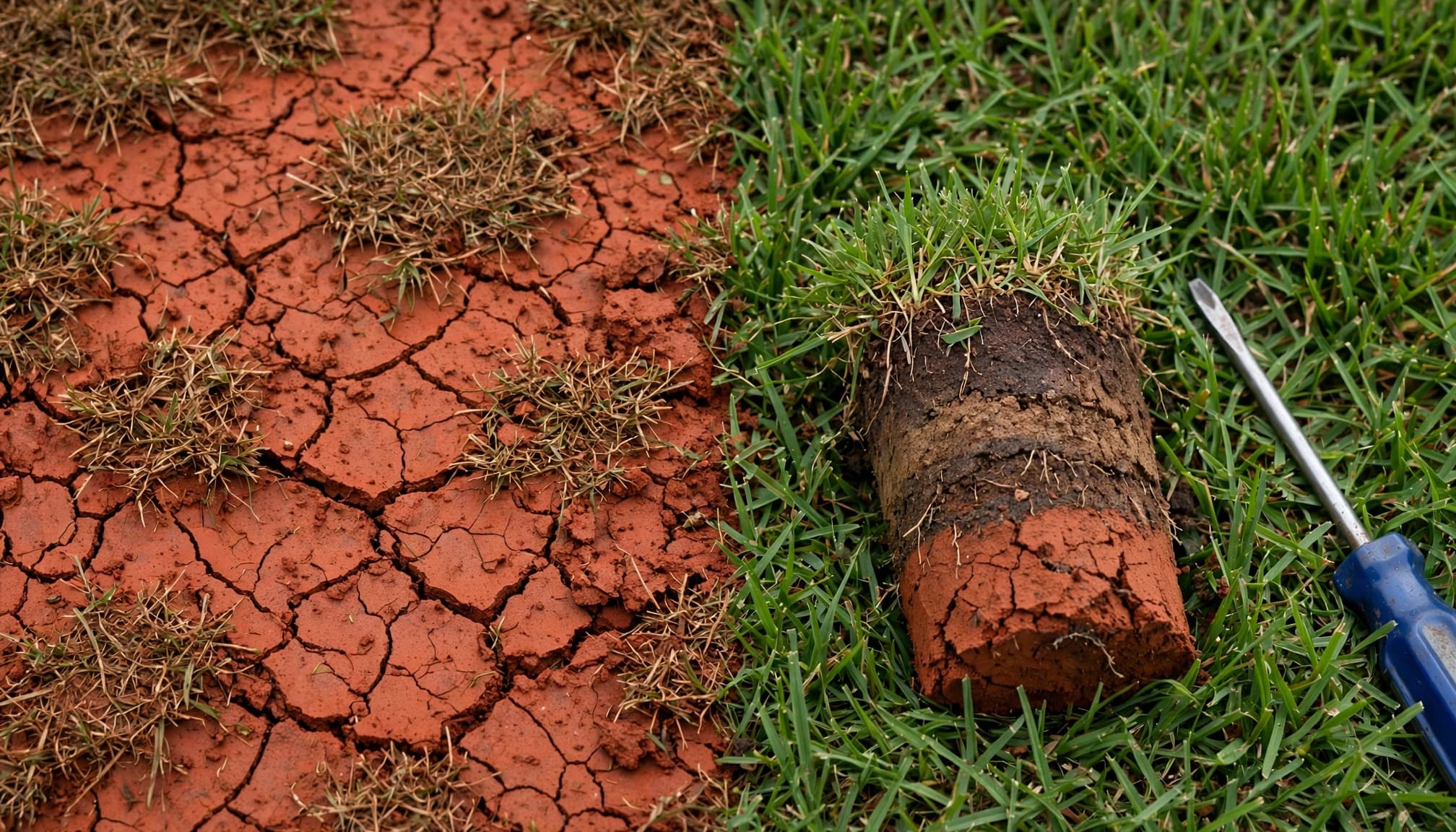
Use a long, sturdy flathead screwdriver with a comfortable handle. Push it straight into the soil in at least five spots, including weak turf and healthy turf. Use steady hand pressure rather than your full body weight.
If it stops within an inch or two in damp soil, compaction is likely. If it slides four to six inches in a healthy area but barely enters a worn path, you have a clear comparison.
Mark the difficult spots with small flags or make a quick sketch. That record helps you see whether trouble follows traffic routes, low areas, or the edge of a driveway.
Dig a small soil profile
A hand trowel or shovel reveals what the screwdriver cannot. Cut a small wedge about six inches deep and examine the sidewall. Healthy soil has visible pores, roots, and crumbly structure. Compacted red clay often forms dense layers with few roots below the top inch.
Watch for a sudden color change or a hard horizontal layer. That can signal buried fill, construction compaction, or poor topsoil depth. Do not dig near marked utilities, irrigation lines, tree roots, or septic components.
A lawn with shallow roots can turn brown during heat even when the sprinkler runs regularly, because the roots never reached the moisture below the surface.
A soil test complements this inspection. Dense soil and low pH can occur together, yet aeration will not correct acidity. Use this Atlanta lawn soil testing guide before adding lime or fertilizer.
Separate Compaction From Drainage and Grade Problems
Compacted clay slows infiltration, but it is not the only reason water collects. Aerating a lawn with a low spot may improve the soil slightly while leaving the puddle in place. Water still follows gravity.
Signs that aeration is the right first move
Core aeration fits a lawn where water runs off quickly, grass thins in traffic lanes, and the soil resists a screwdriver across a broad area. It also makes sense when turf feels springy on top but roots are short beneath the surface.
If the yard has no obvious low spots and drains within a reasonable time after rain, lawn compaction repair can often begin with aeration and organic matter.
When the yard needs more than aeration
Call for a closer look when water flows toward the house, remains for days, or gathers over a visible depression. Downspouts that empty beside a lawn can also overload one section of clay soil. In those cases, use an Atlanta drainage guide for soggy lawns to compare drainage and regrading options.
A hard layer beneath newly installed sod may need more extensive soil work. Deep construction compaction, buried debris, and rough grade changes can require equipment and site preparation. Repeated aeration is helpful maintenance, but it cannot reshape a yard or redirect runoff.
Lawn Compaction Repair That Works in Georgia Clay
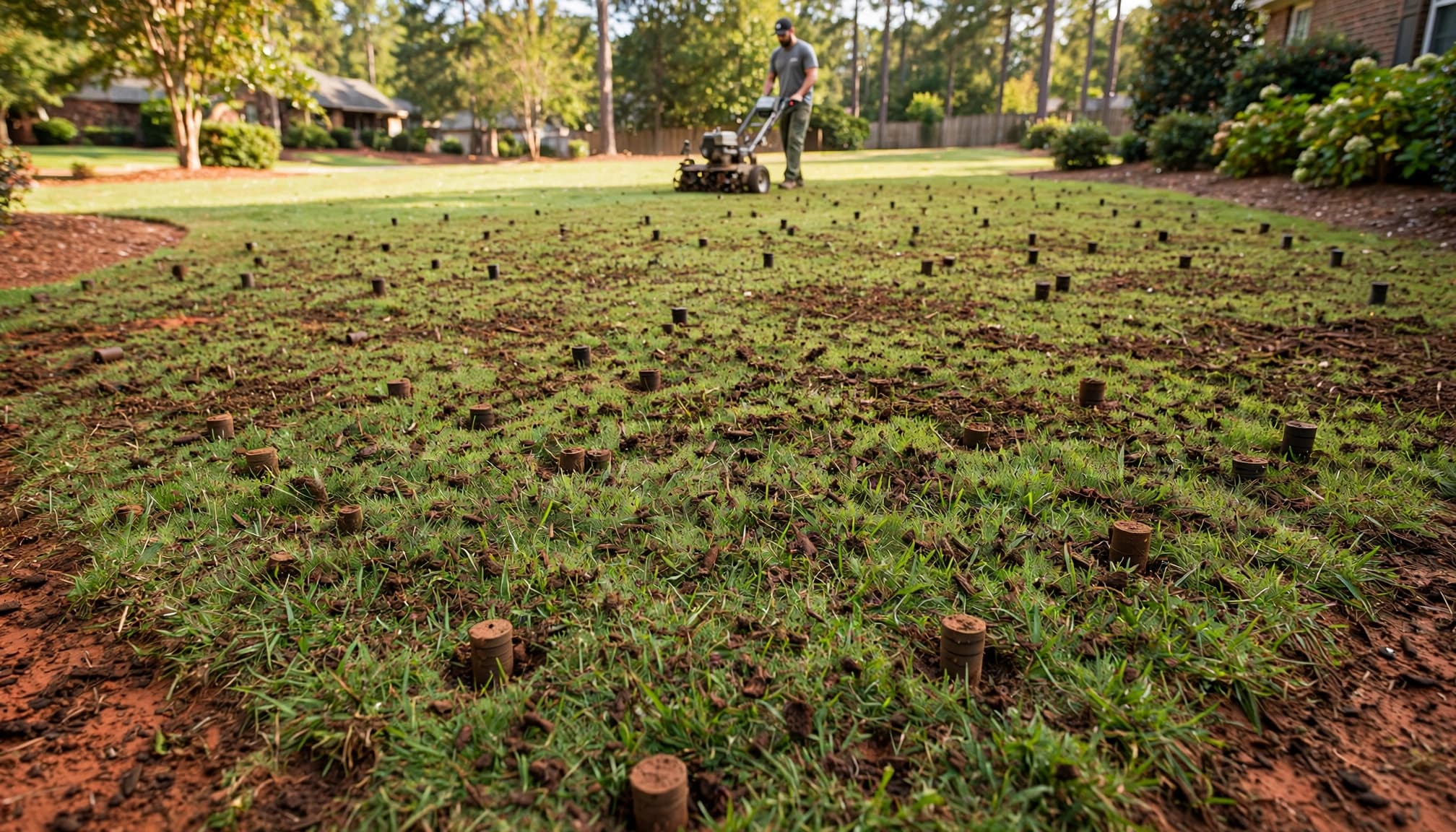
For established turf, core aeration is the most dependable repair method. A core aerator removes small plugs of soil instead of only poking holes. Those open channels let air, water, and nutrients enter the root zone.
Liquid products may help wetting and soil conditioning in lightly compacted areas. Still, they do not remove soil cores or relieve a hard construction layer on their own. Serious Atlanta clay compaction calls for mechanical core aeration.
Aerate at the proper depth and pattern
Rent a walk-behind core aerator or hire a crew with commercial equipment. The machine should pull plugs roughly two to four inches deep, depending on moisture, turf, and soil conditions. Water lightly the day before if the clay is dry, but never aerate saturated soil.
Make two passes in different directions across compacted sections. A single pass can be enough for routine maintenance, while a crisscross pattern works better in hard play areas and mower tracks.
Before starting, flag irrigation heads, shallow cables, valve boxes, and invisible pet fencing. Remove toys, branches, and stones. Wear closed-toe shoes, eye protection, and hearing protection, and keep children and pets away while the machine runs.
Add compost after pulling plugs
Topdress with a thin layer of screened compost after aeration. Spread about one-quarter inch across the lawn, then rake or drag it so grass blades stay visible. Compost feeds soil organisms and improves structure over time.
Do not bury grass under a thick layer. Heavy red clay needs repeated, light additions instead of one large load. Sweep compost off driveways and storm drains before watering.
For details on methods and turf-specific timing, review this core aeration guide for compacted Atlanta clay.
Match Aeration Timing to Your Grass Type
Timing matters because aeration temporarily stresses turf. Grass needs active growth afterward to fill holes and recover its root system. Atlanta's long warm season gives Bermuda and Zoysia a different schedule than tall fescue.
Bermuda and Zoysia recover best in warm weather
Aerate Bermuda and Zoysia after spring green-up, generally from late spring into summer. The grass should be actively growing and no longer at risk from a late frost. May through July is often a good window in Metro Atlanta.
Avoid core aeration during winter dormancy. The holes stay open longer, weeds can take advantage, and warm-season turf cannot repair quickly. Also avoid aerating during a heat wave if you cannot water afterward.
Mow at the normal recommended height before the service. Then leave the soil plugs on the lawn. They break down with rain and mowing, returning soil and organic material to the turf.
Tall fescue needs an early fall schedule
Tall fescue grows most strongly during cooler weather. Aerate in early fall, often September or October in Atlanta, before or during overseeding. This gives roots time to develop before summer heat returns.
Spring aeration can help a severely compacted fescue lawn, but it may also invite warm-season weeds and puts new roots through summer stress. Use spring work only when conditions demand it.
A typical timing guide looks like this:
| Grass type | Best aeration window in Atlanta | Best follow-up |
|---|---|---|
| Bermuda | Late spring through summer | Compost, irrigation, repair bare areas |
| Zoysia | Late spring through summer | Compost and steady mowing |
| Tall fescue | Early fall | Overseeding and starter fertilizer if soil test supports it |
The grass type should set the calendar, not a rental store's availability.
Water, Mow, and Protect the Lawn After Repair
After lawn compaction repair, water enough to settle compost and keep the root zone lightly moist. A slow soak is better than frequent shallow watering. Clay absorbs water slowly, so split a longer irrigation session into shorter cycles if runoff starts.
Wait until the lawn is dry enough to avoid wheel marks before mowing. Continue using the proper cutting height for your turf, and keep the mower blade sharp. A dull blade tears grass tips and makes recovering turf look ragged.
Stop compaction from returning
Change mowing routes when possible. Shift play equipment occasionally, use stepping stones near gates, and keep vehicles off the lawn. If a service crew must cross turf, choose dry conditions and limit trips over the same track.
Annual core aeration helps many Atlanta lawns, especially those with heavy clay and regular traffic. However, a lawn that hardens again within months may need a closer look at grade, runoff, or construction-compacted subsoil.
Low spots deserve careful treatment, too. Thin topdressing layers can help turf stay level without smothering it. This Atlanta lawn leveling guide explains how to correct shallow depressions safely.
A Healthier Lawn Starts Below the Grass
Atlanta clay will always be dense compared with sandy soil, but it does not have to stay sealed and lifeless. Test the soil when turf struggles, aerate during the right growth period, and use compost in thin layers.
The strongest lawn compaction repair plan addresses the cause, not only the bare patch. When roots can reach air, water, and room to spread, the lawn handles Atlanta's heat and heavy rain with far less stress.